Colonial Historical Walking Tour in Yogyakarta
- 2 hours
- Free cancellation up to 24h before
- Guided in English
- Instant confirmation
Highlights
Experience the fascinating colonial history of Yogyakarta on a guided walking tour that takes you through the city’s most significant Dutch-era landmarks. This immersive tour will transport you back to the Dutch East Indies period, revealing stories of trade, governance, architecture, and resistance that shaped the city into what it is today. Wander through grand colonial buildings, bustling historical markets, old administrative centers, and cultural enclaves, each with its own unique story. This tour is perfect for history enthusiasts, cultural explorers, and photographers looking to capture Yogyakarta’s rich heritage beyond its temples and palaces.
Inclusions
What's included
- English Speaking Guide
- Mineral Water
What's not
- Tips
- Personal Expenses
Itinerary
Tugu Monument, often referred to as Tugu Pal Putih, is one of Yogyakarta’s most iconic historical landmarks. Built in 1755 by Sultan Hamengkubuwono I, this towering white pillar stands at the heart of the city, symbolizing the unity between the Sultan and his people. During the Dutch colonial period, the original structure was damaged in an earthquake in 1867 and later reconstructed with modifications by the Dutch government. The new design, completed in 1889, features European architectural influences, reflecting the colonial presence in Yogyakarta at the time.
During the colonial era, press buildings like this one were essential in disseminating news, often controlled by the Dutch to regulate information. After Indonesia’s independence, Kedaulatan Rakyat transformed the space into a symbol of freedom, using it to voice the aspirations of the Indonesian people.
Tugu Hotel is a historical landmark that offers a glimpse into the city’s colonial past. Originally built during the Dutch colonial period, this elegant structure reflects the architectural grandeur of the early 20th century, with its Indo-European design, high ceilings, and antique furnishings that transport visitors back in time.
Tetenger Yogya Kembali serves as a tribute to the city’s struggle for independence from Dutch colonial rule. This monument marks the moment when Yogyakarta was officially returned to Indonesian control on June 29, 1949, after a period of Dutch occupation during the Indonesian National Revolution.
A Colonial-Era Luxury Hotel During the colonial period, this hotel was a prestigious meeting place for Dutch elites and later played a role in Indonesia’s fight for independence. Its strategic location made it a witness to important historical events, including the Dutch occupation and the Indonesian struggle for sovereignty.
During the colonial period, this hotel was a prestigious meeting place for Dutch elites and later played a role in Indonesia’s fight for independence. Its strategic location made it a witness to important historical events, including the Dutch occupation and the Indonesian struggle for sovereignty.
Standing proudly at the entrance of Kampoeng Ketandan, the Páifāng (牌坊), or Ketandan Gate, is a striking symbol of Yogyakarta’s rich Chinese-Indonesian heritage. This beautifully decorated archway marks the entrance to Ketandan, a historic Chinese quarter that dates back to the Dutch colonial period, when Chinese immigrants were designated to live and trade in specific areas under colonial regulations.
The current colonial-style building, with its symmetrical façade and large archways, was constructed in the 1920s as part of Dutch efforts to modernize Yogyakarta’s infrastructure. The Dutch administration sought to regulate trade by providing a formalized market space, reinforcing their economic control over the region.
originally built during the Dutch colonial period, is one of Yogyakarta’s oldest Protestant churches. Established in the mid-19th century, it served as a place of worship for Dutch settlers, officials, and other European expatriates living in the city.
Located at the southern end of Malioboro Street, Kantor Pos Besar Yogyakarta (Yogyakarta Main Post Office) is a prominent landmark from the Dutch colonial period, built in the early 20th century as part of the Netherlands’ expanding postal network in the Dutch East Indies.
Standing majestically at the intersection of Malioboro Street and Yogyakarta’s heritage district, Bank Indonesia Yogyakarta is a striking example of Dutch colonial architecture. Built in the early 20th century, this building was originally home to De Javasche Bank, the central financial institution of the Dutch East Indies, which played a crucial role in regulating the colony’s economy and trade.
Cancellation
Free cancellation up to 24 hours before the experience starts, for a full refund.
Know before you go
- Meeting point
- Please kindly look for the YKExplore sign at the Tugu area. Our guide will contact you before the scheduled meeting time
- Pickup
- Everyone meets at the starting point; there is no pickup.
- Ticket type
- Mobile or paper ticket accepted
- Group size
- Up to 30 travellers
- Operated by
- YKExplore
- Service animals allowed
- Public transportation options are available nearby
- Suitable for all physical fitness levels
- lease note that during this tour, participants may encounter varying accounts of historical events due to the Indonesian perspective provided. Historical narratives can differ based on cultural viewpoints and interpretations. We strive to offer a comprehensive understanding by incorporating local insights, which may present alternative or additional details compared to other sources.
How it compares in Yogyakarta
- Its from-price is 54% below the median of the 544 experiences we list in Yogyakarta.
- It is shorter than most of them.
- The operator lists free cancellation on it.
About Yogyakarta
Yogyakarta is the cultural heart of Java, a university city with a sultan's palace, batik workshops and the temples of Borobudur and Prambanan close by.
The sultan of Yogyakarta is also the region's governor, and his walled palace, the Kraton, is still lived in and holds a museum and a court gamelan orchestra. Close by, the Taman Sari water castle, once the royal pleasure garden, has pools and passageways, and Malioboro Street runs through the centre with shops, becak pedicabs and food stalls. The city is also famed for batik, silverwork and shadow-puppet theatre.
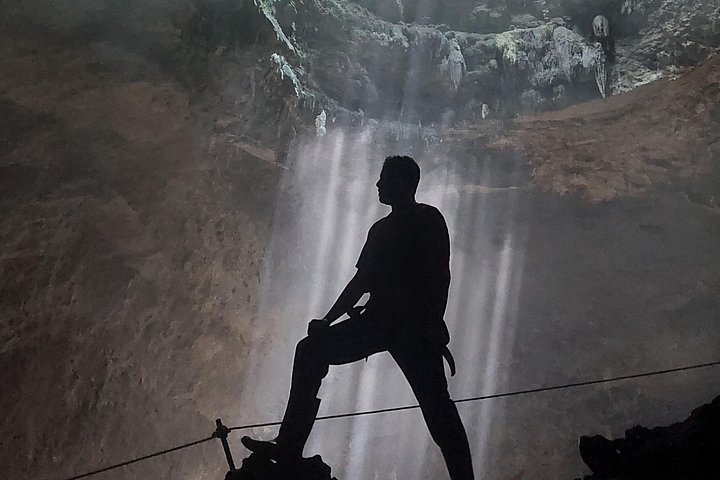
Top-ranked sights in Yogyakarta: Prambanan Temple Complex (Taman Wisata Candi Prambanan), Mendut Temple (Candi Mendut), Jomblang Cave (Goa Jomblang).
Special offers in Yogyakarta
Was/now prices come from the operator, never from us.

Similar experiences
 Free cancellation