Small-Group Day Tour of Kathmandu
- 6–7 hours
- Free cancellation up to 24h before
- Instant confirmation
- Private tour
Highlights
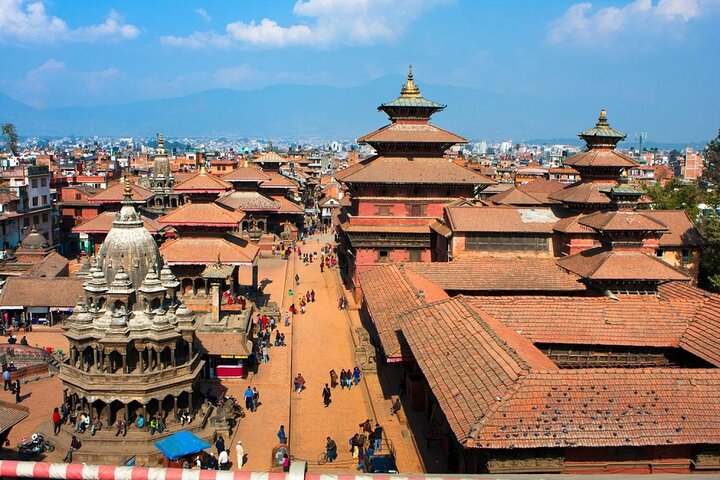
Kathmandu, Nepal's capital, is set in a valley surrounded by the Himalayan mountains. At the heart of the old city’s mazelike alleys is Durbar Square, which becomes frenetic during Indra Jatra, a religious festival featuring masked dances. Many of the city's historic sites were damaged or destroyed by a 2015 earthquake. Durbar Square's palace, Hanuman Dhoka, and Kasthamandap, a wooden Hindu temple, are being rebuilt
Inclusions
What's included
- Hotel pickup and drop-off
- Driver/guide
- Entry fees for the temple and Monastery.
- Fuel surcharge
- Local taxes
- Transport by private vehicle
What's not
- Landing and facility fees
- Food and drinks, unless specified
Itinerary
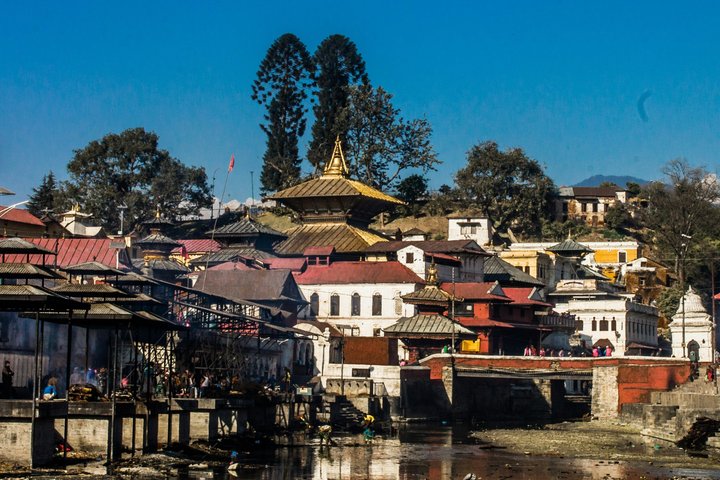
Pashupatinath Temple is the oldest Hindu temple in Kathmandu. It is not known for certain when Pashupatinath Temple was built. But according to Nepal Mahatmaya and Himvatkhanda,[3] the deity here gained great fame there as Pashupati, the Lord of all Pashus, which are living as well as non-living beings. Pashupatinath Temple's existence dates back to 400 BCE.[citation needed] The richly ornamented pagoda houses the sacred linga or holy symbol of Lord Shiva. There are many legends describing how the temple of Lord Aalok Pashupatinath came to existence here. Some of them are narrated below.
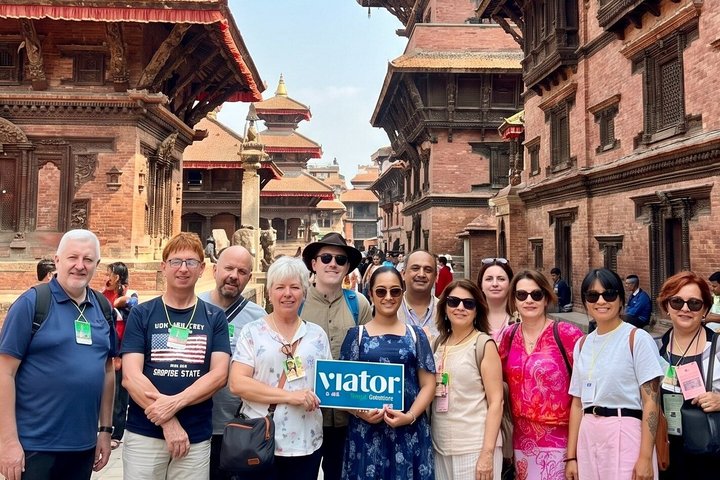
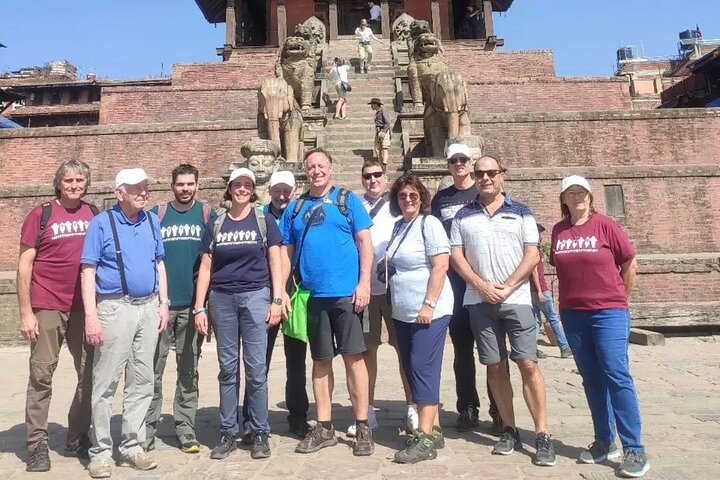
The history of Durbar Square is not clear. Although the Malla Kings of Lalitpur are credited with the establishment of the royal square, it is known that the site is an ancient crossroad. The Pradhanas, who settled around the site before the Mallas, have connections with the Durbar Square. Some chronicles hint that the Thakuri Dynasty built a palace and made reforms to the locality, but there is little evidence of this. Scholars are certain that Patan was a prosperous city since ancient times. The Malla Kings made important changes to the square. Most of the current architecture is from the 1600s, constructed during the reign of King Siddhi Narsingh Malla and his son Srinivasa Sukriti. Some of the notable Malla Kings who improved the square include Purandarasimha, Sivasimha Malla and Yoganarendra Malla.
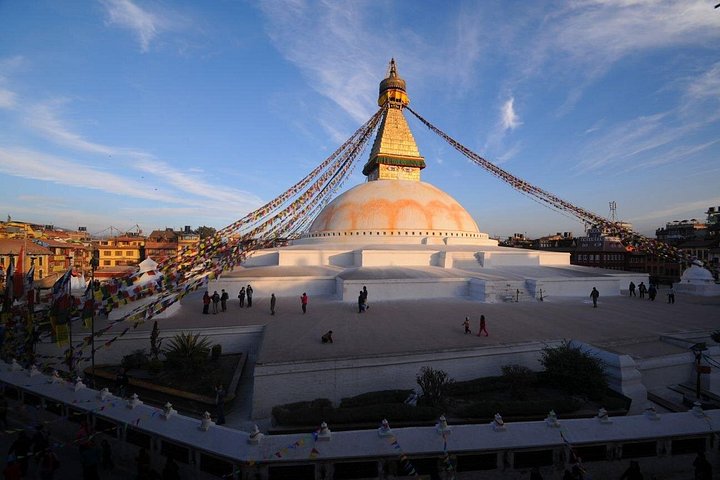
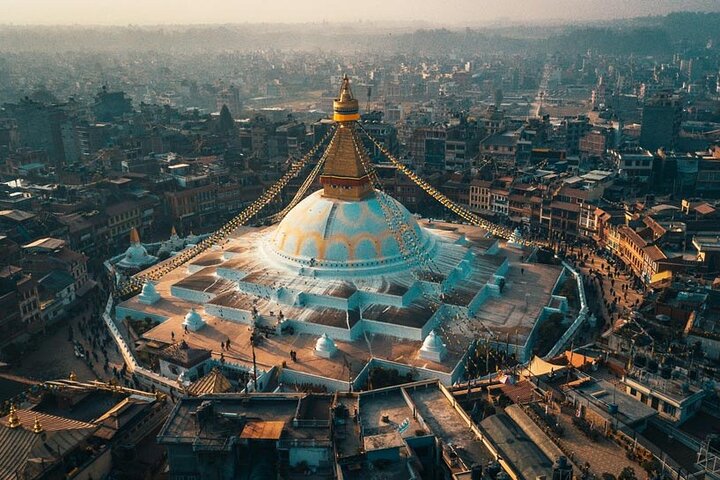
FOR HUNDREDS OF YEARS, THE BOUDHANATH Stupa has stood as a beacon of Buddhist belief, towering over the surrounding town as a giant mandala of peace and beauty and also giant eyes. Built some time around the 14th century, the huge meditative monument is said to have been created just after the passing of the Buddha. The huge offering site quickly become an focal point of worship and offering in the area. The structure of the building consists of a giant dome, on the top which sits a Buddhist pyramid tower. All of this sits on top of huge steps shaped like mandalas themselves. Originally the stupa’s spot was on an important trade route which allowed for a steady stream of possible converts. Among the Nepalese in Kathmandu, the stupa is simply referred to as “Chorten Chenpo” which translates to “Great Tower” or just “Great Stupa.” No matter what pilgrims called it, they flocked to the monument in droves.
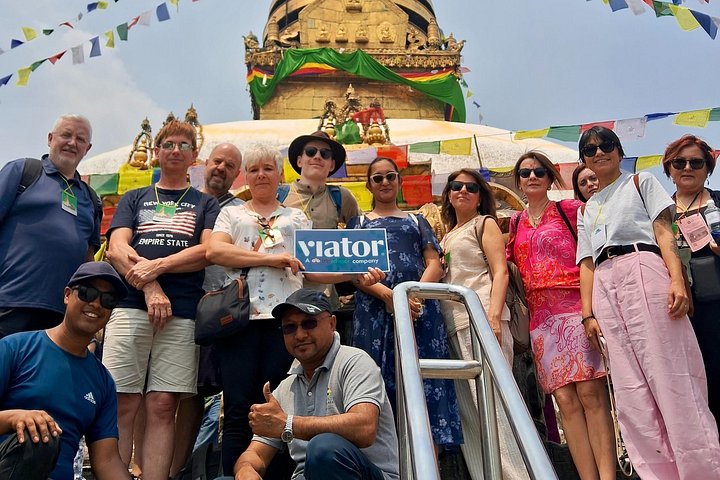
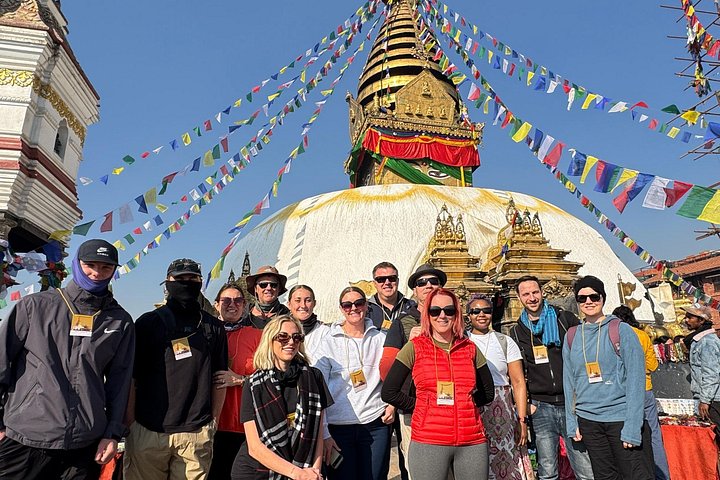
Swayambhu, now a UNESCO World Heritage Site, goes back to ancient times. The earliest written record of the Great Stupa of Swayambhu is a 5th century stone inscription. Honored by kings, monks, and pilgrims alike, the stupa has been restored and repaired on numerous occasions. In 1349 it was damaged by an invading Muslim army and later repaired by King Saktimalle Bhalloka. In 1505, the yogin Sangye Gyaltsen added the wheel and spire to the stupa’s dome. In 1614 the 6th Shamarpa had shrines built into the stupa in the four cardinal directions. Several important Kagyu lamas held a consecration ceremony in 1750 after a major renovation. The famous Bhutanese master Lopön Tsechu Rinpoche (1918-2003), the late abbot of the Bhutanese Drugpa Kagyu Monastery [13] on the western side of the stupa, came to Nepal in order to assist his uncle, the Drukpa lama Sherab Dorje, in restoring and maintaining the stupa during the early 20th century.
Cancellation
Free cancellation up to 24 hours before the experience starts, for a full refund.
Reviews
4.9
- 56
- 41
- 30
- 20
- 10
Ratings come from 7 reviews collected by our booking partner. They are travellers' own words, in the order they were written — never reordered to flatter the experience.
Know before you go
- Pickup
- Pickup is included for everyone.
- Ticket type
- Mobile or paper ticket accepted
- Operated by
- Exciting Nepal Treks and Expedition
- Specialized infant seats are available
- Suitable for all physical fitness levels
How it compares in Kathmandu
- Its from-price is 41% below the median of the 144 city tours we list in Kathmandu.
- It is shorter than most of them.
- By number of reviews it ranks 39 of 144.
- The operator lists free cancellation on it.
About Kathmandu
Kathmandu is Nepal's ancient, colourful capital, a valley city of temples, stupas and royal squares and the gateway to the Himalaya.
Kathmandu Durbar Square, the old royal square, is crowded with pagoda-roofed temples and palaces, and nearby lives the Kumari, the city's living child goddess. Thamel, the travellers' quarter, is a tangle of lanes selling trekking gear, prayer flags and handicrafts, busy with cafés and rooftop restaurants.
Top-ranked sights in Kathmandu: Namche Bazaar, Pashupatinath, Kathmandu Durbar Square (Basantapur).
Special offers in Kathmandu
Was/now prices come from the operator, never from us.