Krakow Vistula River Cruise with Wawel Views and Audio Guide
- 1 hour
- Free cancellation up to 24h before
- 9 languages
- Instant confirmation
Highlights
We've been sailing the Vistula since 2005- for nearly 20 years, our local, family-run crew has been showing Krakow from the perspective most visitors never see. Our departure point is unbeatable- at the foot of Wawel Royal Castle, so your cruise starts with the best panorama in Poland. You'll sail with an experienced, licensed captain and crew who know every bend of this river, aboard one of the most diverse fleets on the Vistula- including the only paddle-wheel steamship operating in Poland. An onboard audio guide in 9 languages (PL, EN, DE, FR, ES, IT, CS, SK, UA) tells the story of every landmark you pass, from a future pope's wartime home to the famous bridge of lovers. Cruises operate rain or shine- covered decks and indoor seating keep you comfortable in any weather. Departures run as scheduled unless cancelled by the operator. Rain, forecasts or storm warnings are not grounds for a refund. If we cancel a cruise for safety reasons, you'll receive a full refund or a free new date.
Inclusions
What's included
- Audio guide in 9 languages after scanning QR code on board
- Seating on board
- Profesional local crew
What's not
- Headphones and device for the audio guide (you use your own phone and headphones)
- Drinks and snacks from the onboard bar, where available (card and cash accepted)
- Hotel pickup and drop-off
Itinerary
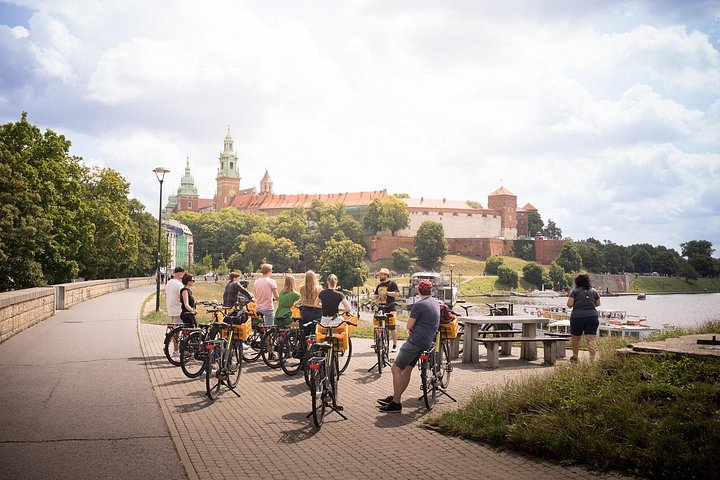
Your adventure begins in the most iconic spot in all of Krakow — at the foot of Wawel Hill, crowned by the Royal Castle and Cathedral, the former seat of Polish kings and the coronation site of Poland's monarchs for over 500 years. Set in a scenic bend of the Vistula River in the very heart of the city, Wawel is the symbol of Krakow — and there is no better way to admire it than from the water. As you board the boat at the pier on Bulwar Czerwieński, you'll enjoy a postcard-perfect panorama of the castle walls, the cathedral towers and the legendary Dragon's Den rising directly above the river. According to legend, the Wawel Dragon once lived in a cave beneath the hill — keep an eye out for the fire-breathing dragon monument on the bank. Sit back, relax and get your camera ready: the view of Wawel Royal Castle from the deck is one of the most photographed scenes in Poland and the perfect opening to your sightseeing cruise on the Vistula.
Shortly after leaving the pier, you'll glide beneath the Dębnicki Bridge — the modern gateway between Krakow's Old Town and the green western districts of the city. Built in its current form in 1951, the bridge is 157 metres long and 19 metres wide, resting on two elegant spans that frame a beautiful view back toward Wawel Hill. This is the moment when the city noise fades away and the river opens up before you: the crowds of the Old Town disappear behind the stern, and ahead lie the calm, leafy banks that most visitors to Krakow never get to see. Passing under a bridge on the water is always a special experience — look up to see the structure from a perspective reserved only for boat passengers, and look back for one of the best photo angles of the Royal Castle rising above the Vistula. From here, your journey into the quieter, greener side of Krakow truly begins.
Stretching between the Vistula and its small tributary, the Rudawa, Zwierzyniec is one of the greenest and most peaceful districts of Krakow — a side of the city you simply cannot experience on a walking tour of the Old Town. From the deck you'll see tree-lined riverbanks, historic villas hidden among the greenery, rowing clubs and locals strolling along the boulevards. The name Zwierzyniec comes from the old Polish word for a game preserve — centuries ago, this was royal hunting ground belonging to the nearby monastery. Today it is one of the most desirable and picturesque residential areas in Krakow, famous for its village-like atmosphere just minutes from the city centre. This stretch of the river is where the cruise becomes truly relaxing: calm water, green banks, birdsong and wide-open views. Breathe in, slow down and enjoy Krakow at the unhurried pace of the Vistula.
As the boat cruises along the western bend of the river, you'll pass Salwator — a charming historic quarter built on the grounds of the former Zwierzyniec village, known for its elegant early 20th-century architecture and one of Krakow's oldest cemeteries.
Toward the green hills above the rooftops: rising proudly on the horizon is the Kościuszko Mound, one of Krakow's most beloved landmarks. This 34-metre man-made hill was raised by the people of Krakow in the 1820s to honour Tadeusz Kościuszko, the national hero who fought for the freedom of both Poland and the United States — soil from American battlefields was symbolically added to the mound. Crowned by a 19th-century Austrian fortress, the mound offers one of the finest panoramas of the city, but from the river you get the opposite — and equally beautiful — view: the green hills of Krakow reflected in the calm waters of the Vistula.
Here you'll witness a small geographical curiosity that most visitors sail past without noticing: the mouth of the Rudawa, a left tributary of the Vistula. This modest river has played an outsized role in the life of Krakow for centuries — it powered the city's medieval mills, filled the moat around the Old Town walls, and to this day remains one of the sources of drinking water for the city of Krakow. In the Middle Ages, its waters were so important that a special channel was dug to redirect the river closer to the city centre. Watch how the clear current of the Rudawa meets the broad, slow-moving Vistula — a quiet meeting of two rivers that have shaped the history, trade and everyday life of Krakow for nearly a thousand years. It's a small moment on the route, but one that reveals how deeply this city is connected to its waterways.
One of the most impressive riverside monuments on the route: the fortified Monastery of the Norbertine Sisters, rising directly from the bank of the Vistula at the mouth of the Rudawa river. Founded in the 12th century, it is one of the oldest convents in Poland — the white walls and towers you see today come from a grand reconstruction carried out in the 17th century, during the times of abbess Ksenia Dorota Kątska. The motto of the order is 'One heart and one soul in God', and the sisters have lived, prayed and worked here continuously for over 800 years. The monastery is also the starting point of Krakow's famous Lajkonik parade, one of the city's oldest folk traditions. From the water, the massive walls reflected in the river create one of the most picturesque and most photographed views of the entire cruise — a scene that has inspired painters for generations. Have your camera ready well in advance.
On the left side of the boat you'll pass Dębniki, a district built on the site of a former riverside village whose history is written in its very name — 'dąb' means oak in Polish. Centuries ago, oak forests covered these banks, and among them lived craftsmen who mastered a unique trade: they produced tannins from oak bark, used for tanning leather, and natural dyes for colouring fabrics. Their goods travelled down the Vistula to markets across Poland. Today Dębniki is a lively, atmospheric part of left-bank Krakow, where old village houses stand side by side with elegant townhouses and modern architecture. The district is also famous for its market square — one of the most charming small squares in the city. From the deck, this stretch of the river shows you the everyday, authentic face of Krakow: a city that has lived with and from the Vistula for centuries, far from the tourist crowds of the Old Town.
A true hidden gem of the route — and a place of great importance for millions of people around the world. At Tyniecka Street 10, just a short distance from the riverbank, stands the modest house where in 1938 a young student named Karol Wojtyła moved in with his father, into the home of Feliks Kaczorowski. He lived here through the dark years of the Nazi occupation, almost until the end of the war — studying in secret, working in a quarry and a chemical factory, and discerning the vocation that would change history. That young man later became Pope John Paul II, the first Polish pope and one of the most influential figures of the 20th century. Few tourists ever find this place, yet from the deck of the boat you'll see the very neighbourhood where the future pope spent his formative years. It's a quiet, moving moment on the cruise — a reminder that the banks of the Vistula have witnessed not only royal history, but personal stories that changed the world.
Prepare for one of the most striking architectural views on the route: the Manggha Museum of Japanese Art and Technology, a modern building whose flowing, undulating roof was designed to resemble a wave on the Vistula. Designed by the celebrated Japanese architect Arata Isozaki, the museum was founded thanks to the film director Andrzej Wajda, who donated his international award to create — in line with the founders' idea — a true 'house for Japanese art' in Krakow. Inside is one of Europe's finest collections of Japanese woodblock prints, ceramics and militaria, including works by Hokusai. The building's glass façade faces the river and directly overlooks Wawel Castle on the opposite bank — a deliberate dialogue between Japanese modernism and Polish royal heritage. From the water, you get the view the architect intended: the wave-shaped silhouette mirrored in the real waves of the Vistula. One of the best photo spots of the entire cruise.
You'll now cruise beneath the Grunwaldzki Bridge, a key crossing that connects the Old Town side of Krakow with the historic district of Podgórze on the right bank. The bridge takes its name from the Battle of Grunwald of 1410, one of the greatest victories in Polish history. Near the bridge, on both banks of the river, you'll notice the stops of Krakow's water trams — small vaporetto boats that serve as a summer river transport line, a charming local answer to Venice. This is also where the river panorama becomes truly urban again: ahead of you open wide views of the boulevards, where locals jog, cycle and relax on the grass, and of the modern buildings that mark the city's contemporary face. Look back once more toward Wawel — from under the Grunwaldzki Bridge you get one of the widest, most impressive perspectives of the royal hill rising above the Vistula, framed by the arc of the bridge itself.
At the level of the Wołyński Boulevard you'll pass another quiet meeting of rivers: the mouth of the Wilga, a right tributary of the Vistula. The Wilga flows into Krakow from the south, winding through green valleys before it joins the main river almost unnoticed — unless you know where to look, and from the deck of the boat you have the perfect vantage point. For centuries, the Wilga marked natural boundaries between riverside settlements and provided water for the crafts and industries of the right bank, including the famous salt trade routes leading toward the mines of Wieliczka. Today its green mouth is a small oasis of nature in the middle of the city, popular with anglers and birds alike — watch for herons and swans that often gather here. It's one of those details that make a river cruise special: the small, hidden features of the city's geography that no walking tour can show you.
Cancellation
Free cancellation up to 24 hours before the experience starts, for a full refund.
Reviews
3.5
- 51
- 40
- 30
- 21
- 10
Ratings come from 2 reviews collected by our booking partner. They are travellers' own words, in the order they were written — never reordered to flatter the experience.
Know before you go
- Meeting point
- Meet at the Aqua Fun, next to the Arkadia barge on Bulwar Czerwieński, at the foot of Wawel Castle. If no staff are there, please enter Barka Arkadia and ask inside. Arrive 15 min early. Meeting point photo:
- Pickup
- Everyone meets at the starting point; there is no pickup.
- Ticket type
- Mobile or paper ticket accepted
- Group size
- Up to 40 travellers
- Operated by
- Aqua Fun River Cruises
- Service animals allowed
- Public transportation options are available nearby
- Infants are required to sit on an adult’s lap
- Suitable for all physical fitness levels
- The activity may not be suitable for guests with severely limited mobility
How it compares in Krakow
- Its from-price is 82% below the median of the 98 city tours we list in Krakow.
- It is shorter than most of them.
- By number of reviews it ranks 43 of 98.
- The operator lists free cancellation on it.
About Krakow
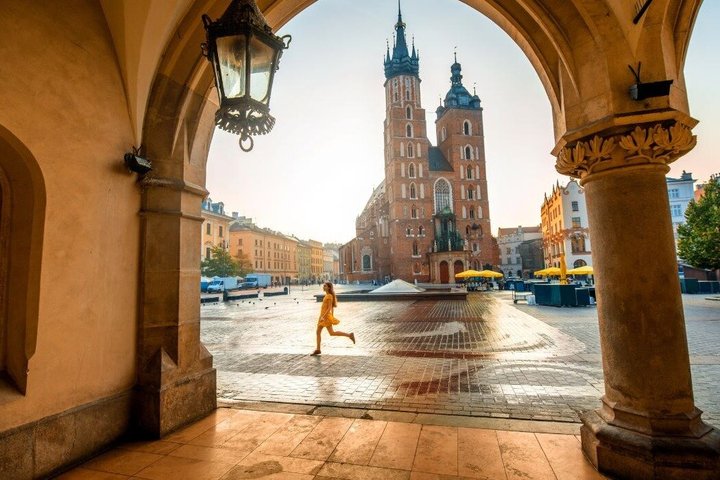
Kraków, Poland's royal former capital, has a beautifully preserved medieval old town, crowned by Wawel Castle above the Vistula River.
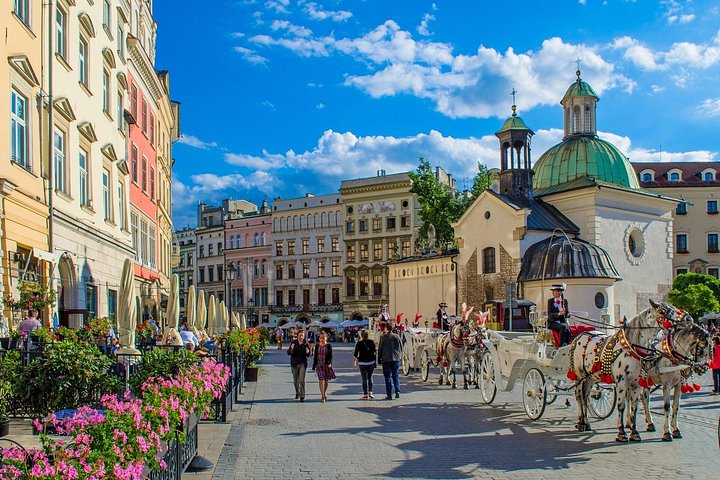
The Main Market Square, one of the largest medieval squares in Europe, is lined with burghers' houses and centred on the arcaded Cloth Hall. St Mary's Basilica rises at one corner, its carved wooden altarpiece a Gothic masterpiece, and a trumpet call sounds from its tower through the day and night.
Top-ranked sights in Krakow: Auschwitz-Birkenau Memorial and Museum, Rynek Glowny (Main Market Square), Wieliczka Salt Mine (Kopalnia Soli).
Special offers in Krakow
Was/now prices come from the operator, never from us.