Krakow Panorama Evening Cruise with Wawel Views and Audio Guide
- 1 hour
- Free cancellation up to 24h before
- 9 languages
- Instant confirmation
Highlights
See Krakow from a completely different perspective on a relaxing evening cruise along the Vistula River. What makes this experience special is the combination of panoramic Wawel views, illuminated riverside landmarks and an informative audio guide available in 9 languages (PL, EN, DE, FR, ES, IT, CS, SK, UA), making the stories of Krakow accessible to international travelers. During the 1-hour cruise, discover famous sights, historic bridges, Kazimierz, Podgórze and hidden details that are easy to miss when exploring the city on foot. Enjoy the changing evening scenery from the water, take memorable photos and relax away from the busy streets. Cruises operate rain or shine — covered decks and indoor seating keep you comfortable in any weather. Departures run as scheduled unless cancelled by the operator. Rain, forecasts or storm warnings are not grounds for a refund. If we cancel a cruise for safety reasons, you'll receive a full refund or a free new date.
Inclusions
What's included
- Audio guide in 9 languages after scanning QR code on board
- Indoor or outdoor seating depending on the boat
- 1-hour evening sightseeing cruise
- Professional crew
What's not
- Food and drinks
- Headphones and device for the audio guide
- Hotel pickup and drop-off
Itinerary
Admire the magnificent Wawel Royal Castle from the Vistula River, one of Krakow’s most iconic and historic landmarks. As you cruise past the former residence of Polish kings, enjoy a unique panoramic perspective of the castle complex rising above the riverbank. See the impressive Wawel Cathedral, historic defensive walls, towers, and the surrounding riverside scenery from the water. In the evening, the castle becomes even more spectacular as its illuminated walls and towers create beautiful reflections on the Vistula River. This is one of the most memorable viewpoints of Krakow and a perfect opportunity to take photos of the city’s famous skyline. Listen to the audio guide to learn more about the history and significance of Wawel Royal Castle while relaxing on board and enjoying the peaceful atmosphere of an evening river cruise.
Cruise beneath Dębnicki Bridge, one of Krakow’s important crossings over the Vistula River, connecting the city center with the historic Dębniki district. From the water, enjoy a unique panoramic perspective of the bridge and the surrounding riverside scenery, with Wawel Hill and Krakow’s famous skyline nearby. As evening falls, watch the city gradually light up and admire the reflections of bridges, buildings, and riverside lights on the Vistula. This part of the 1-hour evening cruise offers a peaceful contrast to the busy streets and another opportunity to experience Krakow from a completely different perspective. Take panoramic photos from the boat and listen to the audio guide, available in 9 languages, to discover more about the sights, history, and districts along the route. Relax on board as you pass beneath the bridge and continue your sightseeing journey along the Vistula River through the heart of Krakow.
Cruise along the Vistula River past Zwierzyniec, one of Krakow’s greenest and most picturesque districts, located just west of the historic city center. From the water, admire the peaceful riverside scenery and discover a different side of Krakow, where urban landmarks blend with green spaces and the natural landscape along the river. During your 1-hour evening cruise, enjoy panoramic views as the changing light creates a relaxing atmosphere over the Vistula and the surrounding riverbanks. Look out for the distinctive skyline of this historic part of the city and capture photos from a unique perspective that cannot be experienced while sightseeing on foot. Listen to the audio guide, available in 9 languages, to learn more about Krakow and the areas you pass along the route. Sit back, relax, and enjoy the evening atmosphere as your boat continues its panoramic journey along the Vistula River.
Discover the riverside character of Salwator, a historic Krakow neighborhood known for its elegant villas, green surroundings, and close connection with the Vistula River. From the boat, take in the peaceful waterfront and the distinctive landscape of this western part of the city, where Krakow’s historic architecture gradually gives way to quieter residential areas and open green spaces. Salwator is also associated with some of the city’s most scenic walking routes and viewpoints, making it an interesting contrast to the busy Old Town. As you pass by, notice how the neighborhood sits naturally between the river, the nearby hills, and the historic center. This section of the route offers a calmer, more local perspective of Krakow and shows a side of the city that many visitors do not experience during a typical sightseeing walk.
Rising above Krakow’s western skyline, the Kościuszko Mound is one of the city’s most distinctive landmarks and a symbol of Polish history. Built in the 19th century in honor of Tadeusz Kościuszko, a national hero who fought for freedom in both Poland and the United States, the mound was inspired by Krakow’s ancient burial mounds. From the Vistula River, look towards the green hills surrounding the city and spot this characteristic monument overlooking Krakow from above. Its elevated location makes the Kościuszko Mound an unmistakable feature of the landscape and an interesting contrast to the historic architecture seen closer to the river. As you pass this part of the route, discover how Krakow’s history extends far beyond the Old Town and Wawel Castle, connecting royal heritage, national traditions, and the natural landscape surrounding the city.
See where the Rudawa River meets the Vistula, adding a quieter, natural element to Krakow’s riverside landscape. The Rudawa is one of the tributaries of the Vistula and flows through the western part of the city before reaching its mouth near the historic districts of Salwator and Zwierzyniec. From the boat, observe the meeting point of the two rivers and the green riverbanks that give this part of the route a noticeably different character from Krakow’s historic center. The Rudawa has long been connected with the development of the city and its surrounding areas, while today its banks are popular for walking, cycling, and recreation. Passing its mouth from the Vistula offers an interesting glimpse of Krakow beyond its famous monuments, revealing how rivers and green spaces have helped shape the city and remain an important part of its landscape today.
Standing prominently on the banks of the Vistula River, the Monastery of the Norbertan Sisters is one of the most recognizable historic landmarks in Krakow’s Zwierzyniec district. Founded in the 12th century, the monastery has witnessed centuries of the city’s history and remains closely connected with Krakow’s religious traditions and local customs. From the river, admire the impressive complex with its church, historic walls, and distinctive towers rising above the waterfront. Its location directly beside the Vistula makes it particularly striking when viewed from a boat and offers a perspective that is difficult to appreciate from the city streets. As you pass this centuries-old monastery, discover another layer of Krakow’s heritage, where medieval history, architecture, religious tradition, and the landscape of the Vistula come together in one of the most picturesque sections of the cruise route.
Stretching along the opposite bank of the Vistula from Wawel Castle, Dębniki offers a fascinating contrast to Krakow’s monumental historic center. Once a separate village, the area became part of Krakow in the early 20th century and developed into a distinctive residential district with its own local character. From the river, notice the mix of traditional architecture, green riverbanks, and quieter streets that shape this part of the city. Dębniki is also closely connected with the story of Karol Wojtyła, the future Pope John Paul II, who lived in this neighborhood during his years in Krakow. Its riverside location provides one of the most impressive perspectives towards Wawel Hill, while the district itself reveals a more authentic, everyday side of the city. Passing Dębniki shows how Krakow extends beyond its famous Old Town, combining royal heritage, local history, residential neighborhoods, and life along the Vistula.
Discover a place closely connected with the life of Karol Wojtyła, the future Pope John Paul II, who lived in Krakow’s Dębniki district during an important period of his youth. After moving to Krakow with his father in 1938, Wojtyła lived at 10 Tyniecka Street while studying at the Jagiellonian University and later during the difficult years of the Second World War. The modest house became part of the story of a man who would eventually become one of the most influential figures associated with modern Krakow. As you pass the Dębniki riverfront, learn about Wojtyła’s connection with this neighborhood and his years spent close to the Vistula River and Wawel Castle. This stop adds a personal dimension to the sightseeing route, linking the city’s famous monuments with the story of one of Krakow’s best-known residents and revealing an important chapter in the early life of the future Polish pope.
Standing on the Vistula riverbank opposite Wawel Castle, the Manggha Museum of Japanese Art and Technology is one of Krakow’s most distinctive examples of contemporary architecture. Opened in 1994, the museum was created to showcase Japanese art and culture, with its origins closely connected to the collection of Polish art collector Feliks “Manggha” Jasieński. From the river, notice the building’s characteristic flowing roofline, designed by renowned Japanese architect Arata Isozaki together with Polish architects. Its wave-like form was inspired by the surrounding landscape and creates a striking dialogue with the Vistula and historic Wawel Hill across the water. Passing Manggha reveals an unexpected side of Krakow, where Japanese culture, modern architecture and the city’s centuries-old heritage meet within one remarkable riverside panorama.
Connecting the historic center of Krakow with the Dębniki district, Grunwaldzki Bridge is one of the key crossings over the Vistula River and an important feature of the city’s riverside panorama. Opened in 1972, the bridge carries both road traffic and trams, linking the areas around Wawel Castle with the southern side of the river. As your boat approaches and passes beneath the bridge, enjoy an impressive perspective of its structure from water level and watch the panorama of central Krakow unfold around you. Its location close to Wawel Hill, the Manggha Museum and the Vistula Boulevards makes this section of the cruise particularly rich in contrasting views. Historic landmarks, contemporary architecture and everyday city life come together here, showing how the Vistula continues to play an important role in connecting Krakow’s neighborhoods and shaping the character of the city.
Discover the mouth of the Wilga River, one of the tributaries flowing into the Vistula and an interesting natural feature of Krakow’s southern riverside landscape. The Wilga winds through several districts of the city before joining the Vistula, creating a distinctive meeting point between two waterways. From the boat, notice how the scenery changes around the river mouth, with greener banks and a more open landscape contrasting with the historic architecture of central Krakow. The Wilga has been part of the city’s natural environment for centuries and today its surroundings combine recreational areas, walking paths and urban development. Passing this point offers another perspective on Krakow, showing that the Vistula is not only surrounded by famous monuments and historic neighborhoods, but also forms part of a wider network of waterways and green spaces that have influenced the city’s landscape and development.
Cancellation
Free cancellation up to 24 hours before the experience starts, for a full refund.
Reviews
1.0
- 50
- 40
- 30
- 20
- 11
Ratings come from 1 reviews collected by our booking partner. They are travellers' own words, in the order they were written — never reordered to flatter the experience.
Know before you go
- Meeting point
- Meet at the Aqua Fun, next to the Arkadia barge on Bulwar Czerwieński, at the foot of Wawel Castle. If no staff are there, please enter Barka Arkadia and ask inside. Arrive 15 min early.
- Pickup
- Everyone meets at the starting point; there is no pickup.
- Ticket type
- Mobile or paper ticket accepted
- Group size
- Up to 40 travellers
- Operated by
- Aqua Fun River Cruises
- Service animals allowed
- Public transportation options are available nearby
- Infants are required to sit on an adult’s lap
- Suitable for all physical fitness levels
- The activity may not be suitable for guests with severely limited mobility.
How it compares in Krakow
- Its from-price is 76% below the median of the 1446 experiences we list in Krakow.
- It is shorter than most of them.
- By number of reviews it ranks 849 of 1446.
- The operator lists free cancellation on it.
About Krakow
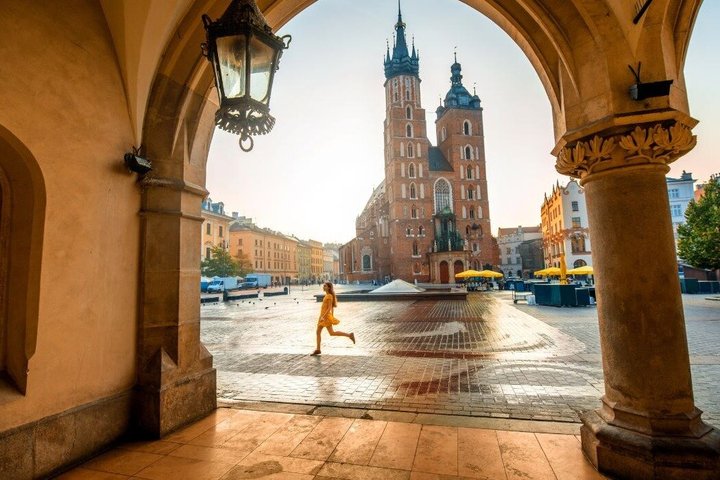
Kraków, Poland's royal former capital, has a beautifully preserved medieval old town, crowned by Wawel Castle above the Vistula River.
The Main Market Square, one of the largest medieval squares in Europe, is lined with burghers' houses and centred on the arcaded Cloth Hall. St Mary's Basilica rises at one corner, its carved wooden altarpiece a Gothic masterpiece, and a trumpet call sounds from its tower through the day and night.
Top-ranked sights in Krakow: Auschwitz-Birkenau Memorial and Museum, Rynek Glowny (Main Market Square), Wieliczka Salt Mine (Kopalnia Soli).
Special offers in Krakow
Was/now prices come from the operator, never from us.
Similar experiences
 Likely to sell outFree cancellation
![Auschwitz Birkenau and Wieliczka Salt Mine Guided Full Day Tour]() Likely to sell outFree cancellation