Jewish Traces and Hitler's Vienna
- 2 hours
- Free cancellation up to 24h before
- Guided in English
- Instant confirmation
Highlights
Due to the expulsion and murder of Jews over the centuries, we now speak of four Jewish communities. On this tour, we will trace the history of these four communities, exploring both their tragedies and their achievements; of the Jewish men and women who helped to make Vienna a world-class city of science and the arts. Adolf Hitler came to Vienna as a young man to become an artist, and he failded. He stayed about five years in the city. At the State Opera he saw how a grandiose staging can delight the people. From the Viennese Major he learnt winning the crowd by rushing against the Jews. Discover more about the history of Hitler’s early, formative years and why he was later celebrated enthusiastically. What political climate paved the way for the Nazis, who plunged the world into the chaos of the Second World War? Which traces are still visible today?
Inclusions
What's included
- A professional, highly motivated and state-certified Austria Guide.
Itinerary
Introduction to the tour: due to the murders and expulsions, we are today discussing four Jewish communities in Vienna. Desider Friedmann was one of the tragic victims of Nazi rule.
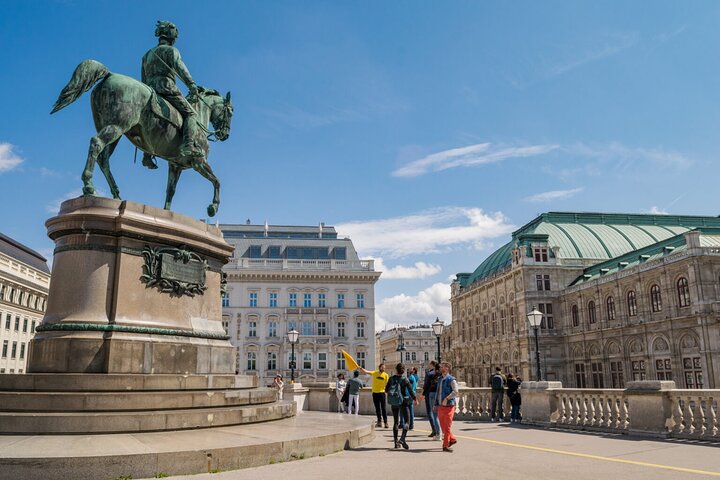
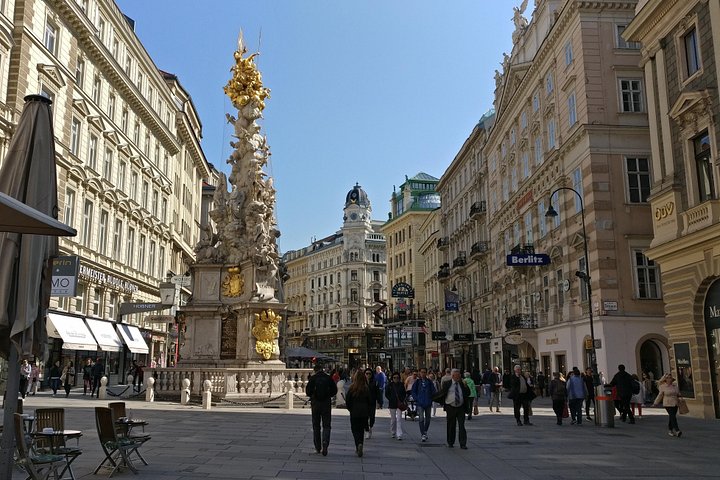
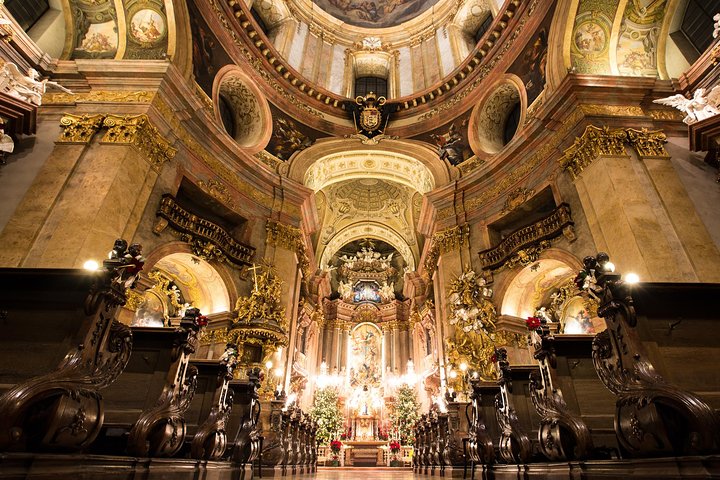
Due to fierce fighting towards the end of the Second World War, virtually all the buildings here were destroyed. Miraculously, Vienna’s oldest church survived the destruction. This stop also focuses on the formative years of the young Adolf Hitler in Vienna.
The founder of political Zionism completed his education in Vienna. It was here, and above all whilst working as a correspondent in Paris, that he realised that the assimilation of the Jews could not contribute to the survival of his people. He therefore proposed an alternative to assimilation; the establishment of the State of Israel was based on Theodor Herzl’s ideas.
One of the largest medieval Jewish communities in Europe developed here, only to be brutally murdered and driven out at the beginning of the 15th century. What were the exact circumstances? There is also a memorial here to the Austrian Jews murdered by the Nazis. And there is also a Jewish museum on this square.
The first part on A. Hitler focused on his youth and his years in Vienna until he moved on to Munich at the age of 24. What was his life like there during the First World War, and what followed – his rise to become the Führer? What steps did he take to ultimately annex Austria to the German Reich? And how did the Austrians react to this? What was life like after the war?
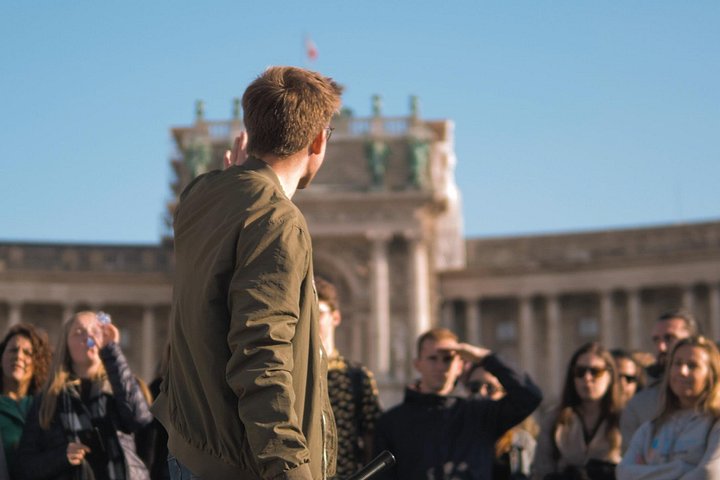
It was from this balcony that A. Hitler announced the Anschluss on 15 March 1938. And it was here that more than 250,000 people cheered in celebration … only to remember nothing of it after the war …
Cancellation
Free cancellation up to 24 hours before the experience starts, for a full refund.
Reviews
5.0
- 52
- 40
- 30
- 20
- 10
Ratings come from 2 reviews collected by our booking partner. They are travellers' own words, in the order they were written — never reordered to flatter the experience.
Know before you go
- Meeting point
- Find the WHITE UMBRELLA!
- Pickup
- Everyone meets at the starting point; there is no pickup.
- Ticket type
- Mobile or paper ticket accepted
- Group size
- Up to 20 travellers
- Service animals allowed
- Public transportation options are available nearby
- Infants and small children can ride in a pram or stroller
- All areas and surfaces are wheelchair accessible
- Transportation options are wheelchair accessible
- Wheelchair accessible
- Suitable for all physical fitness levels
How it compares in Vienna
- Its from-price is 81% below the median of the 1219 experiences we list in Vienna.
- It is shorter than most of them.
- By number of reviews it ranks 484 of 1219.
- The operator lists free cancellation on it.
About Vienna
Vienna is Austria's elegant capital on the Danube, a city of imperial palaces, grand coffeehouses and a musical heritage known the world over.
The Ringstrasse circles the old centre with monumental buildings: the State Opera, the Parliament, the City Hall and the Burgtheater. Inside the ring, St Stephen's Cathedral, with its patterned tile roof, rises above lanes of shops and cafés, and the Hofburg palace complex holds the imperial apartments, the Spanish Riding School and a museum devoted to Empress Elisabeth.
Top-ranked sights in Vienna: Hofburg Imperial Palace (Hofburg Wien) , Schönbrunn Palace (Schloss Schönbrunn), Rathaus.
Special offers in Vienna
Was/now prices come from the operator, never from us.