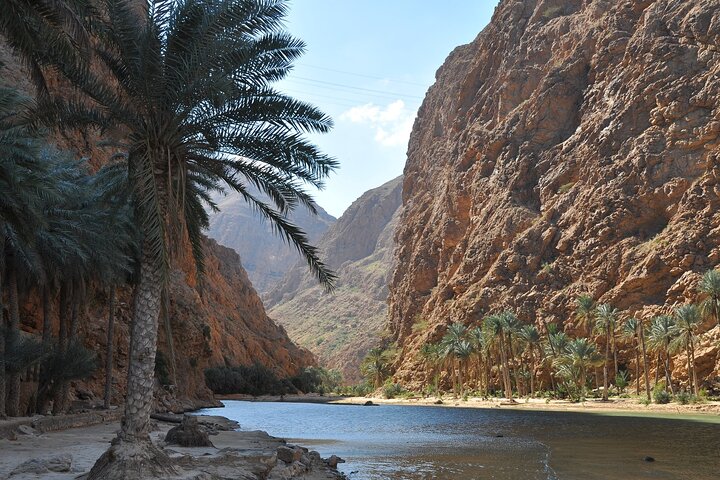
Jebal Shams Grand Canyon Day Tours 8 hours
- 8 hours
- Free cancellation up to 24h before
- Guided in English
- Private tour
Highlights
Al Amirat, Bawshar, Al Seeb, Al Zubair Museum, Al Alam Palace, Jalali, Qurayyat ,The Modern Shopping Complex, Muttrah Souq (Al Dhalam), Sultan Palace, Sultan Qaboos Grand Mosque, Mirani
Inclusions
What's included
- Private tour
- Professional guide
- Round-trip private transfer
- Hotel/Airport/Port pickup and drop-off
- water &soft drink
- Transport by private vehicle
What's not
- Gratuities
- lunch
Itinerary
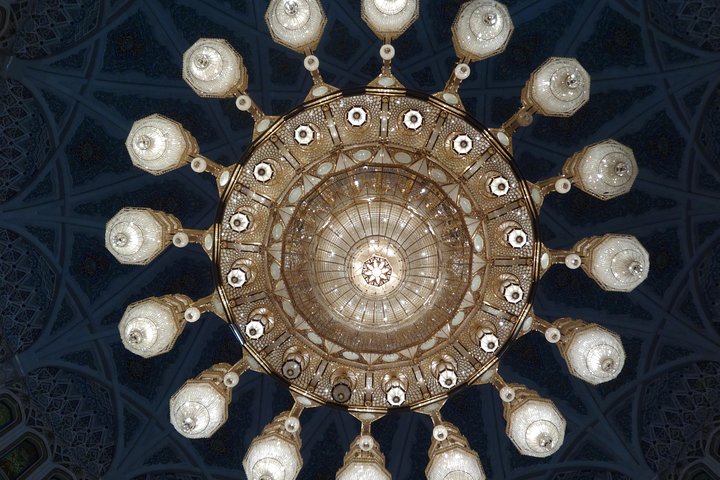
the Mosque of His Majesty Sultan Qaboos Bin Said“Take a look inside this great unique Islamic archeological building where your guide will point out the highlights of the Place and a historical background and some Islamic facts. The mosque is built from 300,000 tonnes of Indian sandstone. The main musalla (prayer hall) is square (external dimensions 74.4 x 74.4 metres) with a central dome rising to a height of fifty meters above the floor.[3] The dome the main minaret (90 meters) and four flanking minarets (45.5 meters) are the mosque’s chief visual features. The main Muslim can hold over 6,500 worshippers, while the women’s can accommodate 750 worshipers. The outer paved ground can hold 8,000 worshipers and there is additional space available in the interior courtyard and the passageways, making a total capacity of up to 20,000 worshipers.
The locals know Souk. This souk is one of the oldest souks in the Arab World. there you can find various goods offered by merchants. you can see fish, frankincense, perfume oil, garments, daggers, gold, silver, spices, and Omani pots.
Al Dhalam (Darkness in Arabic) Souq is the local name for the Muttrah Souq. The Muttrah Souq is perhaps one of the oldest marketplaces in the Arab world. It is located adjacent to the harbor of Muscat harbor and has seen an immense trade in the age of sail, being strategically located on the way to India and China.[3] It has been named after darkness because of the crowded stalls and lanes where the sun's rays do not infiltrate during the day and the shoppers need lamps to know their destinations. The name of the market has been drawn specifically from the part that extends from Al Lawatiya Mosque to Khour Bimba where the place is really full of stores and stalls and the narrow area of lanes does not allow the sunlight to enter. The market was a source of supply for Omanis where they could buy their needs in the 1960s when life requirements were simpler than today. Most of the goods were imported, in addition to local products like textiles, fruit, vegetables, and dates.
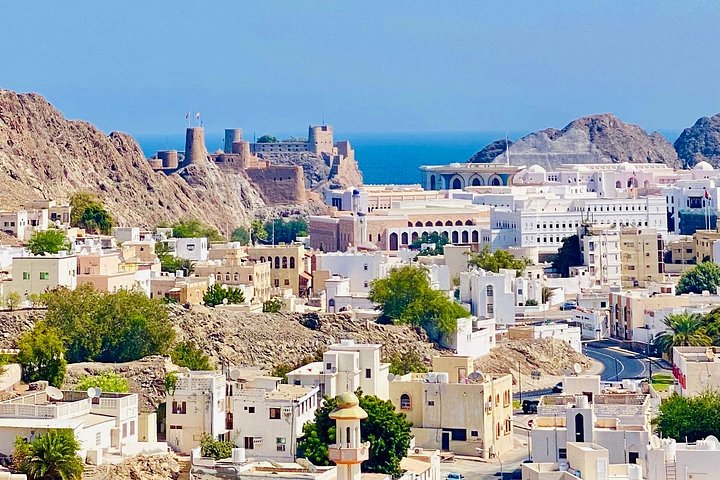
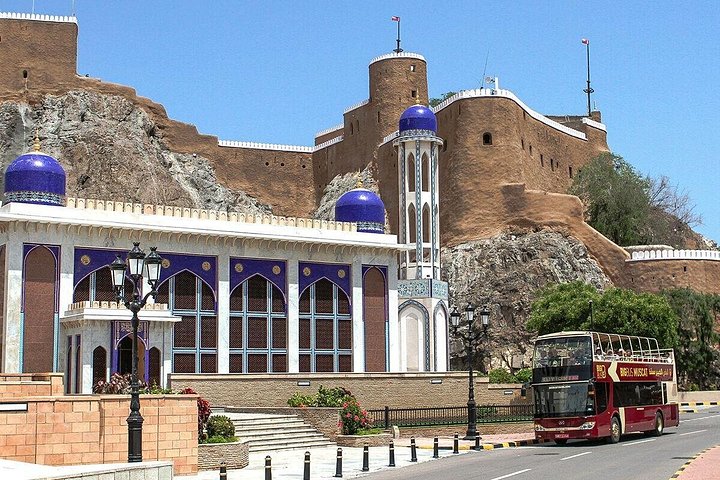
The Al Alam Palace is the ceremonial palace of Sultan Qaboos of Oman located in Old Muscat, Oman. "Al Alam" means "The Flag" in Arabic. The palace, one of six royal residences of the ruling monarch, Sultan Qaboos, has a history of over 200 years, built by Imam Sultan bin Ahmed the 7th direct grandfather of the current Sultan. The existing palace, which has a facade of gold and blue, was rebuilt as a royal residence in 1972. The inner grounds of the palace remain off-limits but visitors are permitted to stop near the gates and take photographs. Al Alam Palace is surrounded by the Mirani and Jalali Forts built in the 16th century by the Portuguese. The Palace is used for official functions and receiving distinguished visitors and in January 2012, the Sultan received Queen Beatrix of the Netherlands at Al Alam Palace during her state visit to Oman.
In the 1552 Capture of Muscat, an Ottoman force consisting of 4 gallons, 25 galleys, and 850 troops attacked the city of Muscat. They captured the city and its fort. The recently built Fort Al-Mirani was besieged for 18 days with one piece of Ottoman artillery brought on top of a ridge. The Fort was captured and its fortifications destroyed
Al Jalali Fort, or Ash Sharqiya Fort, is a fort in the harbor of Old Muscat, Oman. The Fort was built by the Portuguese in the 1580s to protect the harbor after Muscat had twice been sacked by Ottoman forces. It fell to Omani forces in 1650. During the civil wars between 1718 and 1747, the fort was twice captured by Persians who had been invited to assist one of the rival Imams. The Fort was extensively rebuilt later. At times, Al Jalali served as a refuge or a jail for a member of the royal family. For much of the 20th century it was used as Oman's main prison, but this function ended in the 1970s. Fort al-Jalali was restored in 1983 and converted into a private museum of Omani cultural history that is accessible only to dignitaries visiting the country. Exhibits include cannons, old muskets and matchlocks, maps, rugs, and other artifacts.
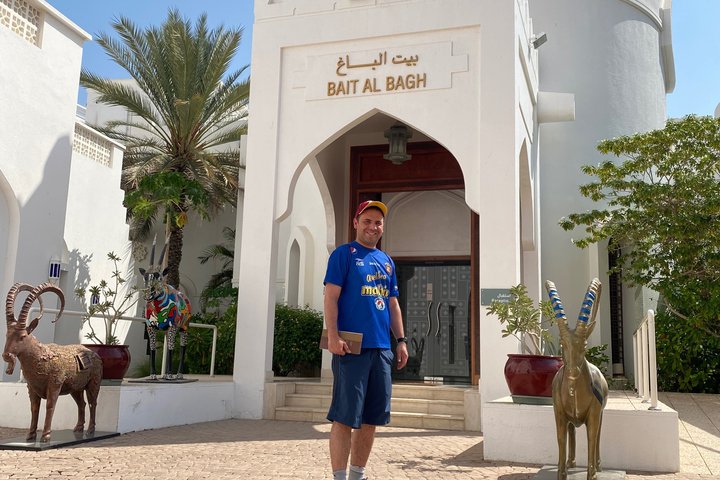
Bait Al Zubair is a museum, located near the Ministry of Information on Al Saidiya Street, Old Muscat, Oman. The museum has an extensive collection of ancient weapons including Khanjar, household equipment, and costumes most of which derive from the owner's private collection. Outside the museum is a full-scale Omani village and souq.
Where you can Buy Souvenirs to your friends and Family
Cancellation
Free cancellation up to 24 hours before the experience starts, for a full refund.
Know before you go
- Pickup
- Pickup is offered, or you can meet at the starting point.
- Ticket type
- Mobile or paper ticket accepted
- Operated by
- Vacation Packages Oman
- Wheelchair accessible
- Suitable for all physical fitness levels
- A dress code is required to enter places of worship and selected museums. No shorts or sleeveless tops allowed. Knees and shoulders MUST be covered for both men and women. You may risk refused entry if you fail to comply with these dress requirements
How it compares in Muscat
- Its from-price is 100% above the median of the 421 day trips we list in Muscat.
- Its length is typical for the group.
- The operator lists free cancellation on it.
About Muscat
Muscat, Oman's capital, stretches between rugged mountains and the Gulf of Oman, with a grand mosque, old forts, souks and a graceful corniche.
The Sultan Qaboos Grand Mosque is the city's showpiece, with a vast prayer hall, an enormous hand-woven carpet and a crystal chandelier, set among marble courtyards. In old Muscat, the colourful Al Alam Palace is flanked by the Portuguese-era forts of Jalali and Mirani, perched on rocks above the harbour.
Top-ranked sights in Muscat: Wahiba Sands (Sharqiyah Sands), Wadi Bani Khalid, Sultan Qaboos Grand Mosque.
Special offers in Muscat
Was/now prices come from the operator, never from us.