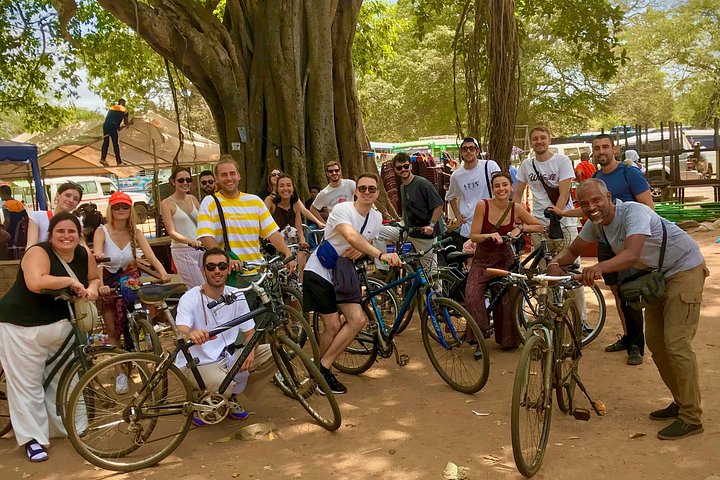
Anuradhapura Ancient City Private Day Tour
- 5 hours
- Free cancellation up to 24h before
- Guided in English
- Instant confirmation
Highlights
Discover the Ancient Wonders of Anuradhapura – the Easy Way Explore the sacred city of Anuradhapura in comfort with private transport and the guidance of a licensed tour guide. Visit all the famous historical sites along with a few hidden gems that most travelers miss. This ancient city is rich in history, but its landmarks are spread far apart and can be difficult to explore on your own. With this private day tour, you’ll enjoy a seamless and stress-free journey through ancient temples, peaceful ruins, and authentic local spots—while gaining deeper insights and stories from a professional licensed guide..
Inclusions
What's included
- Private transportation
- Bottled water
- Professional licensed tourist guide
What's not
- Entrance Tickets
Itinerary
Isurumuniya is a stunning rock temple known for its peaceful setting and intricate stone carvings, including the famous Isurumuniya Lovers sculpture. Originally built in the 3rd century BC, it was a sanctuary for Buddhist monks and remains a serene and spiritual site to this day.
The Jaya Sri Maha Bodhi is a sacred fig tree (Ficus religiosa) located in the Mahamewna Gardens of Anuradhapura. It is considered the oldest human-planted tree in the world with a known planting date and continuous recorded history. This revered tree is the closest living link to Gautama Buddha.
The Brazen Palace (Lovamahapaya) was a remarkable nine-story monastic structure built in the 2nd century BC by King Dutugemunu. It once housed a refectory, assembly hall, and chapter house. The palace was crowned with a roof made of bronze tiles, which gave it its name.
Located in the heart of the ancient city, the Ruwanwelisaya stupa was built by King Dutugemunu (137–119 BC) and completed by his brother King Saddhatissa. It is one of the tallest ancient monuments in the world and holds great spiritual and architectural significance.
Thuparamaya is considered the first stupa built in Sri Lanka, dating back to the 3rd century BC. Constructed by King Devanampiya Tissa, it houses a sacred collarbone relic of the Buddha. Its bell-shaped design and surrounding stone pillars represent the grace of early Buddhist architecture.
The Sandakada Pahana, or Moonstone, is a distinctive architectural element found at the entrances of ancient buildings in Anuradhapura. These semi-circular stone slabs feature intricate carvings symbolizing the cycle of life in Buddhist tradition.
Rathna Prasadaya is an ancient structure featuring detailed carvings and guardstones. Over time, stone replaced wood in the construction of these elements, offering greater durability and artistic complexity in the Anuradhapura period.
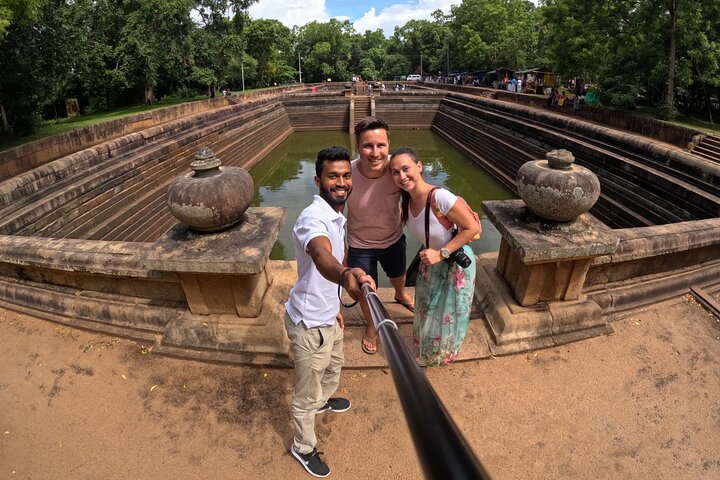
Eth Pokuna is a massive ancient reservoir measuring approximately 159 meters long, 52 meters wide, and 9.5 meters deep. Built to supply water to nearby monasteries, the pond's impressive scale reflects the advanced water management systems of the time.
The Abhayagiriya Stupa is located in the ancient Sinhala capital of Anuradhapura in Sri Lanka’s North Central Province. It was built by King Valagamba (89–77 BC) and became one of the largest monastic complexes in the ancient world. Abhayagiriya is recognized as one of the tallest and most significant ancient stupas in Sri Lanka.
This famous Samadhi Buddha statue is located in Mahamevnāwa Park. It depicts the Buddha in the Dhyana Mudra, the meditation posture linked to his first Enlightenment. Carved from dolomite marble, the statue stands 7 feet 3 inches tall and radiates a sense of calm and serenity.
The Kuttam Pokuna, or Twin Ponds, are ancient bathing tanks built during the Anuradhapura Kingdom. These beautifully preserved structures are part of the Abhayagiri monastic complex and showcase the advanced hydrological engineering and artistic design of ancient Sri Lanka.
Jetavanaramaya is one of the tallest and largest stupas in the ancient world, built by King Mahasena in the 3rd century AD. Once part of a massive monastic complex, it was a center for both religious and scholarly activity. Its massive scale and brickwork reflect the grandeur of ancient Sri Lankan architecture.
Cancellation
Free cancellation up to 24 hours before the experience starts, for a full refund.
Reviews
5.0
- 53
- 40
- 30
- 20
- 10
Ratings come from 3 reviews collected by our booking partner. They are travellers' own words, in the order they were written — never reordered to flatter the experience.
Know before you go
- Pickup
- Pickup is included for everyone.
- Ticket type
- Mobile or paper ticket accepted
- Operated by
- Safe Lanka Tours
- Wheelchair accessible
- Service animals allowed
- Infants are required to sit on an adult’s lap
- Specialized infant seats are available
- Transportation options are wheelchair accessible
- All areas and surfaces are wheelchair accessible
- Not recommended for travelers with spinal injuries
- Not recommended for travelers with poor cardiovascular health
How it compares in Anuradhapura
- Its from-price is 61% below the median of the 351 experiences we list in Anuradhapura.
- Its length is typical for the group.
- By number of reviews it ranks 92 of 351.
- The operator lists free cancellation on it.
About Anuradhapura
Anuradhapura, in Sri Lanka's dry north-central plain, is an ancient capital of vast white stupas, ruined palaces and a sacred fig tree.
Anuradhapura was the capital of Sri Lanka's first great kingdom for well over a thousand years, from around the fourth century BC, and is now one of the island's most sacred cities. Its ruins, listed by UNESCO, spread across a wide plain of reservoirs and woodland. The Sri Maha Bodhi, a fig tree grown from a cutting of the tree under which the Buddha is said to have found enlightenment, is the most venerated site, and pilgrims in white bring flowers.
Top-ranked sights in Anuradhapura: Ruwanwelisaya, Mihintale, Ritigala Forest Monastery.
Special offers in Anuradhapura
Was/now prices come from the operator, never from us.