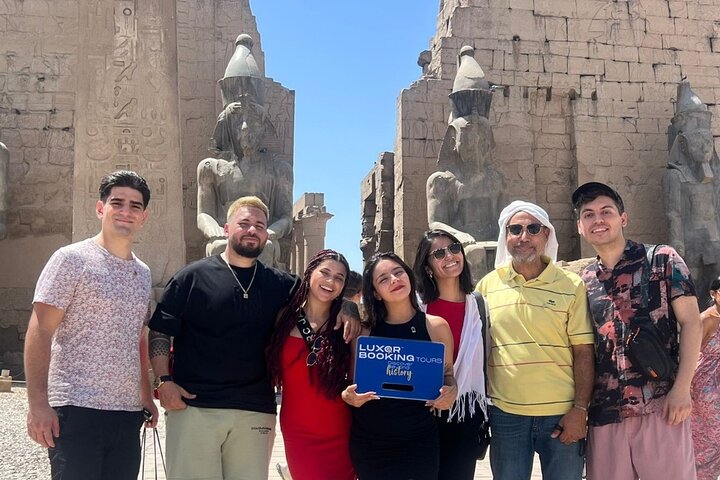
luxor west bank tour
Les descriptions sont affichées en anglais.
- 5–6 heures
- Annulation gratuite jusqu’à 24 h avant
- 2 langues
- Confirmation immédiate
Points forts
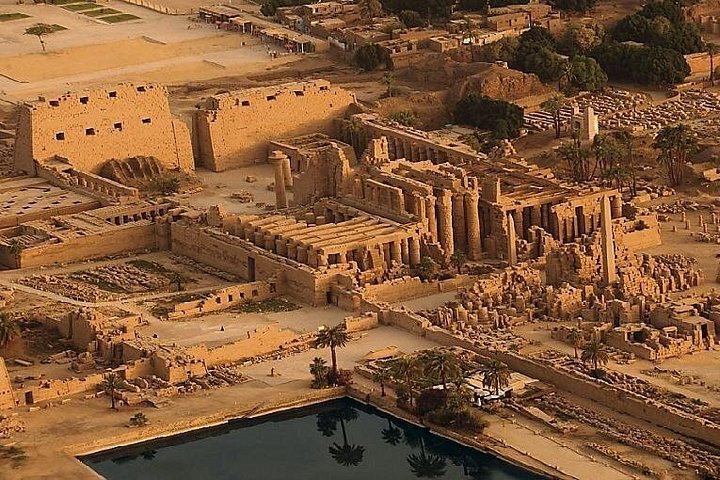
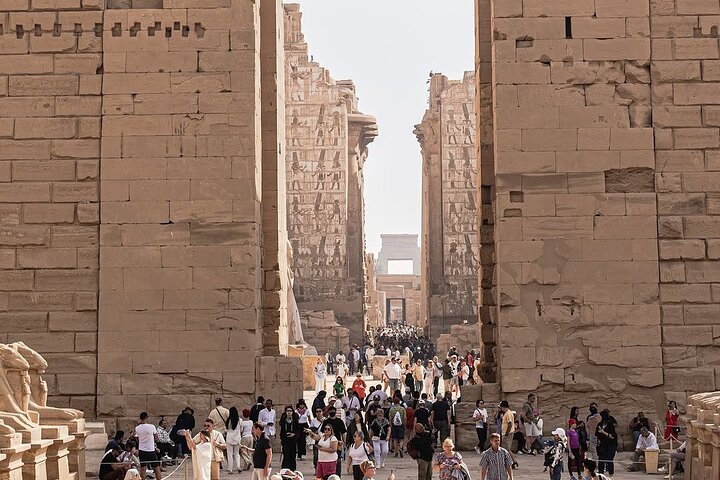
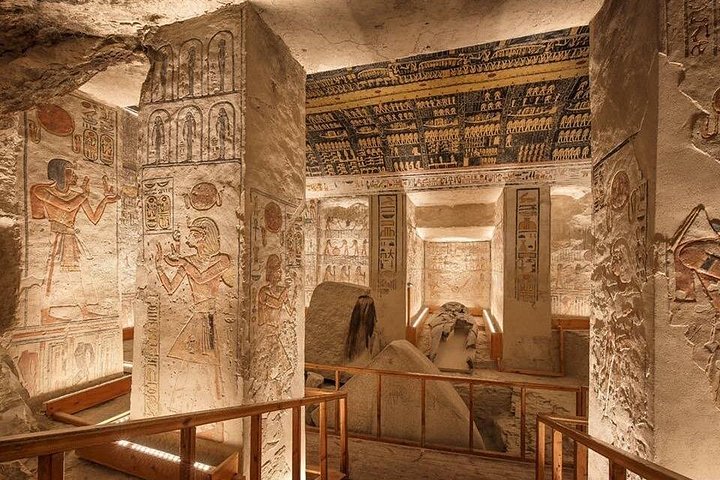
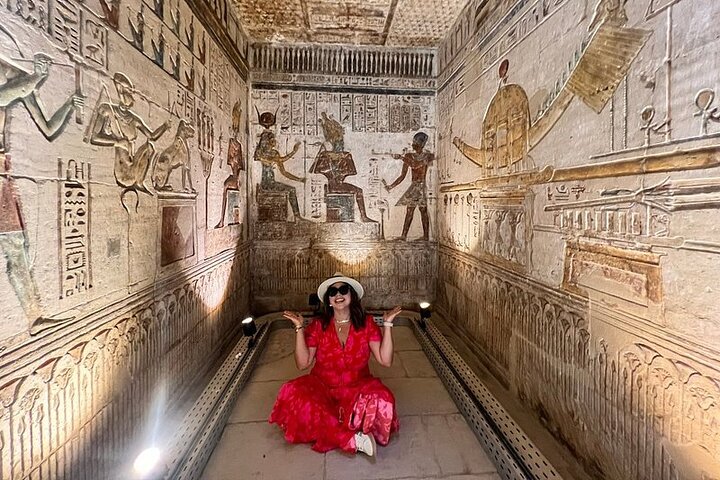
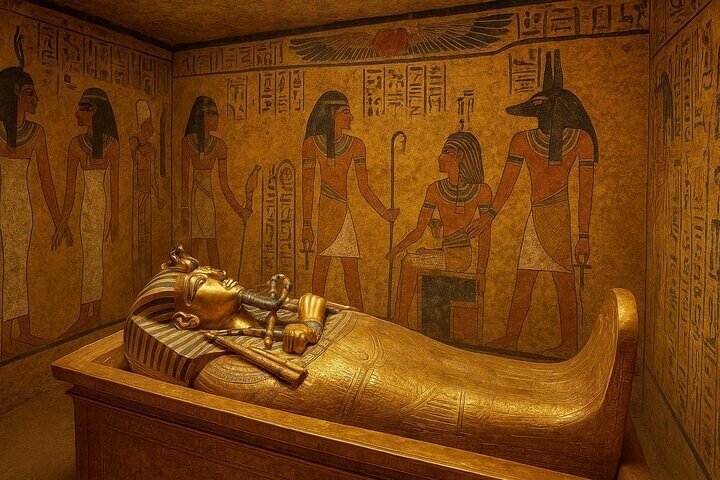
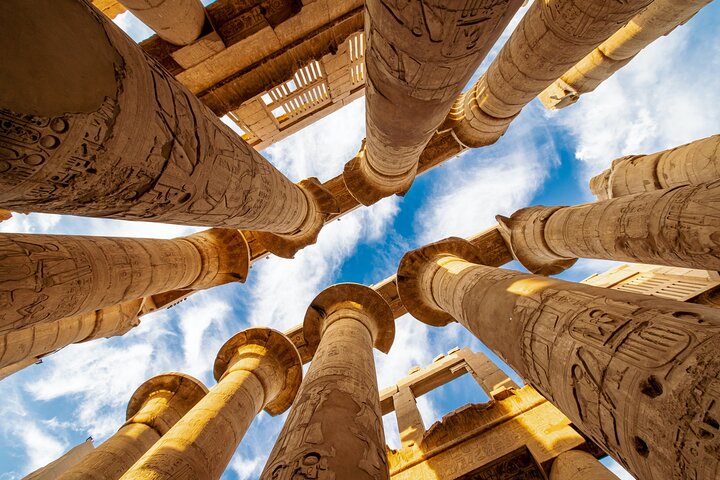
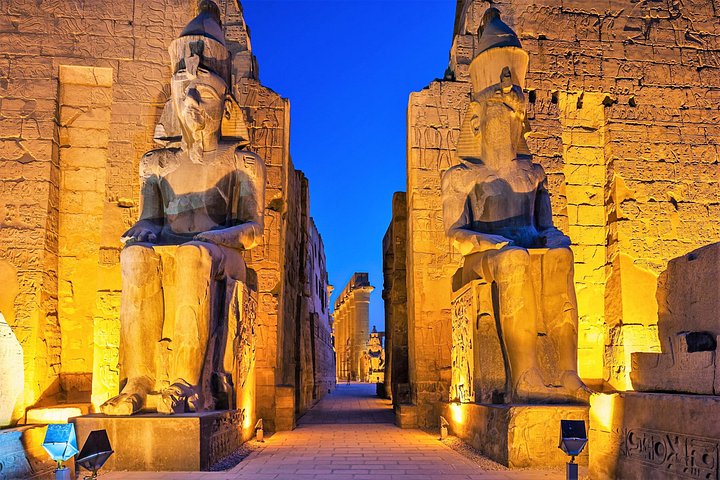
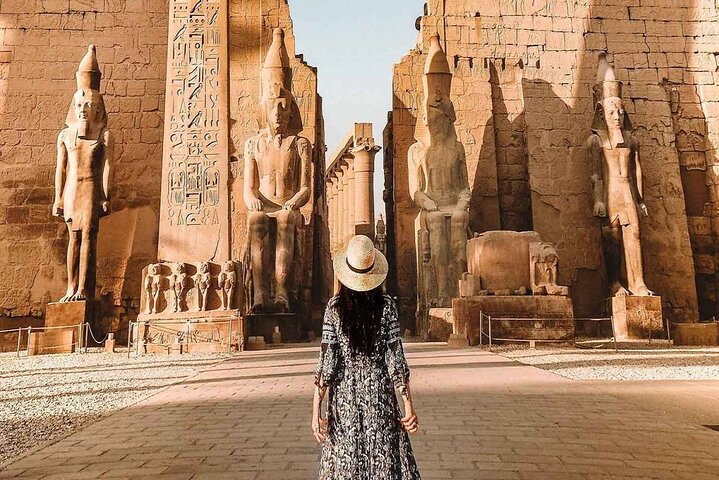
Enjoy a trip to discover Luxor's rich history by visiting its famous archaeological sites, including pharaonic temples and tombs, such as the Karnak and Luxor Temples, the Valley of the Kings, and Hatshepsut Temple. Must-see places in Luxor East Bank Temples: Karnak Temple: A massive temple complex dating back to different eras. Luxor Temple: Also known as "the greatest open-air museum in the world." West Bank Tombs and Temples: Valley of the Kings: Featuring stunning pharaonic royal tombs. Valley of the Queens: Burial site of ancient Egyptian queens. Hatshepsut Temple: A unique funerary temple for Queen Hatshepsut. Medinat Habu Temple: A massive funerary temple for King Ramesses III. Ramesseum: Another memorial temple for King Ramesses II. Other Activities Ride a Nile Boat: Enjoy the breathtaking views along the riverbanks. Avenue of Sphinxes: Explore the unique route connecting Karnak Temple and Luxor Temple.
Inclus
Ce qui est inclus
- Bottle water
- Enjoy Egyptian food such as chicken, rice, and salad, or vegetarian options.
- An air-conditioned car will pick you up from your accommodation and return you.
- Guiding A tour guide will be with you throughout the trip.
Itinéraire
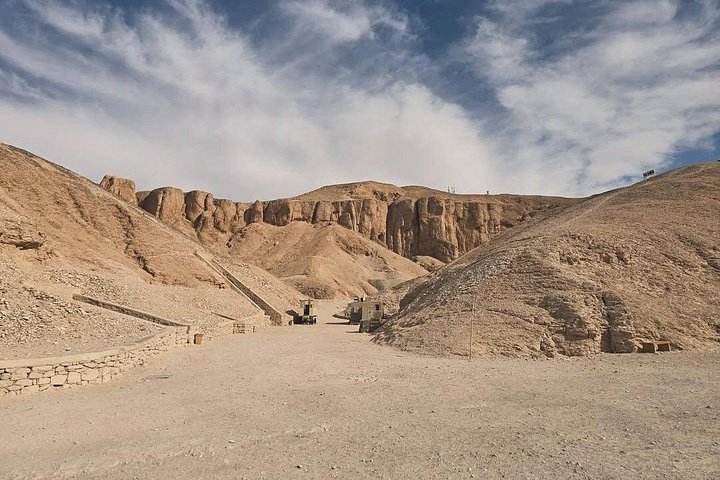
You will enjoy seeing the vally of the kings is the vally in Egypt that was used over a period of 500 years between the sixteenth and eleventh centuries bc.
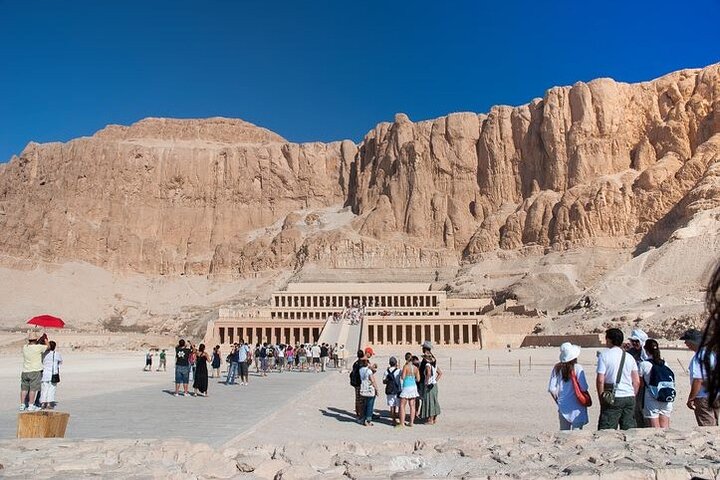
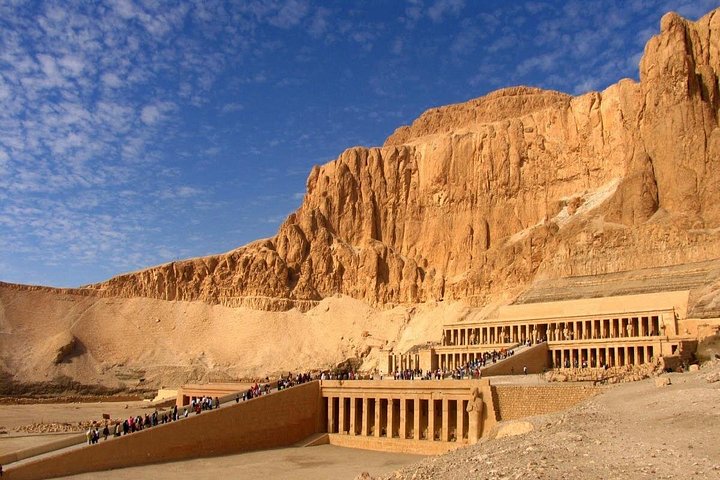
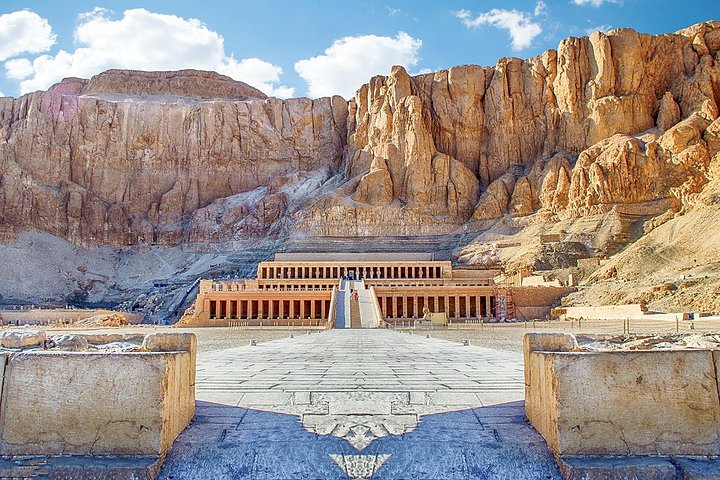
The Temple of Hatshepsut, or the Mortuary Temple of Hatshepsut, is a temple from the Eighteenth Dynasty of Egypt and the best-preserved of the temples built around 3,500 years ago at Deir el-Bahari in Egypt. It was built by Queen Hatshepsut on the west bank of the Nile opposite Thebes (the ancient capital of Egypt and seat of the Amun cult) (present-day Luxor). Hatshepsut's temple is distinguished by its unique architectural design, compared to the Egyptian temples built on the east bank of the Nile in Thebes. The temple consists of three successive floors arranged on open terraces. The temple was built of limestone, and limestone statues of the god Osiris and Queen Hatshepsut were beautifully arranged in front of the columns of the second floor. Originally, these statues were painted, but only a few traces of the colors remain. Some of the statues are in excellent condition, demonstrating the elegance and beauty of the temple's design.
The Colossi of Memnon are two massive stone statues of Pharaoh Amenhotep III (1386–1353 BC) from the Eighteenth Dynasty of ancient Egypt. The Colossi of Memnon depict Pharaoh Amenhotep III seated on his throne, wearing traditional royal clothing and headdresses typical of ancient Egypt. The statues are made of quartzite. The reason for their name, "Memnon," stems from a funny story: When the statues cracked in ancient Greece, especially the left one, they made sounds resembling sad singing due to the passage of air through the cracks. As the legend surrounding these two statues grew in importance, a Roman emperor decided to repair the cracks and fissures in the statues. Around 200 AD, the sound ceased forever. This phenomenon remained a long-standing source of interest for visitors and travelers to Egypt. The truth remains: these two statues are of King Amenhotep III, one of the kings of the 18th Dynasty, the most powerful ruling dynasty in ancient Egyptian history.
Located on the West Bank of Luxor, the Temple of Habu is known in ancient Egyptian as "The Temple of the One United with Eternity" or "The Temple of Millions of Years of Ramesses III." It is one of the largest funerary temples in ancient Egypt, boasting a unique architectural design that blends strength and beauty. Its massive walls are decorated with hieroglyphic inscriptions that tell stories of victories and military battles.
Annulation
Annulation gratuite jusqu’à 24 heures avant le début de l’expérience, avec remboursement intégral.
À savoir avant de partir
- Prise en charge
- La prise en charge est incluse pour tous.
- Type de billet
- Mobile or paper ticket accepted
- Opéré par
- mohamed
- Wheelchair accessible
- Infants and small children can ride in a pram or stroller
- Infants are required to sit on an adult’s lap
- Transportation options are wheelchair accessible
- Suitable for all physical fitness levels
How it compares in Louxor
- Its from-price is 48% below the median of the 374 visites de la ville we list in Louxor.
- It is shorter than most of them.
- The operator lists free cancellation on it.
About Louxor
Louxor occupe le site de l'antique Thèbes : vastes temples sur la rive est du Nil et tombeaux royaux de la Vallée des Rois sur l'autre rive.
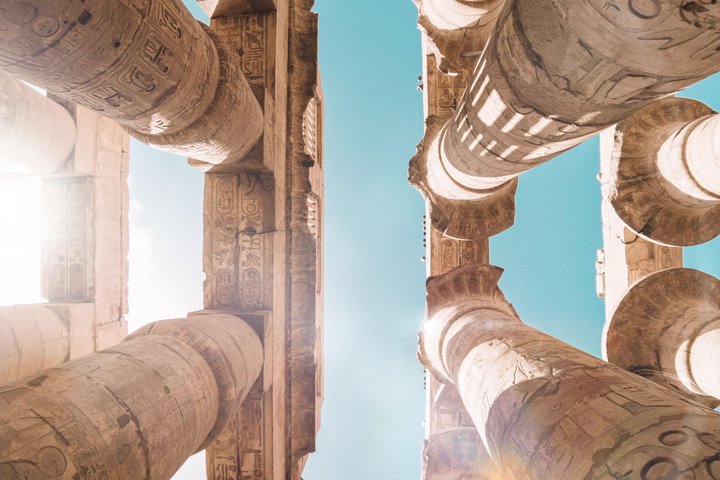
Sur la rive est, le complexe du temple de Karnak s'étend sur des hectares de pylônes, d'obélisques et la forêt de colonnes de sa grande salle hypostyle. Une allée de sphinx le relie au temple de Louxor, au centre de la ville, particulièrement évocateur le soir lorsqu'il est illuminé. Le musée de Louxor et le musée de la Momification bordent la corniche du fleuve.
Top-ranked sights in Louxor: Valley of the Kings, Temple of Hatshepsut (at Deir el-Bahari), Colossi of Memnon.
Offres spéciales à Louxor
Les prix barrés viennent de l’opérateur, jamais de nous.
 -5 %Annulation gratuite
![Visite privée d'une journée complète des tombeaux et des temples de Louxor en Cisjordanie]() -15 %Annulation gratuite
![Luxor Half-day Valley of the Kings &Hatshpsut and Memnon private]() -20 %Annulation gratuite
![Private Half Day Tour:Valley of Kings & Hatshepsut Temple& Memnon]() -11 %Annulation gratuite
![FULL Day Tour:Valley of the Kings &Queens &Hatshepsut Temple&more]() -20 %Annulation gratuite
Expériences similaires
 Annulation gratuite
 Annulation gratuite
![Profitez de la montgolfière, la vallée des rois, temple Hatchepsut à Louxor]() Annulation gratuite
![5 - Jour 5 - Croisière Star Nile Louxor à Assouan avec un égyptologue privé]() Annulation gratuite


Bus à arrêts multiples à Louxor
 Annulation gratuite