Fullday El Salvador Archaeological Exploration & Indigo Workshop
- 9 hours
- 3 languages
- Instant confirmation
- Mobile ticket
Highlights
Discover the mysteries and legacy of the Mayan world in El Salvador. Our team will take you to visit the most emblematic places of this culture, as well as the opportunity for you to visit the only Mayan village preserved in perfect condition, taste local gastronomy, buy sourvenirs made by the local artisans,and be witness of the best sunset on the top of a pyramid while you enjoy a tasty coffe from the farm we`ll visit... something unmissable! LOL: monday all places are closed!
Inclusions
What's included
- Air-conditioned vehicle
- Parking Fees
- entradas
What's not
- Lunch
- Gratuities
- Snacks
Itinerary
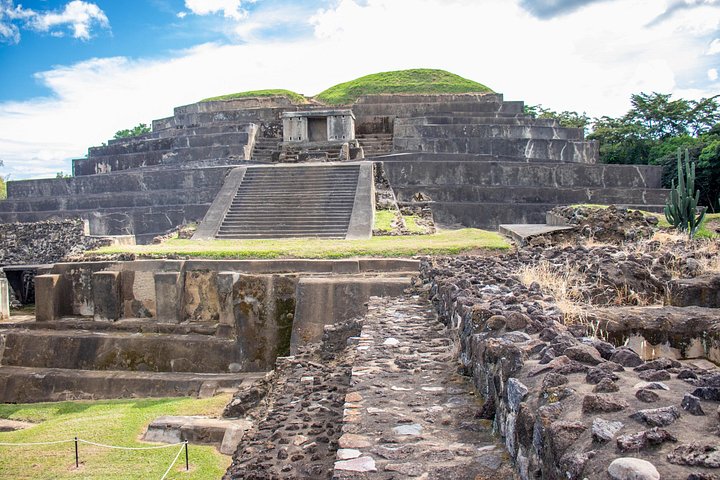
Tazumal archaeological site is located in the Municipality of Chalchuapa, Department of Santa Ana, El Salvador This area is within the archaeological area of Chalchuapa, whose approximate area is 10 km² Its name comes from the farm where the main structures stood when excavations began (by Stanley Boggs) in the 1940s. It consists of a series of structures that were the setting for an important and sophisticated ceremonial center that would be expanded at various stages throughout its history. It would be built in the Early Classic period (AD 200 - AD 600), and would continue to be occupied in the Late Classic (AD 600 - AD 900) and early Postclassic (AD 900) periods. - 1200 AD); being a settlement of Mayan culture in the classic and Nahua in the postclassic. Being influenced throughout its history by Copán and Teotihuacán (in the classic), and by the Toltecs (in the postclassic).
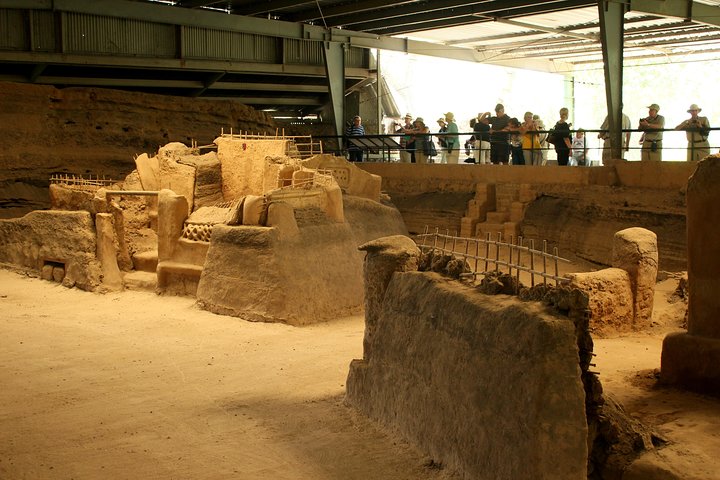
Joya de Cerén is a pre-Columbian site in El Salvador located in the vicinity of San Juan Opico and Las Flores, in the Department of La Libertad, in the Central-Western Region of El Salvador. It was inhabited at least since the year 400 by an agricultural town tributary to San Andrés and was abandoned around the year 600 due to the eruption of Laguna Caldera. The site allows you to appreciate the daily life of a Mayan agricultural people from 1400 years ago (VII century), the only one known in El Salvador. It is one of the most important archaeological sites in Mesoamerica because it shows what life was like for ordinary people. That is why it is often called the Pompeii of America, compared to the archaeological site of Pompeii, located in Italy. In 1993, Joya de Cerén was declared a World Heritage Site by UNESCO.
San Andrés is an archaeological site located in the Zapotitán valley, just five kilometers from Joya de Cerén, in the department of La Libertad. The site comprises an acropolis, which is an architectural space where activities restricted to a special group of people took place, possibly led by the ruling elite. The Acropolis is built by raising the ground level between structures 1, 2, 3 and 4 by using adobe bricks at the time of the heyday of San Andrés in the Late Classic. There is also a large plaza to the north of the Acropolis where other structures are located, including one in the shape of a bell, being the largest structure that San Andrés has. In the surroundings, it is estimated that common people lived, presuming that the Valley of Zapotitán was densely populated in pre-Hispanic times. Adobe brick construction predominates in most buildings, although the use of cut stone and tuff blocks has been documented in recent works.
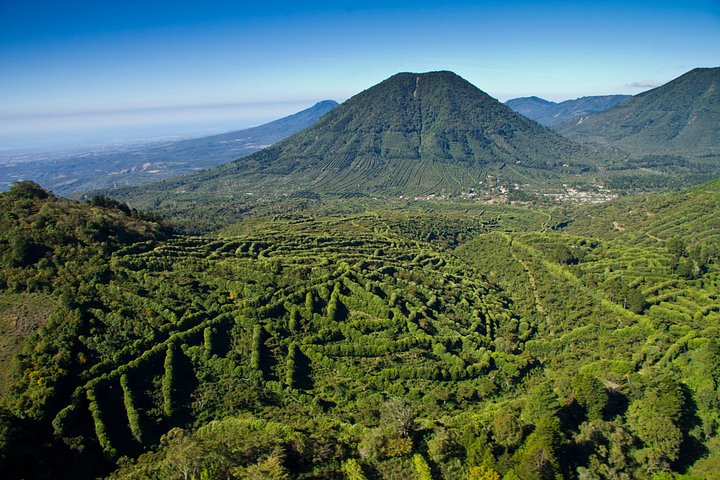
An imposing ceiba tree welcomes you as you enter the Finca San Antonio, in the city of Chalchuapa, Santa Ana. According to the Mayan worldview, the thousand-year-old tree is a powerful symbol that represents the connection between the upper world, the material world, and the underworld. . The Finca San Antonio protects what would be the tallest and oldest pyramid in the archaeological history of El Salvador. When going up, we will be able to enjoy a spectacular sunset with the volcanic mountain range of the Salvadoran west and also, a delicious coffee and bread made by the owners of the farm.
This is the park where the most of the sacrified victims and no nobles we're buried. In the Main House You can learn tecniques of the indigo paint, and.ypu can paint your own!!
Cancellation
All sales are final. No refund is available for cancellations.
Reviews
3.4
- 53
- 40
- 30
- 20
- 12
Ratings come from 5 reviews collected by our booking partner. They are travellers' own words, in the order they were written — never reordered to flatter the experience.
Know before you go
- Pickup
- Pickup is included for everyone.
- Ticket type
- Mobile or paper ticket accepted
- Group size
- Up to 15 travellers
- Operated by
- Natural Trekking Central America
- Infants and small children can ride in a pram or stroller
- Infants are required to sit on an adult’s lap
- Not recommended for pregnant travelers
- Not recommended for travelers with poor cardiovascular health
- Suitable for all physical fitness levels
How it compares in La Libertad
- Its from-price is close to the median of the 28 day trips we list in La Libertad.
- Its length is typical for the group.
- By number of reviews it ranks 18 of 28.
About La Libertad
La Libertad is a Pacific fishing port and surf town in El Salvador, with a long pier, a busy fish market and the famous right-hand break at Punta Roca.
La Libertad sits on El Salvador's Pacific coast, south of the capital San Salvador, on a stretch known as the Costa del Bálsamo. The town centres on a pier where fishing boats land their catch, and the fish market beside it sells whole fish, shrimp and lobster. Punta Roca, just along the shore, is a rocky point with a long right-hand wave that has drawn surfers from many countries for decades.