Communist Tour in Belgrade
- 3 hours
- Free cancellation up to 24h before
- Guided in English
- Instant confirmation
Highlights
Find out the most interesting stories about former Yugoslavia, World War II, Tito's life, „Youth relay baton“, Non-Aligned movement, conflicts of the nineties, NATO bombing of Serbia and Montenegro in 1999 and democratic changes at the beginning of the third millennium. Visit Museum of Yugoslavian history which is also a resting place of the lifetime president of Yugoslavia, see remains of NATO attacks as well as other attractions related to that period.
Inclusions
What's included
- Entrance to the Museum of Yugoslavia
- Trolleybus ticket
- Profesional tour guide
What's not
- Personal expenses
Itinerary
The Republic Square (Serbian: Trg Republike) is one of the central town squares and an urban neighborhood of Belgrade. Our guides introduce tourists to the story of the phenomena of Josip Broz Tito, „Youth relay baton“, Non-Aligned movement, conflicts of the nineties, NATO bombing of Serbia and Montenegro in 1999 and democratic changes at the beginning of the third millennium.
Dom Sindikata ("Trade Union Hall") is a massive building, built in the style of Socialist realism. It was projected by Branko Petričić and the construction began in 1947.
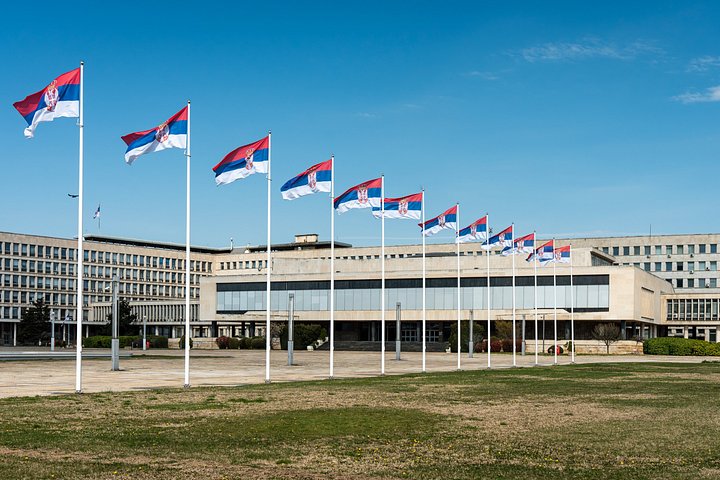
The House of the National Assembly of the Republic of Serbia is the seat of the National Assembly of Serbia. The building is located on Nikola Pašić Square in downtown Belgrade, and is a landmark and tourist attraction. Between its completion in 1936 and 2006, it was the seat of the Parliament of Yugoslavia and the Parliament of Serbia and Montenegro.
Kneza Miloša Street was the main city's korzo (promenade) and today is one of the major traffic arteries of the city, location of some of the most important national institutions and a street with the largest number of embassies in Belgrade.
The Yugoslav Ministry of Defence building, also known as the Yugoslav General Staff is a building that was previously occupied by the Ministry of Defence of Yugoslavia, a governmental department responsible for defending the Federal Republic of Yugoslavia from internal and external military threats. Considered to be a masterpiece of post-war architecture, it was bombed and heavily damaged during the NATO bombing of Yugoslavia in 1999.
From Generalsab building to Museum of Yugoslavia the group takes trolleybus (the drive takes about 15 minutes). The Museum of Yugoslavia is a public history museum in Belgrade, the capital of Serbia. It chronicles the period of Kingdom of Yugoslavia and Socialist Yugoslavia as well as the life of Josip Broz Tito. Tito's grave is located in one of the museum buildings (the House of Flowers). With 120,000 visitors annually, it is the most visited museum in Serbia.
Cancellation
Free cancellation up to 24 hours before the experience starts, for a full refund.
Reviews
4.5
- 520
- 43
- 30
- 22
- 11
Ratings come from 26 reviews collected by our booking partner. They are travellers' own words, in the order they were written — never reordered to flatter the experience.
Know before you go
- Meeting point
- The tour starts from the Republic Square, behind the monument. Our guides will be wearing yellow IDs or shirts/sweaters, hats or umbrella. Just look for something yellow around the monument :)
- Pickup
- Everyone meets at the starting point; there is no pickup.
- Ticket type
- Mobile or paper ticket accepted
- Group size
- Up to 15 travellers
- Operated by
- Belgrade Walking Tours
- Wheelchair accessible
- Infants and small children can ride in a pram or stroller
- Public transportation options are available nearby
- Transportation options are wheelchair accessible
- All areas and surfaces are wheelchair accessible
- Suitable for all physical fitness levels
How it compares in Belgrade
- Its from-price is 83% below the median of the 61 city tours we list in Belgrade.
- It is shorter than most of them.
- By number of reviews it ranks 8 of 61.
- The operator lists free cancellation on it.
About Belgrade
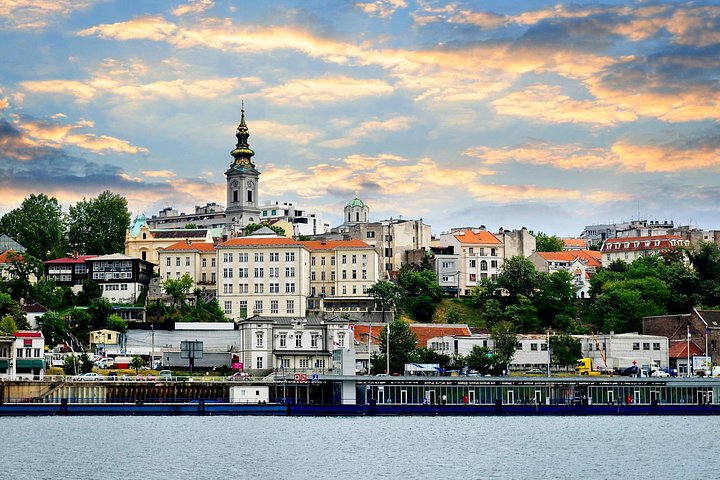
Belgrade is Serbia's capital at the meeting of the Sava and the Danube, a city of a vast fortress, café-lined boulevards and nightlife on the river.
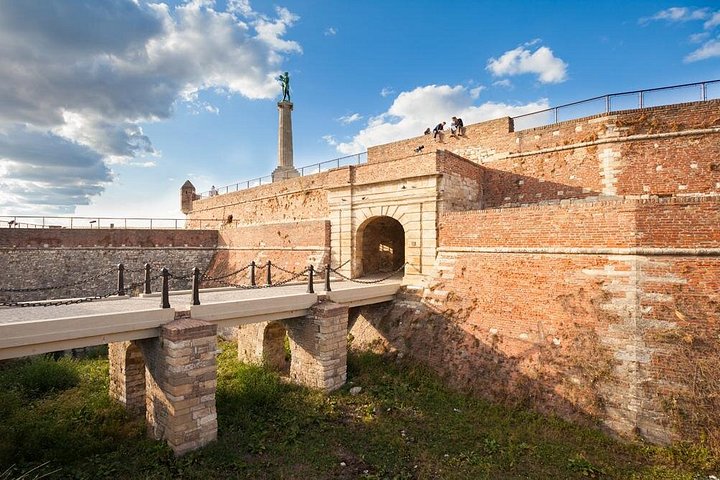
Belgrade stands where the Sava meets the Danube, and the old Kalemegdan Fortress occupies the ridge above the confluence, with walls, gates and a park that looks over both rivers. Knez Mihailova, the pedestrian main street, runs from the fortress to Republic Square. The Temple of Saint Sava, one of the largest Orthodox churches in the world, has a white marble dome.
Top-ranked sights in Belgrade: Petrovaradin Fortress (Petrovaradinska Tvrdjava), Belgrade Fortress (Beogradska Tvrdava), Danube River.
Special offers in Belgrade
Was/now prices come from the operator, never from us.