Budapest Grand Vespa Tour
- 4 hours
- Free cancellation up to 24h before
- Guided in English
- Instant confirmation
Highlights
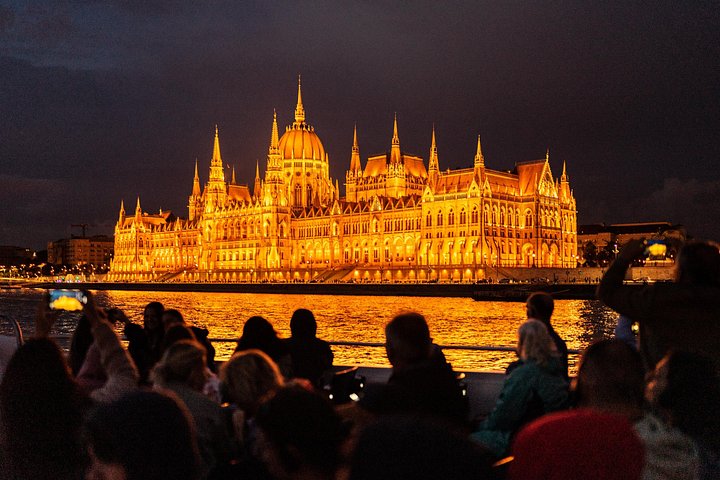
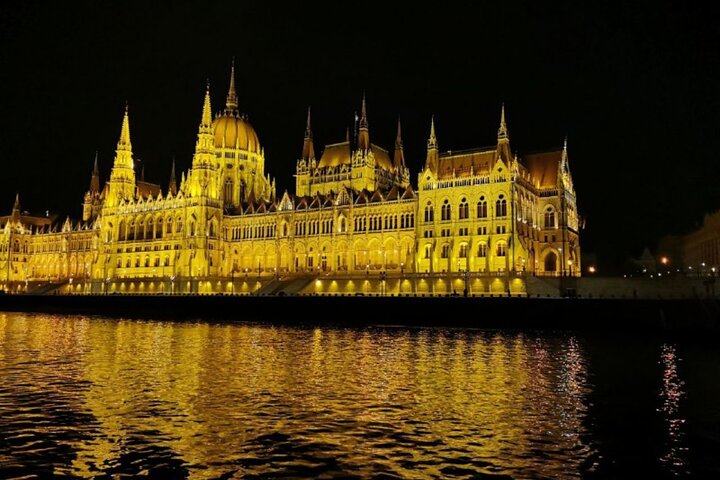
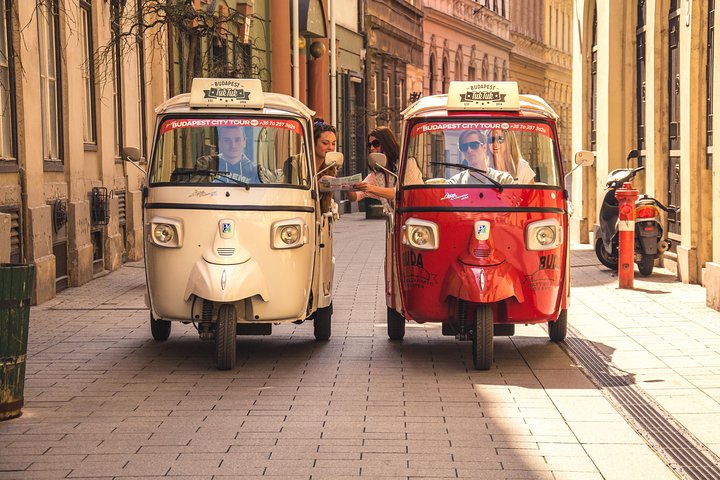
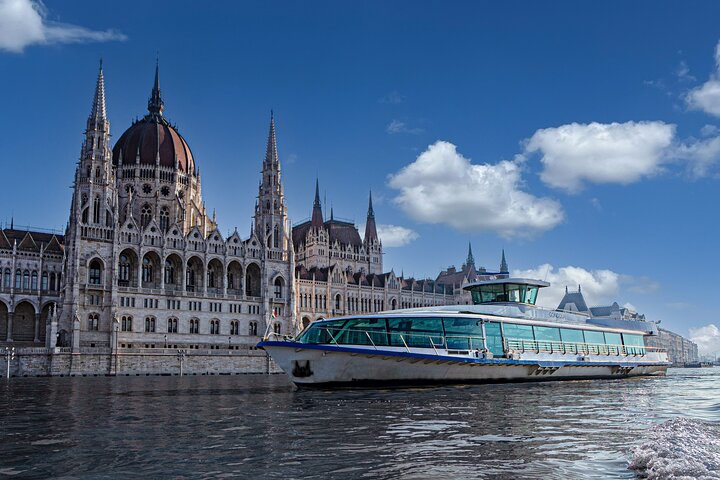
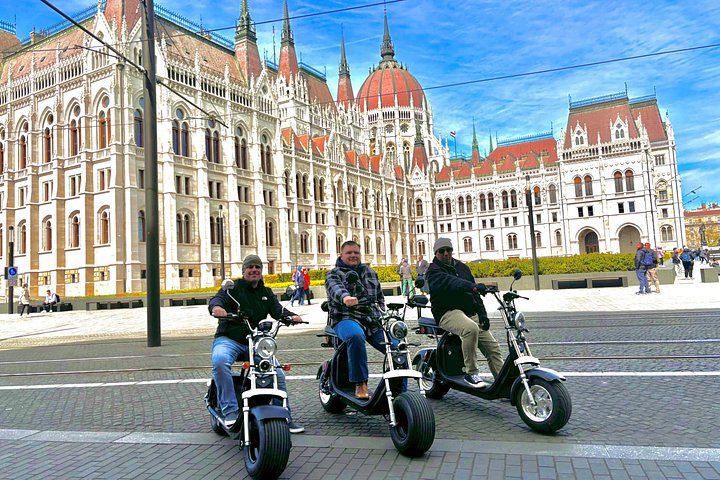
Join our signature Budapest Grand Vespa Tour and explore Budapest in a unique and easygoing way by riding a Vespa. On this spectacular 4-hour tour, you will explore Budapest’s most famous attractions and astonishing views and get an insight into Hungarian history and culture. TOUR HIGHLIGHTS »Discover Budapest's picturesque Danube riverbanks and bridges »Drive along the World Heritage Andrassy Avenue, Budapest's most famous boulevard, and marvel at the Opera House »Visit the monumental Heroes Square and learn about Hungary's 1000-year history »Discover the charming City Park »Marvel at the magnificent Hungarian Parliament Building and St Stephen's Basilica »Explore the World Heritage Buda Castle District with the iconic Matthias Church, and soak in the stunning views from Fisherman's Bastion, the city's most famous lookout » Marvel at Budapest’s astonishing views from Gellert Hill, the highest vantage point in the city crowned with the Citadel and the Liberty Statue
Inclusions
What's included
- Certified English-speaking guide
- Easy-to-ride scooter with automatic gear
- Intercom radio with a headset to listen to your guide during riding
- Fuel
- Third party liability insurance
- Safety helmet
What's not
- Meals, drinks are not included
- Hotel pick up-drop off
- Gratuities
Itinerary
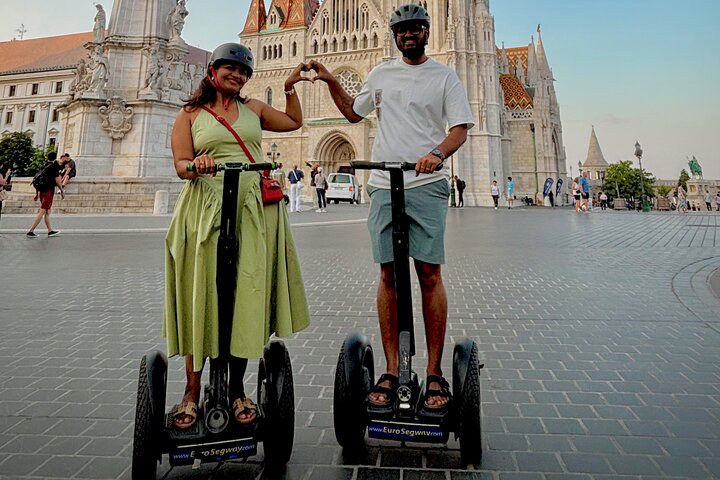
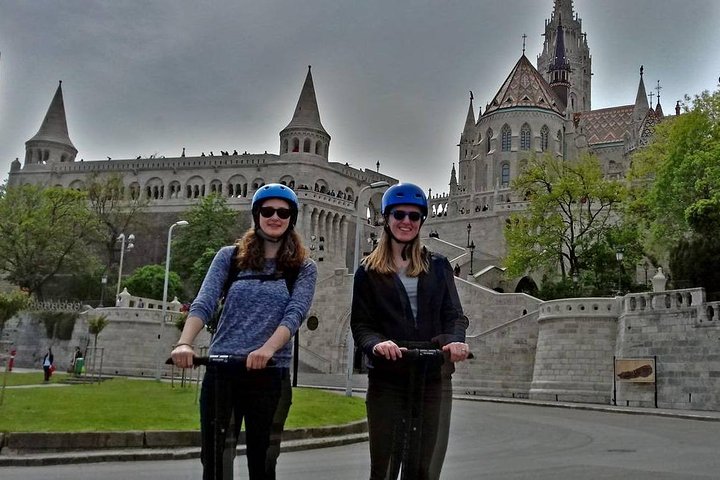
TOUR START/FINISH After a short riding lesson, start exploring the city on the Pest side remarkable for its elegant 19th-century architecture. Ride along the spectacular Danube riverbanks and bridges and the elegant Andrassy Avenue and wonder at the Opera House and grand 19th-century palaces. Visit Heroes’ Square and learn about Hungarian history in a nutshell then tour through the charming City Park, home to the Zoo, the Great Circus, Széchenyi Bath and Vajdahunyad Castle. Marvel at St Stephen's Basilica and the Parliament Building then cross the river Danube and explore the Buda side famous for its medieval castle and astonishing hilltop views. Tour through the cobblestone streets of the historic Buda Castle District, visit the Royal Palace and the iconic Matthias Church and marvel at the stunning view from Fisherman’s Bastion, the most famous lookout in Budapest. At last, drive up to the Citadel and Liberty Statue on top of Gellert Hill and admire the unparalleled view of Budapest.
Budapest’s largest and most famous market hall is a mecca for food lovers. Hungarian sausage and salami, goose liver, and sweet paprika powder are just a few of the countless Hungarian delicacies you can buy here. You can taste typical Hungarian dishes like goulash soup or lángos in its dozens of food kiosks and even buy souvenirs in its gift shops. The Great Market Hall is a must-see tourist attraction that CNN elected as the best market hall in Europe.
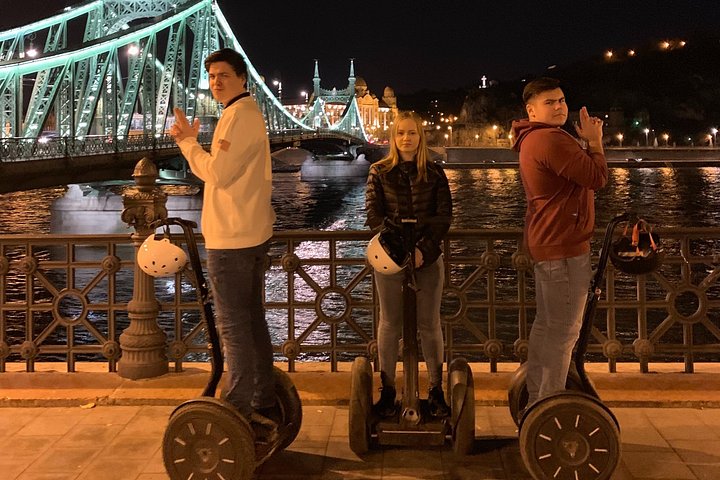
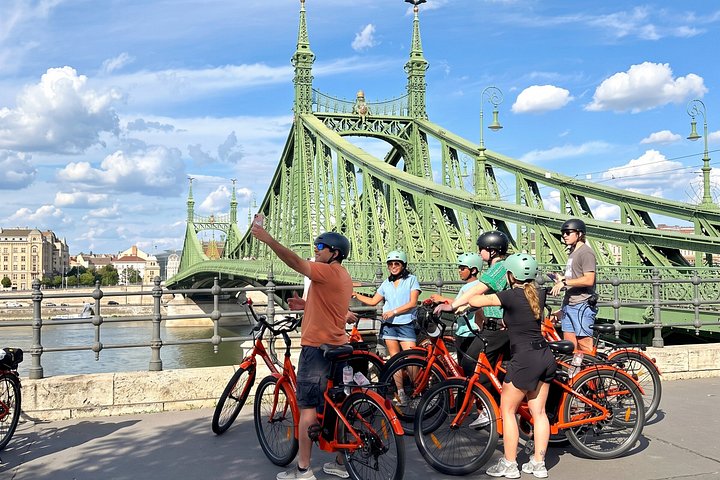
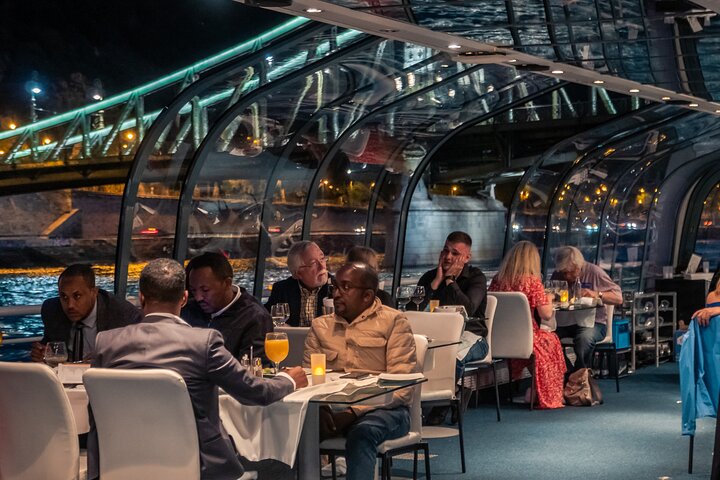
Liberty Bridge is one of the iconic bridges in Budapest completed for the Millennial celebrations in 1896 commemorating the 1000th anniversary of the Conquest of Hungary by the Magyar tribes, which is also reflected in its ornamentation. The pylons are decorated with historic Hungarian coats of arms and falcon-like mythical Turul birds cast in bronze perching on gilded orbs with spread wings. The bridge was originally named after the Austrian Emperor and Hungarian King Franz Joseph I, who presented himself at the opening ceremony and personally hammered the last silver rivet into the iron structure. In WWII, the bridge was blown up by the retreating German troops along with the other bridges of Budapest. Following its post-war reconstruction, it was renamed Liberty Bridge.
The ornate structure, serving as the gate to the royal gardens on the Buda Riverfront, was built in 1883 to the designs of Miklkós Ybl, the most remarkable architect of the age. Initially, there were shops in the arcades, which explains why it is called a bazaar. In the communist era, a legendary music club, the Buda Youth Park, worked here. After an accident in 1984, the authorities closed the club, and the building stayed abandoned for 30 years. The rundown building was fully renovated in 2014 and now is a cultural center.
The elegant avenue, renowned for the Opera House and grand 19-century palaces is often referred to as Budapest's Champs-Elysées. The main reason for its creation was to establish a link between the city centre and City Park, which hosted the Millennium Exhibition in 1896 where 5 million visitors were expected. The visitors were carried to the exhibition by the Millennium Underground running along Andrassy Avenue, the first subway line in mainland Europe opened in 1896. Andrassy Avenue and the Millennium Underground were declared World Heritage sites in 2002.
The Neo-Renaissance Hungarian State Opera House is Budapest's most prestigious music hall and is listed among those with the best acoustics in Europe. It was built in 1884 to the designs of Miklos Ybl, a leading architect of the age, who also drew the plans for St Stephen's Basilica. Its exterior decoration features the statues of world-famous composers while the highlights of its interior are the 24-carat gold plating, a lavish bronze chandelier weighing 2 tonnes and the frescoes created by the most renowned Hungarian artists.
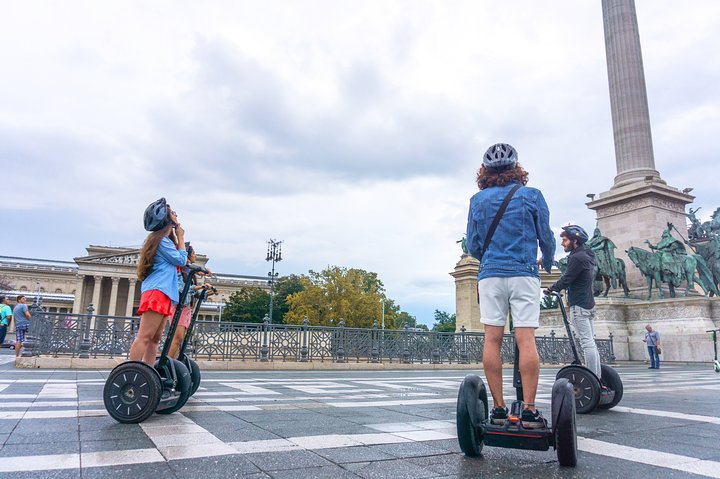
Heroes Square is the largest square in Budapest and one of its most famous national landmarks. It is located at the end of Andrassy Avenue and is surrounded by City Park, the largest public park in Budapest. Its centerpiece is the Millennium Monument, a national pantheon of great Hungarian kings and chieftains commemorating the Conquest of Hungary in 896 and the 1000-year Hungarian history. The square is framed by two Neo-Classical palaces. The Museum of Fine Arts boasts the richest painting collection in Hungary, and the Kunsthalle (Hall of Arts) accommodates modern art exhibitions. Heroes Square along with Andrassy Avenue has been a World Heritage site since 2002.
Budapest City Park is the largest and most frequented park in Budapest and one of the first public parks in the world. In the middle ages, it was the private hunting ground of King Matthias then in the 16th century, the trees were cut down and the area was used as a pasture-land. In the 1700s, by the order of Empress Maria Teresa thousands of new trees were planted, which marked the birth of City Park. The park has been home to some of the city’s most popular attractions such as the City Park Boating Lake and Ice Rink, The Zoo, the Great Circus, the iconic Széchenyi Bath and the fairy-tale Vajdahunyad Castle. Currently, the park is undergoing a comprehensive renewal. The large-scale project involves the renovation of the park’s historic architecture, the construction of new museum buildings such as the National Gallery, the Museum of Ethnography, the House of Hungarian Music, the complete rehabilitation of the park's green area and the development of its infrastructure.
One of the oldest Zoos in Europe was opened in 1866 with 500 animals, partly donated by Emperor Franz Joseph I himself. It features the 34-metre high Big Rock home to polar bears, the secessionist Elephant House and an over 100-year-old roller coaster made entirely of wood which was preserved from the former Amusement Park that had been closed down. The Zoo is currently undergoing a large-scale enlargement including the creation of a new garden section covering 5 hectares called the Pannon Park, which will showcase the flora and fauna of the Carpathian Basin. Its central facility is the Biodome a large indoor park covering 1,7 hectares where visitors can discover wildlife by walking along its paths or by cruising along its water canals by boats. A state-of-the-art marine aquarium will evoke the fauna of the Pannon Sea, which once occupied a significant area of the Carpathian Basin.
The Great Circus home to acrobatic shows was formed from the temporary side shows and entertainment facilities which had been operating in City Park since the early 1800s. The first permanent circus was opened in 1889. The present building was built in 1971.
One of Budapest's iconic baths was opened in 1913 in City Park following the discovery of a hot spring beneath the park. The building resembling a grand Baroque palace is decorated with remarkable artwork featuring statues, mosaics and fountains. Originally the bath was separated into a men’s and women’s bath but since the 1980s it has been mixed. The outdoor pools which were added in 1927, in the late 1990s were extended with new fancy features such as a whirling corridor, underwater effervescence production, neck shower, water beam back massage and many others. While during the day the old men play chess in the pool recalling the good old times, at night massive dance parties entertain the young. Today the bath boasts altogether 18 pools; 15 indoor and 3 outdoor pools, which makes it the largest public bath in Europe. The water temperature of the pools varies between 18 and 40 Celsius. Finnish saunas, steam baths, massage, and beauty treatments are also available.
The castle located on a small island surrounded by the Boating Lake is a dominant feature of City Park and undoubtedly one of the most romantic places in Budapest. It was originally made of wooden planks and cardboard designs as it was supposed to be just a temporary structure built for the Millennial Exhibition of 1896, to showcase Hungarian architecture. The Hungarians loved the castle so much that after the closing of the exhibition it was rebuilt in stone. It was designed by the Hungarian architect Ignác Alpár who blended the most characteristic details of 21 well-known historic buildings from all over Hungary into a composite fairy-tale castle. The most striking element of the castle is the replica of the Transylvanian Castle of Vajdahunyad - once called the King of Castles - found today in Romania. No wonder, the local people named the whole castle after this part Vajdahunyad Castle, which name eventually stayed with it.
Cancellation
Free cancellation up to 24 hours before the experience starts, for a full refund.
Reviews
5.0
- 520
- 41
- 30
- 20
- 10
Ratings come from 21 reviews collected by our booking partner. They are travellers' own words, in the order they were written — never reordered to flatter the experience.
Know before you go
- Meeting point
- The Budapest Scooter Tour office is located inside the house courtyard. Please arrive 15 minutes before the published tour start and don't forget your driver's licence.
- Pickup
- Everyone meets at the starting point; there is no pickup.
- Ticket type
- Mobile or paper ticket accepted
- Group size
- Up to 10 travellers
- Operated by
- The Original Budapest Scooter Tour
- Public transportation options are available nearby
- Not recommended for travelers with spinal injuries
- Not recommended for pregnant travelers
- Not recommended for travelers with poor cardiovascular health
- Suitable for all physical fitness levels
- Regular driver's licence is required a must be presented at check-in
- Motorcycle licence is required if you want to ride a 125 cc scooter with passenger (optional)
- Drivers under 18 years of age must be accompanied by an adult
How it compares in Budapest
- Its from-price is 47% below the median of the 277 city tours we list in Budapest.
- Its length is typical for the group.
- By number of reviews it ranks 74 of 277.
- The operator lists free cancellation on it.
About Budapest
Budapest joins hilly Buda and flat Pest across the Danube, a grand capital of thermal baths, riverside palaces and lively ruin bars.
On the Buda side, Castle Hill holds Buda Castle, the Matthias Church and the white turrets of Fishermen's Bastion, all looking down on the river. The Chain Bridge crosses to Pest, where the Hungarian Parliament Building stretches along the bank and St Stephen's Basilica rises a few streets inland. Gellért Hill and its Citadella give the widest views.
Top-ranked sights in Budapest: House of Parliament (Országház), Buda Castle (Budai Vár), Chain Bridge (Széchenyi Lanchid) .
Special offers in Budapest
Was/now prices come from the operator, never from us.
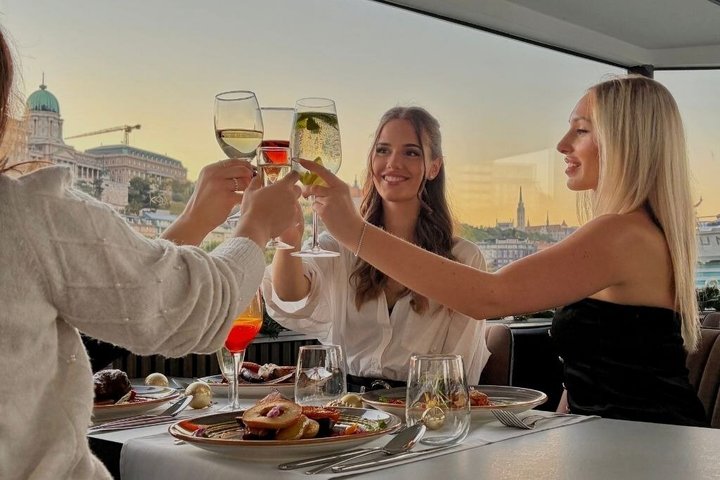
![Budapest : All-You-Can-Eat Gourmet Dinner Cruise + Unlimited Wine]() 18% offFree cancellation



Similar experiences
 Likely to sell outFree cancellation