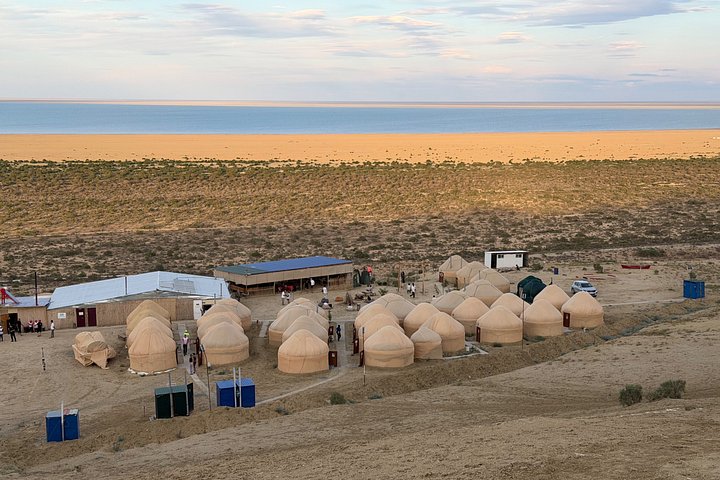
2 Day Private Tour in Nukus
- 48 hours
- Free cancellation up to 24h before
- 3 languages
- Private tour
Highlights
The air is filled with the aroma of freshly baked flatbreads and spices, creating an atmosphere of home comfort. The bright colors of fruits and fabrics delight the eye at the bazaar, and the sounds of local music fill the streets with life. The taste of pilaf, cooked according to traditional recipes, leaves an unforgettable mark, and sweet samsa gives joy from every bite. Locals are happy to share their stories, and the art in the Savitsky Museum immerses you in a world of inspiration and creativity. Nukus is a symphony of tastes, smells and emotions that will forever remain in the memory of travelers.
Inclusions
What's included
- All Fees and Taxes
- Lunch
- Dinner
What's not
- WiFi on board
- Air-conditioned vehicle
- Use of Segway
- Use of bicycle
Cancellation
Free cancellation up to 24 hours before the experience starts, for a full refund.
Know before you go
- Pickup
- Pickup is included for everyone.
- Ticket type
- Mobile or paper ticket accepted
- Operated by
- Ozoda
- Public transportation options are available nearby
- Not recommended for travelers with spinal injuries
- Not recommended for travelers with poor cardiovascular health
- Suitable for all physical fitness levels
How it compares in Nukus
- Its from-price is 53% below the median of the 16 experiences we list in Nukus.
- Its length is typical for the group.
- The operator lists free cancellation on it.
About Nukus
Nukus, capital of Karakalpakstan in north-western Uzbekistan, is a desert city known for its avant-garde art museum, within reach of the Aral Sea.
Nukus lies on the Amu Darya delta in north-western Uzbekistan, as the capital of the autonomous republic of Karakalpakstan, at the edge of the desert. It is a Soviet-era city of wide avenues and low blocks. Its great treasure is the Savitsky Museum, which holds an outstanding collection of Russian avant-garde art, gathered by the artist Igor Savitsky, who saved works banned in the Soviet era, together with Karakalpak textiles, jewellery and archaeological finds.