-10 %Cancelamento gratuito
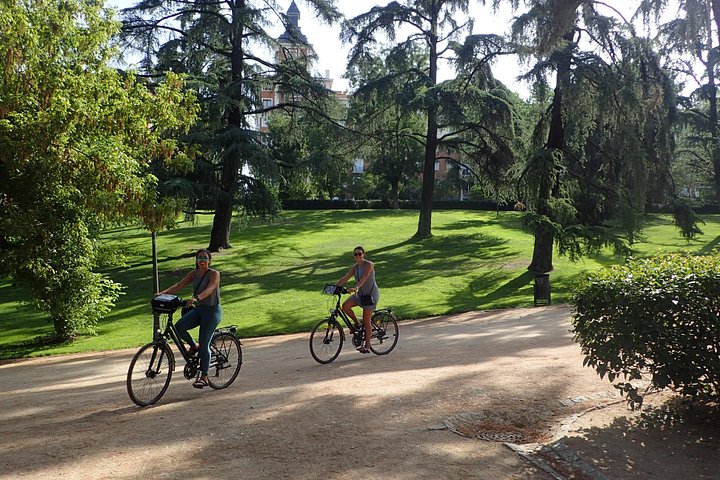
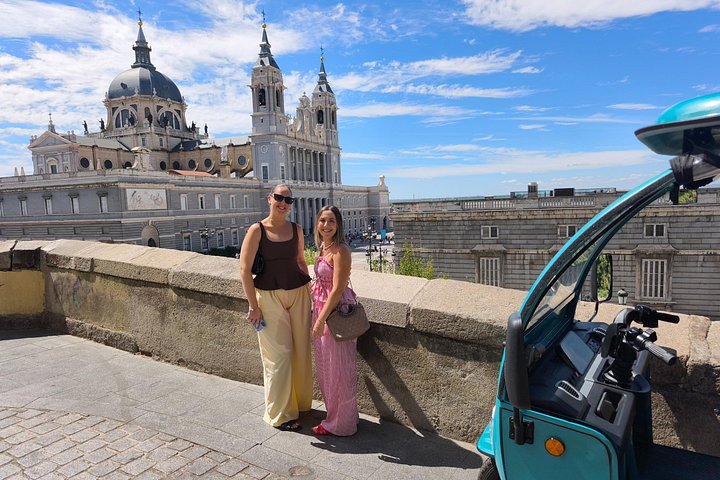
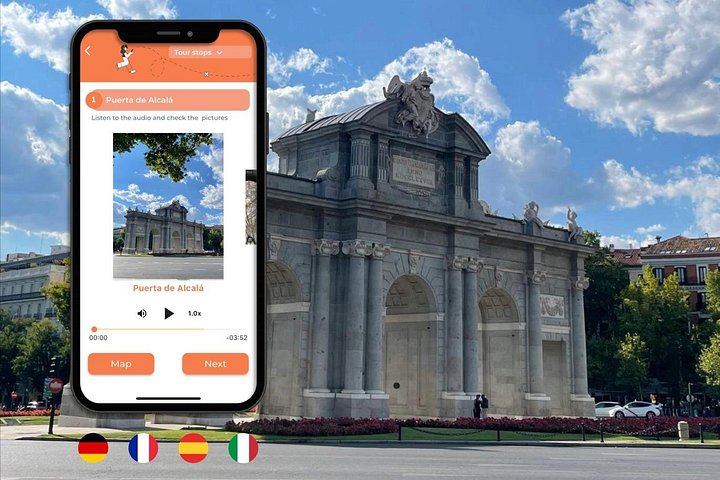
Highlights of Madrid: Guided Bike or E-Bike Tour in Small Groups
desdeUS$ 40US$ 36
Categorias em Madri
As descrições são apresentadas em inglês.
We will explore both Madrid’s famous landmarks and its hidden gems, bringing the city’s extraordinary past to life along the way. As both a driving force and a mirror of Spanish history, culture and art, Madrid has also played a significant role in the history of Europe. You will discover how a ninth-century Muslim fortress became the capital of a global empire. From its Islamic origins to the austere world of the Habsburgs and the elegance of the Bourbons, Madrid is a fascinating mixture of cultures and contradictions. Every corner has a story to tell. This is the city from which a large part of the world was once governed; a city that produced some of history’s greatest artists and writers, but also endured crime, popular uprisings, Napoleonic occupation and civil war. My aim is not only to show you some of Madrid’s most beautiful and meaningful places, but also to help you understand the events, ambitions and unexpected twists of history that shaped its unique character.
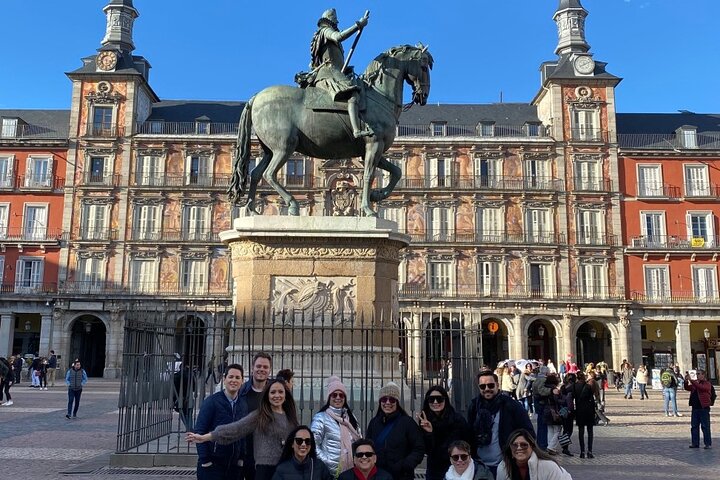
Begin in one of Madrid’s oldest squares, where centuries of power and beauty converge. The façades show the coexistence of Mudéjar, Plateresque and Habsburg architecture, a visual chronicle of the city’s evolution. Look closely at the coat of arms of King Charles II, the last Habsburg monarch, carved into the stone — a symbol full of secrets and the end of an era.
Just a few steps from the Plaza de la Villa lies one of Madrid’s narrowest streets, a silent curve that still follows the line of the medieval city. Its name, the Elbow Street, comes from its sharp bend. The irregular stones, the shadows and the stillness make it one of the places where you can feel the atmosphere of a vanished Madrid
Hidden behind an unmarked door, this 17th-century convent of Corpus Christi preserves a way of life that has barely changed in four hundred years. The cloistered nuns, who rarely see the outside world, bake traditional biscuits known as galletas de las Carboneras. They sell them through a small revolving window — a quiet ritual that connects today’s Madrid with its most secret past.
Rising unexpectedly among narrow streets, this 18th-century church brings the theatrical energy of the Baroque to old Madrid. Its curved façade and dramatic proportions were revolutionary in their time, a declaration that faith could also be spectacle. Built under the Bourbons, it reflects a new vision of beauty and power — lighter, more European — in contrast with the austere spirit of the Habsburg city that surrounds it.
Tucked away behind high walls, this secluded convent garden is one of Madrid’s most intimate corners. Once cultivated by nuns in the 17th century, it remains a rare oasis of silence in the heart of the city. From Monday to Friday, visitors can step inside and breathe the calm of another century — on weekends, the gate stays closed, protecting its timeless peace.
Discover the Casa a la Malicia. In the 16th century, King Philip II ordered a census to tax every new house built in Madrid. The locals, unwilling to pay more, found a clever solution: they built homes that looked unfinished from the outside. These “malicious houses” fooled the inspectors and became a small act of civic rebellion — the kind of quiet irony that still defines Madrid’s spirit.
In medieval Madrid, this square was the place where the Inquisition held public executions before moving them later to the Plaza Mayor. The green cross that gives the square its name was the emblem of the Inquisition itself — a symbol carried at the head of its solemn processions. Today, peace and silence have replaced those scenes of fear. It’s also a good moment for a short pause: nearby cafés offer coffee and restrooms before we continue our walk through old Madrid.
Hidden behind high brick walls, this 18th-century garden once belonged to the palace of the Prince of Anglona. Its symmetry, shaded benches and scent of jasmine inspired poets and lovers during the Romantic era, when Madrid began to look at its own ruins with nostalgia. Few places capture that mood so well — the sense of beauty touched by time, where silence itself seems to remember.
Dating from the 14th century, this modest church is the second-oldest building in Madrid. Its brick tower, with delicate arches and simple geometry, is one of the few remaining examples of mudéjar architecture in the city — Christian in purpose, Islamic in influence. It stands as a silent witness to the centuries.
We will see the VArgas Palace. Built in the 16th century, this palace belonged to the powerful Vargas family, the feudal lords of Madrid before it became a royal capital. The Vargas played a prominent role in the conquest and administration of the Americas, extending their influence far beyond the city walls. According to tradition, San Isidro, now Madrid’s patron saint, worked here as a humble servant. The contrast between the saint’s simplicity and the family’s power reflects Madrid’s dual soul — spiritual and worldly, humble and ambitious.
La calle de los mancebos narrow street, lined with ancient stones, still preserves the atmosphere of medieval Madrid. Its name, Mancebos — “young men” — recalls the tragic story of two youths accused of killing a prince who died in 1217. Whether they were guilty or innocent remains uncertain, a mystery that has never been fully solved. Nearby, a 15th-century house and remnants of the Christian wall remind us how legend and history have always intertwined in the city’s oldest heart.
From this open terrace, Madrid finally breathes. The Vistillas have always been a place of celebration — where locals gather for festivals, music and sunsets. From here, the city unfolds toward the Manzanares River and the distant mountains, offering one of its most iconic views. After so many narrow streets and centuries of stone, this is a moment of air and light — the Madrid of joy, of sky, of freedom.
Cancelamento gratuito até 24 horas antes do início, com reembolso total.
4,8
As classificações vêm de 26 avaliações recolhidas pelo nosso parceiro de reservas. São as palavras dos viajantes, pela ordem em que foram escritas — nunca reordenadas para favorecer a experiência.
Madrid é a capital soalheira e sociável de Espanha: grandes museus, palácios reais, parques frondosos e tapas até depois da meia-noite.
Três grandes galerias ladeiam o Paseo del Prado: o Museu do Prado, com Velázquez e Goya, o Reina Sofía, com o Guernica de Picasso, e o Thyssen-Bornemisza, com a sua vasta coleção privada. Ao lado, o Parque do Retiro oferece um lago para passeios de barco, alamedas sombreadas e o Palácio de Cristal, todo em vidro.
Top-ranked sights in Madri: Plaza Mayor, Royal Palace of Madrid (Palacio Real de Madrid), Puerta del Sol.
Os preços riscados vêm do operador, nunca de nós.
desdeUS$ 40US$ 36
desdeUS$ 56US$ 42
desdeUS$ 252US$ 201
desdeUS$ 90US$ 77

Adicione Ticket Hall ao seu ecrã principal
Bilhetes e guias das cidades a um toque, mesmo sem ligação.
Ticket Hall