Rome Kids Friendly Guided Tour | Highlights Hidden Treasures Rome Private Tour
As descrições são apresentadas em inglês.
- 2,5–3 horas
- Cancelamento gratuito até 24 h antes
- 2 idiomas
- Visita privada
Destaques
Join this Special Kids Private Tour to discover the highlights of Rome and its hidden treasures, designed to let kids approach art and culture in a funny way. This Tour is suitable for all the family. Our expert guide will be able to involve everyone in the discovery of the Eternal City. Along the way, your kids will be involved by the tour guide! Your kids deserve to feel special That's why we've developed Family Friendly tours. Our carefully selected tour guides will make your experience enjoyable for both adults and kids. Our tours are designed to make your kids feel special. If you are looking for a fun activity to do with your family while traveling to the Eternal City, then we are ready to make your visit to Rome extra fun. Our friendly guides have passion and are specially trained to work with children so that your experience with us will be the one your family. They say that positive emotions increase motivation and interest in learning.
Inclui
O que está incluído
- Private tour
- Professional art historian guide
- Insurance
O que não está
- Gratuities
- Hotel pick-up and drop-off
- Transportation to/from attractions
- Food and Drinks
Itinerário
PANORAMIC VIEW The church of the Santissima Trinità dei Monti, often called merely the Trinità dei Monti (French: La Trinité-des-Monts), is a Roman Catholic late Renaissance titular church in Rome, central Italy. It is best known for its position above the Spanish Steps which lead down to the famous Piazza di Spagna. The church and its surrounding area (including the Villa Medici) are a French State property.
The Spanish Steps (Italian: Scalinata di Trinità dei Monti) in Rome, Italy, climb a steep slope between the Piazza di Spagna at the base and Piazza Trinità dei Monti, dominated by the Trinità dei Monti church, at the top. The monumental stairway of 135 steps was built with French diplomat Étienne Gueffier's bequeathed funds of 20,000 scudi, in 1723–1725,[citation needed] linking the Trinità dei Monti church under the patronage of the Bourbon kings of France and the Spanish Embassy at the top of the steps to the Holy See in the Palazzo Monaldeschi at the bottom of the steps. The stairway was designed by architects Francesco de Sanctis and Alessandro Specchi.
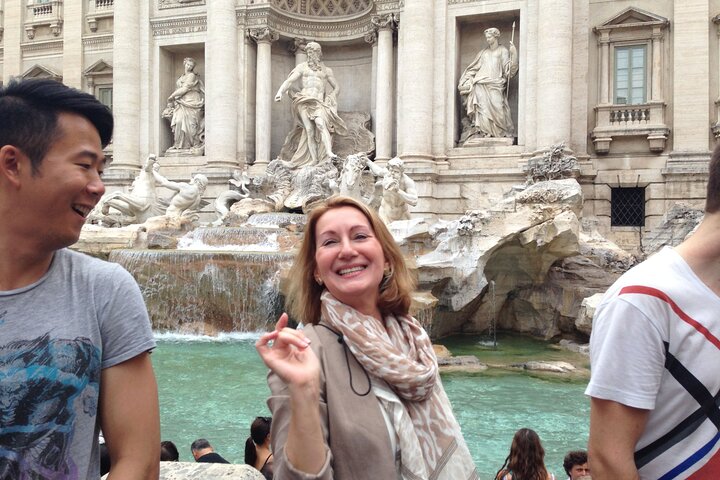
The Trevi Fountain (Italian: Fontana di Trevi) is an 18th-century fountain in the Trevi district in Rome, Italy, designed by Italian architect Nicola Salvi and completed by Giuseppe Pannini and several others. Standing 26.3 metres (86 ft) high and 49.15 metres (161.3 ft) wide,[1] it is the largest Baroque fountain in the city and one of the most famous fountains in the world. The fountain has appeared in several films, including Roman Holiday (1953); Three Coins in the Fountain (1954); Federico Fellini's classic, La Dolce Vita (1960); Sabrina Goes to Rome (1998); and The Lizzie McGuire Movie (2003).[2]
Although the Pantheon has stood from antiquity, the area in front of it had over the centuries become choked with a maze of sheds and small shops that had grown up around its columns. These medieval accretions were cleared by order of Pope Eugenius IV (1431–39) and the piazza was laid out and paved.[1] It took its name from the Pantheon, which had been converted in the 7th century AD into a Christian church dedicated to "St. Mary and the Martyrs" but informally known as Santa Maria Rotonda.[2] The piazza is roughly rectangular, approximately 60 meters north to south and 40 meters east to west, with a fountain and obelisk in the center and the Pantheon on the south side.
The Pantheon "[temple] of all the gods") is a former Roman temple and, since 609 AD, a Catholic church in Rome, Italy, on the site of an earlier temple commissioned by Marcus Agrippa during the reign of Augustus (27 BC – 14 AD). It was rebuilt by the emperor Hadrian and probably dedicated c. 126 AD. Its date of construction is uncertain, because Hadrian chose not to inscribe the new temple but rather to retain the inscription of Agrippa's older temple, which had burned down. The building is cylindrical with a portico of large granite Corinthian columns (eight in the first rank and two groups of four behind) under a pediment. A rectangular vestibule links the porch to the rotunda, which is under a coffered concrete dome, with a central opening (oculus) to the sky. Almost two thousand years after it was built, the Pantheon's dome is still the world's largest unreinforced concrete dome.The height of the oculus and the diameter of the interior circle are the same, 43 meters
The Temple of Hadrian is an ancient Roman structure dedicated to the deified emperor Hadrian by his adoptive son and successor Antoninus Pius in 145 This temple was previously known as the Basilica of Neptune but has since been properly attributed as the Temple of Hadrian completed under Antoninus Pius. With one cella wall and eleven columns from the external colonnade surviving, the remains of the temple have been incorporated into a later building in the Piazza di Pietra, whereby its facade, alongside the architrave which was reconstructed, later on, was incorporated into a 17th-century papal palace by Carlo Fontana, now occupied by Rome's Chamber of commerce. While only part of the structure remains, excavations and scholarship have provided us with information regarding its construction techniques and stylistic influences, helping us recreate the building dynamics and significance of the Temple of Hadrian in Imperial Rome.
It was built atop the ruins of the ancient baths of Nero, next to Piazza Navona. The terrain had been acquired in the Middle Ages by the monks of the Abbey of Farfa, who later ceded it to France. The new building was begun at the end of the 15th century and completed in 1505, for the Medici family. It housed two Medici cardinals and cousins, Giovanni and Giulio, who both later became popes as Leo X and Clement VII, respectively. Catherine de' Medici, Clement VII's niece, also lived here before she was married to Henry, son of King Francis I of France in 1533. Cardinal Francesco Maria Del Monte, patron of the artist Caravaggio, lived there until his death in 1627. The palace takes its name from Madama Margherita of Austria, the illegitimate daughter of Emperor Charles V, who married another illegitimate son, Alessandro de' Medici, and, after his death, Ottavio Farnese. Thus part of the art collection of the Florentine Medici family was inherited by the Farnese family.
Piazza Navona is one of the most famous squares in Rome, built by the Pamphili family. Its shape is that of an ancient stadium: it was built in a monumental style at the behest of Pope Innocent X.
Cancelamento
Cancelamento gratuito até 24 horas antes do início, com reembolso total.
Avaliações
4,0
- 52
- 40
- 30
- 21
- 10
As classificações vêm de 3 avaliações recolhidas pelo nosso parceiro de reservas. São as palavras dos viajantes, pela ordem em que foram escritas — nunca reordenadas para favorecer a experiência.
Antes de ir
- Ponto de encontro
- Directions: You will meet your guide on the top of the Spanish Steps, in Piazza della Trinità dei Monti, near the big Obelisk. Look for the label "TOUR IN THE CITY". Please be on time!
- Recolha
- Todos se encontram no ponto de partida; não há recolha.
- Tipo de bilhete
- Mobile or paper ticket accepted
- Operado por
- Tour In Rome by Tour in the City
- Infants and small children can ride in a pram or stroller
- Public transportation options are available nearby
- Suitable for all physical fitness levels
- Dress code is smart casual
- An adult per booking is required
- A maximum of 7 people per booking
- We kindly inform you that any kind of disability (mobility issues, wheelchair, visual impairment, hearing impairment,... ) or anything that might prevent you to regularly join the tour, MUST BE communicate in advance to our staff. For people with disabilities, the tour route may be different from the one presented.
- Itinerary may vary depending on extraordinary events
How it compares in Roma
- Its from-price is 59% above the median of the 8352 experiences we list in Roma.
- Its length is typical for the group.
- By number of reviews it ranks 3570 of 8352.
- The operator lists free cancellation on it.
About Roma
Roma sobrepõe quase três mil anos de história numa cidade para percorrer a pé, do Coliseu e do Fórum às praças barrocas e à arte do Vaticano.
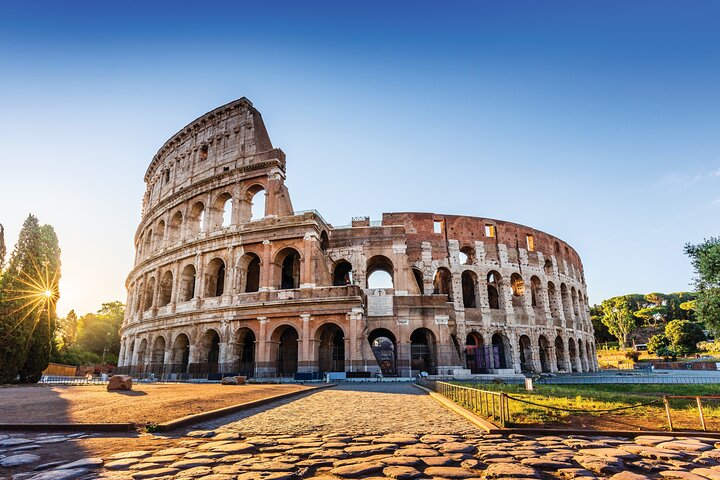
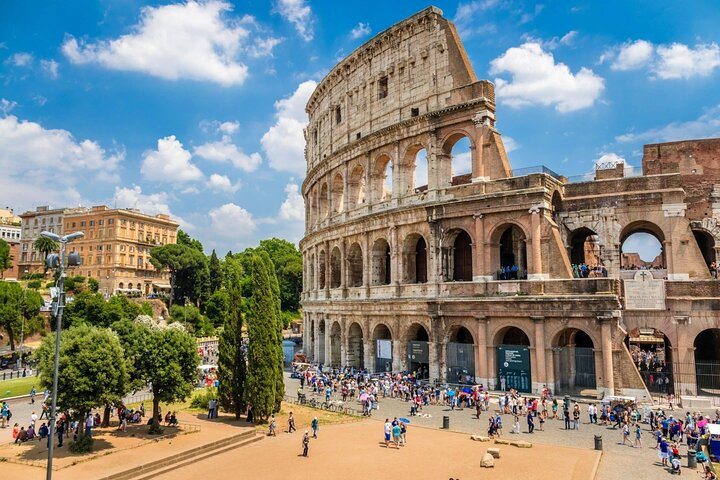
A Roma antiga continua à vista de todos. O Coliseu, o Fórum Romano e o Palatino erguem-se juntos no coração da cidade, o Panteão mantém-se de pé com o seu óculo aberto, e fragmentos de templos e aquedutos surgem entre os prédios de habitação. Do outro lado do Tibre, a Cidade do Vaticano guarda a Basílica de São Pedro, os Museus do Vaticano e o teto da Capela Sistina pintado por Miguel Ângelo.
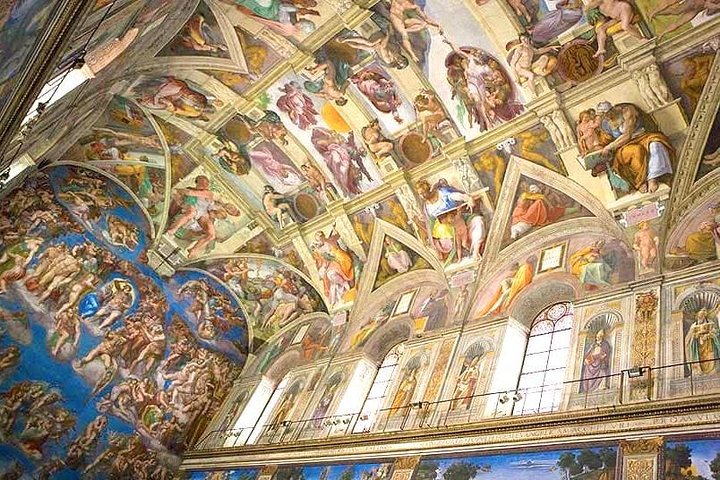
Top-ranked sights in Roma: Colosseum, Vatican Museums, Sistine Chapel.
Ofertas especiais em Roma
Os preços riscados vêm do operador, nunca de nós.
 Esgota depressa-20 %
Roma: Coliseu, Museus do Vaticano, Capela Sistina e Tour a Pé
desde
US$ 172US$ 138![Rome Tour on Quality E-bikes, Small Groups and Local Guide!]() -20 %Cancelamento gratuito
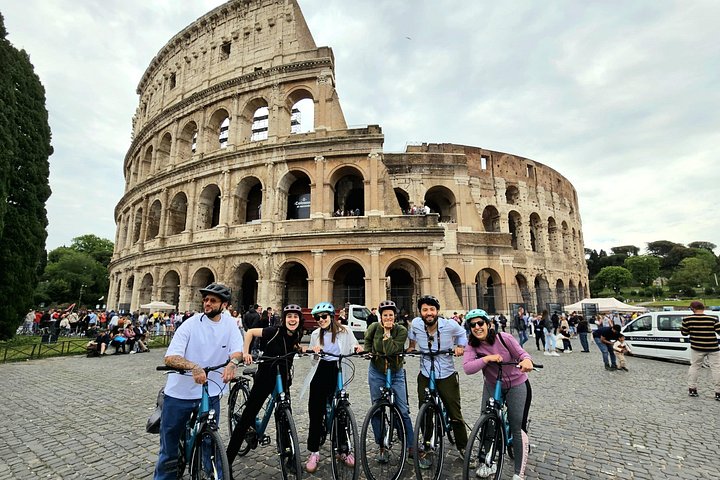
Rome Tour on Quality E-bikes, Small Groups and Local Guide!
desde
US$ 56US$ 45![Carrinho de golfe Roma: deslize pelas maravilhas antigas e gemas escondidas]() -20 %Cancelamento gratuito
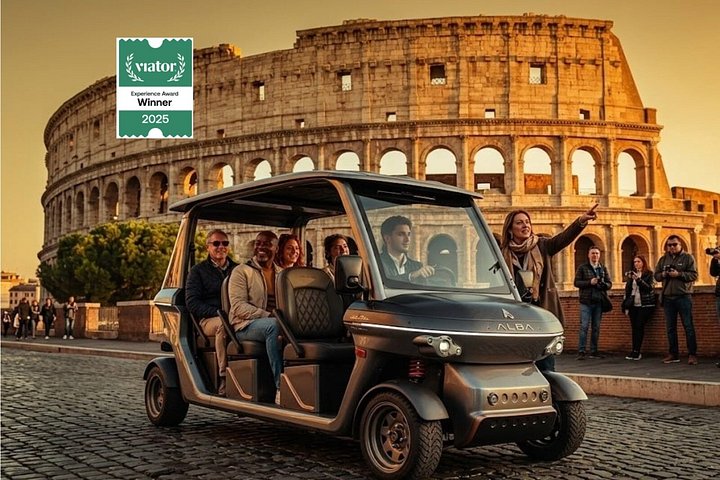
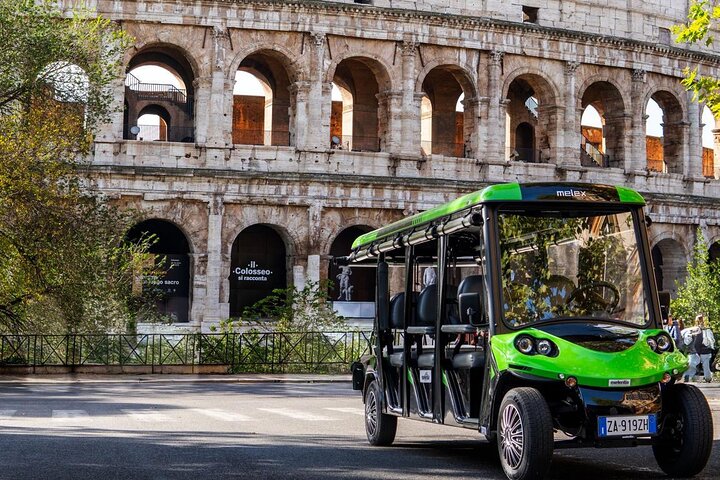
Carrinho de golfe Roma: deslize pelas maravilhas antigas e gemas escondidas
desde
US$ 154US$ 124

Experiências semelhantes
 Cancelamento gratuito
 Cancelamento gratuitoSem filas
![Visita aos Museus do Vaticano, Capela Sistina e Basílica de São Pedro]() Esgota depressaCancelamento gratuito
![Skip-the-Line Vaticano, Capela Sistina e São Pedro | Grupo pequeno]() Esgota depressaCancelamento gratuito

Autocarro turístico em Roma
 -50 %Cancelamento gratuito
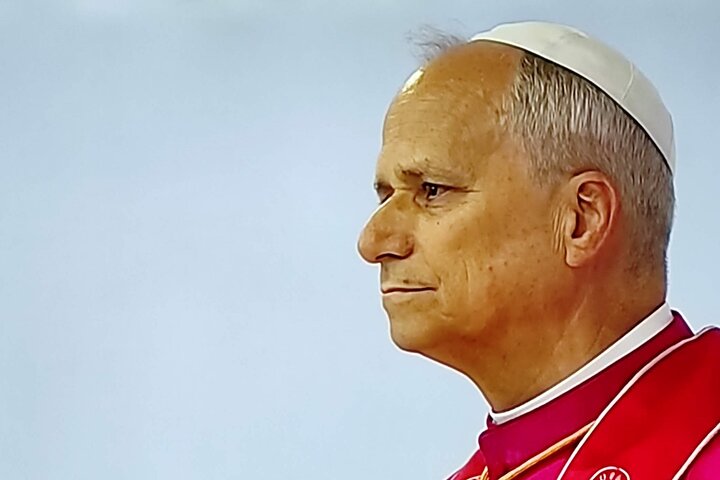
Tour da Audiência Papal do Vaticano com Assistência Local
desde
US$ 41US$ 21