Private Varosha Ghost Town Tour
As descrições são apresentadas em inglês.
- 1–5 horas
- Cancelamento gratuito até 24 h antes
- 2 idiomas
- Visita privada
Destaques
Half Day Ghost Town Walking Panoramic tour of the border fence Guided on varosha and famagusta history Opportunity to see the buildings in the ghost city up close
Inclui
O que está incluído
- Air-conditioned vehicle
- Parking Fees
O que não está
- Lunch
Itinerário
The Varosha area of Famagusta is completely unique in the world and for the first time in more than 48 years, you can visit The ghost town of Famagusta, this tour is the best way to see inside the abandoned holiday resort which has been deserted since the 1974 War
Cancelamento
Cancelamento gratuito até 24 horas antes do início, com reembolso total.
Avaliações
5,0
- 52
- 40
- 30
- 20
- 10
As classificações vêm de 2 avaliações recolhidas pelo nosso parceiro de reservas. São as palavras dos viajantes, pela ordem em que foram escritas — nunca reordenadas para favorecer a experiência.
Antes de ir
- Ponto de encontro
- İn front of the Petek pataserie our guide will be waiting you
- Recolha
- Todos se encontram no ponto de partida; não há recolha.
- Tipo de bilhete
- Mobile or paper ticket accepted
- Operado por
- Arima Tourism
- Infants and small children can ride in a pram or stroller
- Public transportation options are available nearby
- Infants are required to sit on an adult’s lap
- Suitable for all physical fitness levels
How it compares in Famagusta
- Its from-price is 73% above the median of the 15 experiences we list in Famagusta.
- It is shorter than most of them.
- By number of reviews it ranks 9 of 15.
- The operator lists free cancellation on it.
About Famagusta
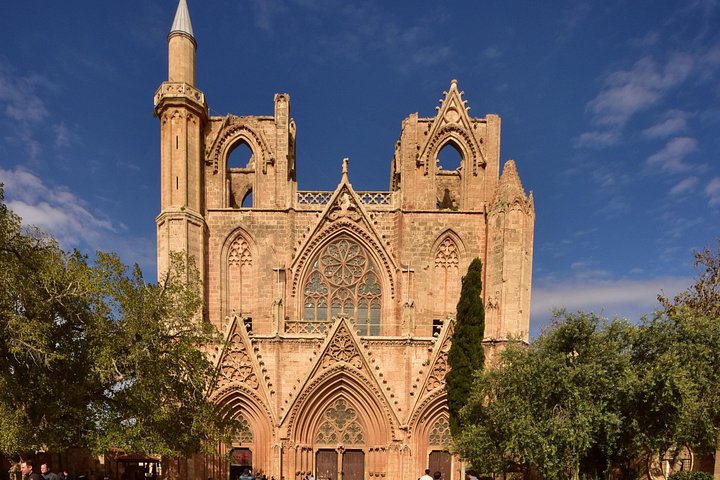
Famagusta, on Cyprus's east coast, is a walled port with Venetian ramparts, a Gothic cathedral turned mosque and the ruins of ancient Salamis nearby.
Famagusta, known in Turkish as Gazimağusa, lies on the east coast of Cyprus, with the island's deepest harbour. Ptolemy II founded a settlement here in the third century BC, and it grew into a rich port under the Lusignan kings, who ruled from 1192, and then under Genoa and Venice. Ramparts built mostly by the Venetians in the fifteenth and sixteenth centuries enclose the old city.