-20 %Cancelamento gratuito
Sarajevo: Mostar Blagaj Kravica Waterfall and Konjic Day Tour
desdeUS$ 92US$ 73
As descrições são apresentadas em inglês.
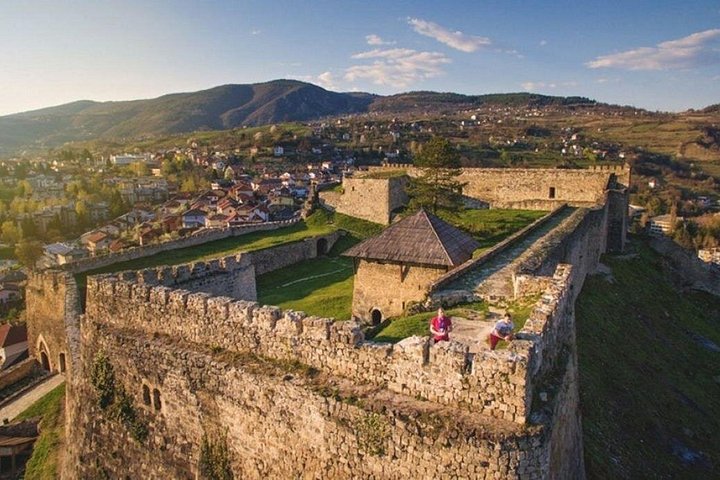
By the arrival in Kraljeva Sutjeska You have the feeling that You have sailed through time and have returned to the past. Kraljeva Sutjeska and fortress Bobovac were the seat of two Bosnian kings of the Kotromanić, Tomaš and Tvrtko dynasties. The importance of this historical fortress is also that the Bosnian royal crown was guarded, the royal grave chapel, which is assumed that King Stjepan Ostoja ordered the old bishop’s church to be rearranged for that purpose. Three Bosnian kings were buried there: Stjepan Ostoja, Tvrtko II Kotromanić and Stjepan Tomaš Kotromanić. The only fully preserved object in Bobovac is the mausoleum which Queen Katarina raised to the King Tvrtko after his death. For the last Bosnian Queen, St. Catherine, women as a sign of grief in their traditional costumes cover the head with a black scarf. In about 2-hour long drive, You will be in Kraljeva Sutjeska, getting closer to Bobovac, medieval town.
By the arrival in Kraljeva Sutjeska You have the feeling that You have sailed through time and have returned to the past. Kraljeva Sutjeska and fortress Bobovac were the seat of two Bosnian kings of the Kotromanić, Tomaš and Tvrtko dynasties. The importance of this historical fortress is also that the Bosnian royal crown was guarded, the royal grave chapel, which is assumed that King Stjepan Ostoja ordered the old bishop’s church to be rearranged for that purpose. Three Bosnian kings were buried there: Stjepan Ostoja, Tvrtko II Kotromanić and Stjepan Tomaš Kotromanić. The only fully preserved object in Bobovac is the mausoleum which Queen Katarina raised to the King Tvrtko after his death. His remains were moved to an unknown location during the last war. For the last Bosnian Queen, St. Catherine, women as a sign of grief in their traditional costumes cover the head with a black scarf.
Kraljeva Sutjeska and fortress Bobovac were the seat of two Bosnian kings of the Kotromanić, Tomaš and Tvrtko dynasties. The importance of this historical fortress is also that the Bosnian royal crown was guarded, the royal grave chapel, which is assumed that King Stjepan Ostoja ordered the old bishop’s church to be rearranged for that purpose. Three Bosnian kings were buried there: Stjepan Ostoja, Tvrtko II Kotromanić and Stjepan Tomaš Kotromanić. The only fully preserved object in Bobovac is the mausoleum which Queen Katarina raised to the King Tvrtko after his death. His remains were moved to an unknown location during the last war. For the last Bosnian Queen, St. Catherine, women as a sign of grief in their traditional costumes cover the head with a black scarf.
Cancelamento gratuito até 24 horas antes do início, com reembolso total.
Sarajevo, capital of Bosnia and Herzegovina, lies in a mountain-ringed valley where Ottoman bazaars meet Austro-Hungarian boulevards.
Sarajevo follows the Miljacka River through a long valley with steep green hills on either side. Baščaršija, the old Ottoman bazaar, has copper workshops, tea houses and the Sebilj, a wooden fountain, and the Gazi Husrev-beg Mosque dates from the 1530s. West of it, the streets turn to Austro-Hungarian façades and cafés, so that a mosque, a Catholic cathedral, an Orthodox church and a synagogue all stand within a short walk.
Top-ranked sights in Sarajevo: Sarajevo Tunnel (Tunel Spasa), Sarajevo Olympic Bobsleigh and Luge Track, Latin Bridge (Latinska Ćuprija).
Os preços riscados vêm do operador, nunca de nós.
desdeUS$ 92US$ 73
Adicione Ticket Hall ao seu ecrã principal
Bilhetes e guias das cidades a um toque, mesmo sem ligação.
Ticket Hall