-10 %Cancelamento gratuito
Full Day Tour of Luxor West Bank Temples and Tombs (Private)
desdeUS$ 32US$ 29
Categorias em Luxor
As descrições são apresentadas em inglês.
Step back in time on this full-day journey through ancient Thebes, guided by an English-speaking Egyptologist. Explore both banks of the Nile in one seamless day — from the monumental temples of the East Bank to the sacred tombs of the West Bank. Begin at the Valley of the Kings, descending into ancient pharaohs' tombs carved deep into the mountain. Continue to the Temple of Hatshepsut against limestone cliffs at Deir el-Bahari, before stopping at the Colossi of Memnon, twin stone giants guarding the West Bank for over 3,400 years. After lunch, cross to the East Bank to marvel at Karnak Temple, the largest religious complex ever built, and finish at Luxor Temple, beautifully illuminated as evening approaches. Hotel pickup and drop-off, an air-conditioned vehicle, lunch, water, and entrance fees are included — just bring your curiosity and comfortable shoes.
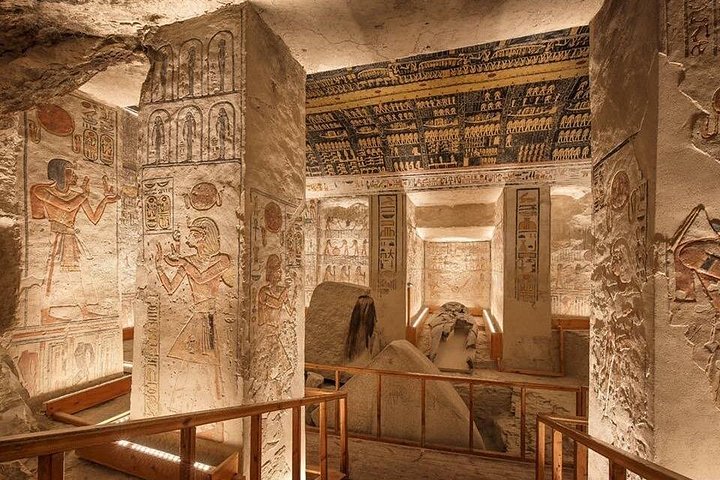
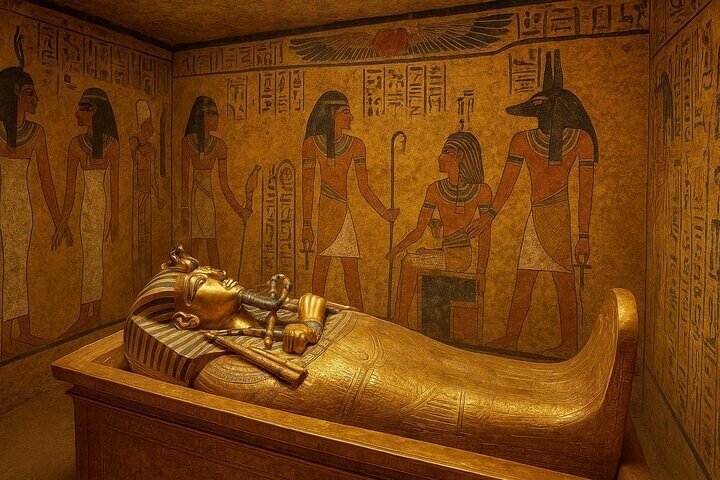
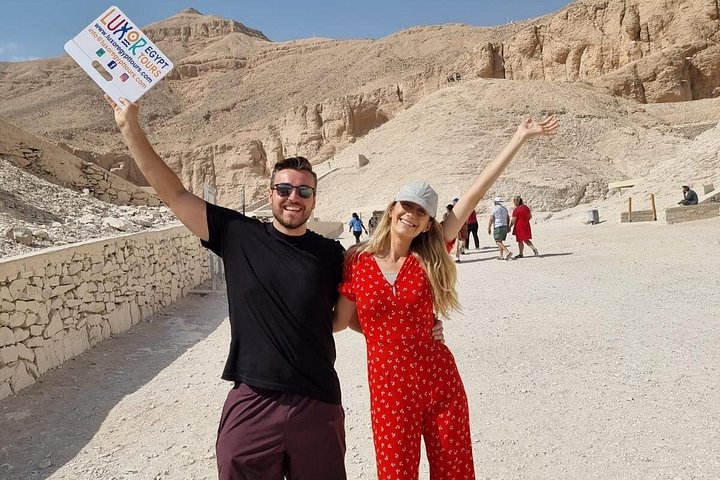
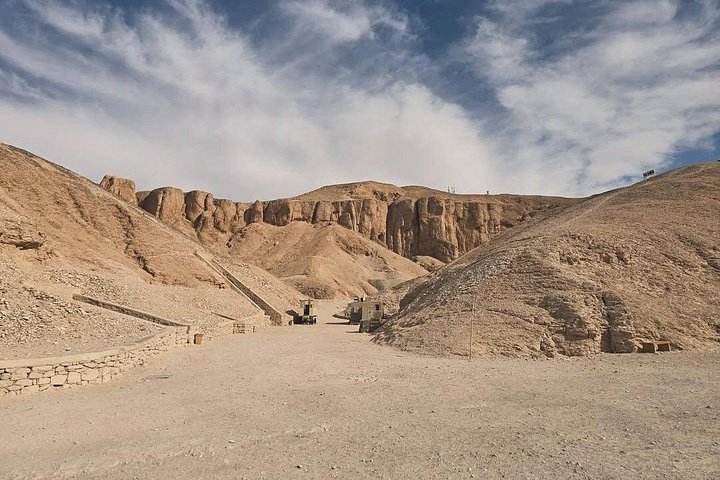
Valley of the Kings For nearly 500 years, from the 16th to 11th century BC, the Valley of the Kings served as the royal burial ground for the New Kingdom pharaohs, including Seti I, Ramesses II, and the young Tutankhamun. Ancient Egyptians chose this remote desert valley, overlooked by the pyramid-shaped peak of El-Qurn, believing its hidden location and the mountain's natural pyramid form would protect their kings' tombs from robbers. To date, 63 tombs and chambers have been discovered, richly decorated with scenes from the Book of the Dead and other funerary texts intended to guide the pharaoh's soul through the afterlife. The 1922 discovery of Tutankhamun's nearly intact tomb by Howard Carter remains one of archaeology's most celebrated finds.
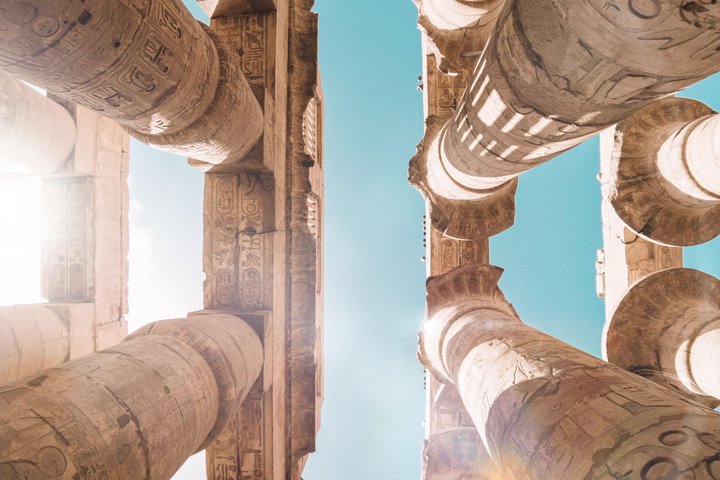
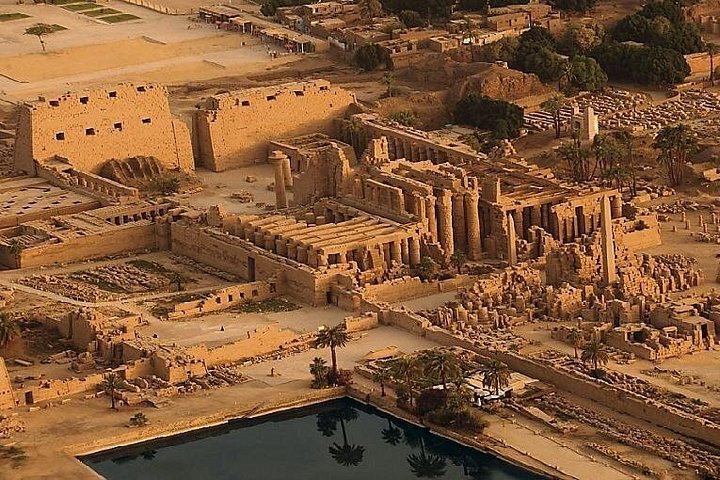
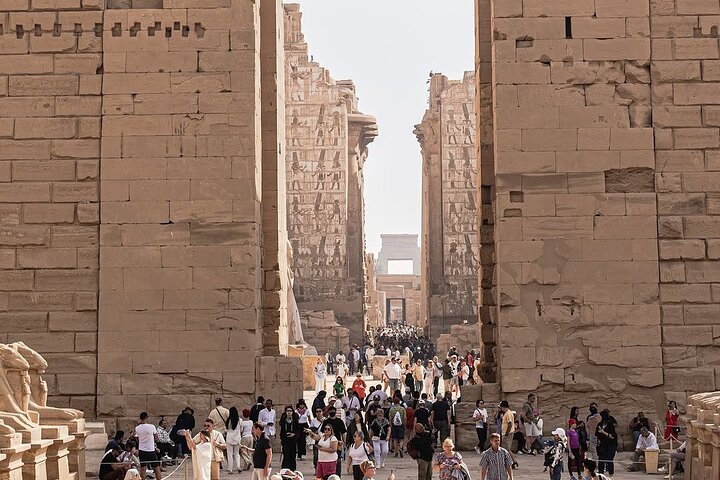
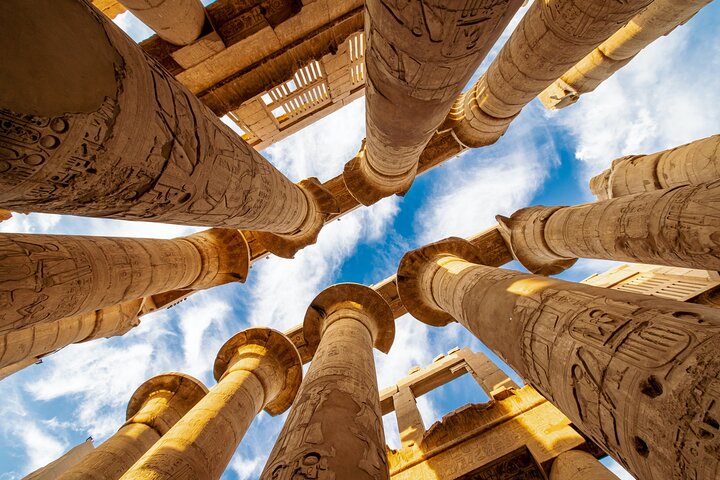
Karnak Temple Karnak is the largest religious complex ever built, constructed and expanded over almost 2,000 years by successive pharaohs, dedicated to the Theban Triad of Amun-Ra, his consort Mut, and their son Khonsu. Its Great Hypostyle Hall, with 134 massive columns, remains one of the most awe-inspiring architectural achievements of the ancient world, alongside its sacred lake and avenue of ram-headed sphinxes.
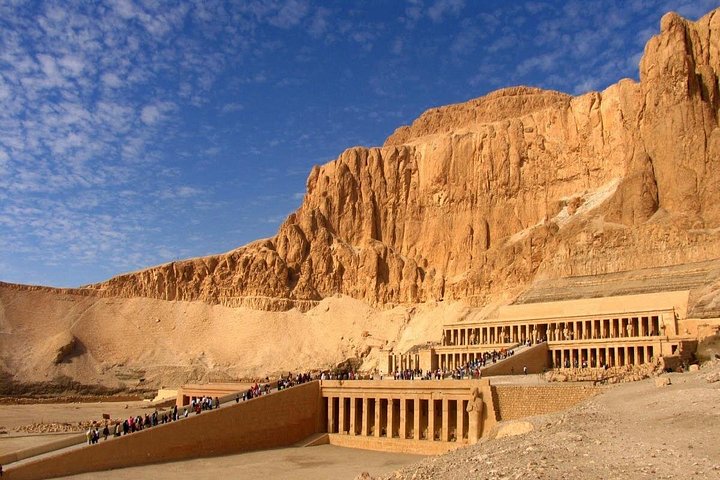
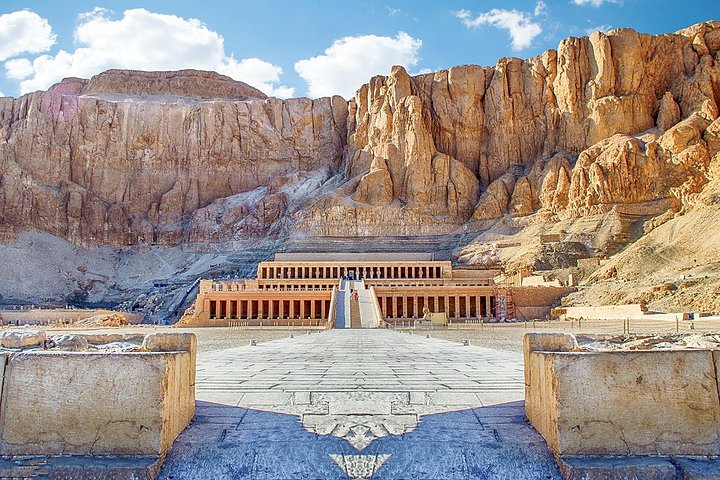
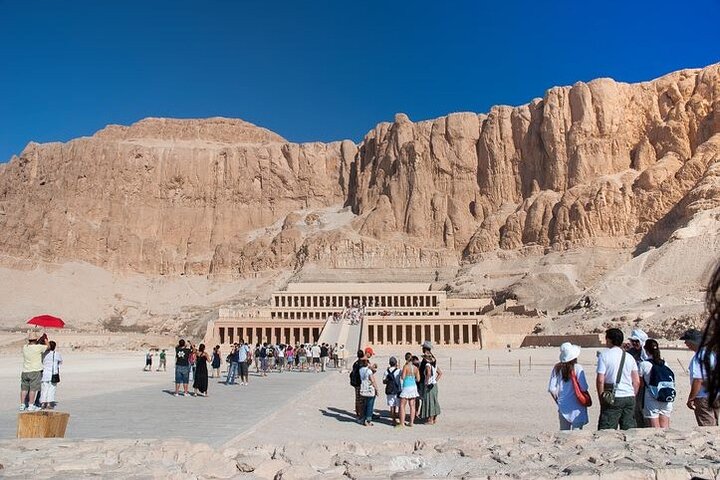
Temple of Hatshepsut Built into the cliffs of Deir el-Bahari around 1470 BC, this mortuary temple honors Hatshepsut, one of the few women to rule Egypt as pharaoh in her own right. Designed by her architect Senenmut, the temple's three tiered terraces and colonnades represented a revolutionary departure from traditional Egyptian temple architecture, harmonizing perfectly with the natural limestone cliffs behind it. Reliefs on its walls depict Hatshepsut's divine birth, her celebrated trading expedition to the Land of Punt, and her transportation of obelisks from Aswan, all designed to legitimize and celebrate her unusual reign.
Colossi of Memnon These two 18-meter-tall stone statues have stood on the Theban plain for over 3,400 years, originally guarding the entrance to the now-vanished mortuary temple of Amenhotep III, once the largest temple complex in Egypt. The statues became famous in antiquity for producing a strange singing sound at dawn, believed by ancient Greek and Roman visitors to be the mythical hero Memnon greeting his mother Eos, goddess of the dawn. The sound stopped after Roman-era repairs, but the colossi remain among the most iconic landmarks of the West Bank.
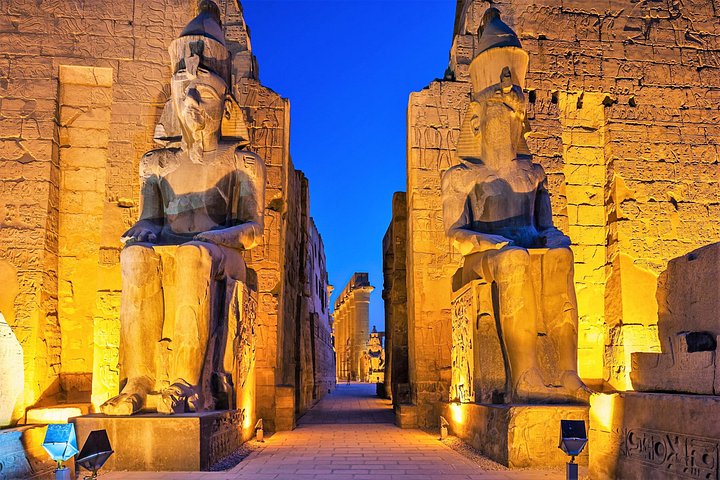
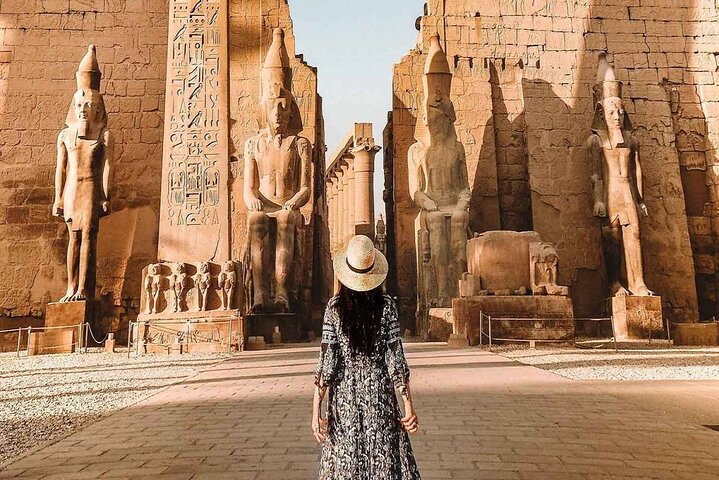
Luxor Temple Located along the Nile in the heart of the modern city, Luxor Temple was built largely by Amenhotep III and completed by Ramesses II. Unlike most Egyptian temples, it was not dedicated to a specific god or a deified pharaoh, but rather focused on the concept of kingship itself, serving as the setting for the annual Opet Festival, when statues of the Theban Triad were carried in procession from Karnak.
Cancelamento gratuito até 24 horas antes do início, com reembolso total.
5,0
As classificações vêm de 2 avaliações recolhidas pelo nosso parceiro de reservas. São as palavras dos viajantes, pela ordem em que foram escritas — nunca reordenadas para favorecer a experiência.
Luxor ergue-se no local da antiga Tebas, com vastos templos na margem leste do Nilo e os túmulos reais do Vale dos Reis do outro lado do rio.
Na margem leste, o complexo do templo de Karnak estende-se por hectares de pilones, obeliscos e a floresta de colunas da sua Grande Sala Hipostila. Uma avenida de esfinges liga-o ao Templo de Luxor, no centro da cidade, especialmente evocador quando iluminado à noite. O Museu de Luxor e o Museu da Mumificação ficam ao longo da marginal do rio.
Top-ranked sights in Luxor: Valley of the Kings, Temple of Hatshepsut (at Deir el-Bahari), Colossi of Memnon.
Os preços riscados vêm do operador, nunca de nós.
desdeUS$ 32US$ 29
desdeUS$ 10US$ 10
desdeUS$ 10US$ 8
desdeUS$ 18US$ 14
Adicione Ticket Hall ao seu ecrã principal
Bilhetes e guias das cidades a um toque, mesmo sem ligação.
Ticket Hall