Sight Sailing in Lisbon
Les descriptions sont affichées en anglais.
- 2 h 30 min
- 3 langues
- Confirmation immédiate
- Visite privée
Points forts
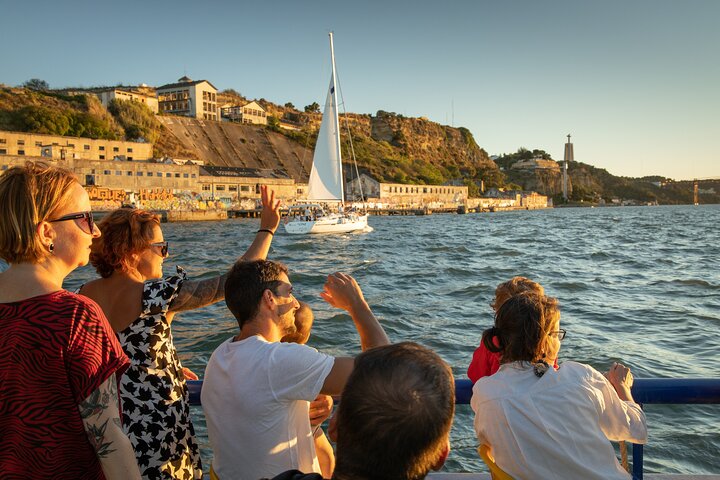
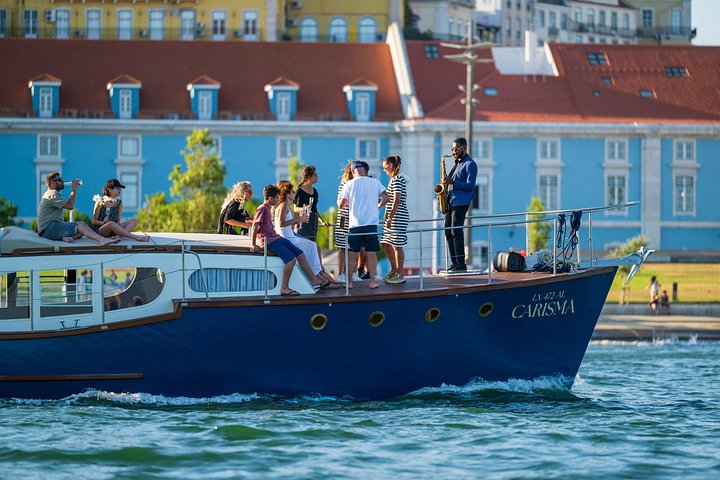
• Discover the other side of Lisbon! • Unforgettable and relaxing experience. • Amazing sights of the City of the Seven Hills. In this unforgettable and relaxing experience, set in an incomparable space and environment, you will be presented to a unique perspective of Lisbon. Sailed on a sailing boat designed to satisfy you - with comfort and security - this tour offers you the opportunity to discover the banks of Tagus River and provides you with magnificent views of the city, of its monuments and enchantments. Being the longest river in the Iberian Peninsula, it is in its estuary that Tagus River blends with the Atlantic Ocean. It is the place where the sails meet the wind and it is the ideal stage for this spectacle.
Inclus
Ce qui est inclus
- Local guide
- Bottled water
- Private tour
- Alcoholic Beverages
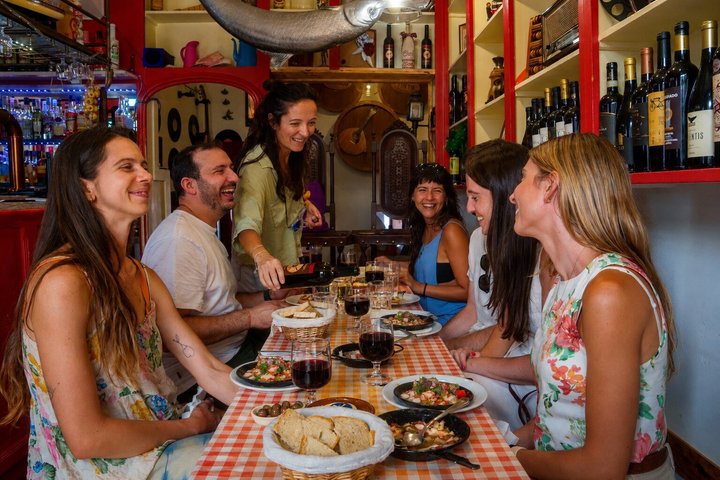
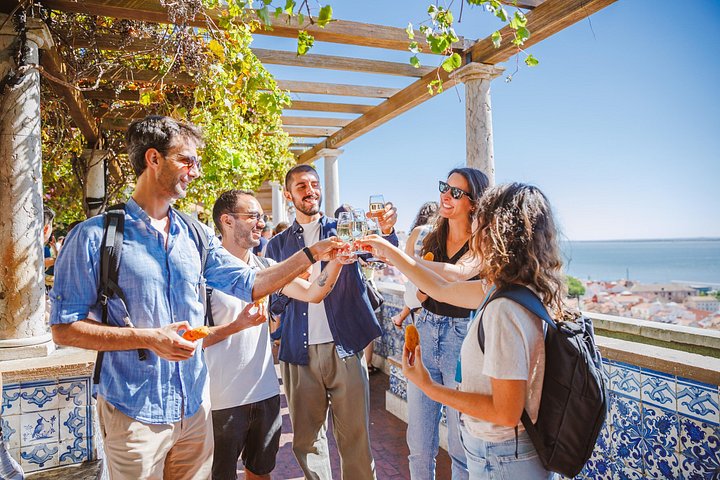
- Wine tasting
- All Fees and Taxes
- Opportunity to taste the Portuguese gastronomy
Non inclus
- Hotel pickup and drop-off
Itinéraire
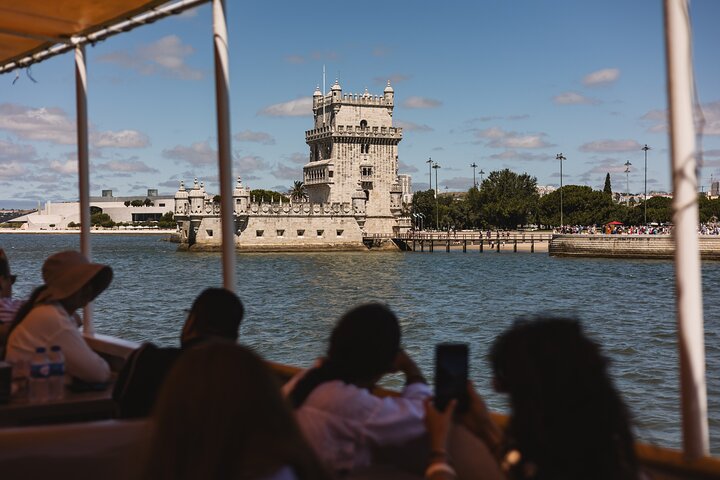
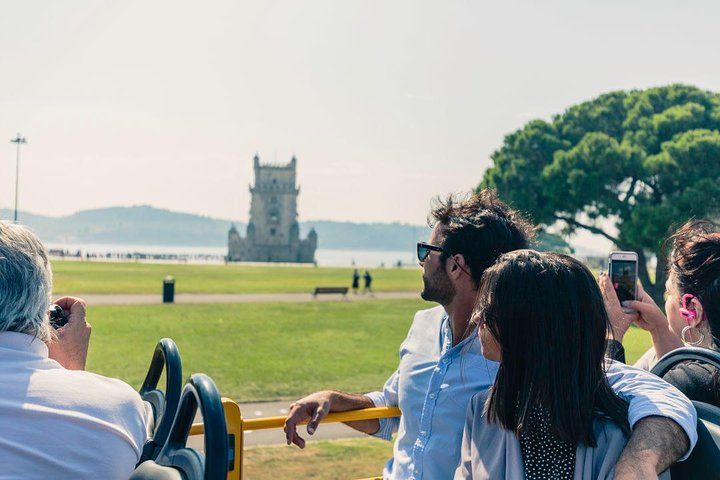
The Belém Tower, built at the narrowest point of the Tagus estuary, was intended to defend Lisbon. Initially surrounded by the waters around its perimeter, today, this structure is symbolically linked to land by a pedestrian bridge. This was the way found to preserve its original context. Classified as a World Heritage Site by UNESCO, since 1983, Belém Tower is undoubtedly one of the most expressive monuments of Lisbon.
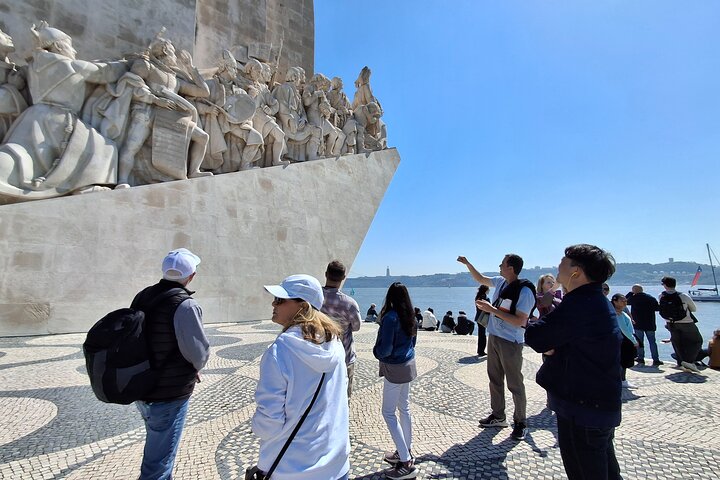
With 50 meters high, the Discoveries Monument has the shape of a ship, comprising two ramps that ends on the prow with the statue of the initiator of the Discoveries Age – Henry, the Navigator. Also, Fernão de Magalhães, Luís de Camões, Pedro Álvares Cabral and Vasco da Gama are some of the 32 figures sculpted in stone and that can be found on the monument. These represents an historical summary of personalities linked directly or indirectly to the Age of the Discoveries. The original Discoveries Monument was built in 1940 for the Portuguese World Exhibition. It was designed by the architec and film-maker Continelli Telmo. It was built on perishable materials and dismantled three years later, in 1943.
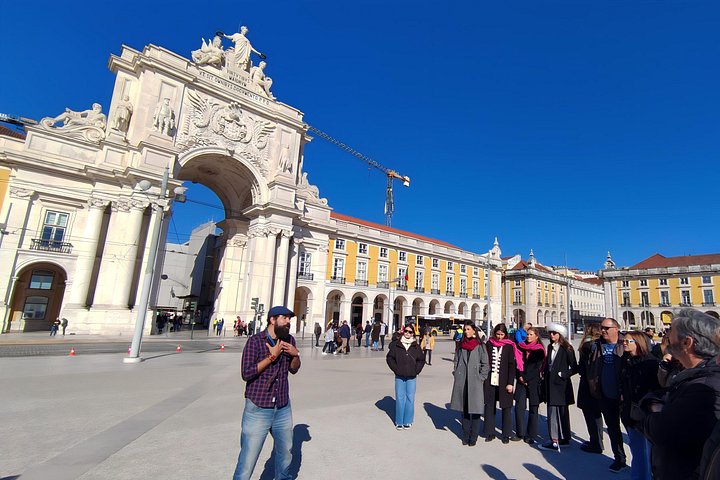
The earthquake that destroyed Lisbon started around 9:30 a.m. on November 1, 1755. The earth shook violently. Thousands of buildings collapsed mainly in the downtown area and on the hillside to the Chiado. The Palácio Real da Ribeira, the Teatro da Ópera, convents, palaces, schools, hospitals, … Everything collapsed. The square adopted in the reconstruction plans made it possible to design Terreiro do Paço, a majestic square open onto the Tagus estuary. Today this square hosts major events all year round. One of the most impressive is the fireworks display put on by the Lisbon City Council on New Year’s Eve.
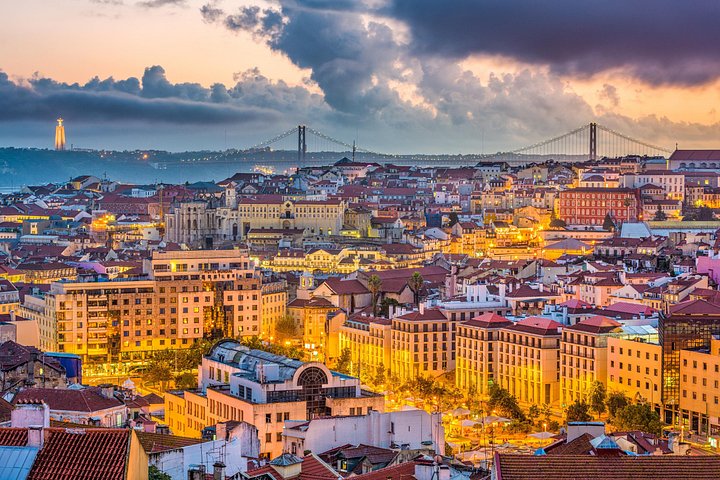
Sometimes named as the “Portuguese Golden Gate Bridge” because of its similarities with the suspension bridge of San Francisco (USA). In fact, after more than 50 years of ideas and projects, the construction of this bridge was attributed to the same North American company. Originally known as Ponte Salazar, this engineering work would go down in the city’s history for several reasons. Having cost less than anticipated and being executed in record time were two of them. This bridge is essential in the communication of the two banks, connecting the cities of Lisbon and Almada.
Alfama is the oldest neighborhood in Portugal and one of the oldest in Europe. It is located on the slope of the hill next to the Castle of São Jorge and has the Tagus River as one of its limits. It is one of the most characteristic and picturesque neighborhoods in the city, with narrow cobbled streets, colorful houses and stunning views over the Tagus River. Alfama is also famous for its musical culture, especially Fado, a traditional form of Portuguese music. There are several bars and restaurants in the neighborhood that offer live Fado performances, where visitors can enjoy an evening of music and gastronomy.
Christ-King is made up of a 75-metre-high portico, topped by the statue of the Most Holy Redeemer with open arms facing the city of Lisbon, 28 meters high. The pedestal, including the portico, rises to 82 meters in height. The monument to Christ-King is the biggest attraction in the municipality of Almada. But, in reality, the monument to Christ-King was built in fulfillment of a vow made by the Portuguese episcopate in 1940, which asked God to free Portugal from participating in the Second World War. The President of the Council of Ministers, António Oliveira Salazar, preferred to remain neutral, as Portugal did not participate in that war.
Ajuda Palace is a historic landmark in the Portuguese capital. Built in the 19th century, the palace was designed as a residence for the Portuguese royal family and is now an important national museum. In addition to its historical and architectural importance, Ajuda Palace is also known for its privileged location, with stunning views over the Tagus and the city of Lisbon. Today, Ajuda Palace is an important national museum, with permanent exhibitions on the history of the Portuguese royal family and on the architecture and decorativism of the palace.
São Jorge Castle rises in a dominant position on a high hill in the historic center, offering visitors one of the most beautiful views over the city and the Tagus river estuary. The castle itself was founded in the 10th and 11th centuries, when Lisbon was an important Muslim port city. In 1147, the first king of Portugal, D. Afonso Henriques, conquered the castle and city from the Moors.
The National Pantheon, also known as the Church of Santa Engrácia, is one of the main tourist attractions in Lisbon, located in Alfama district. It certainly is an important architectural attraction in the city, with a rich history and stunning panoramic views. The imposing appearance and unique character of the work justify its classification as a National Monument and legitimize its choice to house the remains of exceptional Portuguese people.
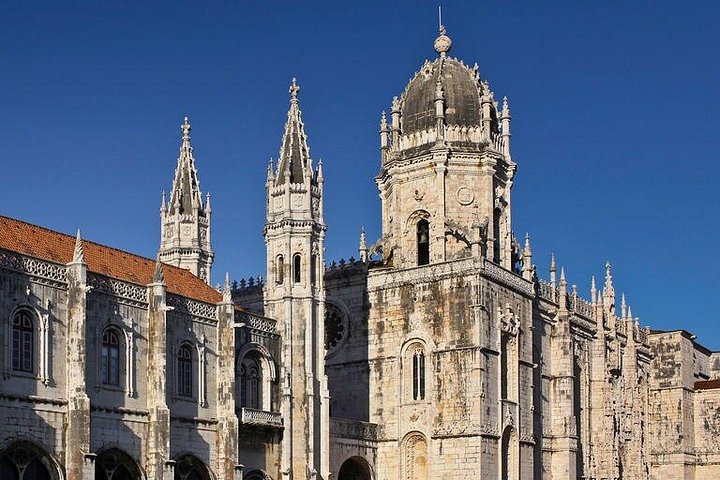
Jerónimos Monastery is 16th century Portuguese architecture masterpiece classified as a national monument. It´s located in one of the most emblematic areas of Lisbon, in a historical and monumental setting – along the river Tagus. Between the Monastery of Jerónimos and the river you can also find the Empire square. It was from here that the Portuguese navigators departed. It is here that you can find Vasco da Gama and Luís de Camões, the maximum representatives of the Portuguese maritime discoveries.
Central Tejo was a thermoelectric plant that supplied electricity to the entire Lisbon region. Built in 1908, its period of productive activity spans between 1909 and 1972. Central Tejo opened to the public for the first time in 1990 as the Electricity Museum. Soon after a new period of restoration work on its buildings and equipment, it reopened definitively in 2006.
The Museum of Art, Architecture and Technology (MAAT) is a cultural institution located in Lisbon, which opened in 2016. MAAT was designed by British architect Amanda Levete, internationally known for her innovative and futuristic approach. It systematically presents exhibitions – national and international – with the contribution of contemporary artists, architects and thinkers, as well as events and educational programs.
Annulation
All sales are final. No refund is available for cancellations.
Avis
5,0
- 544
- 40
- 30
- 20
- 10
Les notes proviennent de 44 avis recueillis par notre partenaire de réservation. Ce sont les mots des voyageurs, dans l’ordre où ils ont été écrits — jamais réorganisés pour flatter l’expérience.
À savoir avant de partir
- Point de rendez-vous
- The meeting point is Gate 1 which gives access to the marina "Doca de Recreio de Santo Amaro", under the 25 de Abril Bridge. If you have any questions, please do not hesitate to call or email us. Welcome aboard!
- Prise en charge
- Tout le monde se retrouve au point de départ ; il n’y a pas de prise en charge.
- Type de billet
- Mobile or paper ticket accepted
- Opéré par
- Lisbon Sight Sailing
- Infants and small children can ride in a pram or stroller
- Public transportation options are available nearby
- Specialized infant seats are available
- Suitable for all physical fitness levels
How it compares in Lisbonne
- Its from-price is 29% above the median of the 4320 experiences we list in Lisbonne.
- It is shorter than most of them.
- By number of reviews it ranks 574 of 4320.
About Lisbonne
Lisbonne dévale ses collines jusqu'à l'estuaire du Tage : façades d'azulejos, tramways jaunes bringuebalants, miradouros et dîners tardifs sans hâte.
Les vieux quartiers concentrent l'essentiel du charme. L'enchevêtrement de ruelles de l'Alfama grimpe vers le château Saint-Georges et résonne de fado le soir, la grille ordonnée de la Baixa descend jusqu'à la vaste place du Commerce, au bord du fleuve, et le Bairro Alto et le Chiado mêlent librairies et cafés le jour, bars la nuit. Des miradouros comme Santa Luzia et Senhora do Monte encadrent les toits rouges et l'eau scintillante.
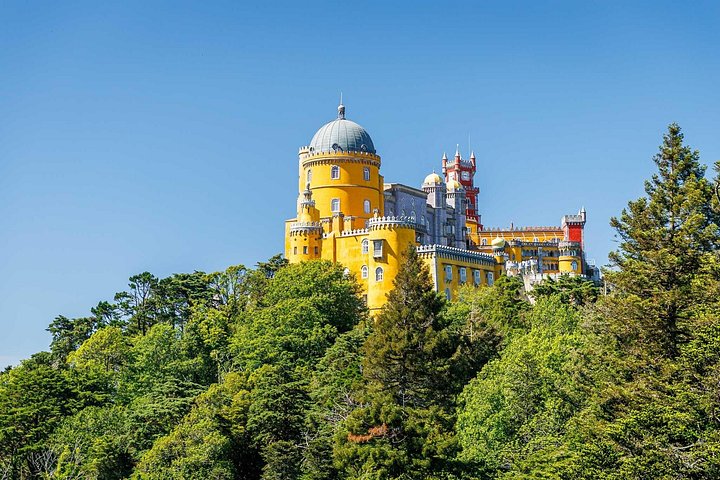
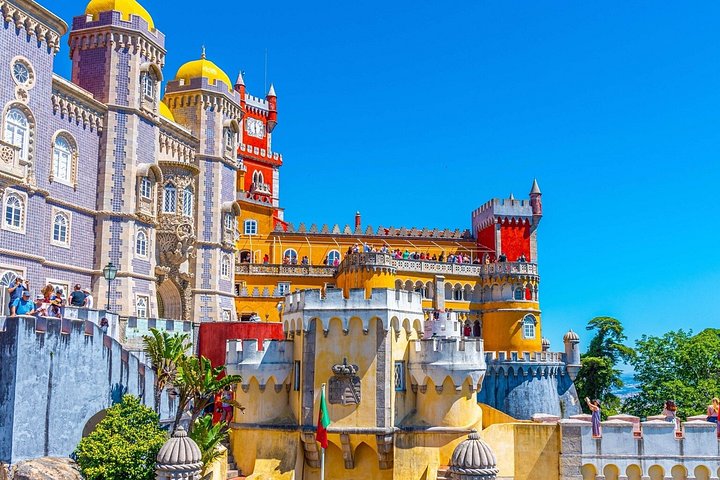
Top-ranked sights in Lisbonne: Commerce Square (Praça do Comércio), Pena National Palace (Palacio Nacional da Pena), Alfama.
Offres spéciales à Lisbonne
Les prix barrés viennent de l’opérateur, jamais de nous.
 -10 %Annulation gratuite
 -10 %Annulation gratuite
![Visite privée des incontournables de Lisbonne avec un guide local]() -5 %Annulation gratuite
Visite privée des incontournables de Lisbonne avec un guide local
dès
206 $US196 $US
Expériences similaires
 Bientôt completAnnulation gratuite
 Annulation gratuite
 Bientôt completAnnulation gratuite
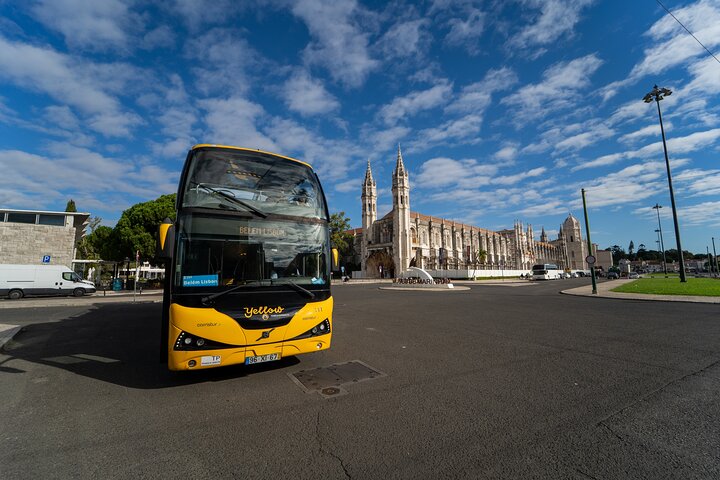
Bus à arrêts multiples à Lisbonne
 Annulation gratuite
 Annulation gratuite