Sidon, Tyre & Maghdouche Small-Group Tour | Lunch Included
- 8 hours
- Free cancellation up to 24h before
- 2 languages
- Instant confirmation
Highlights
South Lebanon is the part of the country most visitors skip — and it is the part that consistently surprises them most when they actually go. This guided small-group day trip from Beirut covers three destinations that together span 5,000 years of Phoenician, Crusader, Roman, and sacred history — with a guide who makes every stop make sense and lunch fully included. Sidon: a 13th-century Crusader sea castle built on an island off the coast, a medieval souk that actually still functions, the world's only olive oil soap museum, and a Silk Road caravanserai. Tyre: a UNESCO World Heritage Site where the Al-Bass archaeological complex — triumphal arch, colonnaded street, Roman hippodrome seating 20,000 — is one of the most complete Roman urban landscapes anywhere in the Mediterranean. Maghdouché: a hilltop sanctuary where the Virgin Mary is held to have waited while Jesus preached in Sidon — revered by Christians and Muslims for two millennia. Three stops, one guide, one included lunch.
Inclusions
What's included
- Entry/Admission to Sidon Castle (if option selected)
- Lunch in a local restaurant (if option selected)
- Air-conditioned vehicle
- Hotel pickup and drop-off in Beirut
- Entry/Admission to Sidon Soap Museum ( if option selected )
- Professional expert guide
- Entry/Admission to Al-Bass Archaeological Site ( if option selected )
What's not
- Gratuities (optional)
- Food or drinks unless specified
Itinerary
8:30 AM — Hotel pickup Your guide meets the group at your Beirut hotel and heads south along the Mediterranean coastal highway. Sidon is 45 minutes away.
Sidon Sea Castle — Crusader fortress on a Mediterranean island A 13th-century Crusader fortress on a small island just off the coast, connected to shore by a stone causeway with open sea on both sides. Phoenician traders were using this harbour 3,000 years before the Crusaders built here. Your guide covers the full layered history — Phoenician port to Crusader fortress to Mamluk conquest — from the castle ramparts.
Sidon Old Souks — the real thing Stone-vaulted alleyways where spice merchants, goldsmiths, and artisan workshops have traded continuously for centuries. Not renovated for tourism — actually functioning, actually unchanged. Your guide points out what makes Sidon's market different from every other souk in Lebanon.
Soap Museum — the only one of its kind on earth. Sidon has been producing olive oil soap for over a thousand years — and this museum, the only one dedicated to the craft anywhere in the world, tells the complete story. Housed in a restored khan in the old city. A genuinely surprising and informative stop that most travelers did not know they wanted until they are inside it.
Khan el Franj — where the Silk Road met the Mediterranean A 17th-century caravanserai built by Emir Fakhreddine II for European merchants trading along the Silk Road — arcaded courtyards, vaulted galleries, carved stone facades. One of the finest Ottoman buildings in Lebanon and a fitting final image of Sidon before heading south.
Al-Bass Archaeological Complex — Roman Tyre at full scale Enter through a triumphal arch still standing after two thousand years. Walk a colonnaded street flanked by ancient sarcophagi from the Roman necropolis. Reach the Tyre Hippodrome — one of the largest in the Roman world, built for 20,000 spectators on a 480-metre track, starting gates and turning posts still in place. Your guide places every structure in its Roman and Phoenician context — this is the kind of site where having the right guide is the difference between a good visit and an unforgettable one.
Lunch in Tyre — included Fresh Lebanese mezze and seafood at a local Tyre restaurant — Mediterranean right there, ancient city as backdrop. Fully included.
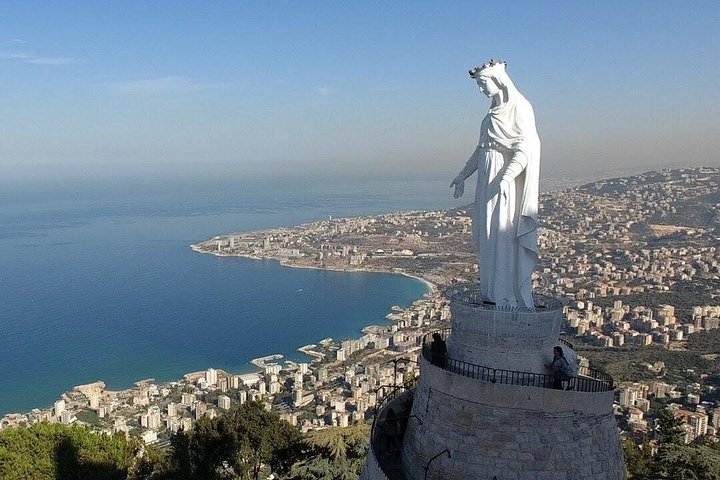
Basilica of Our Lady of Mantara — Mantara means "the one who waits" Christian tradition holds that the Virgin Mary waited in a cave here while Jesus preached in Sidon below. The Arabic name — Mantara, "the one who waits" — has been attached to this place for two millennia. Revered by Christians and Muslims alike. The Basilica stands above the ancient cave, panoramic views over the southern Lebanese coast below. A quiet, unexpected close to a day that started at a Crusader sea castle and covered 5,000 years of history along the way.
Return to Beirut — approx. 5:30–6:30 PM Drop-off at your Beirut hotel. South Lebanon done properly — Phoenician, Crusader, Roman, and sacred, all in one day.
Cancellation
Free cancellation up to 24 hours before the experience starts, for a full refund.
Reviews
4.9
- 511
- 41
- 30
- 20
- 10
Ratings come from 12 reviews collected by our booking partner. They are travellers' own words, in the order they were written — never reordered to flatter the experience.
Know before you go
- Pickup
- Pickup is included for everyone.
- Ticket type
- Mobile or paper ticket accepted
- Group size
- Up to 12 travellers
- Operated by
- Beirut Daily Tours
- Specialized infant seats are available
- Suitable for all physical fitness levels
How it compares in Beirut
- Its from-price is 55% below the median of the 193 day trips we list in Beirut.
- Its length is typical for the group.
- By number of reviews it ranks 35 of 193.
- The operator lists free cancellation on it.
About Beirut
Beirut is Lebanon's capital on a Mediterranean headland, a Phoenician port city with Roman remains and mountains rising close behind.
Beirut juts into the Mediterranean on a rocky headland, with the snow-streaked peaks of Mount Lebanon rising behind. Founded by the Phoenicians, it became the Roman city of Berytus, famed for its school of law, and the remains of Roman baths lie in the city centre. The Mohammad Al-Amin Mosque, with its blue domes, and the nearby churches of St George show the mix of faiths.
Top-ranked sights in Beirut: Jeita Grotto, Our Lady of Lebanon (Notre Dame du Liban), Byblos (Jbeil).
Special offers in Beirut
Was/now prices come from the operator, never from us.