Private Panoramic Beirut City Tour | 4 Hours · 11 Landmarks
- 4 hours
- Free cancellation up to 24h before
- 2 languages
- Instant confirmation
Highlights
Beirut in four hours — properly. Eleven landmarks, one private vehicle, one knowledgeable local driver, and a city that rewards every visitor who takes the time to look at it carefully. From the limestone sea stacks of Pigeon Rocks to the deliberately unrepaired Civil War facade of the Holiday Inn — Beirut's geography, history, religion, and resilience on display in a single half-morning. Mediterranean seafront and marina. A grand mosque and an ancient cathedral sharing the same square — four centuries of coexistence in one view. The square where Lebanon's modern political history was made three times in twenty years. Roman baths in the middle of a rebuilt downtown. Glass floors in a shopping centre revealing Phoenician ruins beneath your feet. A city that has been continuously inhabited for 5,000 years and destroyed and rebuilt so many times that its ruins have ruins. Back at your hotel by early afternoon with the day ahead.
Inclusions
What's included
- Knowledgeable local English-speaking driver
- Hotel pickup and drop-off in Beirut
- Private air-conditioned vehicle
What's not
- Lunch (back by 1:00 PM — full afternoon ahead)
- Gratuities (optional)
Itinerary
9:00 AM — Departure from Beirut hotel Your driver meets the group at your hotel. The tour starts immediately — Pigeon Rocks is five minutes away.
Pigeon Rocks — Beirut's most photographed landmark Two limestone formations rising from the Mediterranean off the Raouche coast — the image that defines Beirut on more postcards, travel articles, and Instagram posts than anything else in the city. Your driver shares the geology and the legends before heading east along the seafront.
Zaitunay Bay — the marina that Beirut rebuilt Beirut's modern waterfront marina — luxury yachts, contemporary architecture, and seafront restaurants that represent the city's determination to rebuild and keep rebuilding. A good photo stop and a glimpse of the Beirut that surprises first-time visitors.
Corniche el Manara — Beirut's democratic seafront The Mediterranean promenade where everyone in Beirut comes to walk regardless of religion, politics, neighbourhood, or background. The Manara lighthouse at the western end. Your driver explains why this stretch of coastline has functioned as the city's unofficial common ground for generations.
Martyrs' Square — where Lebanon's modern history happened The square where the Ottomans executed Lebanese nationalists in 1916 — giving it its name. The square where the Cedar Revolution of 2005 ended Syrian occupation of Lebanon. The square where the 2019 uprising shook the entire political establishment. Three defining moments of Lebanese history in one public space — your driver explains all three.
Place de l'Étoile & Beirut Souks The star-shaped French Mandate square centred on the iconic clock tower — Lebanese Parliament, sandstone facades, and the Haussmann-meets-Levantine architecture of rebuilt downtown Beirut. Then into the Beirut Souks — where glass floors reveal Phoenician, Hellenistic, and Roman archaeological remains beneath your feet as you walk through a post-war shopping district built deliberately above its own ancient marketplace.
Mohammad Al-Amin Mosque & Al-Omari Mosque The grand Blue Mosque — completed in 2008 with Ottoman-inspired domes and four minarets dominating the downtown skyline. Then Al-Omari — one of Beirut's oldest buildings, originally a Byzantine church, converted to a Crusader chapel, then transformed into an Ayyubid mosque and expanded by the Mamluks. Each era visible in the stonework. Your driver reads the architectural history of both buildings in real time.
Saint George Greek Orthodox Cathedral — neighbours since the Crusades One of Beirut's oldest and most cherished churches — standing metres from the Blue Mosque on the same square. A mosque and a cathedral sharing the same skyline for centuries. Your driver explains why this image matters so much to Lebanese identity — and what it looks like when coexistence holds and when it does not.
Roman Baths — 3rd century AD in the city centre A well-preserved Roman bath complex from the 3rd century AD — sitting in the open air of downtown Beirut because Beirut has been continuously inhabited for over 5,000 years and its ancient structures are never far from the surface. One of the most quietly extraordinary things about this city.
Holiday Inn — the bullet holes that Lebanon kept The former Holiday Inn tower stands with its Civil War facade intact — bullet holes, shell damage, and the scars of the 1975-1990 conflict that shaped everything about modern Beirut, preserved deliberately in the middle of a rebuilt downtown. Five minutes at the base of this building tells you more about Lebanon than an hour of reading. Your driver explains what happened here and why it was kept.
Return to hotel — approx. 1:00 PM Drop-off at your Beirut hotel — eleven landmarks, four hours, one city that contains more history per square kilometre than almost anywhere on earth. Afternoon completely free.
Cancellation
Free cancellation up to 24 hours before the experience starts, for a full refund.
Reviews
5.0
- 51
- 40
- 30
- 20
- 10
Ratings come from 1 reviews collected by our booking partner. They are travellers' own words, in the order they were written — never reordered to flatter the experience.
Know before you go
- Pickup
- Pickup is included for everyone.
- Ticket type
- Mobile or paper ticket accepted
- Operated by
- Lebanon Tours
- Specialized infant seats are available
- Suitable for all physical fitness levels
How it compares in Beirut
- Its from-price is 25% below the median of the 442 experiences we list in Beirut.
- It is shorter than most of them.
- By number of reviews it ranks 255 of 442.
- The operator lists free cancellation on it.
About Beirut
Beirut is Lebanon's capital on a Mediterranean headland, a Phoenician port city with Roman remains and mountains rising close behind.
Beirut juts into the Mediterranean on a rocky headland, with the snow-streaked peaks of Mount Lebanon rising behind. Founded by the Phoenicians, it became the Roman city of Berytus, famed for its school of law, and the remains of Roman baths lie in the city centre. The Mohammad Al-Amin Mosque, with its blue domes, and the nearby churches of St George show the mix of faiths.
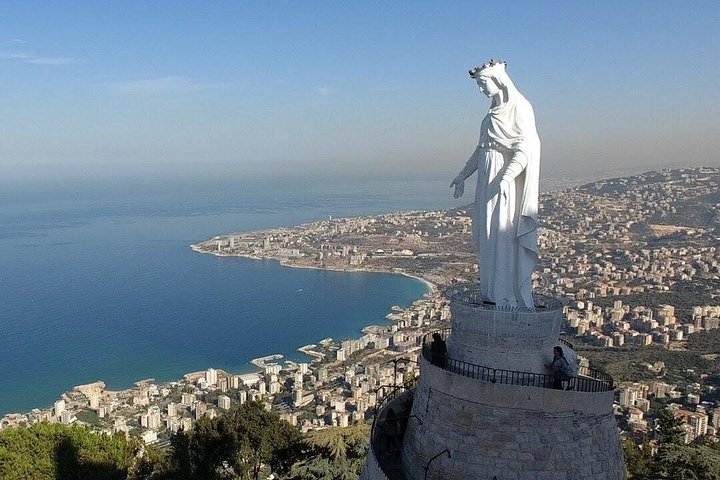
Top-ranked sights in Beirut: Jeita Grotto, Our Lady of Lebanon (Notre Dame du Liban), Byblos (Jbeil).
Special offers in Beirut
Was/now prices come from the operator, never from us.