Private Beirut Historical Tour | National Museum & Landmarks
- 5 hours
- Free cancellation up to 24h before
- 2 languages
- Instant confirmation
Highlights
Beirut has been continuously inhabited for over 5,000 years — and this private historical tour is designed for travelers who want to understand why. At its heart is a 90-minute guided visit to the National Museum of Beirut — one of the finest archaeological museums in the Middle East, housing Phoenician sarcophagi, Roman mosaics, Bronze Age artefacts, and prehistoric finds spanning 1.5 million years of Lebanese history. It is the essential context for everything else you will see in the city. From the museum the tour moves through Beirut's most historically charged landmarks — a seafront shaped by Phoenician traders, a downtown rebuilt from Civil War rubble, a square where revolutions began, mosques and cathedrals sharing the same skyline, and Roman baths buried beneath a modern city that has been destroyed and rebuilt so many times that even its ruins have ruins. For history lovers, archaeology enthusiasts, and cultural travelers — this is Beirut at its most profound.
Inclusions
What's included
- Hotel Pick up & Drop off
- Local, authentic experiences
- Air-conditioned vehicle
- Professional, knowledgeable guides
- Comfortable Private Transportation
What's not
- Lunch
- Gratuities
Itinerary
9:00 AM — Hotel pickup, Beirut Your private guide and driver collect you from your Beirut hotel. The first stop is Pigeon Rocks — just minutes away on the seafront.
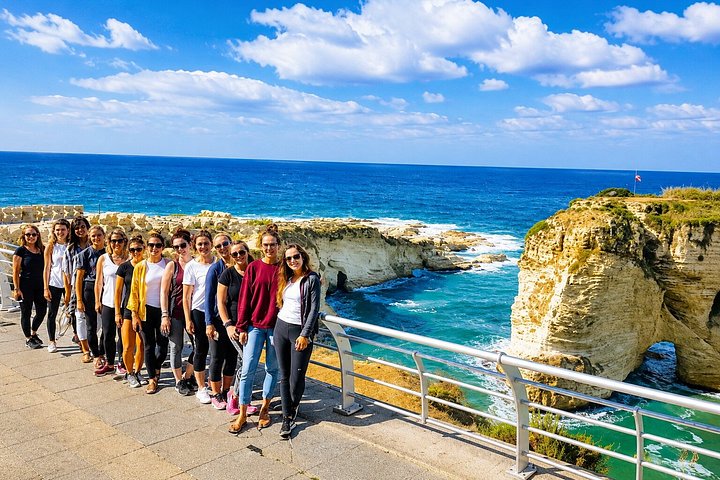
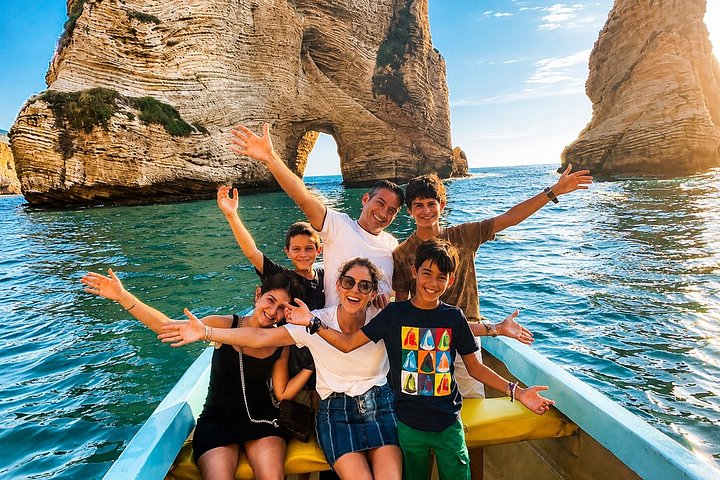
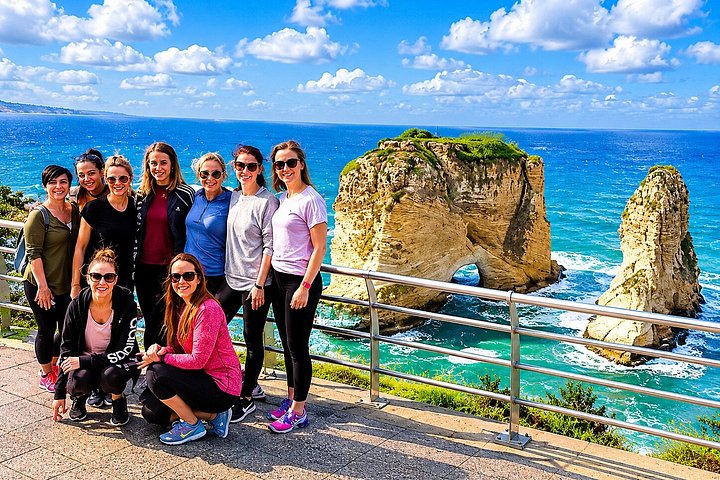
Begin at Beirut's most iconic natural landmark — two towering limestone formations rising from the Mediterranean off the Raouche coast. Beyond the famous silhouette, your guide explains the Phoenician trading history of this coastline — the same waters that launched the ships that founded Carthage, traded with Egypt, and gave the world the colour purple that made Phoenicia famous.
Beirut has been continuously inhabited for over 5,000 years — and this private historical tour is designed for travelers who want to understand why. At its heart is a 90-minute guided visit to the National Museum of Beirut — one of the finest archaeological museums in the Middle East, housing Phoenician sarcophagi, Roman mosaics, and prehistoric finds spanning 1.5 million years of Lebanese history. It is the essential context for everything else you will see in the city. From the museum the tour moves through Beirut's most historically charged landmarks — a downtown rebuilt from Civil War rubble, a square where revolutions began, mosques and cathedrals sharing the same skyline, and Roman baths buried beneath a modern city that has been destroyed and rebuilt so many times that even its ruins have ruins. For history lovers and cultural travelers — this is Beirut at its most profound.
Drive along the Corniche Beirut past the Manara lighthouse — your guide narrates the seafront's history as Lebanon's most democratic public space, where all communities have always walked side by side.
A brief stop at Beirut's modern waterfront marina — a striking symbol of the city's post-war reconstruction and cosmopolitan ambition, built on the same shores where Phoenician merchants once loaded their ships with cedar wood, purple dye, and glass.
Photo stop at the Holiday Inn Hotel — its unrepaired bullet-scarred facade is the most visceral reminder of the Lebanese Civil War visible in the city today, left standing deliberately as a monument to memory.
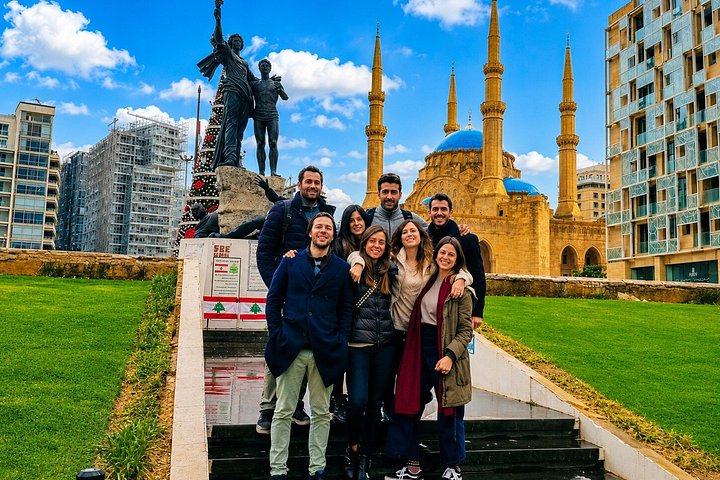
Stand in the square that has witnessed more of Lebanon's modern history than anywhere else — the 1916 Ottoman executions that gave the square its name, the 2005 Cedar Revolution that ended Syrian occupation, and the 2019 uprising that shook the entire political establishment. Your guide traces the full arc of this extraordinary public space and its role in shaping modern Lebanon.
Two of Beirut's most significant religious buildings stand metres apart on the same square — the grand Blue Mosque completed in 2008 and the ancient Greek Orthodox Cathedral of Saint George, one of Beirut's oldest churches. The juxtaposition is not accidental — it is Beirut's most powerful architectural statement about the coexistence that defines Lebanese identity at its best and is tested most severely at its worst.
One of Beirut's most historically layered buildings — originally a Byzantine church, converted to a Crusader chapel under the Frankish occupation, transformed into an Ayyubid mosque after Saladin's reconquest, and expanded under the Mamluks. No single building in Beirut better illustrates the city's extraordinary layered history than the Al-Omari Mosque — a living timeline of every major civilisation that has ruled this city.
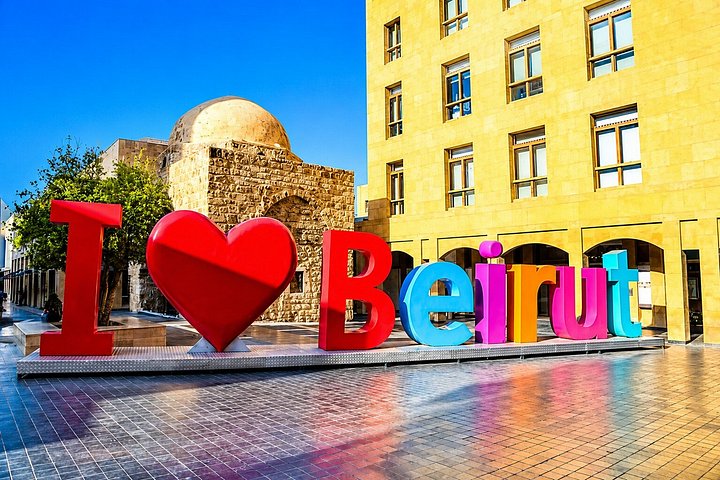
Walk through the elegant French Mandate downtown — the star-shaped Place de l'Étoile with its iconic clock tower and Lebanese Parliament buildings — before visiting the Beirut Souks, where glass floors reveal Phoenician, Hellenistic, and Roman archaeological remains beneath your feet. Post-war Beirut's decision to build over rather than erase its ancient marketplace is one of the most thoughtful acts of urban archaeology anywhere in the world.
The final stop brings the day full circle — from the prehistoric artefacts of the National Museum to Roman stonework standing in the open air of downtown Beirut, dating to the 3rd century AD. A city that has been inhabited for 5,000 years does not hide its past — it builds around it, on top of it, and sometimes, as here, simply leaves it in place for the next civilisation to walk past and wonder.
Built over the ancient marketplace with Phoenician, Hellenistic, and Roman archaeological remains incorporated directly into the building's design — glass floors reveal ruins beneath your feet as you walk. Post-war Beirut's decision to build around rather than erase its ancient marketplace is one of the most thoughtful acts of urban archaeology anywhere in the world, and a perfect bridge between the French Mandate elegance of Place de l'Étoile and the Roman Baths that follow.
Cancellation
Free cancellation up to 24 hours before the experience starts, for a full refund.
Reviews
5.0
- 57
- 40
- 30
- 20
- 10
Ratings come from 7 reviews collected by our booking partner. They are travellers' own words, in the order they were written — never reordered to flatter the experience.
Know before you go
- Pickup
- Pickup is included for everyone.
- Ticket type
- Mobile or paper ticket accepted
- Operated by
- Lebanon Tours & travels
- Wheelchair accessible
- Specialized infant seats are available
- Suitable for all physical fitness levels
How it compares in Beirut
- Its from-price is 38% above the median of the 25 city tours we list in Beirut.
- Its length is typical for the group.
- By number of reviews it ranks 7 of 25.
- The operator lists free cancellation on it.
About Beirut
Beirut is Lebanon's capital on a Mediterranean headland, a Phoenician port city with Roman remains and mountains rising close behind.
Beirut juts into the Mediterranean on a rocky headland, with the snow-streaked peaks of Mount Lebanon rising behind. Founded by the Phoenicians, it became the Roman city of Berytus, famed for its school of law, and the remains of Roman baths lie in the city centre. The Mohammad Al-Amin Mosque, with its blue domes, and the nearby churches of St George show the mix of faiths.
Top-ranked sights in Beirut: Jeita Grotto, Our Lady of Lebanon (Notre Dame du Liban), Byblos (Jbeil).
Special offers in Beirut
Was/now prices come from the operator, never from us.