Exploring Lebanon's Heritage: Half-Day Tour to Beiteddine & Sidon
- 5 hours
- Free cancellation up to 24h before
- 2 languages
- Instant confirmation
Highlights
Experience the allure of Lebanon's rich history and captivating scenery on a Half-Day Tour to Beit El Din and Sidon. Embark on a journey steeped in cultural splendor and architectural marvels, accompanied by an English-speaking driver who will guide you through the hidden gems and storied landmarks of these ancient cities. From the grandeur of Beit El Din's palace to the bustling streets of Sidon's old town, this excursion promises an immersive exploration into the heart of Lebanon's past and present. Join us as we uncover the secrets of these enchanting destinations, where every cobblestone and monument tells a tale of bygone eras and enduring legacies.
Inclusions
What's included
- Private transportation
- English Speaking Driver
- Hotel Pick up & Drop off
- Air-conditioned vehicle
What's not
- Lunch
- Gratuities
Itinerary
Beiteddine Palace or ‘House of Faith’ is a 19th-century palace in Beiteddine, Lebanon. It hosts the annual Beiteddine Festival and the Beiteddine Palace Museum. Emir Bashir Chehab II, who later became the ruler of the Mount Lebanon Emirate, built the palace between 1788 and 1818. After 1840, the palace was used by the Ottomans as a government building. During the French Mandate it served as a local administrative office. In 1943, the palace was declared the president's official summer residence. During the Lebanese Civil War it was heavily damaged. Parts of the palace are today open to the public while the rest is still the president's summer residence.
Sidon, one of the oldest Phoenician cities, was founded in the 3rd millennium BC and became prosperous in the 2nd. Sidon was famous for its purple dyes and glassware and Jesus visited it. During the Crusades, Sidon changed hands several times and was destroyed and rebuilt.
The Sidon Sea Castle was built by the crusaders in the thirteenth century on a small island, connected to the mainland by a causeway, as a fortress of the holy land. It is one of the most prominent historical sites in the port city of Sidon, Lebanon. The castle was largely destroyed by the Mamluks in 1291 and was later restored by Fakhr el-Dine Maan II in the early 17th century. Old prints of the fortress show it to be one of great beauty, but little remains of the embellishments that once decorated its ramparts.
Khan al-Franj is one of Sidon’s main attractions. It was built in the beginning of the 17th century by Emir Fakhreddine II to be a hotel for ambassadors and a center for commercial exchange between Lebanon and France. The hotel soon became a center for literature, religion, history, industry and diplomacy. It became a home for culture and civilization. This is a typical khan with a large rectangular courtyard and a central fountain surrounded by covered galleries.
The Soap Museum is a museum in Sidon specialized in Levantine soaps The soap workshop was originally built in Sidon by the Hammoud family in the 17th century. The Soap Museum traces the history of soap making in the region, its development and manufacturing techniques. Visitors can see a demonstration of how traditional olive oil soaps are made and learn about the history of the "hammam" (bath) traditions. A historical section of the museum introduces artifacts which were found during onsite excavation and which include remains of clay pipe heads dating from the 17th to 19th century as well as pottery fragments. The Museum building is an old soap factory built in the 17th century, although containing parts thought to date back to the 13th century.
The Debbane Palace was Built in the Old City of Sidon in the 18th century and It is now the last house of the Ottoman period remaining in a city that has since given way to traffic and glass storefronts. Approached from a narrow stairwell in the crowded Souq, the palace is built literally on top of the markets below. Inside it contains an entire world of reception rooms, stained-glass windows, rare mosaic tiles and centuries-old stables. the Debbane Palace marks the only example of an Ottoman palace within the city walls of urban Lebanon
The souk of Sidon is the center of all the commercial activities of retail, as well as craft industry. The souk is a maze of narrow alleyways with small kiosks, shops and cafes, street merchant, butchers, grocers, shoe-makers, tailors and jewelers.
Cancellation
Free cancellation up to 24 hours before the experience starts, for a full refund.
Know before you go
- Pickup
- Pickup is included for everyone.
- Ticket type
- Mobile or paper ticket accepted
- Operated by
- Lebanon Daily Tours
- Specialized infant seats are available
- Suitable for all physical fitness levels
How it compares in Beirut
- Its from-price is close to the median of the 442 experiences we list in Beirut.
- It is shorter than most of them.
- The operator lists free cancellation on it.
About Beirut
Beirut is Lebanon's capital on a Mediterranean headland, a Phoenician port city with Roman remains and mountains rising close behind.
Beirut juts into the Mediterranean on a rocky headland, with the snow-streaked peaks of Mount Lebanon rising behind. Founded by the Phoenicians, it became the Roman city of Berytus, famed for its school of law, and the remains of Roman baths lie in the city centre. The Mohammad Al-Amin Mosque, with its blue domes, and the nearby churches of St George show the mix of faiths.
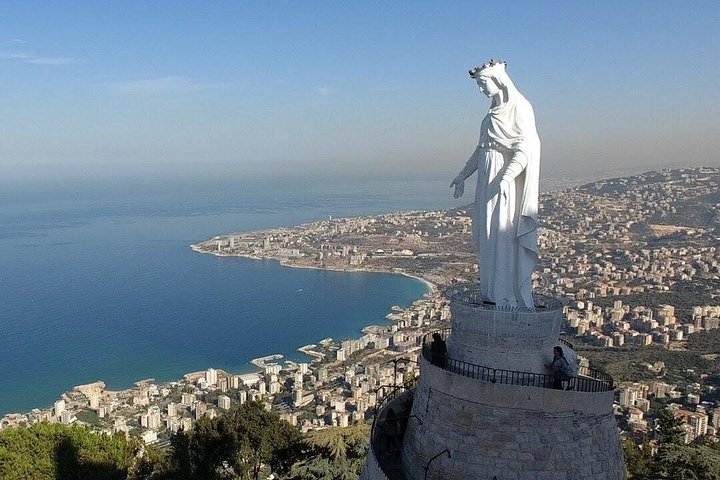
Top-ranked sights in Beirut: Jeita Grotto, Our Lady of Lebanon (Notre Dame du Liban), Byblos (Jbeil).
Special offers in Beirut
Was/now prices come from the operator, never from us.