-20 %Cancelación gratuita
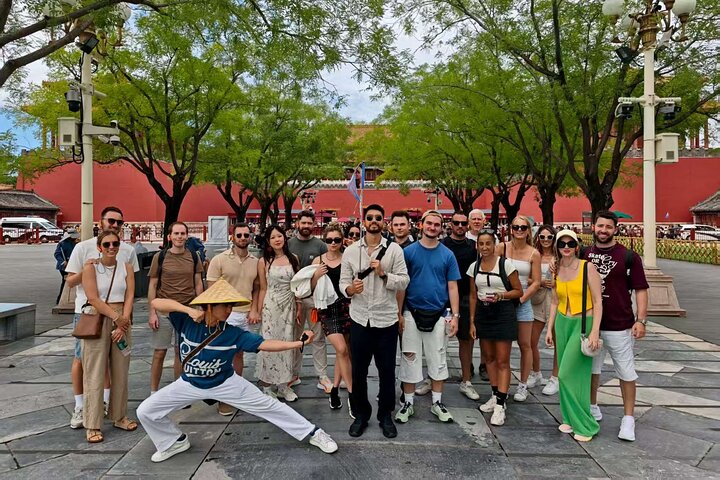
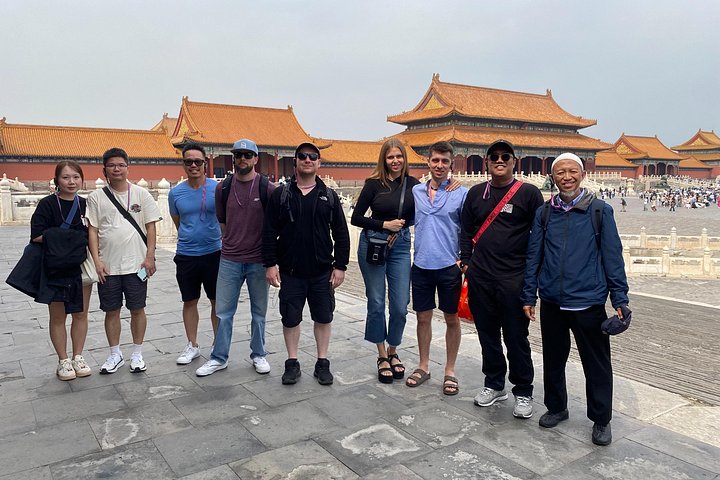
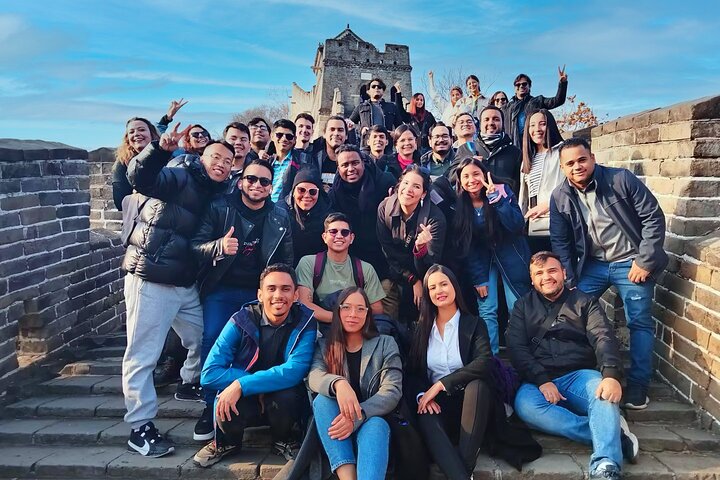
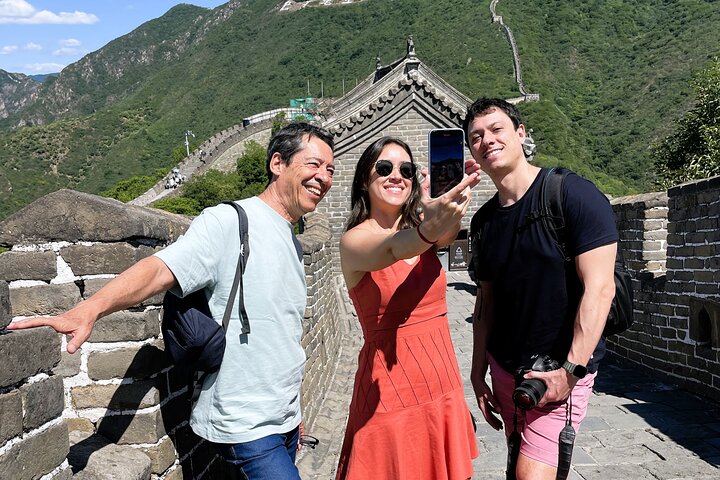
MuBus: Mutianyu Great Wall Bus Tour with Options(ENG/ESP/RUS)
desde25 US$20 US$
Categorías en Pekín
Las descripciones se muestran en inglés.
This unique autumn trip begins and ends in two of the best known nature reserves of China. The first is Jiuzhaigou, internationally recognized as one of the most beautiful nature reserves in the world, and the latter is Zhangjiajie which was brought to the public attention as it served as the background for the Hollywood hit movie, Avatar. These two nature reserves consist of dense forests, and thus, when autumn arrives, they stand in beautiful autumn foliage. In between these two magnificent sites we travel just below the Tibetan Plateau, where communities of Tibetans managed to avoid the political turbulences often stirring the Tibetan plateau. These communities have therefore managed to better maintain their unique traditions and way of life. We will travel amidst beautiful villages, and get an in-depth insight to Tibetan culture.
We arrive in Beijing in the morning hours. Upon arrival, we meet our guide and drive to Zone 798, a modern art compound, in which artists from all over the city create and exhibit their work. At the galleries we can engage in conversation with some of the artists, hearing from them about what it is like to express yourself in a country where self-expression was taboo until not so long ago. In the early afternoon we go back to the airport to board our flight to Jiuzhaigou. As we arrive in Jiuzhaigou early in the evening, we meet our guide and driver, and drive straight to our hotel, where we check in and have dinner. Overnight in Jiuzhaigou.
We spend the entire day taking in the marvels of Jiuzhaigou (Nine Villages Valley). This nature reserve and its superb and breathtaking landscapes are extremely attractive on account of the karst scenery, the large number of lakes, and spectacular waterfalls. A great number of endangered plant and animal species, including the giant panda, inhabit this wonderland. The name Jiuzhaigou derives from the nine Tibetan villages scattered throughout the valley. Its attraction lies in its simple, idyllic beauty; it is primitive, natural and still in a pristine state. With majestic and unrivalled emerald lakes, layered waterfalls, colorful forests, snow-peaked mountains, and Tibetan folk villages, all blending in harmony with each other, it is a jewel of nature set in spectacular mountain scenery. Jiuzhaigou lies in a transitional area where northern and southern flora and fauna meet. A natural botanical and zoological garden, it is home to densely growing conifers and broadleaf trees, and to rare and endangered animal species such as the giant panda, golden snub-nosed monkey, and white-lip deer. Overnight in Jiuzhaigou.
We check out of our hotel, and drive to the nearby Huang Long Nature Reserve. Huang Long literally means ‘The Yellow Dragon Valley’ and it is commonly known to the Chinese people as ‘The fairyland on Earth’ for its undeniably breathtaking landscapes. The valley was added to UNESCO’s Natural World Heritage List in 1992. Running along the southern slopes of the Minshan mountain range, the valley is a true wonder of nature, with stunning limestone formations, some 3400 ponds of all shapes and colors, stalactite caves and beautiful waterfalls. In addition, several ancient temples dot the landscape. All these features, together with the snowcapped peaks of the Minshan in the background make up a beautiful day for anyone willing to make the journey. In the afternoon we drive to Songpan, a mainly Tibetan dominated town. If time permits, we visit Songpan old town, with some of its buildings dating back to the Tang Dynasty era. Overnight in Songpan.
This morning we drive out to visit Mounigou Scenic Area, which is recognized as a World Biosphere Reserve, and a UNESCO World Natural Heritage Site. Although the entire area comprises of stunning landscapes, it is mainly known for two of its main features, Zhaga Waterfalls, and Erdaohai Lake which are hidden in the middle of a beautiful forest. We then take the approximately 150 km (93 miles) of winding mountain road to Wenchuan. The city of Wenchuan is known throughout China as the epicenter of the 2008 Sichuan earthquake which claimed the lives of nearly 70,000 people, and left nearly 5 million people homeless. With 80% of its buildings collapsing on this horrific night, Wenchuan is now newly built. Overnight in Wenchuan.
After a short drive out of Wenchuan, we stop at the village of Taoping. This well fortified village is inhabited by the Qiang people, an ethnic group which traditionally lived on the border between the Tibetan people to the west, and the Chinese Han people to the east. As a site of constant tensions for centuries, the hills surrounding the village still bear the remains of walls that goes back to the Three Kingdoms Period, in the 3rd century AD. The village itself is very much fortress-like, with three distinct guard towers rising above it, and maze-like crisscrossing narrow streets within it. The village is also known for its underground water-system, which supported the village during lengthy sieges. All these features were necessary in order for the Qiang to maintain their cultural identity amidst the two neighboring regional super-powers. Another rather short drive brings us at the Bipengou Scenic Area. This incredibly diversified nature reserve consists of pristine forests, glaciers, lakes, crystal clear streams and waterfalls, and a beautiful wetland. This area is known as one of the best spots to view autumn foliage. Late in the afternoon we drive to the city of Maerkang, at the foot of the Quanya Snow Mountain. If time permits, we pay a visit to one of several ancient Tibetan temples on the hills overlooking the town, which is stretched along the river bed. Overnight in Maerkang.
We begin the day with a visit to Zhuokeji, considered to be one of the most beautiful and best preserved Tibetan Villages in the region. The village was first established during the reign of the Qing Dyansty as a Tibetan outpost, and later the seat of the Tu Si, the ruler of the Yi people in China. In more recent history, the village was famed for being the place at which Mao Zedong, Zhou Enlai, and Zhou De have stopped for a week during the 1935 Long March, one of the most prominent events shaping modern-day China. We visit the ancient palace and the remains of the impressive watchtower before heading down south, for a visit to Supo village, and then on to the town of Danba. Ovenight in Danba.
For most of the day, we explore the surroundings of Danba. The area is inhabited by Gyarong Tibetans, and is famous for its stone-made watchtowers. The watchtowers date back all the way to the very beginning of the 18th century, and it is said that they could shelter a family during times of war for up to 15 days. We travel the region, stopping by the towers, and visit the Jiaju Residential House, a magnificent display of typical Kham Tibetan architecture. From here we continue past the small town of Bamei to Tagong, a Tibetan town in the historical Kham Tibetan region, and home to the most important monastery in the region. We now have a chance to explore Tagong Monastery, built during the Qing Dynasty era. The monastery has miraculously escaped destruction during the Cultural Revolution, and thus, the murals painted on its walls are exceptionally preserved. Late in the evening we reach Xinduqiao. Overnight in Xinduqiao.
After breakfast we spend a few hours roaming the vast lands surrounding Xinduqiao, which are regarded as a photographer's paradise. The area between Zheduoshan and Xinduqiao features plateau pasture scenery of rolling chains of mountains, river valleys dotted with poplars, grassland, and Tibetan villages. We take our time exploring the area, and enjoying its magnificent autumn foliage. Late in the afternoon we drive on the narrow road along the mountain’s foot, past picturesque Tibetan villages, to the city of Kangding. Overnight in Kangding.
Some 26km north of the town of Kangding, nestled within the Zheduo Mountains, lays Mugecuo scenic area. We take the one-hour drive from Kandgding to Mugecuo Lake, the biggest alpine lake in Sichuan, located some 3800 meters (12460 feet) above sea level. From here we have a three hours’ hike down the beautiful valley, and past the 7 colors lake, to a cluster of steaming hot springs. Late in the afternoon we drive to Hailuogou, known to Westerners as ‘The Glacier Forest Park’. The park is located well over 2000 meters (6560 feet) above sea level, and lies on the eastern slopes of the Gonggar Mountain, 31 square kilometers (12 square miles) of the park are covered in marine glaciers. The park offers stunning views of virgin forests in lush green valleys beneath snow-capped mountain peaks. In the evening we reach our hotel at the entrance to the nature reserve. Overnight by Hailuogou.
Today we hop on a shared ECO bus. These buses has been designed to drive through China’s most fragile biospheres, so they have very low impact on the environment. We drive through Hailuogou Park to marvel the unparalleled views. We then take the cable car to an astounding view point some 3500 meters (11480 feet) above sea level, for a view over the Hailuogou Galcier, and the Gonggar Shan rising 7500 meters (24600 feet) above sea level. In the afternoon we visit Moxi, where Han Chinese, Tibetan and Yi people live together with the mighty and holy mountains, serving as a backdrop to the tranquil ambience this small town has to it. This is yet another important place where the Chinese Red Army, led by Mao Dzedong, stopped during the famous battle of Luding Suspension Bridge, one of the most heroic and well known sagas of the Long March. We stay a second night in our hotel by Hailuogou.
We descend from the high mountains, and drive back to the lowlands of west Sichuan. We drive to the town of Ya’an, and on to Bifengxia Nature Reserve. As well as being the biggest conservation and research center of the endangered Giant Panda (after Wolong Nature Reserve was shut down following the Wenchuan earthquake), this is also a beautiful nature reserve, consisting of running rivers, marvelous mountain peaks and lush green forests. We take few hours to walk in the Panda Research Base and the Nature Reserve before proceeding to Chengdu for the night. Overnight in Chengdu.
With an early wake up call, we drive to Chengdu’s airport for our morning flight to Zhangjiajie. Upon arrival we meet our guide and driver, and drive to the Zhangjiajie National Forest Park. This magnificent natural gem has been brought to the world’s attention as the place in which much of the Hollywood motion picture Avatar was filmed. The park is considered to be one of China’s most spectacular scenic spots, offering unique rock formations, clear streams, caves and waterfalls. We begin with a visit to the northern part of Wulingyuan Park. A UNESCO World Natural Heritage site since 1992, Wulingyuan boasts some 3,100 quartz and sandstone peaks which appear spectacular, lofty and elegant. This, along with the mysterious deep valleys and grottos, offers numerous fantastic views. Here we visit the Yellow Stone Village, where we take a cable car to view the first ever scenic spot within the forest park, and the place which is made famous by the common phrase “one is not considered as he visited Zhangjiajie if he has not visited the Yellow Stone Village”. We then continue to the Golden Whip Stream, probably the best known landmark in the entire park, where we take a short hike. From here we drive to our hotel at Wulingyuan.
All sales are final. No refund is available for cancellations.
5,0
Las valoraciones proceden de 5 opiniones recogidas por nuestro socio de reservas. Son palabras de los viajeros, en el orden en que se escribieron — nunca reordenadas para favorecer la experiencia.
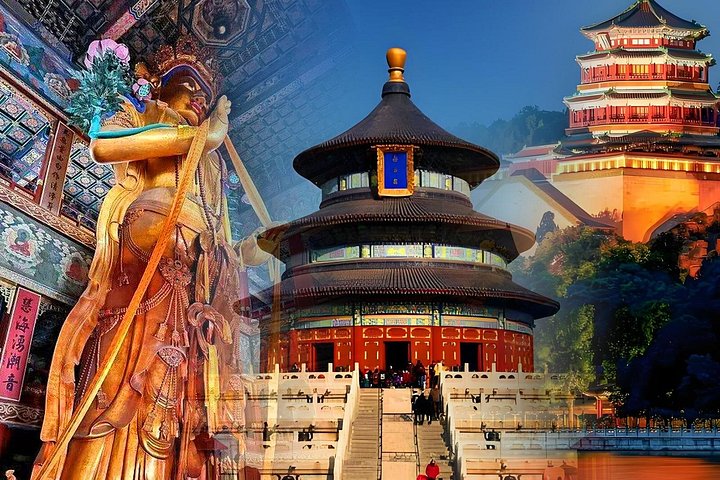
Pekín, capital de China durante siglos, reúne palacios imperiales, templos sagrados y tramos de la Gran Muralla cerca de sus bulevares modernos.
En el corazón de la ciudad, la Ciudad Prohibida se extiende tras muros bermellón, un laberinto de salas y patios que albergó a los emperadores de las dinastías Ming y Qing. La plaza de Tiananmén queda al sur, y la colina del parque Jingshan, al norte, ofrece la mejor vista de sus tejados dorados. El Templo del Cielo, en un parque donde los vecinos practican tai chi y bailan, es una obra maestra del diseño imperial.
Top-ranked sights in Pekín: Mutianyu Great Wall, Forbidden City (Palace Museum), Tiananmen Square (Tiananmen Guangchang).
Los precios tachados vienen del operador, nunca de nosotros.
desde25 US$20 US$
desde78 US$74 US$
desde98 US$83 US$
desde24 US$22 US$
desde79 US$75 US$
desde218 US$185 US$
desde25 US$20 US$
Añada Ticket Hall a su pantalla de inicio
Entradas y guías de ciudad a un toque, incluso sin conexión.
Ticket Hall