Sighișoara Vlad Dracula Medieval Self Guided Audio Walking Tour
Las descripciones se muestran en inglés.
- 1–1,5 horas
- Cancelación gratuita hasta 24 h antes
- Guía en inglés
- Confirmación inmediata
Destacados
Want to know the history of the real life Dracula? You are in luck. This UNESCO-listed medieval town is no movie set. These cobbled streets? Real. The clock towers, guild halls, and watchtowers? Built by hands that feared siege and worshipped saints. We’ll walk the same roads Vlad did as a child, pass the church that heard his family’s confessions, and peek into towers that once stood guard against invading forces and internal betrayal. Along the way, I’ll show you where myth and history collide, and what Sighișoara reveals when you look past the tourist signs. Go at your own pace. It never expires. Go anytime. It never expires.
Incluye
Qué incluye
- Discover the site and stories of Sighișoara, Romania
- Go at your own pace, anytime, it never expires.
- Tour in Sighișoara, Romania on our walking tour app
Qué no incluye
- No food or drink
- No Admission, the tour is all outside
- No human guide, it's all on our walking tour app
Itinerario
The tour begins at the beginning with the Statue of Vlad Țepeș. You'll hear his story and how Dracula became Dracula. Then you'll be guided through this historic town step by step.
The tour stops outside the The Ironsmiths' Tower, you'll hear the purpose of the towers, and the history.
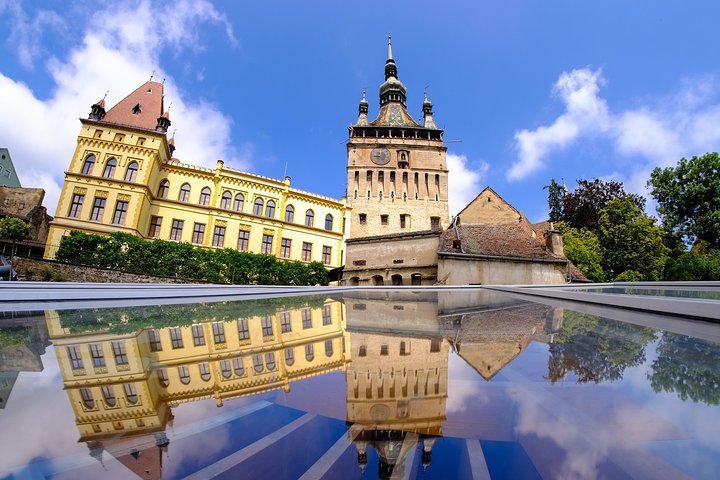
Then you'll stop outside the historic clock tower, not to be missed, and hear the story and links to Dracula.
The tour stops outside the house Vlad once lived in, and shares that story, history and more.
Stop outside the tower and hear it's history.
Stop at the historic square and hear the link between Dracula.
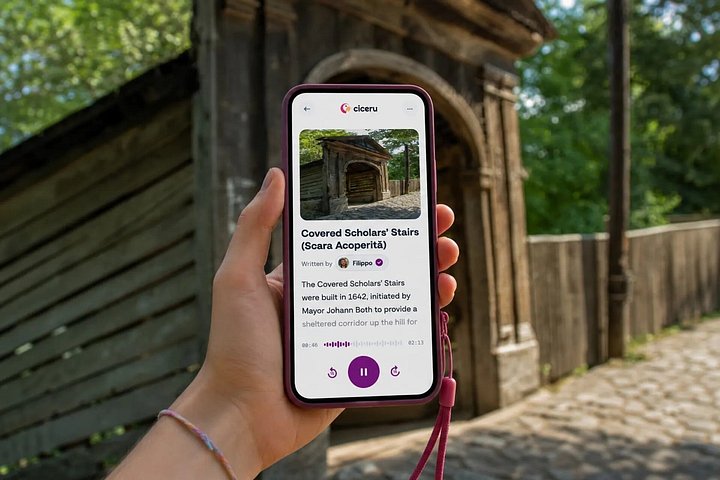
These stairs are historic, and spooky, and amazing, and goes up to a site linked to Dracula.
You'll walk around the old church and her it's link to Vlad.
This historic and spooky monument, while not directly linked to Vlad, has a connection.
The tour weaves through Sighișoara, Romania sharing the sites, stories and history linked to the person that inspired Dracula.
Cancelación
Cancelación gratuita hasta 24 horas antes del inicio, con reembolso completo.
Opiniones
5,0
- 52
- 40
- 30
- 20
- 10
Las valoraciones proceden de 2 opiniones recogidas por nuestro socio de reservas. Son palabras de los viajeros, en el orden en que se escribieron — nunca reordenadas para favorecer la experiencia.
Antes de ir
- Punto de encuentro
- The tour begins at the beginning with the Statue of Vlad Țepeș. You'll hear his story and how Dracula became Dracula. Then you'll be guided through this historic town step by step.
- Recogida
- Todos se reúnen en el punto de inicio; no hay recogida.
- Tipo de entrada
- Mobile or paper ticket accepted
- Operado por
- WalknTours
- Wheelchair accessible
- Infants and small children can ride in a pram or stroller
- Service animals allowed
- Public transportation options are available nearby
- Transportation options are wheelchair accessible
- All areas and surfaces are wheelchair accessible
- Suitable for all physical fitness levels
How it compares in Sighișoara
- Its from-price is 90% below the median of the 17 experiences we list in Sighișoara.
- It is shorter than most of them.
- By number of reviews it ranks 7 of 17.
- The operator lists free cancellation on it.
About Sighișoara
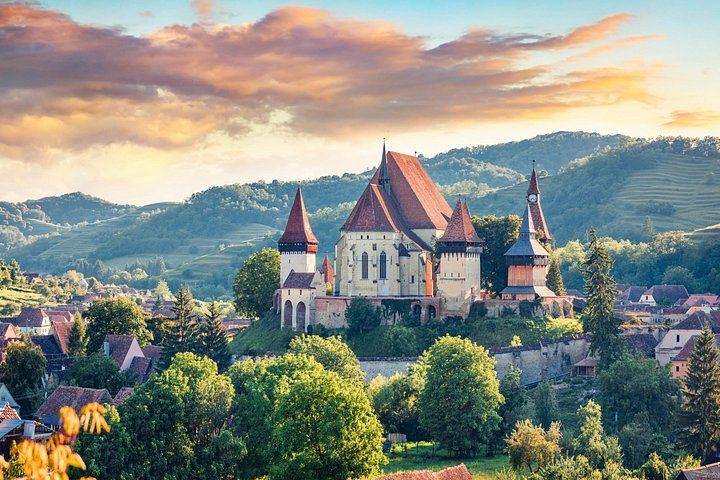
Sighișoara is a medieval citadel in Transylvania, one of Europe's best-preserved inhabited old towns, with painted towers, steep lanes and a clock tower.
Sighișoara's citadel was built on a hill by Saxon settlers in the twelfth century and is one of the few inhabited medieval fortified towns in Europe, listed by UNESCO. Nine of the original fourteen guild towers survive, and the 64-metre Clock Tower, with its museum, is the symbol of the town. A covered wooden staircase, the Scholars' Stair, climbs to the church on the hill, and its cemetery has views over the roofs.
Top-ranked sights in Sighișoara: Clock Tower, Church on the Hill (Biserica din Deal).
Ofertas especiales en Sighișoara
Los precios tachados vienen del operador, nunca de nosotros.