-10 %Cancelación gratuita
Categorías en Oporto
Las descripciones se muestran en inglés.
Yes! Aveiro is all about salt, cod, the lagoon, the canals and convent sweets. We won’t forget that. But there are other unique gems in this city that go unnoticed by mass tourism operators. So come and wander with us, at a leisurely pace, guided by the captivating tiles scattered throughout the city, which allow us to travel back in time, explore history and recognise different artistic movements and multicultural influences. With me, even a cemetery can be full of surprises. Discover it...
Introduction to the tour. Viewing the points of interest in the square: the Aveirense Theatre; the Homem Christo Secondary School; the statue of José Estevão; the Town Hall – dating from the late 18th century, in the Pombaline style. Jacaranda trees.
A Catholic church built during the transition from the 16th to the 17th century. It is in the Mannerist (Renaissance) style, with Baroque elements appearing in the interior and exterior decoration. Thousands of hand-painted ornamental tiles, dating from the early 17th century, cover the walls of the central nave. Built and maintained by its owner – the Santa Casa da Misericórdia de Aveiro, a brotherhood with origins in the Middle Ages.
Streets known as ‘Direita’ in Portugal are generally the main street in the old town. This is the case in Aveiro. A stroll down this street gives us the opportunity to discuss some of the heritage features and also to explore the history of the traditional Portuguese cobblestone pavement, which in Aveiro features designs representing the traditions of salt, the lagoon and the sea that have shaped the city.
Built in the early 20th century to serve as Aveiro’s main square, it is home to, amongst other things, the courthouse, the post office building and the former Civil Government building. The Portuguese cobblestone paving depicts the twelve signs of the zodiac. The square is also home to the Carmelite Church and the Casa de Santa Zita.
Completed in the early 18th century as part of the convent of the Order of Barefoot Carmelites, it remains one of Aveiro’s lesser-known gems. Abandoned for decades, it reopened in 2021 following extensive restoration, presenting visitors with a small but splendid Baroque gem. Figurative tiles painted in Coimbra in the early 18th century, gilded woodwork, dozens of paintings on canvas and sacred sculpture fill the once-religious space that is now part of the municipal museum. Here, the symmetry is obsessive and every detail is a discovery.
This 19th century manor house stands out for its façade with eight panels and a pediment of hand-drawn and painted tiles, with various allegories, mainly of the four seasons. Originally owned by the Viscounts of Granja, it now houses the Casa de Santa Zita, a Catholic organisation for the protection of house maids.
External viewing of places of interest: Testa & Amadores shop (Art Nouveau); Leitão shoe shop (advertising tiles); Dominican Convent of Jesus (Municipal Museum); city walls memorial; statue of the novice Blessed Joana of Portugal.
Exterior view. The former church of the Monastery of São Domingos has suffered fires and other incidents that have altered its appearance and interior. From the Middle Ages to the 21st century, there is a bit of everything in this cathedral. The highlights include a late Gothic limestone stone cross, which is a national monument, and an organ made in Hungary, with over 1,800 pipes. We may visit it if other sites on the tour are closed.
Opened in 1860, this cemetery is characterised by a series of crypts and tombs, many of them in revivalist styles (Neo-Gothic, Neoclassical) and Art Nouveau, some of which are listed as protected heritage sites. Some Masonic symbolism is also visible. Essential for understanding the history of Aveiro during the transition from the 19th to the 20th century, its main highlight is an Art Nouveau bronze statue by Arthur Prat entitled ‘The Last Breath’.
Aveiro's urban canals and their function today and in the past. Tides and locks. The types of boats in the Ria de Aveiro: physical characteristics, traditional decoration, usefulness and means of locomotion. Bridges and ribbons. What's left of the tide mill. The Art Nouveau surroundings.
External view of Aveiro’s main Art Nouveau building wich features two façades of great visual impact. Formerly the residence of a cocoa plantation owner in São Tomé, it is now the Municipal Art Nouveau Museum.
Here, next to the 1904 iron market, the tour will come to an end, bringing to a close the half-told stories of Aveiro’s salt, of the sea that once lay here, and of how the sea used to be there and is now far away. It will be time to reveal where the walls of Aveiro, which enclosed part of the city between the 15th and 18th centuries, were taken.
Cancelación gratuita hasta 24 horas antes del inicio, con reembolso completo.
5,0
Las valoraciones proceden de 2 opiniones recogidas por nuestro socio de reservas. Son palabras de los viajeros, en el orden en que se escribieron — nunca reordenadas para favorecer la experiencia.
Oporto baja por empinadas colinas hasta el Duero: ciudad de granito, iglesias de azulejos, bodegas junto al río y vino de Oporto al otro lado.
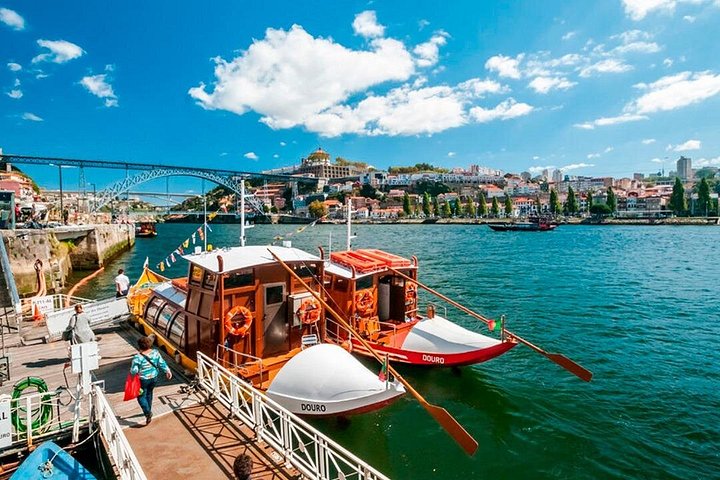
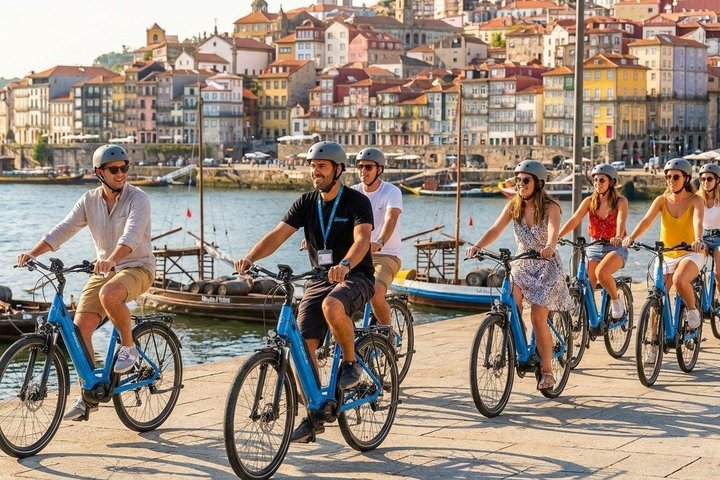
El barrio de la Ribeira bordea la orilla con casas de colores, cafés y barcos, parte de un casco antiguo declarado por la UNESCO bajo los arcos de hierro del puente Dom Luís I. Encima, el vestíbulo de la estación de São Bento está cubierto de azulejos azules y blancos, la Torre de los Clérigos se alza sobre los tejados y la catedral, la Sé, se levanta en su colina.
Top-ranked sights in Oporto: Clérigos Church and Tower (Torre & Igreja dos Clérigos), Dom Luis Bridge (Ponte de Dom Luis I), Porto Cathedral (Sé Catedral do Porto).
Los precios tachados vienen del operador, nunca de nosotros.

desde286 US$243 US$
desde68 US$62 US$
desde50 US$33 US$



Añada Ticket Hall a su pantalla de inicio
Entradas y guías de ciudad a un toque, incluso sin conexión.
Ticket Hall