20% kortingGratis annuleren
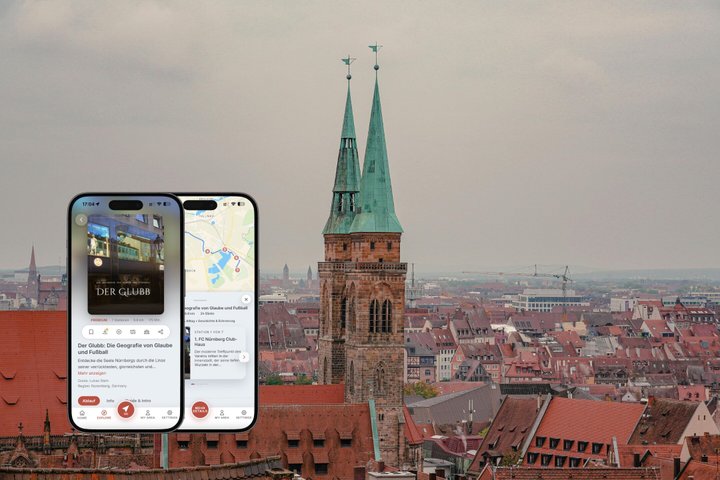
Podcast Tour Nuremberg The Geography of Faith and Football
vanafUS$ 7US$ 5
Beschrijvingen worden in het Engels getoond.
This tour is designed by a born and raised Nuremberg local. It includes the history of the rally grounds, as well as a brief overview of the Nuremberg laws and Nuremberg trials. Beside the historical aspects we also discus Nurembergs way to deal with its Nazi-heritage and how the 3rd Reichs history is reflected in our modern education, collective memory and culture.
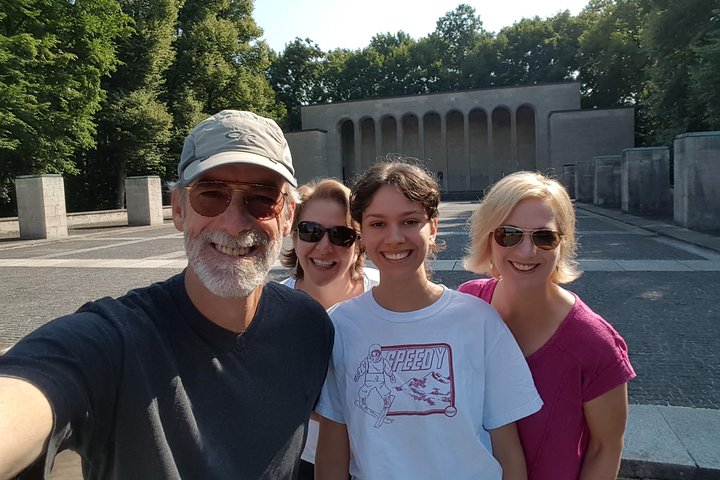
The Kongresshalle in Nuremberg, part of the former Nazi Party Rally Grounds, was designed by architects Ludwig Ruff and Franz Ruff in the 1930s. Inspired by Rome's Colosseum, it was intended to host 50,000 people but was never completed due to WWII. The massive, horseshoe-shaped structure stands as a haunting symbol of Nazi ambition and propaganda. Post-war, it was left largely untouched and now houses the Documentation Center, which educates visitors about the Nazi era, preserving the site as a powerful reminder of Germany’s history.
The Luitpoldarena in Nuremberg was a vast parade ground built in the 1930s for Nazi Party rallies, capable of hosting over 100,000 people. It was built around "Ehrenhalle" (Hall of honor) for the WWI veterans. While the Nazis missused it for honoring the fallen "old-comrades" of the "Hitlerputsch" it is now used as a public park, preserving some remnants as a somber reminder of Nazi history and the dangers of totalitarianism.
The "Great Street" at the Nazi Party Rally Grounds in Nuremberg was a 1.5-mile-long granite road designed by Albert Speer as a central axis for marches and parades. Oriented toward the imperial city of Nuremberg, it symbolized the Nazis' attempt to link their regime to Germany's historic past. The street was intended for grand military processions and formations during rallies but was barely used due to the outbreak of WWII.
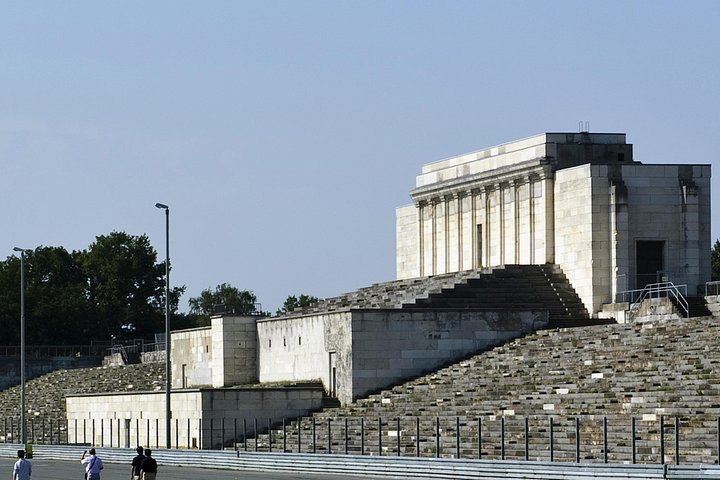
The Zeppelinfeld in Nuremberg was a major site of Nazi Party rallies, designed by Albert Speer in the 1930s. It featured a massive grandstand inspired by ancient Greek and Roman architecture, with a central platform where Hitler addressed crowds of up to 200,000 people. Iconic for its huge swastika, which was famously blown up by Allied forces after WWII, the site symbolized Nazi power.
Gratis annuleren tot 24 uur voor aanvang, met volledige terugbetaling.
4,9
Beoordelingen komen uit 19 reviews die onze boekingspartner verzamelt. Het zijn de eigen woorden van reizigers, in de volgorde waarin ze geschreven zijn — nooit herschikt om de ervaring mooier te maken.
Nuremberg, in Franconia in northern Bavaria, is a walled medieval city of sandstone churches, an imperial castle and Christmas markets.
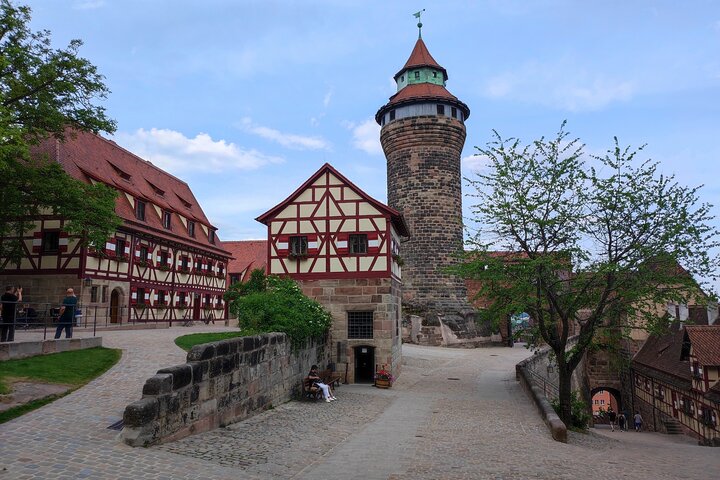
Nuremberg's old town sits inside a ring of medieval walls, crowned by the Kaiserburg, the imperial castle that was a residence of Holy Roman emperors. Below it, half-timbered houses and sandstone churches line the lanes by the Pegnitz river. The painter Albrecht Dürer lived in a house near the castle that is now a museum, and the Hauptmarkt square is dominated by the ornate Beautiful Fountain. Much of the old town was rebuilt after the Second World War.
Top-ranked sights in Nuremberg: Imperial Castle of Nuremberg (Kaiserburg), Hauptmarkt, Schöner Brunnen.
Van/voor-prijzen komen van de aanbieder, nooit van ons.
vanafUS$ 7US$ 5
vanafUS$ 183US$ 146
vanafUS$ 7US$ 5
Zet Ticket Hall op uw beginscherm
Tickets en stadsgidsen, met één tik, ook offline.
Ticket Hall