Sendai 8hr Private Tour with Licensed Guide and Vehicle
Le descrizioni sono mostrate in inglese.
- 8 ore
- Cancellazione gratuita fino a 24 h prima
- 2 lingue
- Conferma immediata
In evidenza
Discover the history, culture, and scenic beauty of Sendai and Matsushima on this private 8-hour tour with a government-licensed guide and a private vehicle. Built around your interests, this flexible itinerary lets you choose the sites that matter most, traveling in comfort with a local guide and a professional driver. In Sendai, the elegant 'City of Trees,' explore the lavish Zuihoden mausoleum of feudal lord Date Masamune, the hilltop ruins of Aoba Castle with sweeping city views, and the National Treasure Osaki Hachimangu Shrine, then stroll the tree-lined Jozenji-dori Avenue. Journey to Matsushima Bay, celebrated as one of the Three Most Scenic Views of Japan, where over 260 pine-clad islands dot the sea. Visit the famous Zen temple Zuiganji, the photogenic island hall of Godaido, and the tranquil gardens of Entsuin. With a private vehicle and a guide dedicated to your group, enjoy a relaxed, personalized day exploring the gateway to northern Japan.
Incluso
Cosa è incluso
- Private vehicle
- Customizable Tour of your choice of 3-4 sites from 'Itinerary' list.
- Licensed Local English Speaking Guide
Cosa non è incluso
- You cannot combine multiple tour groups.
- Entrance fees, Lunch, and Other personal expenses
- Guide Entry fees are only covered for sights listed under Itinerary
Itinerario
Zuihoden is the lavishly decorated mausoleum of Date Masamune, the powerful feudal lord who founded Sendai. Rebuilt in the ornate Momoyama style with vivid colors, gold leaf, and intricate carvings, it stands among towering cedar trees and offers a striking glimpse into the grandeur of the Date clan.
The Sendai Castle Ruins were the inspiration for a famous Japanese poem called 'The moon over the desolate castle' and this tells you all you need to know about their condition now. The ruins also include a model of the original gate to give you a feel of how Sendai Castle would have looked in the days of old. There is also a small museum here that takes you through the history of the castle, although don't expect anything too grand as Sendai is not one of the cities in Japan best known for a complete or particularly impressive castle.
If you want to get the best views in Sendai then you need to head to SS30 Observation Lounge. This building is actually an office block, so there is not much to check out here except for two observation decks on the 29th and 30th floors. These are free to visit and give you panoramic vistas across all of Sendai, so try to come in the morning or the late afternoon when you will get the best photo opportunities from the decks.
Closed for long-term renovation from August 31, 2026, through the end of March 2029. The Museum of the Forest of Depths of the Earth tells the story of the Stone Age in Japan. On a visit here you can find out how the Sekki Stone Age would have looked in the days of old and learn more about the excavation of the Tomizawa Ruins. The museum has a huge number of galleries and is the best place to come if you want to know more about the 20,000 year Sekki Stone Age.
A free tour walks visitors through the different stages and buildings of production. Even though it is only about 45 minutes long, it gives a good overview of how and where they produce their whisky. A highlight is the barrel room where you can see rows and rows of whisky being aged to perfection, followed by a tasting at the end.
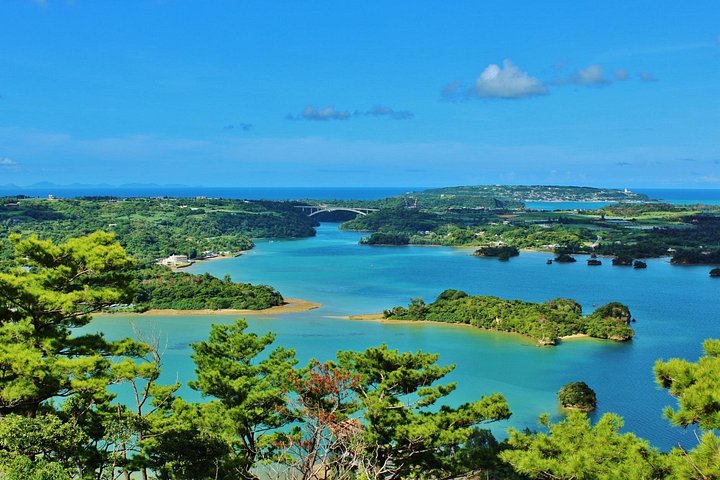
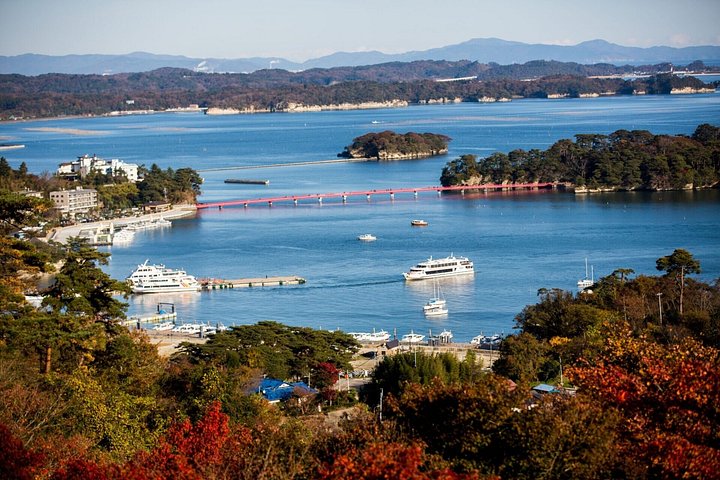
Located half an hour outside of Sendai, Matsushima is famous for its bay, which is dotted by many pine-clad islets and has been ranked one of Japan's three most scenic views for centuries. The small town is also known for Zuiganji, one of the Tohoku region's most important Zen temples. Matsushima was hit by the earthquake and tsunami of March 11, 2011, but escaped major damage thanks to its protected location inside the island-dotted bay.
Zuiganji is one of the Tohoku Region's most famous and prominent Zen temples, well known for its beautifully gilded and painted sliding doors (fusuma). Zuiganji was originally founded in 828 as a temple of the Tendai sect, and was converted into a Zen temple during the Kamakura Period (1192-1333). After years of decline, it was restored to prominence by the feudal lord Date Masamune, who rebuilt it as his family temple in 1609.
Oshima is a small, pine tree-covered island close to the pier of Matsushima. The island can be accessed over a short bridge free of charge and offers some pleasant, short walks, with multiple small shrines and viewpoints dotted about. Oshima used to be a retreat for monks, and decorated meditation caves can still be found on the island. The bridge to Oshima was destroyed in the 2011 tsunami, but was rebuilt and reopened two years later.
Entsuin Temple was built in 1647 next to Matsushima's most important temple, Zuiganji Temple, to house the mausoleum of Date Mitsumune, the son of the ruling local feudal lord Date Terumune. The temple was built in mourning and is devoted to Kannon, the Buddhist goddess of mercy, as Mitsumune died an untimely death at the age of 19.
Kanrantei is a Momoyama-style tea house originally built in Kyoto by Toyotomi Hideyoshi, who gave it to Date Masamune for his service. Date's son eventually moved it to its current location overlooking Matsushima Bay. Kanrantei means 'place to view ripples on water', due to its beautiful view over the water and surrounding islands.
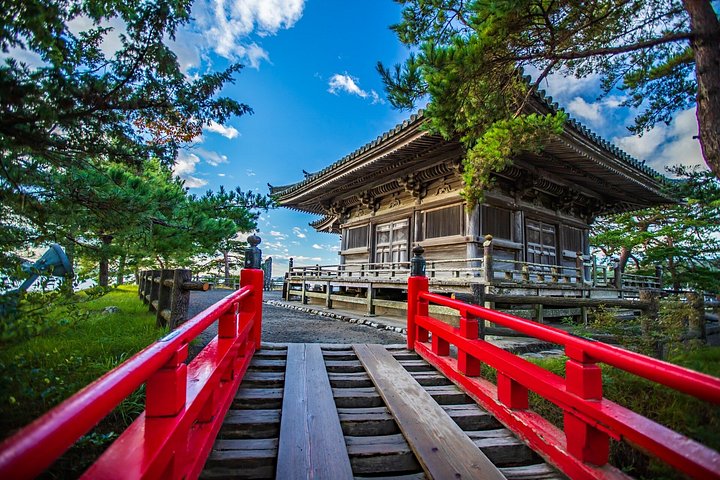
Godaido is a small temple hall on an islet just next to the pier. Due to its prominent location, it has become a symbol of Matsushima. Godaido was built in 807 and contains five statues which were enshrined by the same priest who founded nearby Zuiganji. The statues are displayed to the public only once every 33 years, and were last displayed in 2006.
Fukuura Island is one of the few pine-covered islands in Matsushima Bay that is accessible to the public. The island is reached via a 252 meter long, red painted bridge that costs 200 yen (round trip) to cross. The bridge was damaged by the tsunami of March 11, 2011 and had to undergo repair works.
Cancellazione
Cancellazione gratuita fino a 24 ore prima dell’inizio, con rimborso totale.
Da sapere prima di partire
- Prelievo
- Il prelievo è incluso per tutti.
- Tipo di biglietto
- Mobile or paper ticket accepted
- Gestito da
- Japan Guide Agency
- Specialized infant seats are available
- Service animals allowed
- Public transportation options are available nearby
- Infants and small children can ride in a pram or stroller
- All areas and surfaces are wheelchair accessible
- Transportation options are wheelchair accessible
- Wheelchair accessible
- Suitable for all physical fitness levels
How it compares in Sendai
- Its from-price is 155% above the median of the 22 gite di un giorno we list in Sendai.
- Its length is typical for the group.
- The operator lists free cancellation on it.
About Sendai
Sendai is Tohoku's largest city, a green city of tree-lined avenues, samurai history, grilled beef tongue and the pine islets of Matsushima.
Sendai, in Miyagi Prefecture, was founded in 1601 by the samurai lord Date Masamune, and is known as the City of Trees for the zelkova-lined avenues of Jozenji-dori and Aoba-dori. The ruins of Aoba Castle on a hill above the river have a mounted statue of Masamune and a view over the city, and his mausoleum, Zuihoden, stands among cedars on another hill, its halls in ornate gold and black lacquer.
Top-ranked sights in Sendai: Zuihoden Mausoleum.
Offerte speciali a Sendai
I prezzi barrati arrivano dall’operatore, mai da noi.