-7%Cancellazione gratuita
Categorie a Buenos Aires
Le descrizioni sono mostrate in inglese.
We explore one of Buenos Aires' most fascinating neighborhoods through the lens of art, architecture, and history. Throughout the walk, we'll focus on Retiro's artistic side, exploring how this historically residential and commercial neighborhood has continually reinvented itself while maintaining its deep connection to the city's artistic heritage. Along the way, we'll visit hidden art galleries tucked away in unexpected places, discover remarkable architecture and secret corners, and explore key moments in the history of Argentine art and architecture. What makes this tour unique is its perspective. Rather than following a traditional sightseeing route, you'll experience Retiro through the eyes of someone deeply connected to the local art scene, revealing a side of the neighborhood that most visitors—and even many locals—never get to see. If you're a curious traveler who enjoys uncovering hidden gems and discovering the stories behind a city, this tour is for you.
We begin in front of the Kavanagh Building. Here we introduce ourselves and I provide context about the neighborhood and its importance within the world of art and architecture in Buenos Aires. I share the famous legend surrounding the construction of the Kavanagh and talk about the building as a piece of cultural heritage.
At this stop, we focus on the sculpture Nosotros Afuera by Federico Manuel Peralta Ramos. Through this work, I talk about his eccentric personality, his belief that art and life were inseparable, and his connection to the Di Tella Institute in the 1960s. This stop helps us understand the experimental spirit of the period and of this iconic Buenos Aires artist, and how Retiro became the stage for a bold and provocative avant-garde.
We visit a contemporary art gallery where we explore a current exhibition. Here we analyze the artworks and reflect on how they engage with social, political, and economic contexts. I also explain the role of galleries within the art system: how they represent artists, how art fairs and the market function, and how galleries differ from museums. When possible, we talk with gallerists or curators, creating a close and dynamic experience.
In front of the former Di Tella Institute, I explain why this place marked a turning point in Argentine art. We discuss the international context of the 1960s, the Cold War, and the cultural influence of the United States in Latin America. I introduce the so-called “Di Tella Generation” and recount key episodes and milestones of the artistic avant-gardes of the 1960s. This stop helps us understand how art, politics, and power are always deeply connected, and how Retiro was the heart of that cultural revolution—and how it is once again becoming a site of artistic experimentation today.
In a second gallery, we delve into other contemporary proposals. We analyze materials, scale, curatorial decisions, and modes of display. We reflect on how current artists engage with—or challenge—the Argentine modern tradition and the experimental legacy of the 1960s. This is a moment to train the eye and to understand that every exhibition is also a position taken within the art field.
We end our walk in this 1891 building, inspired by the great Parisian department stores. In the late 1940s, its dome was painted by some of the most important artists in the country. Among them, Antonio Berni, together with Spilimbergo, Castagnino, and Urruchúa, created the monumental murals that now crown the central space. Standing beneath this dome allows us to understand that art does not belong only to museums: it also inhabits commercial buildings, transitional spaces, hidden galleries, and everyday places. Retiro, though residential and financial in character, holds layers of artistic history within its architecture. From these murals to the avant-gardes of the 1960s and contemporary art galleries today, art appears woven throughout the neighborhood and its history.
Cancellazione gratuita fino a 24 ore prima dell’inizio, con rimborso totale.
5,0
I voti arrivano da 25 recensioni raccolte dal nostro partner di prenotazione. Sono parole dei viaggiatori, nell’ordine in cui sono state scritte — mai riordinate per far apparire meglio l’esperienza.
Buenos Aires, elegante e appassionata capitale dell'Argentina: grandi viali, sale da tango, barrios alberati e cene di carne a tarda notte.
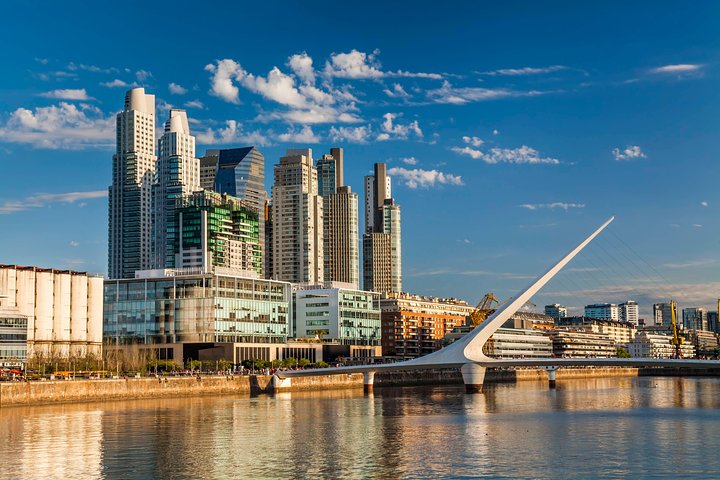
La Plaza de Mayo, incorniciata dalla rosa Casa Rosada e dalla Cattedrale Metropolitana, è il cuore storico della città, e la vasta Avenida 9 de Julio porta all'Obelisco. Il Teatro Colón, uno dei grandi teatri d'opera, e i grandi caffè dell'Avenida de Mayo ricordano l'età dell'oro della città.
Top-ranked sights in Buenos Aires: Plaza de Mayo, Palermo, Puerto Madero.
I prezzi barrati arrivano dall’operatore, mai da noi.
da160 USD144 USD
Aggiungi Ticket Hall alla schermata Home
Biglietti e guide delle città a portata di dito, anche offline.
Ticket Hall