-44%Cancellazione gratuita
Private Guided Group Tour of Nagasaki for 11 to 25 Members
da200 USD112 USD
Categorie a Nagasaki
Le descrizioni sono mostrate in inglese.
Explore Nagasaki with a government-licensed and experienced English-speaking guide! Your guide will help you efficiently enjoy a full-day walking tour of Nagasaki and introduce both modern and traditional sides of this dynamic and ancient Japanese city. Your guide will pick you up in the morning at your hotel in Nagasaki and take you to visit Nagasaki's famous sites. Along with atomic bombing of Nagasaki during WWII, this city's history features many prominent events. You can learn about this and other interesting aspects during this Half-day walking tour accompanied by your private guide. Note*1: You cannot visit all the sites on the itinerary. You must choose at maximum 3 sites to visit and inform your guide of your choices. Note*2: The National Government Licensed Guide Interpreter certification is issued by the Japanese government requires a good knowledge and understanding of Japanese culture and history.
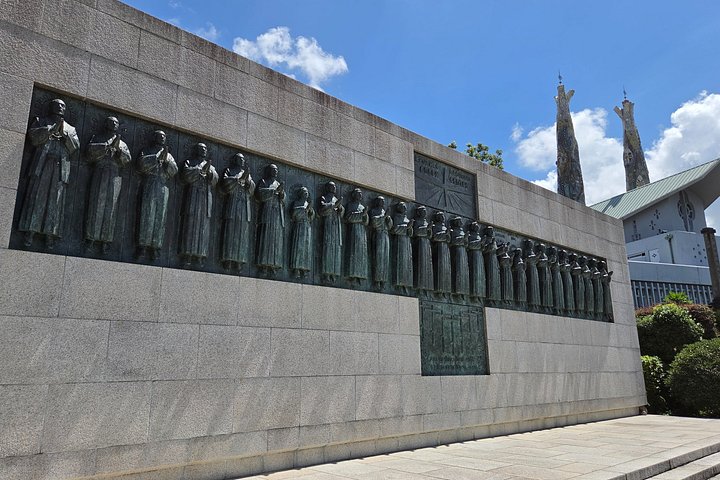
The Nagasaki Peace Park (平和公園, Heiwa Kōen) is a tranquil space that commemorates the atomic bombing of Nagasaki on August 9, 1945, which destroyed a significant portion of the city and killed tens of thousands of inhabitants. The complex is comprised of two parks and a memorial museum. In the center of the complex is the Hypocenter Park with a simple, black monolith that marks the explosion's epicenter. Not far from it stands a damaged pillar of the former Urakami Cathedral which was destroyed in the blast. Furthermore, there is an area that allows visitors to take a look at a layer of soil below the park's surface where broken roof tiles, bricks and pieces of glass remain from the explosion.
Mount Inasa (稲佐山, Inasayama) is a 333 meter high mountain close to Nagasaki's city center. The summit can be reached by ropeway, bus or car and offers great views over the city. In fact, the night views from Mount Inasa are ranked among Japan's three best night views besides the views from Mount Hakodate and Mount Rokko. Several television and radio antennas and an observation deck with restaurant are located at the summit.
Glover Garden (グラバー園, Glover-en) is an open air museum in Nagasaki that exhibits mansions of several of the city's former foreign residents and related buildings. It is located on the hill where Western merchants settled down after the end of Japan's era of seclusion in the second half of the 19th century. The main attraction of the garden is the Former Glover House, the oldest Western-style wooden building in Japan. Thomas Glover (1838-1911) was a Scottish merchant who moved to Nagasaki after the opening of its port to foreign trade in 1859. He later assisted some of the revolutionaries who would eventually overthrow the Tokugawa Shogunate in the Meiji Restoration. Active in various industries, including shipbuilding and mining, Glover features prominently in the early history of Japan's industrialization.
Sofukuji Temple (崇福寺, Sōfukuji) is a temple in Nagasaki belonging to the Obaku school of Zen Buddhism. Originally built in 1629 for Nagasaki's Chinese residents, the temple is constructed in a Chinese architectural style and feels somewhat different to other temples in Japan. Sofukuji is built along the slope of a hill. At the bottom stands the temple's two-stories tall entrance gate, Ryugumon (lit. Gate of the Dragon Palace). Like the rest of the temple, it is painted bright red. The gate was originally built in 1673, but was destroyed several times by fire and storms before the most recent reconstruction was completed in 1849.
Dejima (出島) was a man-made island in the port of Nagasaki, constructed in 1636 to segregate Portuguese residents from the Japanese population and control their missionary activities. A few years later, the Portuguese were expelled from Japan, and the Dutch Trading Station, formerly located in Hirado, was moved to Dejima. The Dutch were restricted to Dejima during Japan's two centuries of isolation as the only remaining Westerners allowed in the country. Today, Dejima is not an island anymore, as the surrounding area has been reclaimed in the 20th century. However, a number of Dejima's historical structures remain or have been reconstructed in the area, including various residences, warehouses, walls and gates. The ultimate goal is to convert Dejima back into an island by digging canals around all its four sides.
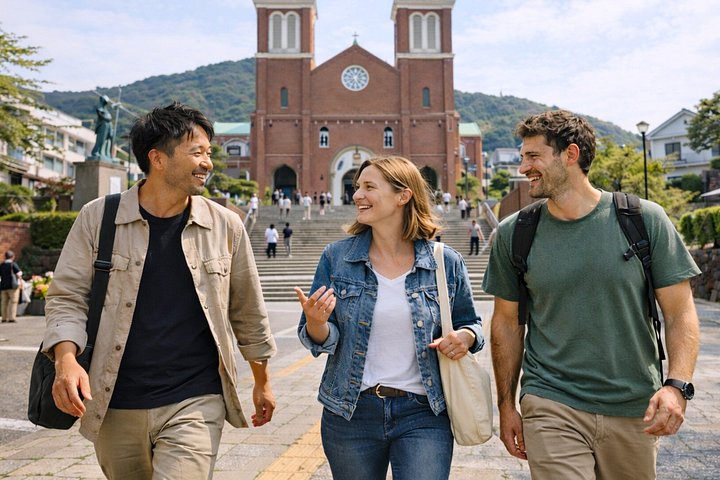
Urakami Cathedral (浦上天主堂, Urakami Tenshudō) is a Catholic church in Nagasaki with a tragic yet interesting history. Today a working church housed in a large, European-style, red brick building, the cathedral is home to various relics that survived the atomic bombing.
Nagasaki Museum of History and Culture (長崎歴史文化博物館, Nagasaki Rekishi Bunka Hakubutsukan) is a well-executed, modern museum dedicated to Nagasaki's history as one of Japan's major international trading ports. The fairly large, permanent exhibition is spread over two floors and is comprised of various sections, each focusing on a different facet of Nagasaki's rich history. During the Edo Period the Japanese government adopted isolationism, effectively cutting the country off from the rest of the world. At this time, Nagasaki became one of the only ports where international trade was permitted, namely with the Chinese and Dutch. This temporarily made the city Japan's main window to the outside world and allowed a rich economy, culture and history to flourish.
A Gokoku Shrine is a shrine dedicated to the spirit of those who died for the nation. Before World War II, they were under the jurisdiction of the Ministry of the Interior, but after World War II they are administered by an independent religious corporation.
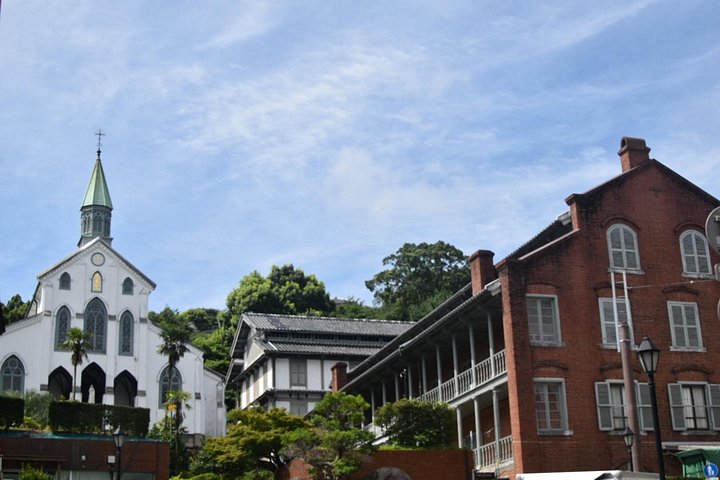
Oura Church (大浦天主堂, Ōura Tenshudō) is a Catholic church in Nagasaki. Built towards the end of the Edo Period in 1864 by a French missionary for the growing community of foreign merchants in the city, it is considered the oldest standing Christian church in Japan.
Kofukuji Temple (興福寺, Kōfukuji) is the oldest and one of the most important Chinese-founded temples in Nagasaki. Located in the city's Teramachi ("Temple Town") district, it is the birthplace of the Obaku school of Zen Buddhism in Japan and has many interesting features. The temple was established around 1620 by a Chinese monk at a time when large numbers of Chinese merchants were coming to Nagasaki to trade. The complex was originally set up as a place to pray for safe sea travel for the merchants, and the construction is heavily influenced by Chinese architectural styles, making it feel different to other temples in Japan.
Nagasaki Confucius Shrine (孔子廟, Kōshi-byō) is one of only a handful of shrines dedicated to the revered Chinese philosopher Confucius in Japan. The shrine was built in 1893 by Nagasaki's Chinese community. The colorful, atmospheric shrine also contains a museum at the rear of the grounds. A small garden with a bridge and pond greets visitors at the entrance. The ornate Chinese-style buildings are adorned with yellow roofs. Flanking the shrine's courtyard stand the 72 sages, life-size stone statues that weigh around two tons each and depict Confucius' disciples. The shrine encourages visitors to find among the statues one that resembles a relative.
Oura Church (大浦天主堂, Ōura Tenshudō) is a Catholic church in Nagasaki. Built towards the end of the Edo Period in 1864 by a French missionary for the growing community of foreign merchants in the city, it is considered the oldest standing Christian church in Japan.
Cancellazione gratuita fino a 24 ore prima dell’inizio, con rimborso totale.
4,9
I voti arrivano da 64 recensioni raccolte dal nostro partner di prenotazione. Sono parole dei viaggiatori, nell’ordine in cui sono state scritte — mai riordinate per far apparire meglio l’esperienza.
Sono mostrate le recensioni scritte in inglese.
5Thank you, Yoshi!
Yoshi was born and raised in Nagasaki and really knows her city. She brings the story of the bombing to life because of a personal connection. She also knows the best places to eat and drink too!
5Fantastic Way to see Nagasaki!
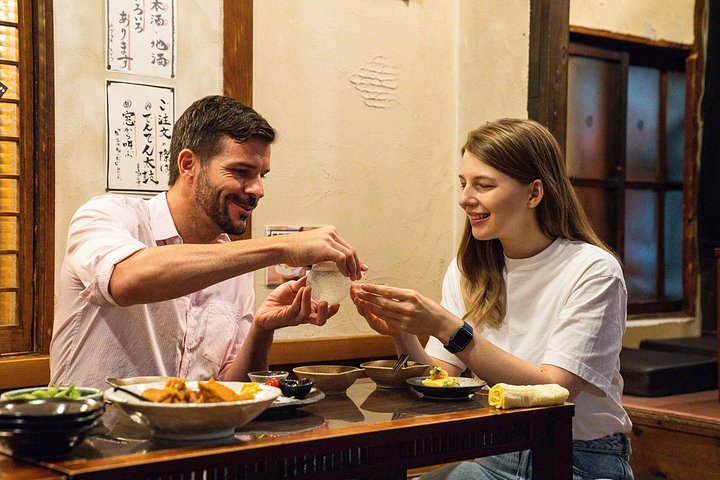
We had been here before and seen the Bomb Museum and Peace Park. We wanted a way to organize a private tour to other places the ship tours might not go and which give us more of an insight into Nagasaki. Hiro worked a custom 4 hour tour with us, met us exiting the immigration checkpoint, part walking, part by taxi and part by tram, to see parks, shrines, bridges and Chinatown where we had a nice lunch before going back to the ship. Private tour, friendly knowledgeable guide, at our pace, without crowds- what could possibly be better?
5Nagasaki half day Peace museum and local area
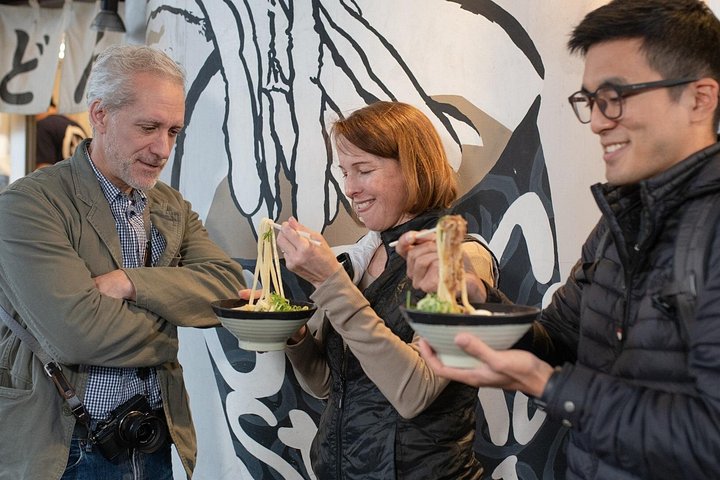
This is a recommended activity for anyone interested in looking at a range of sights in Nagasaki. As it is a half day you will choose from a set of offerings. We chose the Peace museum and the Peace Park (areas with remnants and statues to the bomb), cable car and then walk through Chinatown where we had lunch to finish. As it was nearby we also walked through the oldest shopping street to spectacle bridge- named as such for the reflection it makes on the water. Our guide was the wonderful and informative Yoshi-san. In between the destinations and while walking through them, we had a constant stream of information and question and answers so we learnt a number of things along the way. Highlights at the park are ground zero above where the bomb exploded, the remnants of a Christian church, a range of sculptures donated by various countries, a cross section of what the ground actually looked like after the blast and the small bomb shelters people dug out of the ground for protection. At the start of the museum walk you are confronted with an actual clock that stopped at 11:02. It somewhat sets the tone for what follows. At the end, where there are accounts from survivors, you will see a photo now famed as “The boy from Nagasaki”. It is a poignant ending to the whole display…do research the story if you are not familiar with it. The cable car ride is a worthy addition as you get to see all of Nagasaki and the landmarks you previously walked through. In order to move quickly through the destinations we choose to travel by taxi …about yen 1400 each trip. Lunch in Chinatown was a recommendation from Yoshi-san for one of the local specialities - Champon and Sara Udon. Both are a chinese-style noodle served in a rich, creamy broth - one in soup and one with crispy noodles. After lunch we walked through the oldest shopping street and then to spectacle bridge. We did this in early June so rain weather can be a factor - we were fortunate to have a warm day, although it rained the next. As we had also done the Hiroshima tour it was still an appreciated difference…noting that there as are way less tourists as I think most just go for the Hiroshima trip.
5Half day tour Nagasaki
Our tour experience was led by Yoshi. She was professional, knowledgeable and fun. She was also very patient. Our visit to the Atomic Museum was longer than any of us anticipated. There is so much information, photos and personal testimony, I could have stayed longer. What we appreciate about having a local guide is the stories which set the context. Yoshi talked of people she knew who were survivors. The challenges after the bombing. She took us outside to Nagasaki Peace park - showed us places (the bomb shelter holes) that we would have missed had she not been with us. She explained the history of Nagasaki. Even took us to the sculpture in the park donated by the government of Aotearoa. We then headed to Inasa-yama ropeway. Again she explained various landmarks, associated histories and random facts. Lastly she guided us to a restaurant in China town to try Champon and sara-udon. Delicious!!! She also directed us toward local landmarks (Megane-bashi). This was incredible value for a half day tour. It was longer than half a day really. I think this tour is worth doing for all the reasons mentioned above.
5Great and lasting experience
Hiro buideldier us and hé was very informative, hé knel a lot and het was a very Nice person to travel with. We can sincerely reconventie Hiro to guide you in Kumamoto.
4Nagasaki our pace
Walked and toured at our pace. Some stairs and slopes to negotiate. Guide was friendly and knowledgeable.
Nagasaki, on Kyushu's west coast, is a hillside harbour city shaped by centuries of contact with China, Portugal and the Netherlands.
Nagasaki climbs the steep hills around a deep natural harbour, and for most of the Edo period it was Japan's only window on the outside world, through the Dutch trading post on the artificial island of Dejima and a Chinese community nearby. Reminders include Oura Church, the oldest surviving Western-style church in Japan, the hillside mansions of Glover Garden and Chinatown.
Top-ranked sights in Nagasaki: Huis Ten Bosch.
I prezzi barrati arrivano dall’operatore, mai da noi.
da200 USD112 USD

da148 USD119 USD
da200 USD112 USD
Aggiungi Ticket Hall alla schermata Home
Biglietti e guide delle città a portata di dito, anche offline.
Ticket Hall