Kamakura Customized Half-Day Tour with Licensed Local Guide
Le descrizioni sono mostrate in inglese.
- 4 ore
- Cancellazione gratuita fino a 24 h prima
- 2 lingue
- Conferma immediata
In evidenza
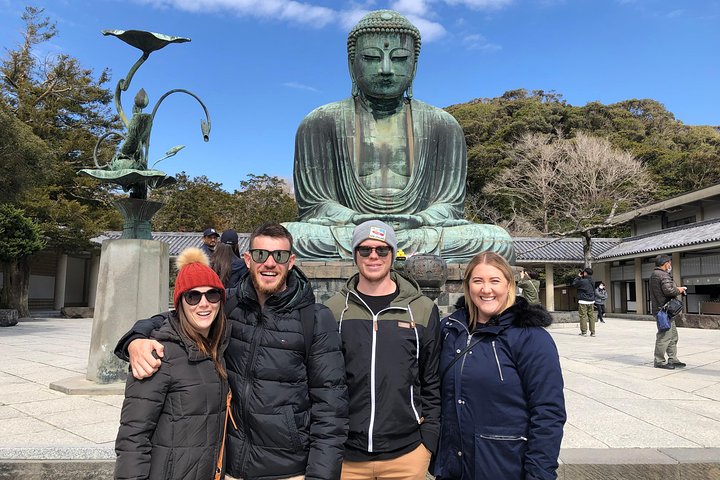
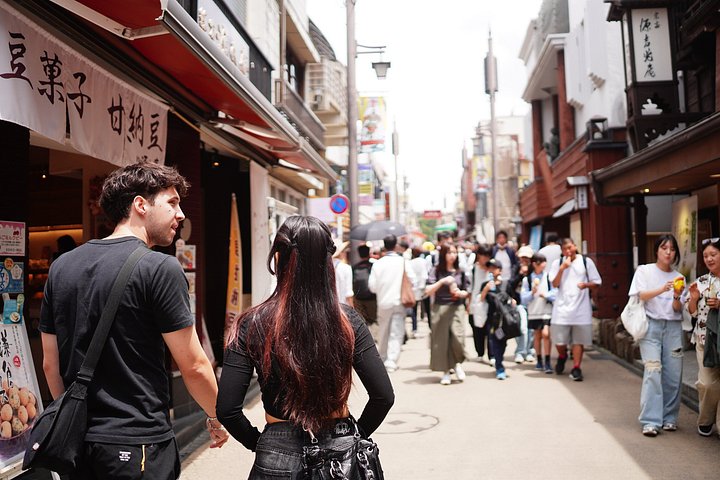
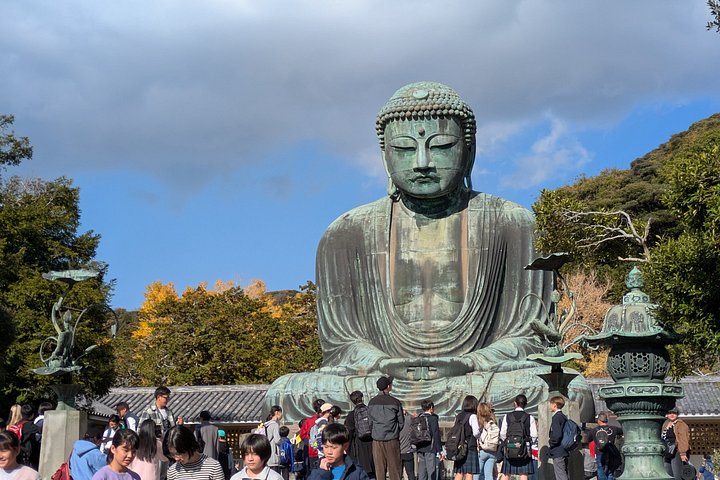
Just south of Tokyo, lays the beautiful and historical Kamakura. Kamakura’s temples and shrines are home to gardens that are beautiful in any season. You can view the ocean from the highest point of Hasedera temple and write your wish on an oyster shell. The over 11 meters tall Great Buddha is an icon of the area residing in Kotokuin Temple. Stop by the old Komachi shopping street and try some Hatosabure, dove shaped biscuits. Each tour is customizable and private. Once you place a reservation, your personal guide will be in touch with you to tailor your trip to you. You can view 2 to 3 sights on this trip. If you wish to extend your time to see more, please contact us directly for extensions. Transportation time is included in the 4 hours. We hope to guide you soon!
Incluso
Cosa è incluso
- Meet up with guide on foot within designated area of Kamakura
- Licensed Local English Speaking Guide
- Customizable Tour of your choice of 2-3 sites from 'What to expect' list
Cosa non è incluso
- Transportation fees, Entrance fees, Lunch, and Other personal expenses
- Private transportation
- You cannot combine multiple tour groups.
- Guide Entry fees are only covered for sights listed under What to Expect.
Itinerario
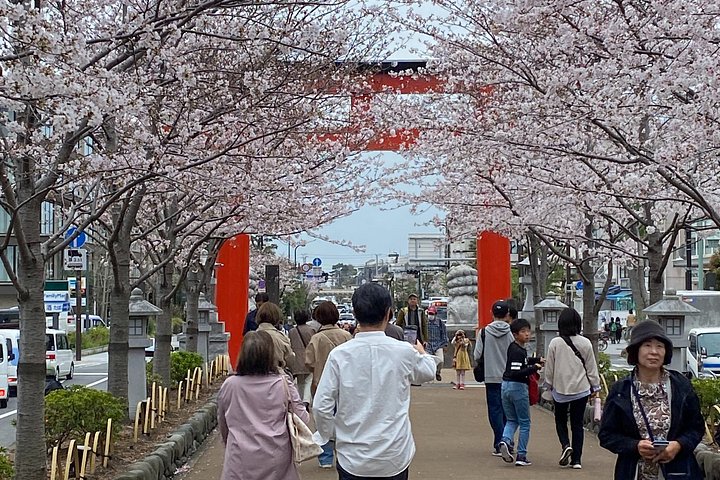
The shrine is dedicated to Hachiman, the patron god of the Minamoto family and of the samurai in general. The deified spirits of the ancient Emperor Ojin who has been identified with Hachiman, Hime-gami and Empress Jingu are enshrined at Tsurugaoka Hachimangu Shrine.
The Great Buddha of Kamakura (鎌倉大仏, Kamakura Daibutsu) is a bronze statue of Amida Buddha, which stands on the grounds of Kotokuin Temple. With a height of 11.4 meters, it has long been the second tallest bronze Buddha statue in Japan, surpassed only by the statue in Nara's Todaiji Temple and some recent creations.
Hasedera (長谷寺) is a temple of the Jodo sect, famous for its eleven-headed statue of Kannon, the goddess of mercy. The 9.18 meter tall, gilded wooden statue is regarded as one of the largest wooden sculpture in Japan and can be viewed in the temple's main building, the Kannon-do Hall
Hokokuji Temple is best known for the beautiful, small bamboo grove found behind the temple's main hall, which lies thick with over 2000 dark green bamboo stalks. A few narrow pathways lead through the bamboo to a tea house where, for a small fee, you can sit and enjoy a cup of matcha tea while enjoying views into the bamboo grove. Also located behind the temple are a series of shallow caves carved into the hillsides, which are believed to hold the ashes of some of the later Ashikaga lords.
Kamakura is surrounded by the ocean in the south and by wooded hills in all other directions. Attractive hiking trails lead through the woods along these hills and connect various atmospheric temples. They are a great way to travel between some of Kamakura's sights. Many of the trails do not take long to complete - typically between 30 to 90 minutes - and allow visitors to enjoy a mix of nature and cultural sights.
Only a short train ride west of Kamakura, Enoshima (江の島) is a pleasantly touristy island just off the coast but connected by bridge with the mainland. The island offers a variety of attractions, including a shrine, park, observation tower and caves. Views of Mount Fuji can be enjoyed on days with good visibility. Enoshima is divided into a yacht harbor accessible to motorized traffic and a forested hill which can only be explored on foot (and paid escalators) and contains most of the sights. Several shrine buildings, collectively known as Enoshima Shrine, are found around the island and are dedicated to Benten, a popular goddess of good fortune, wealth, music and knowledge. Benten is believed to have created Enoshima before subduing a five headed dragon that had been terrorizing the area.
ngakuji (円覚寺) is one of the leading Zen temples in Eastern Japan and the number two of Kamakura's five great Zen temples. Engakuji was founded by the ruling regent Hojo Tokimune in the year 1282, one year after the second invasion attempt by the Mongols had been reverted. One purpose of the new temple was to pay respect to the fallen Japanese and Mongolian soldiers. Engakuji is built into the slopes of Kita-Kamakura's forested hills. The first main structure encountered upon entering the temple grounds is the Sanmon main gate, which dates from 1783. Behind it stands the temple's main hall, the Butsuden, which displays a wooden statue of the Shaka Buddha. The Butsuden was rebuilt relatively recently in 1964 after the former building was lost in an earthquake.
Kenchoji (建長寺, Kenchōji) is the number one of Kamakura's five great Zen temples. The oldest Zen temple in Kamakura, Kenchoji was founded by the ruling regent Hojo Tokiyori in 1253 during the Kencho Era after which it was named. Its first head priest was Rankei Doryu, a Zen priest from China. Although considerably smaller than during its heydays, Kenchoji still consists of a large number of temple buildings and subtemples, and stretches from the entrance gate at the bottom of the valley far into the forested hills behind. After passing through the Sanmon main gate, visitors will see Kenchoji's temple bell (Bonsho), designated a national treasure, on their right.
Zeniarai Benten Shrine (銭洗弁天) is a popular shrine in western Kamakura, which people visit to wash their money (zeniarai means "coin washing"). It is said that money washed in the shrine's spring, will double. Minamoto Yoritomo, the founder of the Kamakura government, ordered the shrine's construction after a god appeared in his dream and recommended him to build the shrine in order to bring peace to the country. Because the dream occurred on the day of the snake, in the month of the snake of the year of the snake, the shrine was later also dedicated to Benten, a Buddhist goddess associated with snakes.
Meigetsuin Temple (明月院) is a temple of the Rinzai Zen Sect founded in 1160 in Kamakura. It is also known as Ajisaidera ("Hydrangea Temple") because hydrangea bloom in abundance on the temple grounds during the rainy season around June. 95% of the hydrangea here are of the Hime Ajisai ("Princess Hydrangea") variety; they are thus named because of their pretty blue colors. The temple was originally a repose built by a son in memory of his father who had died in the struggle for power between the Taira and Minamoto clans in the late Heian Period. It later became part of a larger temple complex called Zenkoji, which was abolished during anti-Buddhist movements soon after the Meiji Restoration, leaving only Meigetsuin to remain as an individual temple today.
Ankokuronji (安国論寺) is one of several temples of the Nichiren sect of Japanese Buddhism along the hills in the southeast of Kamakura. Nichiren himself founded Ankokuronji around 1253 when he first came to Kamakura, and he is said to have lived at the temple for several years. Visitors can walk along a short hiking trail through the wooded hills around the temple buildings. A nice view of the city of Kamakura can be enjoyed underway. Some of the trail's passages are quite steep and should only be explored with good walking shoes and during dry weather.
Jomyoji Temple (浄妙寺, Jōmyōji) is a Zen temple in the hills of eastern Kamakura. Ranked fifth among the five great Zen temples of Kamakura, Jomyoji was founded by the influential Ashikaga family and at its peak was made up of seven buildings and several pagodas. Over the centuries, however, many of the structures were destroyed by fire, and only its historic main hall, reception hall, main gate and warehouse remain today. The main hall sits at the end of a garden and houses a statue of Shaka Nyorai, the historical Buddha. Jomyoji Temple also has a restored teahouse where visitors can sit and enjoy a cup of tea for a small fee while enjoying the view of a nice dry garden. On the hillside behind the main hall is the temple's spacious cemetery, while a path leads up the hill to a small western-style restaurant. The restaurant is operated by the temple and offers good views out over Kamakura from its patio.
Cancellazione
Cancellazione gratuita fino a 24 ore prima dell’inizio, con rimborso totale.
Recensioni
4,9
- 560
- 45
- 31
- 20
- 10
I voti arrivano da 66 recensioni raccolte dal nostro partner di prenotazione. Sono parole dei viaggiatori, nell’ordine in cui sono state scritte — mai riordinate per far apparire meglio l’esperienza.
Sono mostrate le recensioni scritte in inglese.
4Kamakura
Our guide Takeshi was very knowledgeable and took us to places we had requested. It would have been very difficult to find everything on our own. We enjoyed our experience very much.
5All the temples and...
All the temples and shrines were fantastic. Our guide Toru, was excellent, very knowledgeable and his love of Japanese culture shone through.
5Kamakura adventure
Toru was fantastic, very committed to the experience and his love of Japanese culture. The 4 stops we made were incredible, the bamboo shrine and the great Buddha were highlights.
5This customizable tour...
This customizable tour worked really well for us and enjoyed the conversation throughout despite the heat! We went to the places we were most interested in iand received thorough explanations from An. She is very knowledgeable, flexible and kind, highly recommend her and would definitely love to tour again with her the places we did not have the time to visit if we’re back in Kamakura.
3Drab and boring guide
The guide was very stiff and his English was rehearsed not fluent. The Buddha and Shinto shrine were quite impressive.
5Great time, great tour!
We had a great tour experience with Yasuho during our visit to Kamakura. He was very knowledgeable, attentive and enthusiastic about sharing his own experiences. In addition he provided reading material about Japan and offered recommendations of other places to visit as we told him of our intentions to return to the country. Thank you Yasuho for making our tour a pleasurable one.
Da sapere prima di partire
- Prelievo
- Il prelievo è incluso per tutti.
- Tipo di biglietto
- Mobile or paper ticket accepted
- Gestito da
- Japan Guide Agency
- Service animals allowed
- Public transportation options are available nearby
- Infants and small children can ride in a pram or stroller
- All areas and surfaces are wheelchair accessible
- Transportation options are wheelchair accessible
- Wheelchair accessible
- Suitable for all physical fitness levels
- This is a walking tour. Pick up is on foot.
How it compares in Kamakura
- Its from-price is 35% below the median of the 10 tour della città we list in Kamakura.
- Its length is typical for the group.
- By number of reviews it ranks 1 of 10.
- The operator lists free cancellation on it.
About Kamakura
Kamakura is a coastal town south of Yokohama, once Japan's samurai capital, known for the Great Buddha, Zen temples and surf beaches.
Kamakura was the seat of the first samurai government, from the late twelfth to the early fourteenth century, and its hills still hide dozens of temples and shrines. The Great Buddha at Kotoku-in, a bronze figure about eleven metres high, sits in the open air, and the broad avenue of Wakamiya leads from the beach to Tsurugaoka Hachimangu, the town's main shrine. Hasedera temple has a tall wooden statue of Kannon and a terraced garden above the sea.
Top-ranked sights in Kamakura: Tsurugaoka Hachimangu Shrine.
Offerte speciali a Kamakura
I prezzi barrati arrivano dall’operatore, mai da noi.
 -20%Cancellazione gratuita