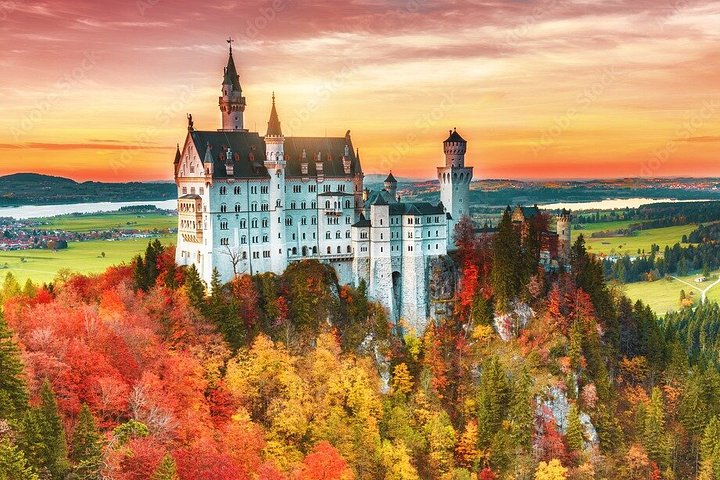
Neuschwanstein Castle Fast Track Ticket
Las descripciones se muestran en inglés.
- 45 minutos
- 17 idiomas
- Confirmación inmediata
- Entrada móvil
Destacados
Neuschwanstein Castle tickets sell out quickly. This experience guarantees your entry to one of the world's most iconic UNESCO World Heritage sites. Your official ticket for the 11:55 A.M. audio-guided tour will be sent to you via text message by 10:00 A.M. on the morning of your scheduled visit. Please ensure that the contact details provided with your booking are accurate and accessible on the day of your tour so you can receive your tickets without delay.
Incluye
Qué incluye
- Admission fee
- Audio Headset
Itinerario
This experience allows you admission with an audio guided tour to one of the world's most famous heritages. Your audio guided tour begins at 11:55. A.M.
Cancelación
All sales are final. No refund is available for cancellations.
Antes de ir
- Punto de encuentro
- Your guided tour of Neuschwanstein Castle begins promptly at 11:55 A.M. Please arrive at the castle entrance no later than 11:45 A.M. Late arrivals cannot be accommodated, and entry times and tour dates cannot be rescheduled under any circumstances on the day of the experience.
- Recogida
- Todos se reúnen en el punto de inicio; no hay recogida.
- Tipo de entrada
- Mobile or paper ticket accepted
- Tamaño del grupo
- Hasta 30 viajeros
- Operado por
- Castle Tours Bavaria
- Not recommended for travelers with spinal injuries
- Travelers should have at least a moderate level of physical fitness
About Hohenschwangau
Hohenschwangau is an Alpine village in the Allgäu below Neuschwanstein, the fairytale castle of King Ludwig II, with a lake and lofty peaks around.
Hohenschwangau sits on the Bavarian edge of the Alps, close to the Austrian border, beside the green Alpsee. Above it stand two castles. Hohenschwangau Castle, rebuilt in neo-Gothic style from 1832 by the future Maximilian II, was the childhood home of Ludwig II. His own dreamlike creation, Neuschwanstein, begun in 1869 on a crag above the Pöllat gorge, was still unfinished when he died in 1886.