20% kortingGratis annuleren
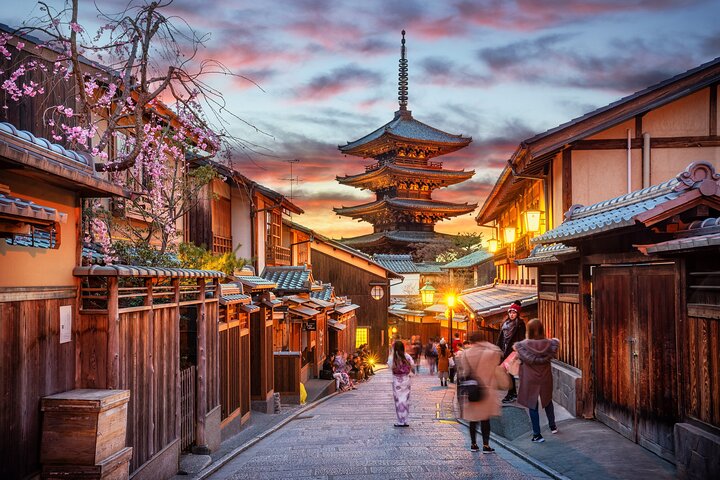
Kyoto Gion Geisha District-wandeltocht - De verhalen van Geisha
vanafUS$ 30US$ 24
Beschrijvingen worden in het Engels getoond.
Many visitors to Kyoto are fascinated by its traditional architecture, but often wonder how modern architecture fits into a city so deeply rooted in the past. This tour is designed to explore exactly that—discovering how contemporary ideas, materials, and design have found their place within Kyoto’s historic landscape. Your guide for this tour will be an architect and design writer, an expatriate who has lived in Japan for nearly a decade. [ Consideration ] If you’re not particularly interested in architecture, design, philosophy, or psychology, this tour may not be the right fit for you. [ Notice ] This tour is completely private, meaning it will be only the travelers in your booking—no one else will join.
[ Designed by Sachio Otani · Opened 1966 ] This gives you a completely different generation of Japanese modernism. The building uses bold geometric forms inspired partly by traditional Japanese architecture and is deliberately integrated with the surrounding landscape. The center itself describes its architecture as combining upright and inverted trapezoids and using the surrounding mountains as a kind of borrowed scenery.
[ Designed by Tadao Ando · Opened 1994 ] This building immediately introduces Ando’s language: exposed concrete, geometry, water, movement, and carefully controlled views. It is essentially an architecture-as-experience project rather than a conventional museum.
[ Designed by Arata Isozaki · Opened 1995 ] A completely different approach to monumentality and geometry. The complex forms, symmetry, circulation, and relationship between structure and public space make it useful for discussing how Japanese architects approached large cultural buildings in the late 20th century.
[ Designed by Kenjirō Maeda · Opened 1933 ] Explore one of Kyoto’s landmark modernist buildings, where its 1933 architecture by Kenjirō Maeda is thoughtfully integrated with contemporary additions by Jun Aoki and Tezzo Nishizawa.
[ Designed by Hiroshi Hara · Opened 1997 ] We’ll walk along the Sky Walk, away from the crowds, using the station’s elevated passageways. It's probably the best place to discuss architecture at an urban scale: enormous interior volume, circulation, commercial functions, transportation, light, and the tension between Kyoto's historic identity and an extremely futuristic building.
Gratis annuleren tot 24 uur voor aanvang, met volledige terugbetaling.
Kyoto, meer dan duizend jaar de keizerlijke hoofdstad van Japan, is een stad van tempels, tuinen, houten stadshuizen en verfijnde tradities.
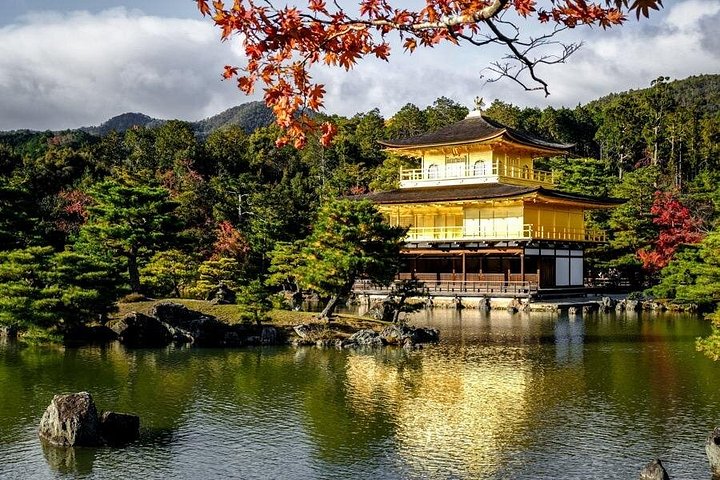
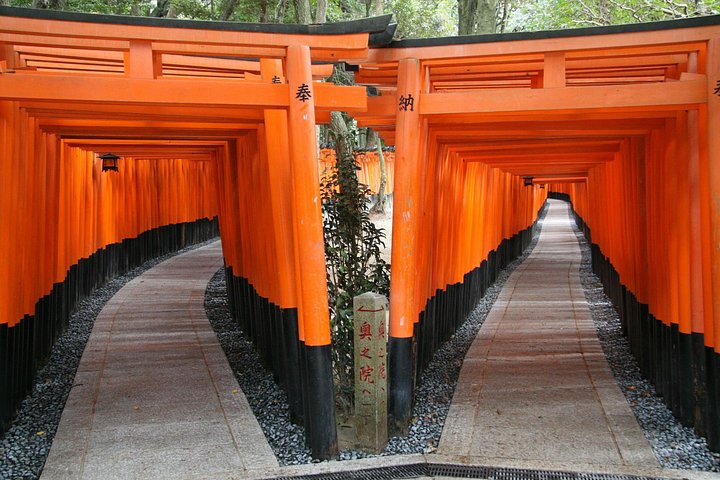
De stad herbergt veel van de meest gekoesterde plekken van Japan. Duizenden vermiljoenrode torii-poorten van Fushimi Inari Taisha klimmen een beboste berg op, het Gouden Paviljoen van Kinkaku-ji schittert boven zijn vijver, en het houten podium van Kiyomizu-dera steekt uit de heuvel boven de stad. De rotstuin van Ryoan-ji en het met mos begroeide terrein van Ginkaku-ji nodigen uit tot stille overpeinzing.
Top-ranked sights in Kyoto: Fushimi Inari Shrine (Fushimi Inari Taisha), Kinkaku-ji (Golden Pavilion), Kiyomizu-dera Temple.
Van/voor-prijzen komen van de aanbieder, nooit van ons.
vanafUS$ 30US$ 24

vanafUS$ 45US$ 32
vanafUS$ 65US$ 61
vanafUS$ 110US$ 93
vanafUS$ 13US$ 6
vanafUS$ 30US$ 24
vanafUS$ 110US$ 93
Zet Ticket Hall op uw beginscherm
Tickets en stadsgidsen, met één tik, ook offline.
Ticket Hall