
Independent guide
Big Bus Athens: routes, stops and tickets
Independent guide, not operated by or affiliated with Big Bus Tours.
We list 2 Big Bus ticket options in Athens, from 1–2 hr. Big Bus Tours sells the Athens hop-on hop-off routes on its own Athens pages. This guide covers 2 routes, its 24 distinct stops, when to ride and who it suits, then lines up the tickets.
- Routes2
- Stops24
- Shortest loop80M
- Tickets2
Route and stops
- Athens Route (Red)
- Piraeus Route (Purple)
Fifteen-stop loop around central Athens from Syntagma Square past the Acropolis, Temple of Olympian Zeus, Parliament, Panathenaic Stadium and the National Archaeological Museum, via Omonia and Monastiraki.
Athens Route (Red)
Show all 15 stops
Links central Athens with the Piraeus cruise port and Mikrolimano, returning via the Temple of Zeus and Parliament to Syntagma.
Piraeus Route (Purple)
Show all 13 stops
Big Bus tickets in Athens
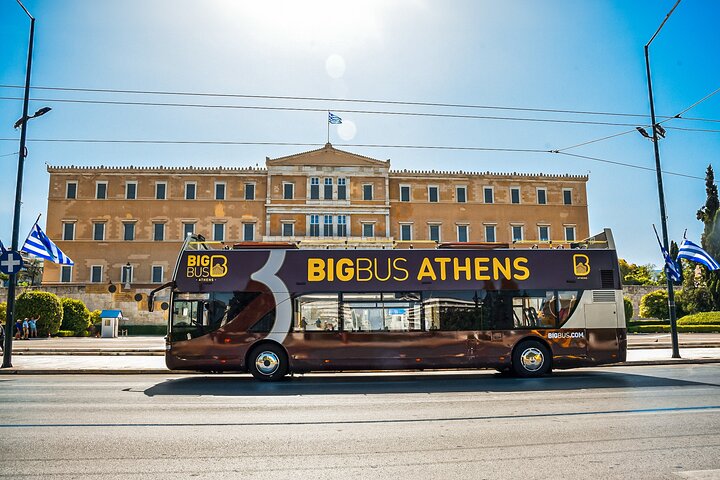
Want to see every hop-on hop-off bus in Athens, not just this one? Compare hop-on hop-off tours in Athens.
What riders say
Across these tickets travellers rate Big Bus Athens 4.0 out of 5 from 855 reviews.
On time and well organized. Good that there are agents at stops to help answer questions. Good narration
Good value to purchase 2 day package as its cheaper to explore the city. Pick up at their bus stop was not as frequent as they stated on their signs. We ended waiting 30 minutes in heavy rain.
Love the convenience of using this service. It's the best way to see a city like Athens. Bonus: the other 2 routes are very nice too and highly recommend the Riviera route if you have time.
Best time to ride
Spring and autumn are generally pleasant for open-top riding, while summer afternoons are hot, so early rides and shade matter more. Winter is mild but rain is possible.
Who it suits
- Families
- The Red Route passes the Acropolis Museum, Panathenaic Stadium and Monastiraki, giving children places to get off and rejoin.
- Couples
- The Riviera Route runs to the southern coast, and the Plaka and Monastiraki stops are close to cafes.
- Seniors
- Hop-on hop-off lets riders choose a few stops in a city with steep sites. Check the operator for current accessibility details before booking.
- First-time visitors
- The Red Route covers the central sights in about 1 hour 40 minutes.
Tips before you go
- A full loop takes about 1 hour 40 minutes, with buses every 20 minutes.
- The Purple Route reaches the Piraeus cruise terminals and runs about every 80 minutes.
- The Riviera Route runs about hourly, with a circuit of about 2 hours.
- Stop 2 at Plaka & South Entrance Acropolis starts both the Purple and Green routes.
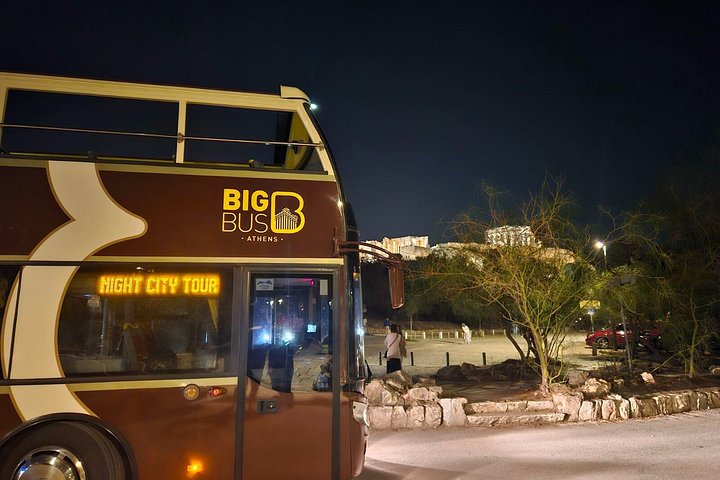
- A separate night tour is available.
Sights along the way
Acropolis, Acropolis Museum, Temple of Olympian Zeus, Hellenic Parliament, Panathenaic Stadium, National Archaeological Museum, Monastiraki, Piraeus.
Top-ranked in Athens: Acropolis, Parthenon, Acropolis Museum, Ancient Agora of Athens, Panathenaic Stadium. All things to do in Athens.
Why take the bus in Athens
The case for a sightseeing bus here is mostly about effort. The Acropolis and its neighbours sit on and around a hill, and the sights outside that core are far enough apart to wear you down before lunch. A bus that circles the centre lets you see the spread of the city, pick the two or three places that deserve real time and ride past the rest. If this is your first visit, riding the loop first gives you the layout of the city before you start walking.
Walking is the better choice for the heart of the old city. The Acropolis, Parthenon, Acropolis Museum, Ancient Agora, Temple of Olympian Zeus, Plaka and Monastiraki form one cluster that you can cover on foot in a half-day, and lanes like those in Plaka are not made for vehicles anyway. If your plan is only that cluster, a walking tour or a self-guided stroll does the job, and a typical walking tour adds a guide's stories and context that a bus loop cannot match.
The metro is the quicker tool for point-to-point trips, especially on hot afternoons, when you know exactly where you are going. The bus wins when you want to hop between spread-out sights without working out connections, or when you want a seated break with a view between visits.
If you are weighing up whether it is worth it, think in terms of how many sights outside the central cluster you actually want to see. Two or more, and the bus starts to make sense. Only the Acropolis area, and you can safely skip it.
How the routes work together
There are two routes. The Red Route is the sightseeing workhorse: a loop of about 1 hour 40 minutes through central Athens. It calls at the Acropolis area, the Temple of Zeus, Parliament, the Panathenaic Stadium and the National Archaeological Museum, then swings through Omonia and Monastiraki. For a first visit it is the one that matters, because it touches nearly every major sight in one circuit.
The Purple Route has a different job. It heads out to the Piraeus cruise port and Mikrolimano, then returns through the Temple of Zeus and Parliament to Syntagma. Think of it as the coastal extension: useful if you are arriving or leaving by cruise ship, or if you want a look at the waterfront and the Stavros Niarchos Cultural Center rather than more ruins.
The two routes meet in the middle of the city. A sensible approach is to treat the Red Route as the main event and add the Purple Route only if the port side appeals.
For sights, the Acropolis and Plaka are right at the Plaka & South Entrance Acropolis stop on both routes. The Parthenon and Erechtheion are about 50 metres from the Red Route's Acropolis stop, and the Temple of Athena Nike is about 100 metres away. The Odeon of Herodes Atticus and the Theatre of Dionysus are each about 200 metres from that same stop. The Acropolis Museum has its own Red Route stop, and the Panathenaic Stadium and the Temple of Olympian Zeus are both right at their stops. The Ancient Agora is about 250 metres from the Monastiraki Square stop, and Monastiraki itself is right at it.
A sample day on the bus
Start in the morning, when the Acropolis is at its most comfortable. Board the Red Route and get off at the Acropolis stop, about 50 metres from the Parthenon. Give the rock itself a solid block of time: the Parthenon, the Erechtheion with its caryatid porch and the Temple of Athena Nike are all on the summit, and the Theatre of Dionysus lies on the slope below.
Walk down to the Acropolis Museum next, where the sculpture found on the rock is displayed, and have lunch nearby.
In the afternoon, rejoin the bus and use it for what it does best: covering distance. Ride to the Temple of Olympian Zeus for a short visit, then continue past Parliament to the Panathenaic Stadium, the marble arena that hosted the first modern Olympics. If the museum is your priority, carry on towards the National Archaeological Museum, which deserves a couple of hours by itself.
Finish the loop through Omonia and into Monastiraki Square. This is the right moment to get off: the flea-market stalls and the Ancient Agora are close, and from there you can wander back into Plaka for an evening meal. That ending leaves you on foot in the liveliest streets, which is where Athens is best after dark.
To make this a two-day plan, split it: the Acropolis cluster on foot one day, and a full Red Route ride with the museum and stadium on the other. The Purple Route fits as a half-day add-on if you have time near the port.
Booking advice
Decide first how much of the city you really want to cover.
Compare more than one provider. Athens has several sightseeing bus operators, with around eight products between them. They differ in the kinds of tour on offer: some are simple open-top or double-decker loops, some add a river or boat cruise, and some bundle the bus with an attraction or a second activity. A bundle is worth a look if you were going to visit that attraction anyway, but do not pay for an add-on you would skip.
Language matters if you plan to listen to commentary. Across the products, 18 languages are offered, including English, Greek, German, French, Italian and Japanese, but each product has its own selection, so confirm yours on the ticket page.
Before buying, check which route and stops the ticket page describes, how the ticket is described, and the cancellation terms. Choose your travel dates around the season: spring and autumn suit open-top riding best, while summer afternoons are hot and favour earlier rides and shade.
Sights worth the stop
If you only get off the bus a few times, make the Acropolis the first. Together with the Parthenon, Erechtheion and Temple of Athena Nike, it is the reason most people come to Athens, and it rewards unhurried time.
The Acropolis Museum is the natural partner, putting the rock's sculpture in context and offering a cool break from the heat. The Panathenaic Stadium is a good second-tier choice: it is quick to visit and sits right at its stop.
The Temple of Olympian Zeus, with Hadrian's Arch close by, gives a sense of scale in just a short visit. The Ancient Agora shows the everyday civic side of the ancient city and pairs well with a wander through Monastiraki.
For atmosphere, spend the end of your day in Plaka, with its whitewashed houses and tiny churches. The Odeon of Herodes Atticus hosts ancient dramas and concerts on summer nights, so look at the event programme if your dates allow, and the Theatre of Dionysus is a quieter stop on the slope below the rock.
More on Athens sightseeing
Questions about Big Bus Athens
How many routes are there in Athens?
Three: Red (Athens), Purple (Piraeus) and Green (Riviera).
Where does the Athens bus start?
The Red Route's first bus leaves from Syntagma Square.
Does it stop at the Acropolis?
Yes, there are stops at the Plaka and South Entrance, the Acropolis Museum and Rovertou Galli Street.
Which route goes to Piraeus?
The Purple Route links central Athens with the Piraeus cruise port.
How long is the Red Route?
About 1 hour 40 minutes, with buses every 20 minutes.
How many Big Bus ticket options are there in Athens?
We list 2 Big Bus ticket options in Athens, lasting 1–2 hr, rated 4.0 out of 5 across 855 traveller reviews.
Route and stop details checked 2026-10-13; routes and times change with the season, so confirm on the ticket page before you travel.