Patzcuaro & Janitzio Private Tour
Le descrizioni sono mostrate in inglese.
- 8 ore
- Cancellazione gratuita fino a 24 h prima
- 2 lingue
- Conferma immediata
In evidenza
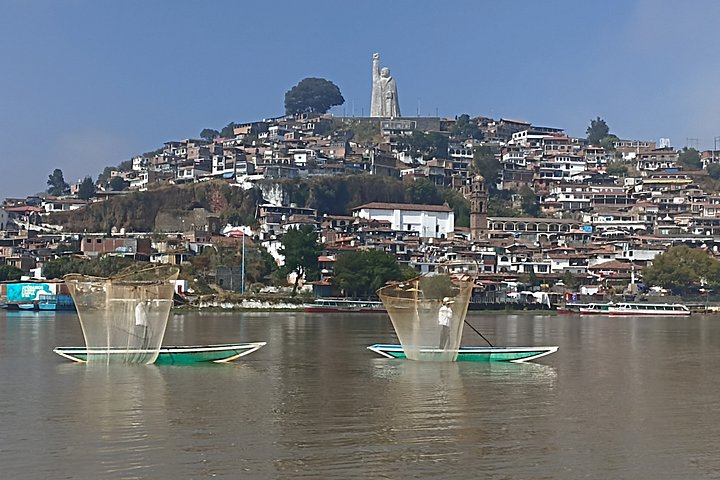
Come to visit the only lake in the world where the local fishermen still use the famous "butterfly nets". Discover the statue of "Morelos" on top of Janitzio Island, built in 1933, which is actually higher than the Statue of Liberty in New York, USA. As you walk the cobblestoned streets, admire the white walls & tile roofs in the city of Patzcuaro that has a style as the state capital as of 1534. Try the local gastronomy at lunch break and learn about the way first Bishop Vasco de Quiroga did his best to benefit the local Indigenous with hospitals, schools, and workshops to improve life, based on the "Utopia" book by Thomas More. Forget about bus tours and taxi cab drivers! Go with an expert Tour Guide driving this tour for over 25 years.
Incluso
Cosa è incluso
- Boat ride ticket to the Island is a round trip of 3 hours
- Air-conditioned vehicle
Cosa non è incluso
- Lunch
Itinerario
Come to take a boat ride and visit the only lake in the world where the local fishermen still use the famous "butterfly nets" Discover the statue of "Morelos" on top of Janitzio Island, built in 1933, which is actually higher than the Statue of Liberty in New York, USA.
Enjoy looking at the old-time architecture plus the time in shops and galleries to admire the local artwork. Hand-made masterpieces are waiting for you in the workshops, to know more about the local artisans that preserved Precolumbian techniques and tools.
As you walk the cobblestoned streets, admire the white walls & tile roofs in the city of Patzcuaro that was a state capital as of 1534. Try the local gastronomy at lunch break and learn about the way first Bishop Vasco de Quiroga did his best to benefit the local Indigenous with hospitals, schools, and workshops to improve life-based on the "Utopia" book by Thomas More.
Admire the old church built by Bishop Quiroga that used to be the local Cathedral in 1540. This is one of many buildings by Quiroga built on the ruins of the prehispanic temples, located one block away from the main square.
The main church in town preserves important treasures: The sculpture of the local Virgin and the memorial to the first Bishop in Michoacan Vasco de Quiroga named "Tata Vasco" by the local indigenous people.
The first school in town is the construction from XVI Century built on the ruins of prehispanic temples. To present-day is the local museum.
Walk into the oldest Spanish home around the square that works as a gallery of handicrafts from indigenous families in town.
Cancellazione
Cancellazione gratuita fino a 24 ore prima dell’inizio, con rimborso totale.
Recensioni
5,0
- 531
- 41
- 30
- 20
- 10
I voti arrivano da 32 recensioni raccolte dal nostro partner di prenotazione. Sono parole dei viaggiatori, nell’ordine in cui sono state scritte — mai riordinate per far apparire meglio l’esperienza.
Da sapere prima di partire
- Punto d’incontro
- The corner of Madero (Main st.) and Guillermo Prieto at Burger King.
- Prelievo
- Tutti si ritrovano al punto di partenza; non c’è prelievo.
- Tipo di biglietto
- Mobile or paper ticket accepted
- Dimensione del gruppo
- Fino a 8 viaggiatori
- Gestito da
- Alfredo Tour Guide
- Not recommended for travelers with spinal injuries
- Not recommended for travelers with poor cardiovascular health
- Travelers should have at least a moderate level of physical fitness
How it compares in Morelia
- Its from-price is 30% below the median of the 17 gite di un giorno we list in Morelia.
- Its length is typical for the group.
- By number of reviews it ranks 1 of 17.
- The operator lists free cancellation on it.
About Morelia
Morelia is the capital of Michoacán, a colonial city of pink stone, with a cathedral, arcaded plazas and an aqueduct, set in the central Mexican highlands.
Morelia's historic centre, a World Heritage site, grew from the sixteenth century in pink cantera stone. The Baroque cathedral, with twin towers, is lit at night, and arcaded plazas, colonial mansions and the Palacio Clavijero fill the grid of streets. The city was called Valladolid until 1828, when it took the name Morelia after José María Morelos, the independence hero born here.