5 % RabattKostenlose Stornierung
Kategorien in Istanbul
Die Beschreibungen werden auf Englisch angezeigt.
Enhance your Trojan experience by visiting another site where the souls of heroes are present. You will also travel by the shores of the Dardanelles, as you will pass by Gallipoli, and other land of gallantry where the famous “Gentlemen’s War” was fought between the Ottoman and Anzac troops during the WW1. Scenic ferry ride from Europe to Asia across the Dardanelles
The Dardanelles(Greek: Δαρδανέλλια, romanized: Dardanéllia), also known from Classical Antiquity as the Hellespont (/ˈhɛlɪspɒnt/; Classical Greek: Ἑλλήσποντος, romanized: Hellēspontos, lit. 'Sea of Helle'), is a narrow, natural strait and internationally significant waterway in northwestern Turkey that forms part of the continental boundary between Europe and Asia, and separates Asian Turkey from European Turkey. One of the world's narrowest straits used for international navigation, the Dardanelles connects the Sea of Marmara with the Aegean and Mediterranean Seas, while also allowing passage to the Black Sea by extension via the Bosphorus. The English name Dardanelles is an abbreviation of Strait of the Dardanelles. During Ottoman times there was a castle on each side of the strait. These castles together were called the Dardanelles, probably named after Dardanus, an ancient city on the Asian shore of the strait which in turn was said to take its name from Dardanus, son of Zeus.
The Trojan Horse is a story from the Trojan War about the subterfuge that the Greeks used to enter the independent city of Troy and win the war. In the canonical version, after a fruitless 10-year siege, the Greeks constructed a huge wooden horse and hid a select force of men inside, including Odysseus. The Greeks pretended to sail away, and the Trojans pulled the horse into their city as a victory trophy. That night the Greek force crept out of the horse and opened the gates for the rest of the Greek army, which had sailed back under cover of night. The Greeks entered and destroyed the city of Troy, ending the war. Metaphorically, a "Trojan horse" has come to mean any trick or stratagem that causes a target to invite a foe into a securely protected bastion or place. A malicious computer program that tricks users into willingly running it is also called a "Trojan horse" or simply a "Trojan".
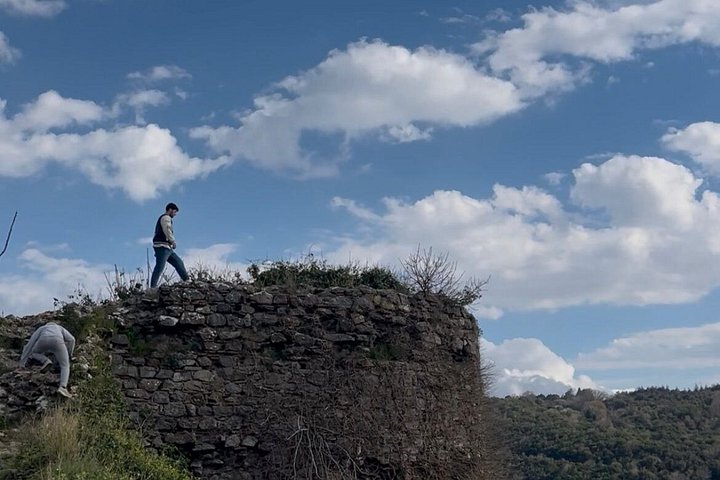
Much of the surrounding area is visible from the ancient Temple of Athena, built on top of a trachyte crag. The view from this temple on a clear day extends to nearby Lesbos in the south, Pergamum in the southeast, and Mount Ida in Phrygia in the east. To the north, the Tuzla River flows. To the northwest, two massive Hellenic columns still mark the gate to the city.
After leaving the Platonic Academy in Athens, Aristotle (joined by Xenocrates) went to Assos, where he was welcomed by King Hermias, and opened an Academy in this city. Aristotle also married Pythias, the adopted daughter of Hermias. In the Academy of Assos, Aristotle became a chief to a group of philosophers, and together with them, he made innovative observations on zoology and biology. When the Persians attacked Assos, King Hermias was caught and put to death. Aristotle fled to Macedonia, which was ruled by his friend King Philip II of Macedon. There, he tutored Philip's son, Alexander the Great. There is a modern statue of Aristotle at the town entrance.
The Gallipoli campaign, also known as the Dardanelles campaign, the Battle of Gallipoli or the Battle of Çanakkale (Turkish: Çanakkale Savaşı), was a campaign of the First World War that took place on the Gallipoli peninsula (Gelibolu in modern Turkey), from 17 February 1915 to 9 January 1916. The Entente powers, Britain, France and Russia, sought to weaken the Ottoman Empire, one of the Central Powers, by taking control of the straits that provided a supply route to the Russian Empire. The Allies' attack on Ottoman forts at the entrance of the Dardanelles in February 1915 failed and was followed by an amphibious landing on the Gallipoli peninsula in April 1915 to capture the Ottoman capital of Constantinople (Istanbul).
The landing at Anzac Cove on Sunday, 25 April 1915, also known as the landing at Gaba Tepe, and to the Turks as the Arıburnu Battle, was part of the amphibious invasion of the Gallipoli Peninsula by the forces of the British Empire, which began the land phase of the Gallipoli Campaign of the First World War. The assault troops, mostly from the Australian and New Zealand Army Corps (ANZAC), landed at night on the western (Aegean Sea) side of the peninsula. They were put ashore one mile (1.6 km) north of their intended landing beach. In the darkness, the assault formations became mixed up, but the troops gradually made their way inland, under increasing opposition from the Ottoman Turkish defenders.[nb 1] Not long after coming ashore the ANZAC plans were discarded, and the companies and battalions were thrown into battle piece-meal, and received mixed orders. Some advanced to their designated objectives while others were diverted to other areas.
Kostenlose Stornierung bis 24 Stunden vor Beginn, mit voller Rückerstattung.
4,6
Die Bewertungen stammen aus 8 Rezensionen, die unser Buchungspartner gesammelt hat. Es sind die eigenen Worte der Reisenden, in der Reihenfolge ihres Entstehens — nie umsortiert, damit das Erlebnis besser dasteht.
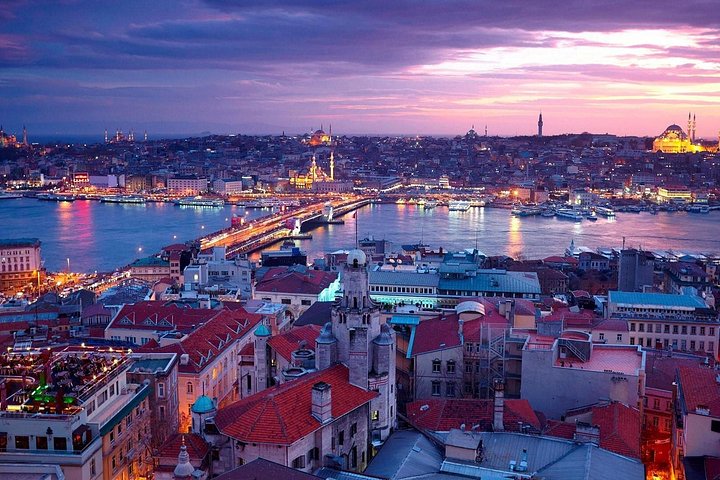
Istanbul liegt am Bosporus in Europa und Asien: byzantinische und osmanische Bauten, lebhafte Basare und Fähren zwischen zwei Kontinenten.
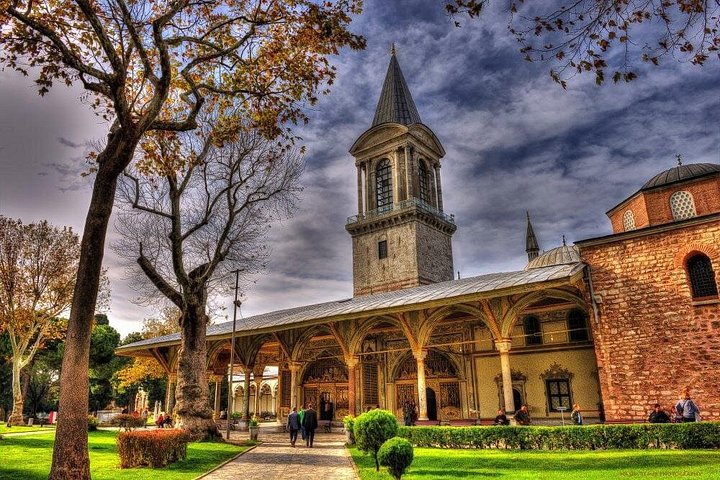
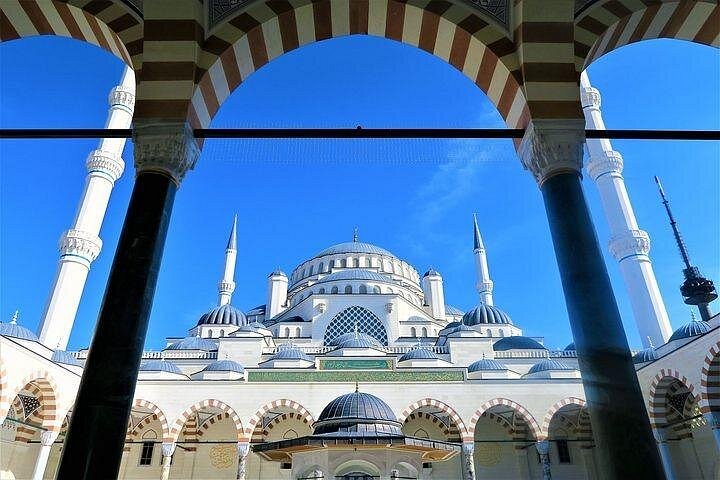
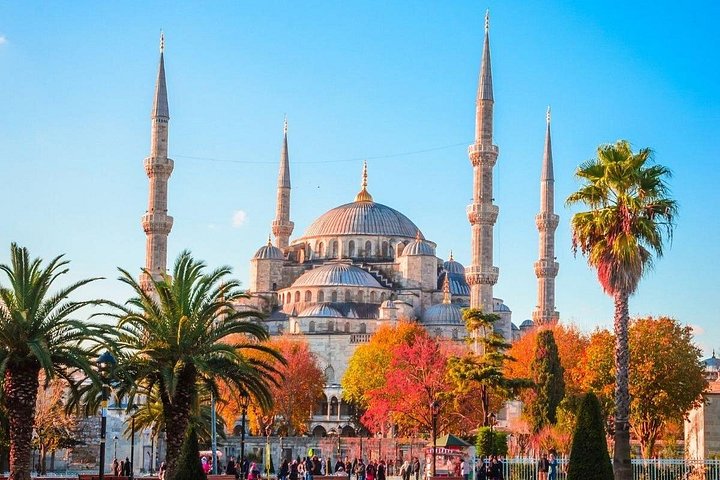
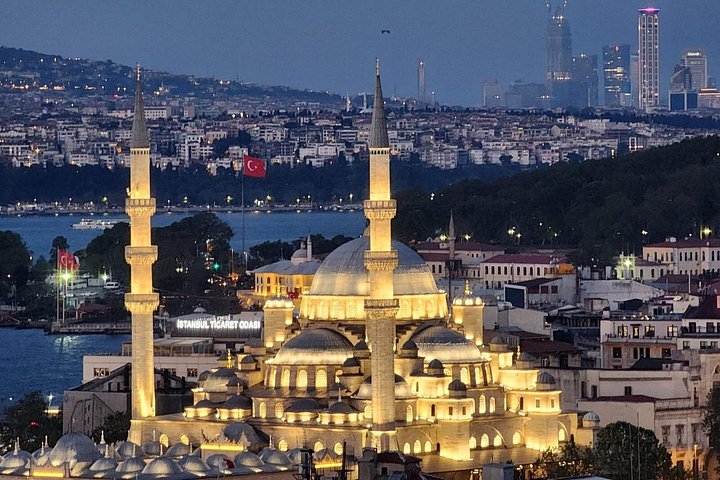
Auf der historischen Halbinsel stehen die größten Sehenswürdigkeiten. Hagia Sophia, Blaue Moschee und Hippodrom liegen sich in Sultanahmet gegenüber, die Basilikazisterne erstreckt sich unter den Straßen, und der Topkapı-Palast breitet sich auf dem Hügel über dem Goldenen Horn aus. Wenige Schritte entfernt sind der Große Basar und der Gewürzbasar seit Jahrhunderten Handelsplätze, und die Süleymaniye-Moschee des großen osmanischen Baumeisters Sinan krönt einen der sieben Hügel der Stadt.
Top-ranked sights in Istanbul: Dolmabahce Palace (Dolmabahce Sarayi), Bosphorus, Bosphorus Bridge (Bogazici Koprusu).
Streichpreise kommen vom Anbieter, nie von uns.
Ticket Hall zum Home-Bildschirm hinzufügen
Tickets und Stadtführer, nur einen Fingertipp entfernt, auch offline.
Ticket Hall