Sink Canyon and Cork Chiapa
Beskrivningarna visas på engelska.
Beskrivningarna kommer från arrangören och översätts automatiskt.
- 8 timmar
- Fri avbokning till 24 tim före
- Guidning på spanska
- Omedelbar bekräftelse
Höjdpunkter
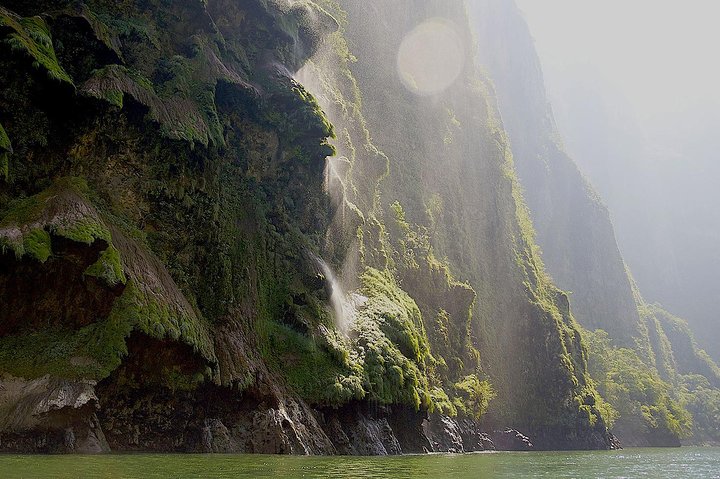
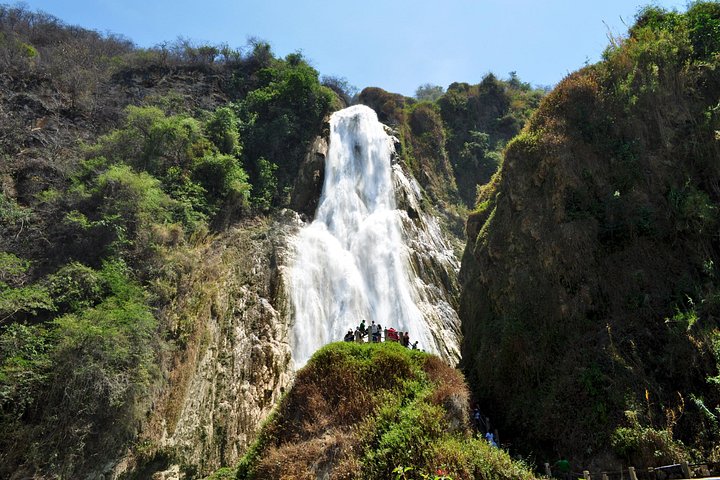
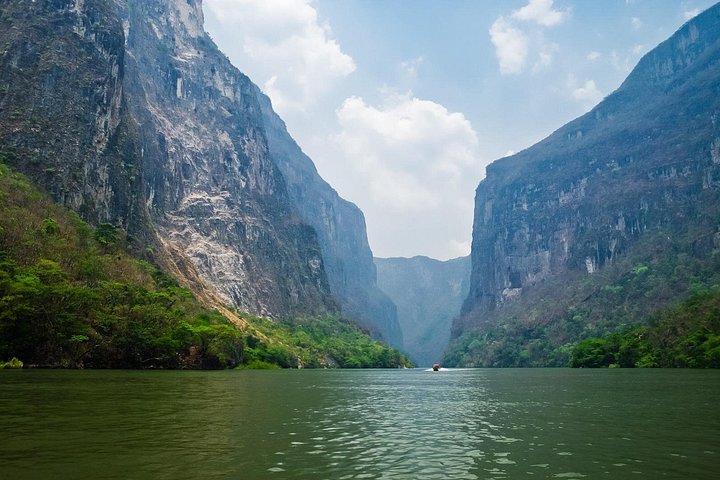
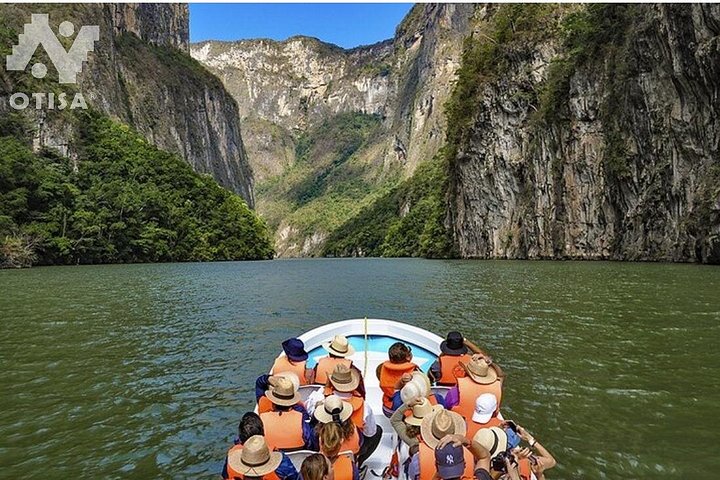
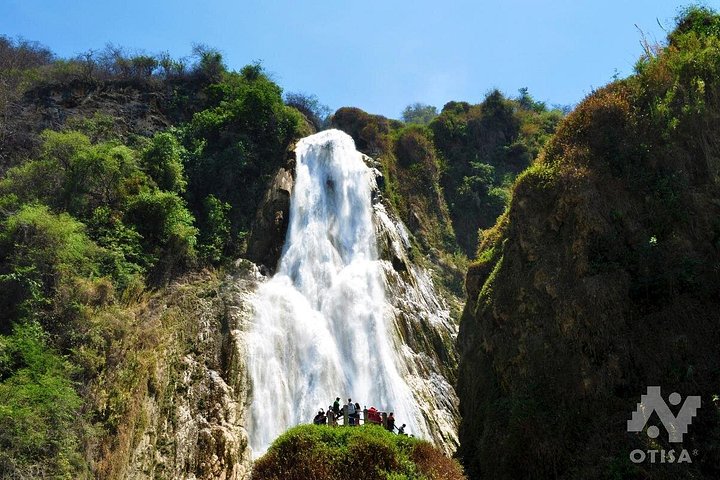
Leave San Cristobal de las Casas for a boat ride along the Grijalva River through Sumidero Canyon, a towering vertical canyon formed around the same time as the Grand Canyon of the United States. Admire wildlife and picturesque rainforest. Then visit the 'Magic Village' of Chiapa de Corzo, the oldest village in the state of Chiapas, known for its natural beauty and historical importance. See centuries-old monuments and the huge tree around which the city was founded, and get some souvenirs before returning to San Cristobal.
Ingår
Det här ingår
- Visit to Chiapa de Corzo
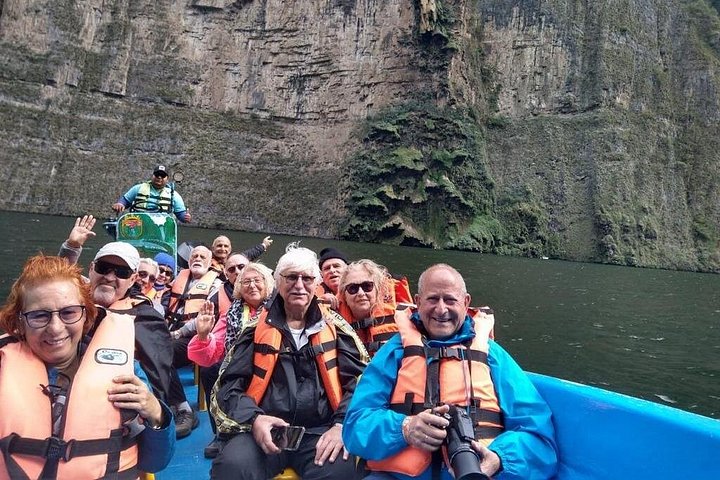
- Shared boat in Sumidero Canyon
- Pick-up from the hotel
Ingår inte
- Food
- Guided commentary in English in the Canyon of the Sump.
- Private guide
Rutt
We pass by our clients to each of the hotels, and then start route.
Chiapa de Corzo, a colonial site of tradition and culture, framed with the warmth of its people, is one of the most beautiful cities in the State of Chiapas; located only 15 minutes from the capital city; its value lies in its history, because it was the first city founded by the Spanish during the 16th century. From Chiapa de Corzo, stands out the Mudéjar complex formed by La Pila, a source of refined Moorish inspiration made of brick, unique in Ibero-America; the temple of Santo Domingo and the convent building attached to it, now home of the Lacquer Museum, as well as the ruins of the temple of San Sebastian.
The rocks that we see today in the walls of Sumidero Canyon, began to form about 136 million years ago based on sediments and calcium minerals (limestones), which is formed by the action of some marine animals such as corals, this assumes that, in ancient times, this region of Chiapas was submerged by a shallow sea. The Canyon as such began to form 70 million years ago thanks to the action of tectonic movements called Horts-Graben; which, due to their characteristics of earth mass movement, are called tectonic pillar and tectonic pit respectively. Fifteen million years ago the seawaters withdrew from this region thanks to geological movements that formed the important mountains of Chiapas, including the mountains of Sumidero Canyon, which began to suffer dissolution and erosion because of the same water, here the Canyon was born and began its formation which continues today.
It is known as Miradors del Sumidero Canyon to a small route where along the route you can find 3 main viewpoints from which it is possible to appreciate the Sumidero Canyon in all its splendour from different perspectives, each of them with its charm and worthy of being appreciated.
Avbokning
Fri avbokning till 24 timmar innan upplevelsen börjar, med full återbetalning.
Omdömen
3,3
- 58
- 42
- 32
- 22
- 15
Betygen kommer från 19 omdömen som vår bokningspartner samlat in. Det är resenärernas egna ord, i den ordning de skrevs — aldrig omsorterade för att smickra upplevelsen.
Bra att veta
- Upphämtning
- Upphämtning ingår för alla.
- Biljettyp
- Mobile or paper ticket accepted
- Gruppstorlek
- Upp till 14 resenärer
- Arrangeras av
- Explorando Chiapas
- Public transportation options are available nearby
- Infants are required to sit on an adult’s lap
- Travelers should have at least a moderate level of physical fitness
- Works in all weather conditions, dress appropriately
How it compares in San Cristóbal de las Casas
- Its from-price is 34% below the median of the 52 dagsturer we list in San Cristóbal de las Casas.
- Its length is typical for the group.
- By number of reviews it ranks 12 of 52.
- The operator lists free cancellation on it.
About San Cristóbal de las Casas
San Cristóbal de las Casas is a colonial town in the highlands of Chiapas, with cobbled streets, baroque churches and Maya markets.
San Cristóbal de las Casas sits in a pine-ringed valley about 2,200 metres up in the highlands of Chiapas, a town of red-tiled roofs, painted walls and cobbled lanes laid out by the Spanish in 1528. Its yellow cathedral and the baroque church of Santo Domingo, whose carved facade glows in late light, face squares where Maya women from nearby villages sell textiles.
Top-ranked sights in San Cristóbal de las Casas: Centro de Textiles del Mundo Maya.