Full Coverage Istanbul Walking Tour
Die Beschreibungen werden auf Englisch angezeigt.
- 5 Stunden
- Kostenlos stornierbar bis 24 Std. vorher
- Führung auf Englisch
- Sofortige Bestätigung
Highlights
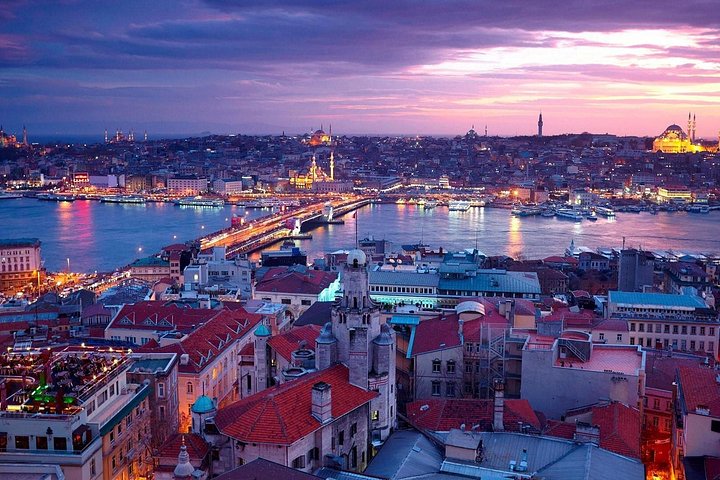
Explore Istanbul's history and culture with our full day Istanbul walking tour. A journey through iconic landmarks like the Hagia Sophia Mosque and Topkapi Palace, as well as hidden gems such as the Fountain of Ahmet III and the Grand Bazaar. Our expert guides weave stories, bringing each site to life, from absorbing panoramic views at the Galata Tower to immersing yourself in the artistic offerings of the Pera Museum. Join us for a walking tour that exceeds expectations, creating lasting memories and a profound appreciation for Istanbul's rich cultural diversity.
Leistungen
Inbegriffen
- All Local Taxes
- Professional Guidance
Nicht inbegriffen
- Entry Admissions
- Tips
Ablauf
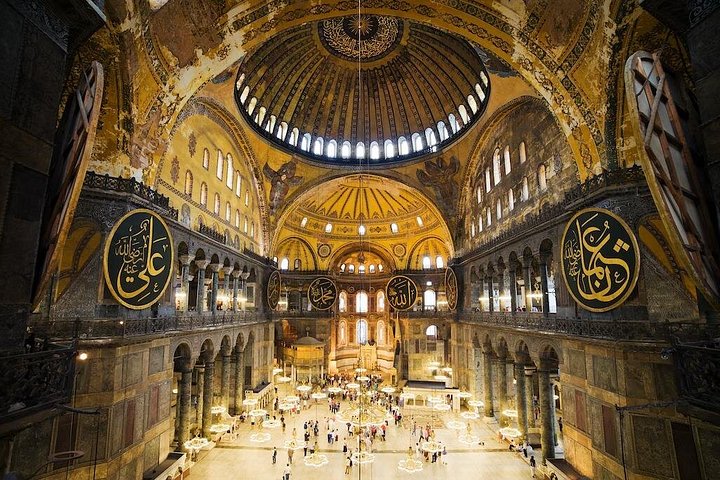
In 537 AD, Emperor Justinian walked into the newly finished Hagia Sophia and reportedly said, "Solomon, I have surpassed you" — a reference to the Temple in Jerusalem. The dome had never been built that large before; it was an engineering gamble that partially collapsed twice. What stands today is the third attempt. Byzantine mosaics, Islamic calligraphy, and Ottoman additions were each layered on top of the last. This building didn't just witness history — it was history's address.
In 1728, Sultan Ahmet III had this fountain built as a statement. The Tulip Era — his era — was Ottoman Istanbul at its most extravagant: European fashions, tulip gardens, poetry nights on the Bosphorus. The fountain offered free sherbet to anyone passing by. Three years later, a rebellion ended it all. The Sultan was dethroned. The tulips were torn up. But the fountain stayed — a marble footnote to one of history's most flamboyant and abruptly finished reigns.
Most people walk past Hagia Irene without stopping — which is remarkable, because this is where early Christianity nearly tore itself apart. Theological wars over the nature of Christ raged within these walls for decades. Hagia Irene — meaning Holy Peace — saw precious little of it. Unlike every other Byzantine church in the city, the Ottomans never converted it to a mosque; they used it as an armory instead. The cannonballs are long gone. The silence they left behind is something else entirely.
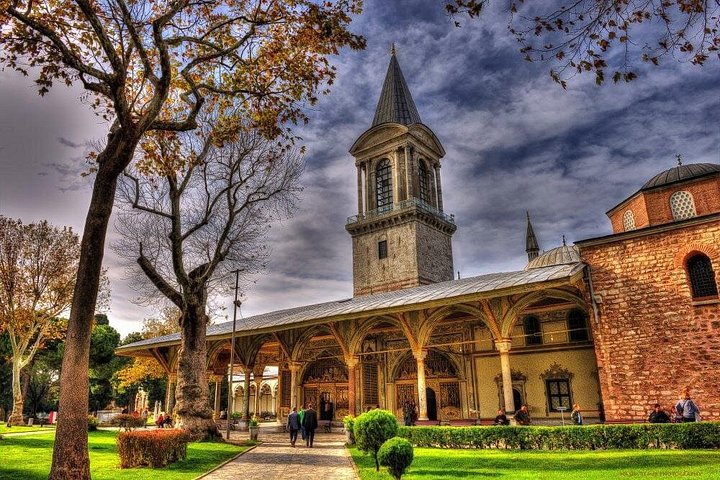
For 400 years, every decision shaping three continents was made inside these walls. Topkapı wasn't a palace — it was a city within a city, home to 4,000 people at its peak: sultans, concubines, eunuchs, janissaries, and an entire empire's bureaucracy. The Harem alone had 300 rooms. Suleiman the Magnificent walked these courtyards. So did Roxelana — the slave who became his legal wife and arguably the most powerful woman in Ottoman history. Power always leaves a residue. You can feel it here.
In 1887, Ottoman archaeologist Osman Hamdi Bey excavated Sidon in modern Lebanon and returned with something extraordinary — a sarcophagus carved with such precision that historians initially assumed it belonged to Alexander the Great. It doesn't, but the true story of its owner is just as remarkable. The same museum also holds a 3,300-year-old clay tablet recording the world's oldest surviving peace treaty, between Egypt and the Hittites. Most of recorded civilization passed through this city. The proof is in here.
n 532 AD, a chariot-racing rivalry between two fan factions escalated into the Nika Riots — five days of violence that burned half of Constantinople and killed 30,000 people. Emperor Justinian nearly fled. His wife Theodora stopped him, saying she would rather die in imperial purple than live in exile. He stayed. The rioters were lured into this very stadium and massacred. The three ancient monuments still standing here — the Egyptian Obelisk, Serpent Column, and Column of Constantine — watched all of it.
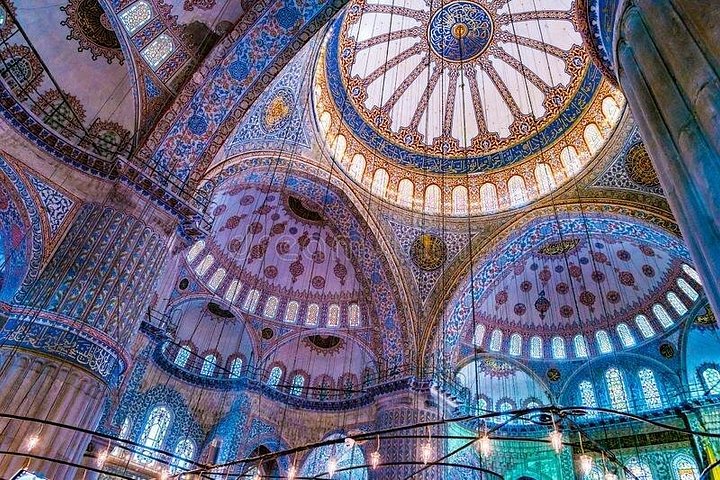
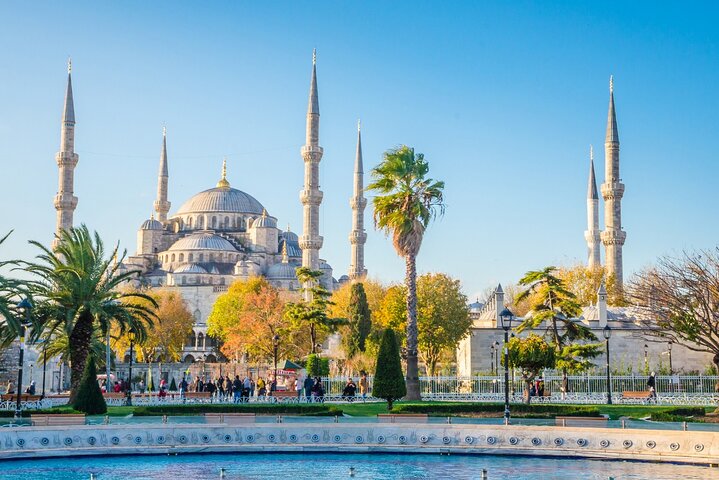
Sultan Ahmet I was 19 when he commissioned this mosque in 1609. He had never won a war — unusual for an Ottoman sultan — and building directly opposite Hagia Sophia was partly compensation, partly ambition. He demanded six minarets, which scandalized the Islamic world: only Mecca's mosque had six. He quietly funded a seventh minaret for Mecca to end the controversy. Ahmet died at 27, just a year after the mosque's completion. He is buried in a mausoleum just outside the wall he never lived to see finished.
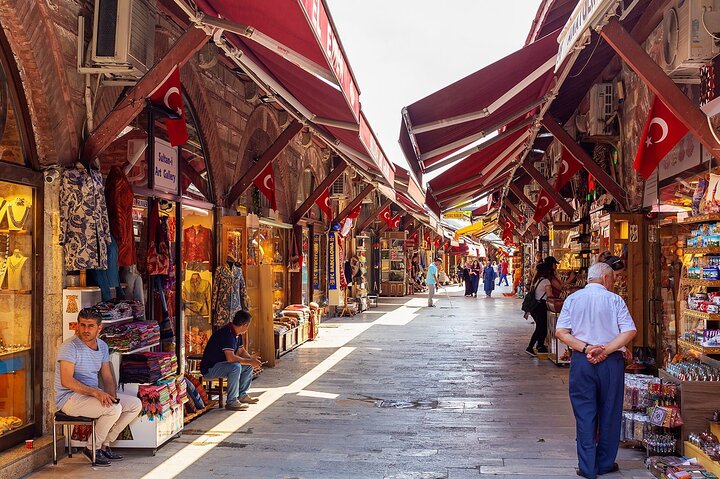
Corlulu Ali Pasha served as Grand Vizier under three sultans, survived palace intrigues that finished most men, and built this courtyard complex in the early 1700s. He was eventually executed anyway — that was the standard fate of Grand Viziers who fell from favor. His complex became a madrassa, then a caravanserai, and today it's one of the few corners of the old city where you can sit under plane trees, drink tea, and watch time pass without anyone trying to sell you something.
The Grand Bazaar didn't begin as a market. Mehmed II built a small stone bedesten — a lockable vault for storing valuables — shortly after conquering Constantinople in 1453. Merchants clustered around it. Then more merchants, then hans, coffee houses, mosques, and fountains. Over 500 years it expanded organically into 61 streets and 4,000 shops. It has burned and been rebuilt multiple times, because trade could not stop. Some families have held the same shop for generations. The commerce never paused long enough for them to leave.
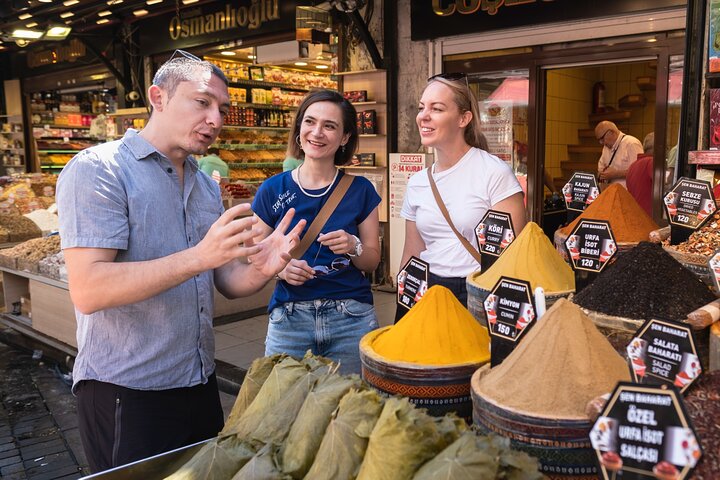
The name means Egyptian Market — not because it sold Egyptian goods, but because it was built using tax revenues collected from Egypt, then an Ottoman province. Completed in 1664, the income from these shops funded the upkeep of the Yeni Mosque next door. That arrangement — commerce sustaining religion — was very Ottoman. The spice trade filling these vaulted corridors once moved the entire global economy. Today the same stalls sell saffron, sumac, and Turkish delight. The scale changed. The smell hasn't.
There have been five bridges on this spot. The first was a pontoon of lashed boats. Leonardo da Vinci submitted a design for a replacement in 1502 — it was rejected. Michelangelo was also approached and declined. The current bridge opened in 1994. Beneath its deck, restaurants hang over the water. Above, fishermen line the railings at all hours. The Golden Horn it spans was the very harbor the Byzantines blocked with a great chain in 1453 — and which the Ottomans bypassed by dragging their warships overland.
In 1906, Ottoman painter Osman Hamdi Bey completed The Tortoise Trainer — a man coaxing tortoises with a flute. It sounds whimsical. It was not. Hamdi Bey was arguing that the Ottoman world was not static or backward — it was being guided somewhere. He was also the man who passed the law banning antiquities from leaving the country, which is why Istanbul's museums are as rich as they are. His painting anchors Pera Museum's collection. Both the art and the argument it was making still hold up.
Stornierung
Kostenlose Stornierung bis 24 Stunden vor Beginn, mit voller Rückerstattung.
Bewertungen
5,0
- 534
- 40
- 30
- 20
- 10
Die Bewertungen stammen aus 34 Rezensionen, die unser Buchungspartner gesammelt hat. Es sind die eigenen Worte der Reisenden, in der Reihenfolge ihres Entstehens — nie umsortiert, damit das Erlebnis besser dasteht.
Gut zu wissen
- Treffpunkt
- Sultanahmet Square, next to the German Fountain which is next to the Blue Mosque.
- Abholung
- Alle treffen sich am Startpunkt; eine Abholung gibt es nicht.
- Ticketart
- Mobile or paper ticket accepted
- Gruppengröße
- Bis zu 35 Reisende
- Durchgeführt von
- RoseTheGuide - Istanbul Tour Guides
- Wheelchair accessible
- Infants and small children can ride in a pram or stroller
- Public transportation options are available nearby
- Transportation options are wheelchair accessible
- All areas and surfaces are wheelchair accessible
- Suitable for all physical fitness levels
How it compares in Istanbul
- Its from-price is 48% below the median of the 3649 experiences we list in Istanbul.
- Its length is typical for the group.
- By number of reviews it ranks 522 of 3649.
- The operator lists free cancellation on it.
About Istanbul
Istanbul liegt am Bosporus in Europa und Asien: byzantinische und osmanische Bauten, lebhafte Basare und Fähren zwischen zwei Kontinenten.
Auf der historischen Halbinsel stehen die größten Sehenswürdigkeiten. Hagia Sophia, Blaue Moschee und Hippodrom liegen sich in Sultanahmet gegenüber, die Basilikazisterne erstreckt sich unter den Straßen, und der Topkapı-Palast breitet sich auf dem Hügel über dem Goldenen Horn aus. Wenige Schritte entfernt sind der Große Basar und der Gewürzbasar seit Jahrhunderten Handelsplätze, und die Süleymaniye-Moschee des großen osmanischen Baumeisters Sinan krönt einen der sieben Hügel der Stadt.
Top-ranked sights in Istanbul: Dolmabahce Palace (Dolmabahce Sarayi), Bosphorus, Bosphorus Bridge (Bogazici Koprusu).
Sonderangebote in Istanbul
Streichpreise kommen vom Anbieter, nie von uns.
 15 % RabattKostenlose Stornierung
 22 % RabattKostenlose Stornierung
![Istanbul in One Day Hagia Sophia, Blue Mosque, Iron Church, Boat]() 20 % RabattKostenlose Stornierung
![Istanbul exklusive private Tour Optionen für einen oder zwei Tage]() 20 % RabattKostenlose Stornierung

Ähnliche Erlebnisse
![Istanbul Bosporus Yachtkreuzfahrt mit Fortgeschrittener und asiatischer Seite]() Kostenlose Stornierung

Hop-on-Hop-off in Istanbul
 Kostenlose Stornierung