10 % RabattKostenlose Stornierung
Kategorien in Cusco
Die Beschreibungen werden auf Englisch angezeigt.
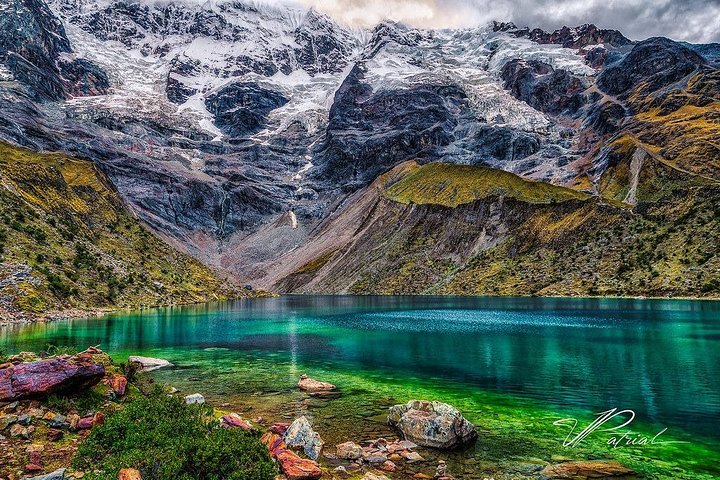
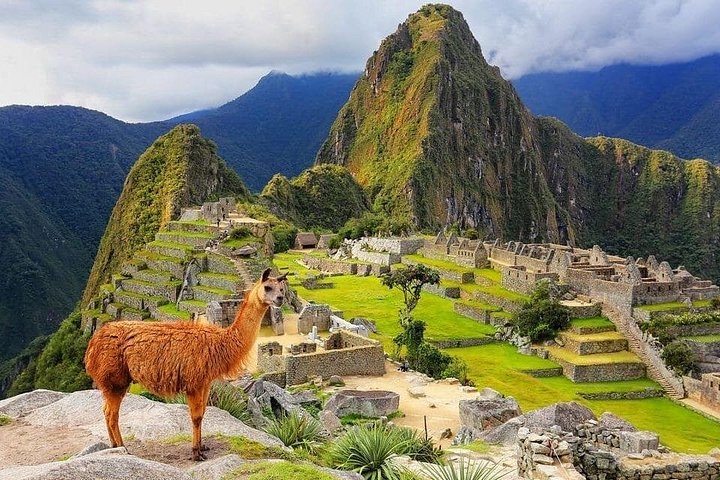
The Sacred Valley of the Incas is home to beautiful villages like Pisac, Urubamba and Ollantaytambo. Take a day trip out of Cusco, try the local cuisine, and get to know these hidden gems - discover their history, culture, and mystery.
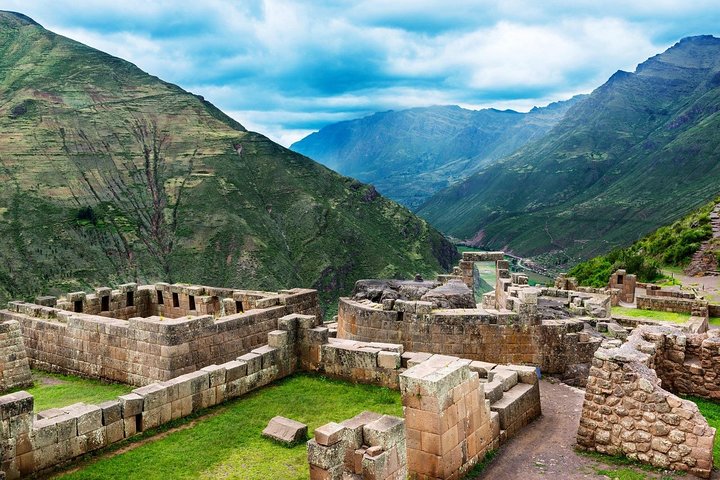
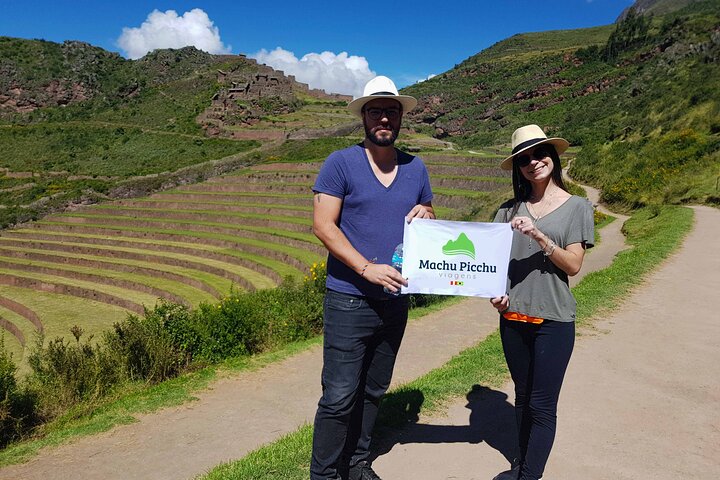
Pisac’s fascinating stone block walls show a balanced proportion, from its size to the perfect joints of each stone, forming a wonderful architectural complex that captivates visitors in the Sacred Valley. The word Pisac has a Quechua origin meaning partridge, a hen-like bird that inhabits the area. According to theories, this complex was slightly similar to the “Royal Estate” of the Inca Pachacutec, that’s why it has a variety of facilities such as terraces, a ceremonial room, palaces, walls, and towers all connected to each other, without any amalgam. Intihuatana Known as the most important ceremonial and religious site in Pisac, it has buildings made of sedimentary rocks. The translation of its name from Quechua means “Sundial”. It is located at the top of the mountain and from that point the whole valley can be appreciated. The Intihuatana is considered as Pisac’s Temple of the Sun, as it served as astronomical observatory during the Inca Empire. The fineness of its carved rock walls is perfectly aligned with the rising of the sun during June Solstice (the onset of winter). La ciudad de las torres (the City of the Towers) It is believed that its developments served as water channels, which still exist today. Their fine finishes are similar to the constructions of Sacsayhuaman. Furthermore, about 20 towers were erected on the edges of the mountain. Ñusta Encantada (Enchanted Princess) It is a rocky complex that can be seen from the Ñustáyoc hill, to the south. It is called ñusta (Inca princess) because it has the shape of a woman carrying saddlebags on her back. A famous Andean legend tells that the cacique of Pisac (village chief) Huayllapuma had a daughter named Inquill Chumpi. She had to marry a prince who had the strength to build a bridge in one night. The possibility of building that seemed ridiculous for most villagers, being a very hard task. Once upon the time, after turning down many potential suitors because of the difficulty of this task, the Inca prince Asto Rimac appeared and asked for the princess’ hand. They fell in love, and he began to build the bridge. However, Inquill Chumpi had to climb the hill without turning until her beloved finished the request; otherwise, they both would turn into stone. After hours of work, when the bridge was almost done, the worried daughter of the cacique turned to see her fiancé. At this disobedience, they both were turned into stone until this day. Pisac’s diverse and incredible Inca architecture that endures the lapsing of years captivates travelers because of its ancestral history and culture.
The charming town of Urubamba is enveloped by tall Andean peaks in the heart of the Sacred Valley. Unlike Ollantaytambo and Pisac whose Inca ruins are the main draw, the appeal of Urubamba is the surrounding natural beauty and its laidback vibes. The host of beautiful hotels are the perfect place to disconnect and treat yourself to a luxurious spa treatments. Adventure-packed sports and tours are just a short ride away! We will stop here for lunch.
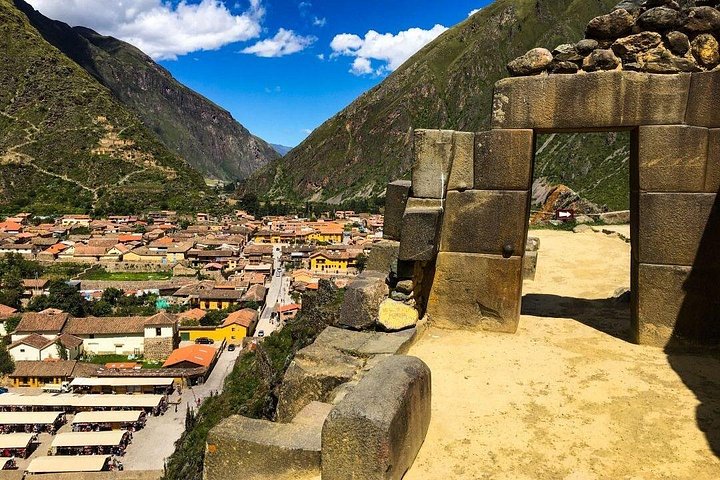
Ollantaytambo is a lovely village that preserves the designs of Inca buildings located at an altitude of 9160 feet in the province of Urubamba. Among this place's most impressive attractions are the ceremonial temple in worship of water and a fortress that guarded the entrance to the valley to repel any invasions. The temple has a set of terraces lying one atop the other which visitors scale via a steep stairway. The fortress is a stone colossus that was built between two mountains to protect the valley. The area also holds the Temple of Inti (the sun god), Incamisana, the baths of the Ñustas (princesses), the Cachiccata funerary towers, and a group of tiered and very steep terraces on the side of a hill. Ollantaytambo also contains the mountain called Pinculluna or Tunupa, which holds the vestiges of Inca architectural structures which seem to have been a storehouse for various foodstuffs. Ollantaytambo is also a meeting place for nearby communities, such as the Huayruros de Willoc, who can be recognized by their red and black ponchos and hats.
Chinchero is a small Andean Indian village located high up on the windswept plains of Anta at 3765m about 30km from Cusco. There are beautiful views overlooking the Sacred Valley of the Incas, with the Cordillera Vilcabamba and the snow-capped peak of Salkantay dominating the western horizon. Chinchero is believed to be the mythical birthplace of the rainbow. Its major claim to tourism is its colourful Sunday market which is much less tourist-orientated than the market at Pisac. The village mainly comprises mud brick (adobe) houses, and locals still go about their business in traditional dress. The village may have been an important town in Inca times. The most striking remnant of this period is the massive stone wall in the main plaza which has ten trapezoidal niches. The construction of the wall and many other ruins and agricultural terraces (which are still in use) are attributed to Inca Tupac Yupanqui who possibly used Chinchero as a kind of country resort. In the main plaza an adobe colonial church, dating from the early seventeenth century, has been built upon the foundations of an Inca temple or palace. The ceiling and walls are covered in beautiful floral and religious designs. The church is open on Sundays for mass. Half an hour's walk from the village brings you to Lake Piuri which once fed Cusco with water. It takes about 3 hours to walk around the lake passing through small picturesque villages.
Kostenlose Stornierung bis 24 Stunden vor Beginn, mit voller Rückerstattung.
5,0
Die Bewertungen stammen aus 2 Rezensionen, die unser Buchungspartner gesammelt hat. Es sind die eigenen Worte der Reisenden, in der Reihenfolge ihres Entstehens — nie umsortiert, damit das Erlebnis besser dasteht.
Cusco, die alte Inka-Hauptstadt hoch in den peruanischen Anden, verbindet gewaltige Steinmauern mit Kolonialkirchen und ist Tor nach Machu Picchu.
Die Plaza de Armas ist das Herz der Stadt, umrahmt von der Kathedrale und der Jesuitenkirche La Compañía. Inka-Mauerwerk ist im ganzen Zentrum erhalten, am berühmtesten im Qorikancha, dem Sonnentempel, auf dem die Spanier ein Kloster errichteten, und im zwölfeckigen Stein in der Straße Hatun Rumiyoc. San Blas, das Handwerkerviertel, steigt steil an, mit Werkstätten und Cafés.
Top-ranked sights in Cusco: Aguas Calientes, Machu Picchu, Ollantaytambo Ruins.
Streichpreise kommen vom Anbieter, nie von uns.
Ticket Hall zum Home-Bildschirm hinzufügen
Tickets und Stadtführer, nur einen Fingertipp entfernt, auch offline.
Ticket Hall