Sunrise at Angkor Wat and Small Tour off beaten track
Beskrivelserne vises på engelsk.
- 6–8 timer
- Gratis afbestilling indtil 24 t før
- Guidet på engelsk
- Straks bekræftet
Højdepunkter
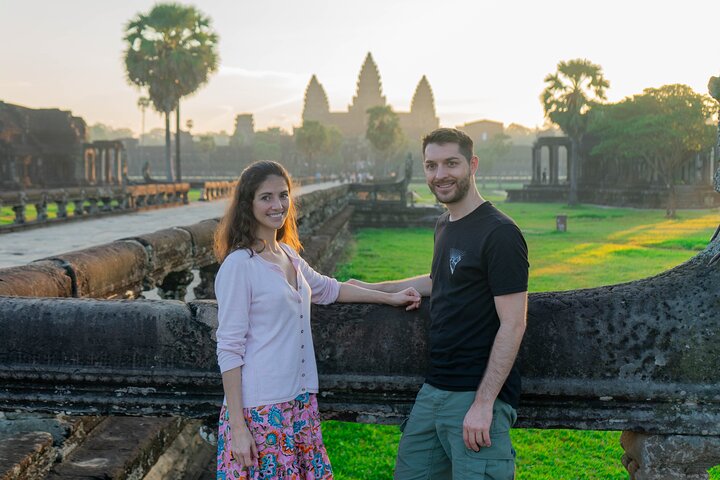
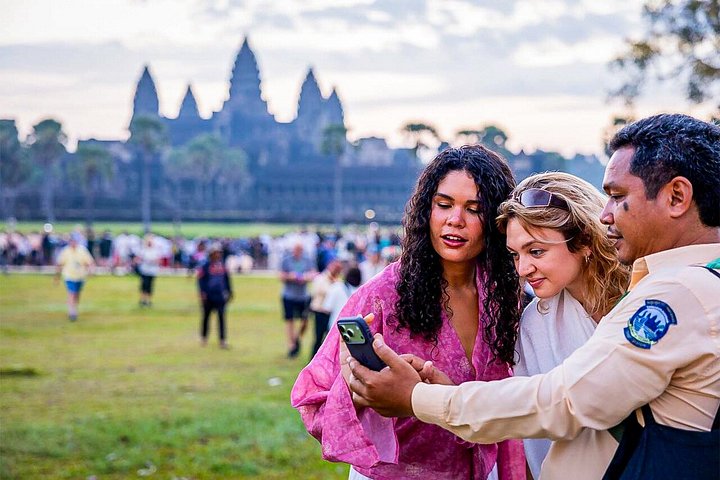
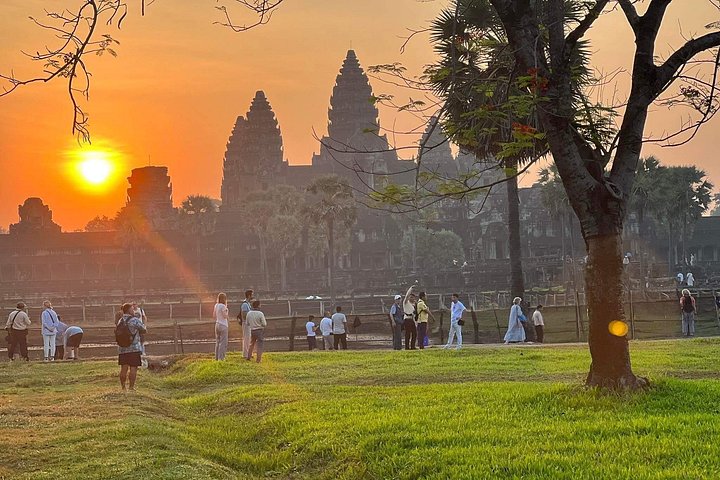
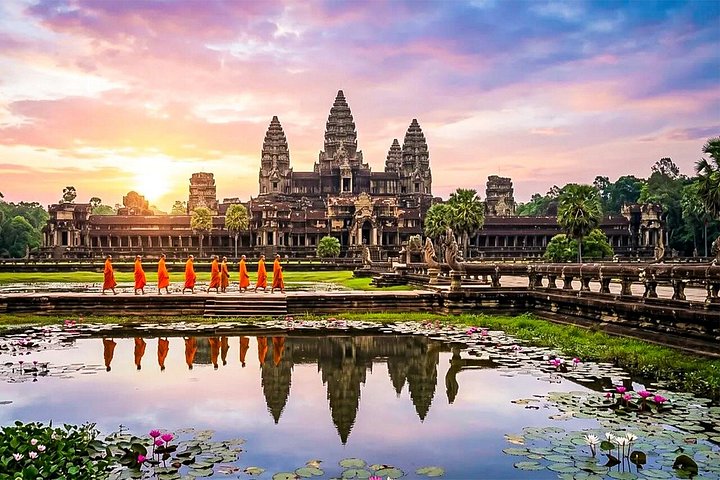
1. Perfect alignment with the temple * The sun rises directly behind the temple’s iconic towers, creating a dramatic silhouette against the morning sky. 2. Beautiful reflections * The lotus ponds in front of the temple often reflect both the towers and the colorful sunrise, making for stunning photographs. 3. Unique architecture * Angkor Wat was originally built in the 12th century and is oriented toward the west, which is unusual for Khmer temples. This creates distinctive lighting effects at dawn and dusk. 4. Atmosphere * Before sunrise, the area is quiet and cool. Watching the sky gradually change colors behind one of the world’s most famous temples creates a memorable experience. 5. Cultural significance * Angkor Wat is Cambodia’s national symbol and the largest religious monument in the world. Seeing the first light of day illuminate such a historic site feels meaningful to many visitors
Inkluderet
Det er inkluderet
- Hotel pickup and drop-off
- Private tour
- Bottled water
- Driver/guide
Ikke inkluderet
- Temple entrance fees
Rute
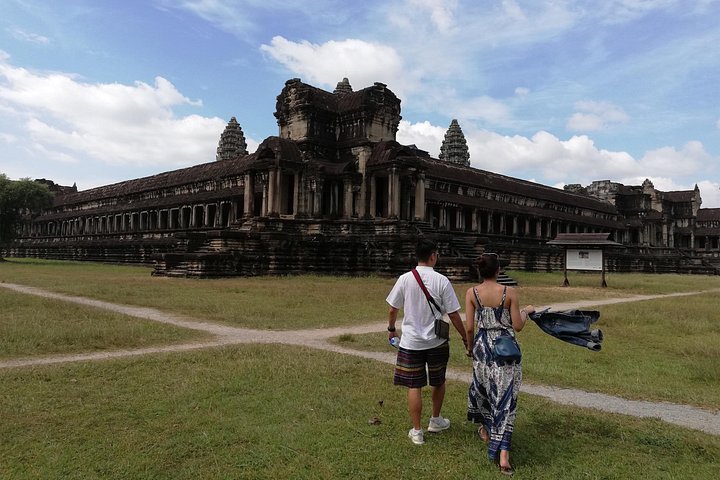
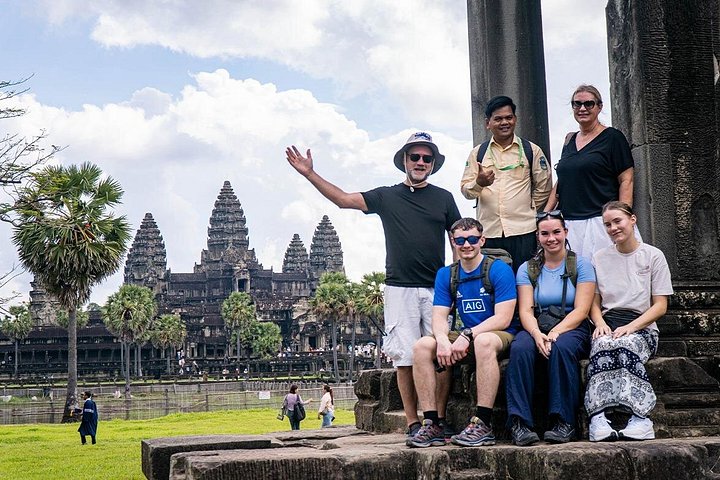
After we meet you at Hotel we will proceed to Angkor Wat but if you have no ticket we will stop by the ticket booths so we can get one there after we will drive to Angkor Wat for viewing a wonderful sunrise behind Angkor Wat. Angkor Wat mean ( City/Capital of Temples ) is a Buddhist temple complex in Cambodia and is the largest religious monument in the world, on a site measuring 162.6 hectares (1,626,000 m2; 402 acres). Originally constructed as a Hindu temple dedicated to the god Vishnu for the Khmer Empire, it was gradually transformed into a Buddhist temple towards the end of the 12th century. It was built by the Khmer King Suryavarman II in the early 12th century in Yaśodharapura (Khmer: យសោធរបុរៈ, present-day Angkor), the capital of the Khmer Empire, as his state temple and eventual mausoleum. Breaking from the Shaiva tradition of previous kings, Angkor Wat was instead dedicated to Vishnu.
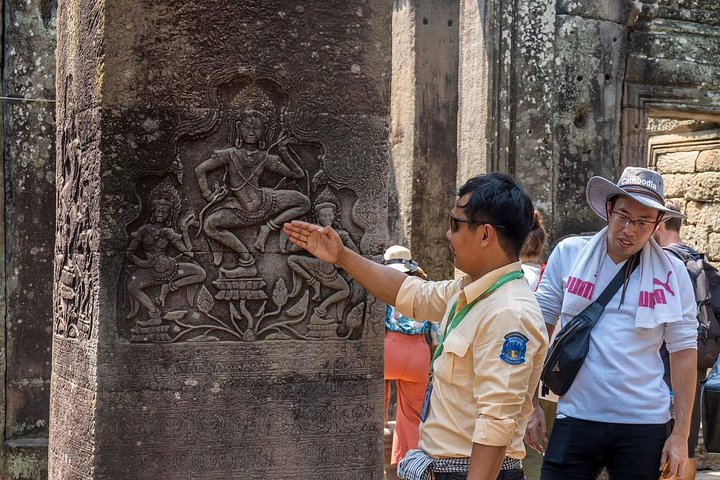
The Bayon ( Prasad Bayon) is a richly decorated Khmer temple at Angkor in Cambodia. Built-in the late 12th or early 13th century as the state temple of the Mahayana Buddhist King Jayavarman VII, the Bayon stands at the center of Jayavarman's capital, Angkor Thom, Following Jayavarman's death, it was modified and augmented by later Theravada Buddhist kings in accordance with their own religious preferences. The Bayon's most distinctive feature is the multitude of serene and smiling stone faces on the many towers which jut out from the upper terrace and cluster around its central peak. The temple has two sets of bas-reliefs, which present a combination of mythological, historical, and mundane scenes. The main conservatory body, the Japanese Government Team for the Safeguarding of Angkor (the JSA) has described the temple as "the most striking expression of the baroque style" of Khmer architecture, as contrasted with the classical style of Angkor Wat.
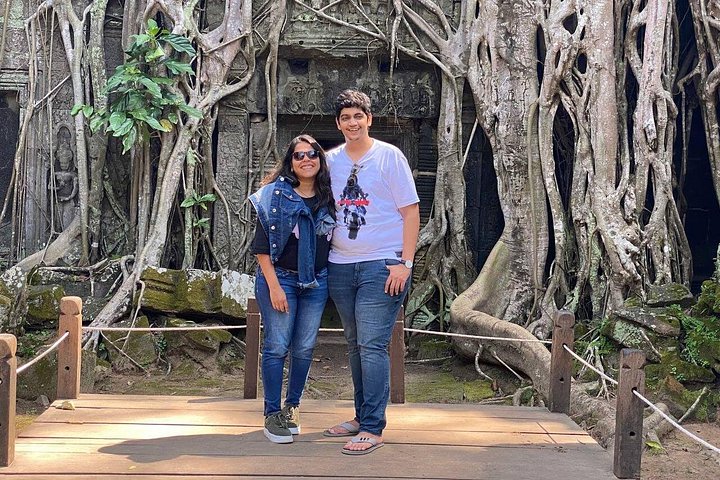
Ta Prohm ( ancestor of Brahma ) is the modern name of the temple at Angkor, Siem Reap Province, Cambodia, built in the Bayon style largely in the late 12th and early 13th centuries and originally called Rajavihara ( royal monastery ). Located approximately one kilometer east of Angkor Thom and on the southern edge of the East Baray, it was founded by the Khmer King Jayavarman VII, as a Mahayana Buddhist monastery and university. Unlike most Angkorian temples, Ta Prohm is in much the same condition in which it was found: the photogenic and atmospheric combination of trees growing out of the ruins and the jungle surroundings have made it one of Angkor's most popular temples with visitors. UNESCO inscribed Ta Prohm on the World Heritage List in 1992. Today, it is one of the most visited complexes in Cambodia’s Angkor region. The conservation and restoration of Ta Prohm is a partnership project of the Archaeological Survey of India and the APSARA.
Afbestilling
Gratis afbestilling indtil 24 timer før oplevelsen starter, med fuld refusion.
Anmeldelser
5,0
- 51
- 40
- 30
- 20
- 10
Bedømmelserne kommer fra 1 anmeldelser, som vores bookingpartner har indsamlet. Det er de rejsendes egne ord, i den rækkefølge de blev skrevet — aldrig omrokeret for at pynte på oplevelsen.
Godt at vide
- Mødested
- Please wait for us at the hotel lobby our driver guide will look for you with your nameplate.
- Afhentning
- Afhentning tilbydes, eller I kan mødes ved startstedet.
- Billettype
- Mobile or paper ticket accepted
- Udføres af
- ANGKOR CAB-OFF BEATEN TRUCK
- Wheelchair accessible
- Public transportation options are available nearby
- Transportation options are wheelchair accessible
- Not recommended for travelers with spinal injuries
- Travelers should have at least a moderate level of physical fitness
How it compares in Siem Reap
- Its from-price is 106% above the median of the 2414 experiences we list in Siem Reap.
- Its length is typical for the group.
- By number of reviews it ranks 1363 of 2414.
- The operator lists free cancellation on it.
About Siem Reap
Siem Reap er byen ved floden ved siden af Angkor, Cambodjas enorme kompleks af khmertempler, med natmarkeder, flodpromenader og et afslappet centrum.
Angkor Wat, ofte kaldet verdens største religiøse monument, rejser sig over sin voldgrav i en silhuet af lotusknoptårne, der er betagende ved solopgang. I nærheden rummer den ommurede by Angkor Thom Bayon med sine over to hundrede rolige stenansigter, Elefantterrassen og Baphuon, mens Ta Prohm er omklamret af rødderne fra kæmpe kapok- og kvælerfigentræer.
Top-ranked sights in Siem Reap: Angkor Thom, Tonlé Sap, Kampong Phluk.
Særtilbud i Siem Reap
Før/nu-priser kommer fra udbyderen, aldrig fra os.
 10% rabatGratis afbestilling
![Half Day Angkor Wat Tour - Morning or Afternoon from Siem Reap]() 10% rabatGratis afbestilling