خصم 15%إلغاء مجاني
Delhi to Agra and Taj Mahal Private Day Trip by Express Train with Lunch
ابتداءً من90 US$77 US$
الأوصاف معروضة بالإنجليزية.
A professional driver with a high-standard private car, offering complimentary multi languages certified guide along the way showing two UNESCO World Heritage Sites The Taj Mahal and Agra Fort.
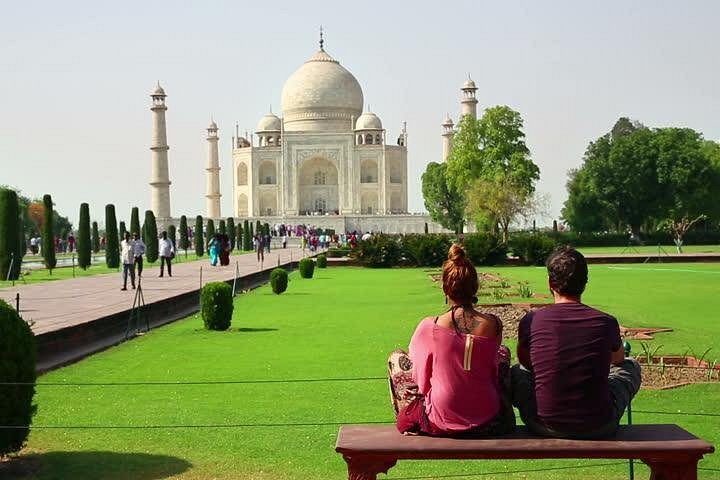
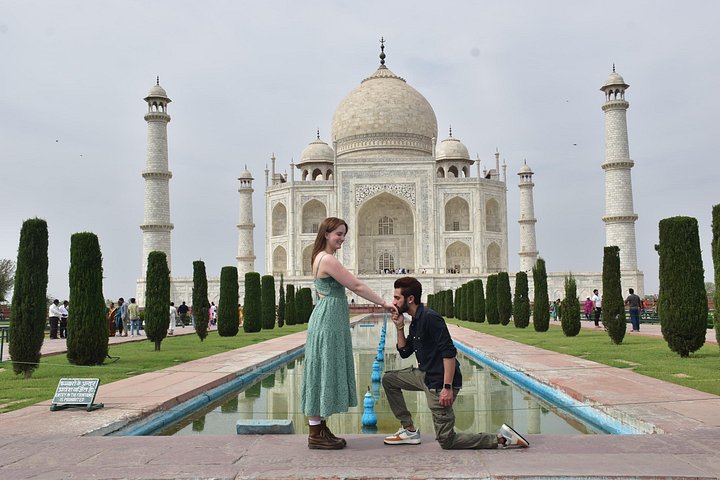
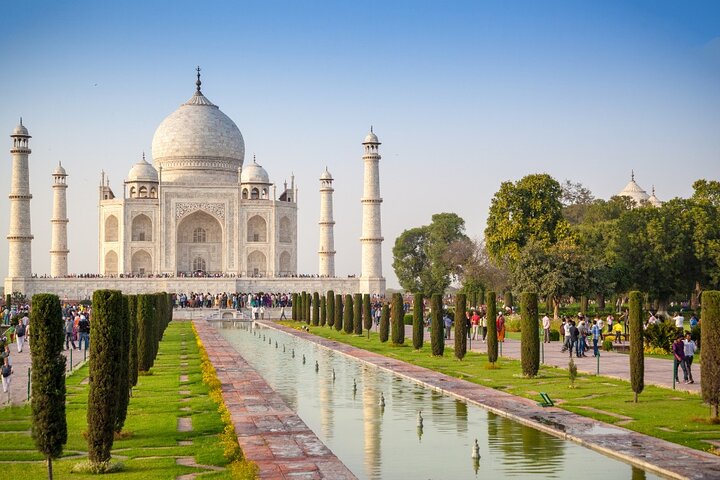
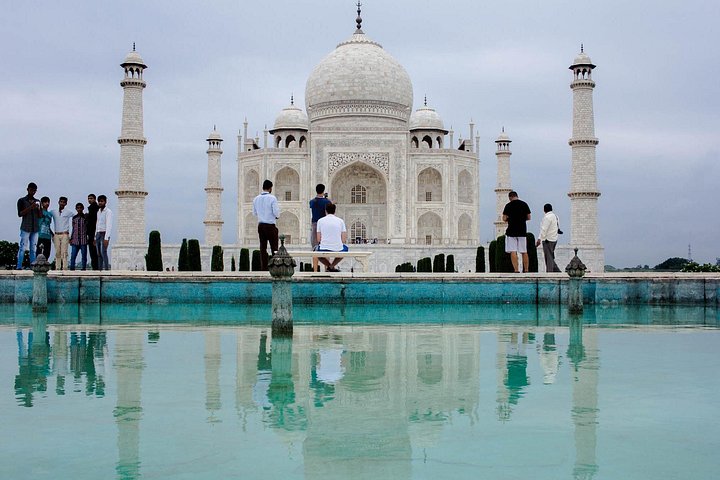
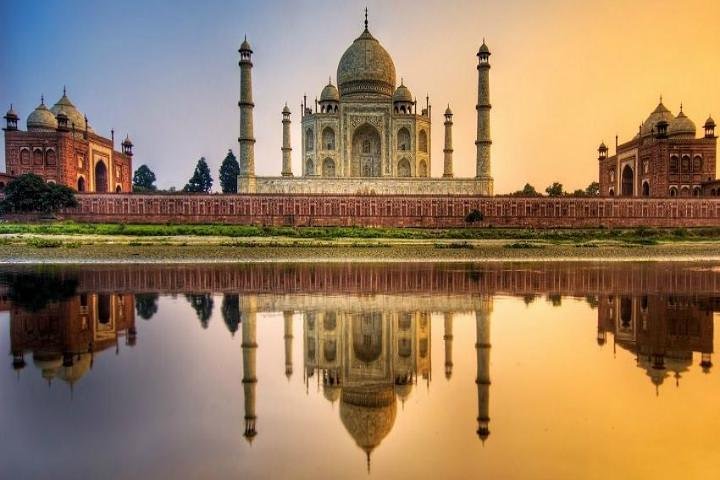
The Taj Mahal Crown of the Palace is an Islamic ivory-white marble mausoleum on the right bank of the river Yamuna in the Indian city of Agra. It was commissioned in 1631 by the Mughal emperor Shah Jahan (r. 1628–1658) to house the tomb of his favorite wife, Mumtaz Mahal; it also houses the tomb of Shah Jahan himself. The tomb is the centerpiece of a 17-hectare (42-acre) complex, which includes a mosque and a guest house, and is set in formal gardens bounded on three sides by a crenelated wall. Construction of the mausoleum was essentially completed in 1643. The Taj Mahal was designated as a UNESCO World Heritage Site in 1983 for being "the jewel of Muslim art in India and one of the universally admired masterpieces of the world's heritage". It is regarded by many as the best example of Mughal architecture and a symbol of India's rich history.
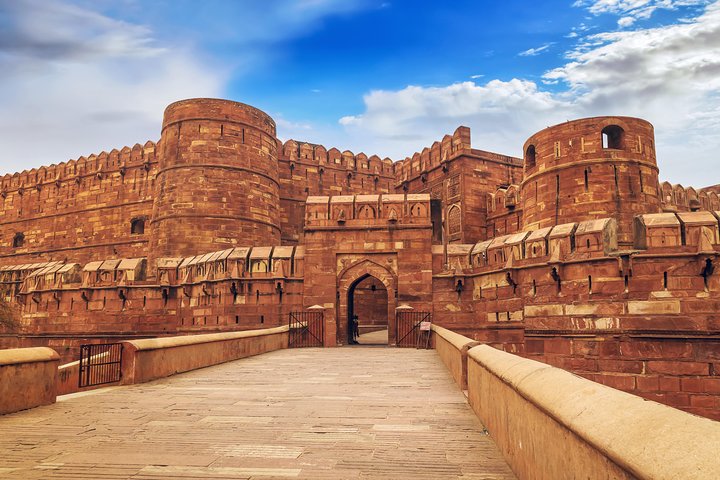
The Agra Fort is a historical fort in the city of Agra in India also known as the Red Fort. Rebuilt by the Mughal emperor Akbar in 1565 and completed in 1573, it served as the main residence of the rulers of the Mughal Dynasty until 1638, when the capital was shifted from Agra to Delhi. It was also known as the “Lal-Qila”Fort Rouge” or “Qila-i-Akbari Before capture by the British, the last Indian rulers to have occupied it was the Marathas. In 1983, the Agra fort was life inscribed as a UNESCO World Heritage Site. It is about 2.5 km northwest of its more famous sister monument, the Taj Mahal. The fort can be more accurately described as a walled city. Like the rest of Agra, the history of Agra Fort prior to Mahmud Ghaznavi's invasion is unclear. However, in the 15th century, the Chauhan Rajputs occupied it. Soon after, Agra assumed the status of capital when Sikandar Lodi (A.D. 1487–1517) shifted his capital from Delhi and constructed a few buildings in the pre-existing fort at Agra.
The tomb of I'timād-ud-Daulah (I'timād-ud-Daulah Maqbara) is a Mughal mausoleum in the city of Agra in the Indian state of Uttar Pradesh. Often described as a "jewel box", sometimes called the "Bachcha Taj" or the "Baby Taj", the tomb of I'timād-ud-Daulah is often regarded as a draft of the Taj Mahal. Along with the main building, the structure consists of numerous outbuildings and gardens. The tomb, built between 1622 and 1628, represents a transition between the first phase of monumental Mughal architecture – primarily built from red sandstone with marble decorations, as in Humayun's Tomb in Delhi and Akbar's tomb in Sikandra – to its second phase, based on white marble and pietra dura inlay, most elegantly realized in the Taj Mahal. The mausoleum was commissioned by Nur Jahan, the wife of Jahangir, for her father Mirzā Ghiyās Beg, originally a Persian Amir in exile, who had been given the title of I'timād-ud-Daulah (pillar of the state).
The Mehtab Bagh garden was the last of eleven Mughal-built gardens along the Yamuna opposite the Taj Mahal and the Agra Fort. The garden was built by Emperor Babur (d. 1530). It is also noted that Emperor Shah Jahan had identified a site from the crescent-shaped, grass-covered floodplain across the Yamuna River as an ideal location for viewing the Taj Mahal. It was then created as "a moonlit pleasure garden called Mehtab Bagh." White plaster walkways, airy pavilions, pools, and fountains were also created as part of the garden, with fruit trees and narcissus.[6] The garden was designed as an integral part of the Taj Mahal complex in the riverfront terrace pattern. Legends attributed to the travelogue of the 17th-century French traveler Jean Baptiste Tavernier mention Shah Jahan's wish to build a Black Taj Mahal for himself, as a twin to the Taj Mahal; however, this could not be achieved as he was imprisoned by his son Aurangzeb.
إلغاء مجاني حتى 24 ساعة قبل بدء التجربة، مع استرداد كامل.
5.0
التقييمات مبنية على 14 مراجعة جمعها شريك الحجز لدينا. وهي كلمات المسافرين أنفسهم بالترتيب الذي كُتبت به، ولا يُعاد ترتيبها لتجميل التجربة.
New Delhi pairs the stately avenues of India's capital with the bazaars and Mughal monuments of Old Delhi, a city of layered empires and great food.
The planned capital centres on a grand ceremonial avenue running from India Gate to Rashtrapati Bhavan, the presidential palace. Nearby, Humayun's Tomb, a forerunner of the Taj Mahal, sits in formal gardens, and the Qutub Minar, a towering sandstone minaret, rises in the south. The Lotus Temple and the vast Akshardham complex add striking modern landmarks.
Top-ranked sights in New Delhi: India Gate, Jama Masjid (Masjid e Jahan Numa), Chandni Chowk.
السعر قبل الخصم وبعده من المشغّل، لا منّا.
ابتداءً من90 US$77 US$
ابتداءً من235 US$211 US$
ابتداءً من252 US$201 US$
ابتداءً من27 US$22 US$
ابتداءً من25 US$20 US$
ابتداءً من68 US$16 US$

ابتداءً من25 US$
ابتداءً من55 US$
أضف Ticket Hall إلى الشاشة الرئيسية
تذاكر وأدلة مدن على بُعد نقرة واحدة، حتى دون اتصال.
Ticket Hall