go Tajmahal tours
説明は英語で表示されます。
- 12時間
- 24時間前まで無料キャンセル
- 5言語
- 即時確定
見どころ
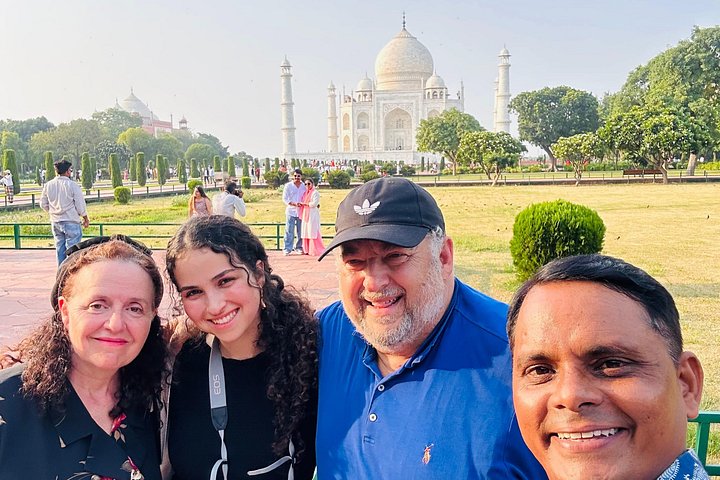
A professional driver with a high-standard private car, offering complimentary multi languages certified guide along the way showing two UNESCO World Heritage Sites The Taj Mahal and Agra Fort.
含まれるもの
料金に含まれるもの
- Private transportation
- Bottled water
- WiFi on board
- All Monuments Entrance Fees
含まれないもの
- Lunch
- Alcoholic Beverages
行程
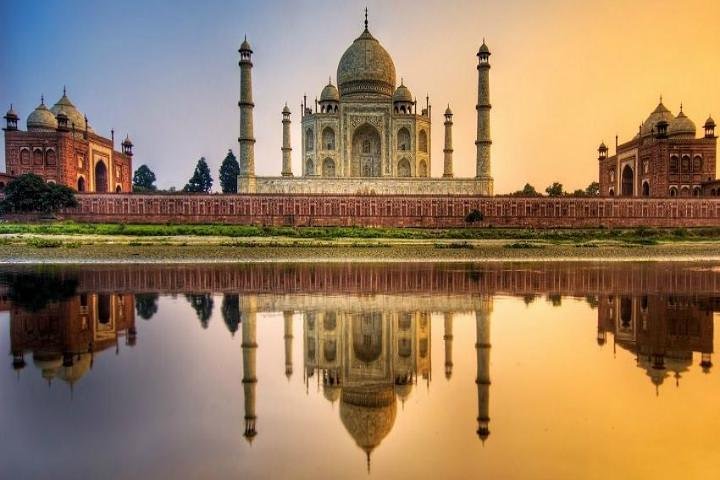
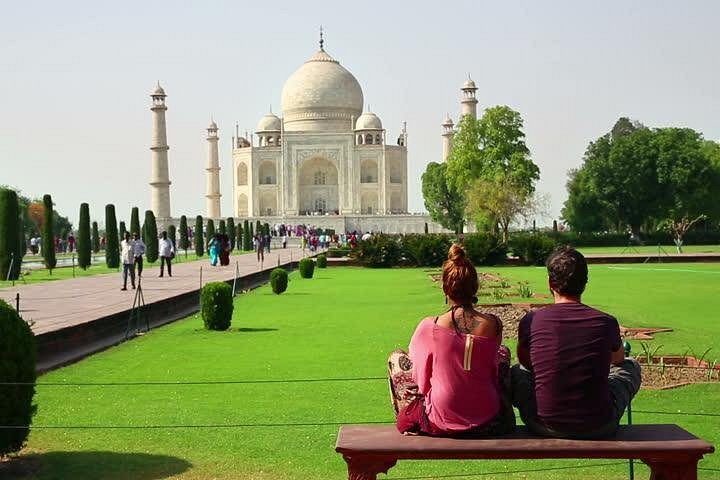
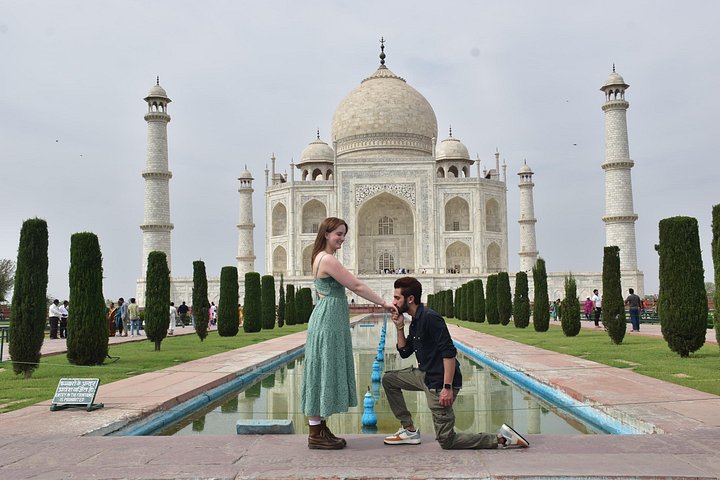
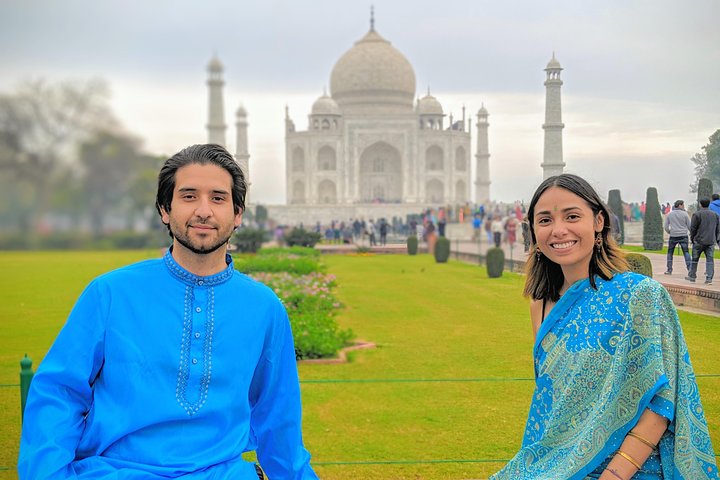
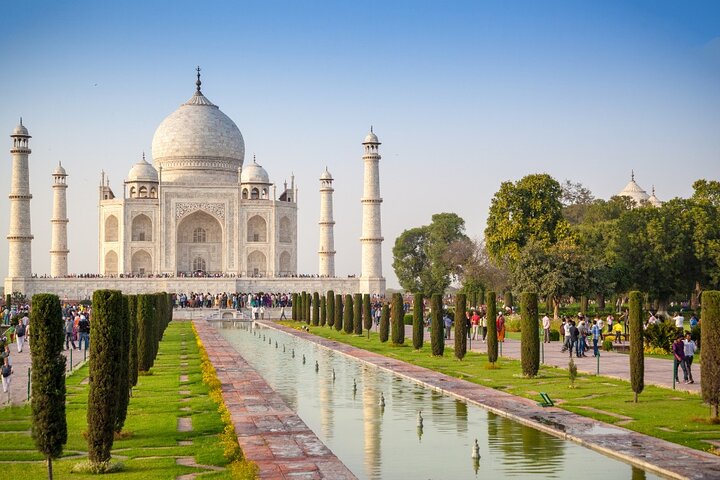
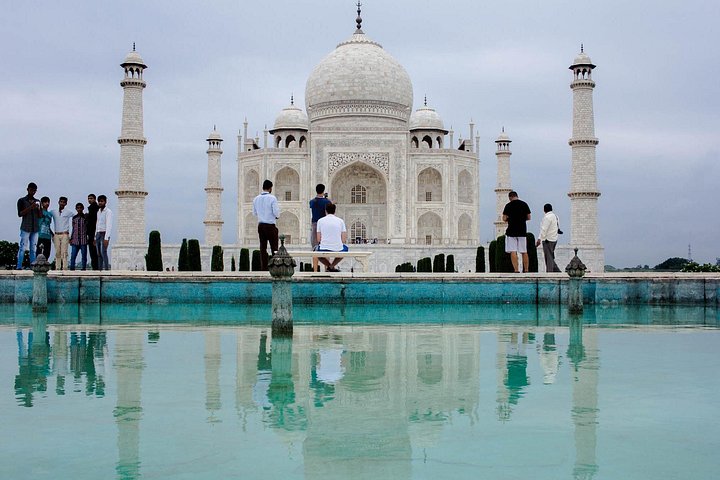
The Taj Mahal Crown of the Palace is an Islamic ivory-white marble mausoleum on the right bank of the river Yamuna in the Indian city of Agra. It was commissioned in 1631 by the Mughal emperor Shah Jahan (r. 1628–1658) to house the tomb of his favorite wife, Mumtaz Mahal; it also houses the tomb of Shah Jahan himself. The tomb is the centerpiece of a 17-hectare (42-acre) complex, which includes a mosque and a guest house, and is set in formal gardens bounded on three sides by a crenelated wall. Construction of the mausoleum was essentially completed in 1643. The Taj Mahal was designated as a UNESCO World Heritage Site in 1983 for being "the jewel of Muslim art in India and one of the universally admired masterpieces of the world's heritage". It is regarded by many as the best example of Mughal architecture and a symbol of India's rich history.
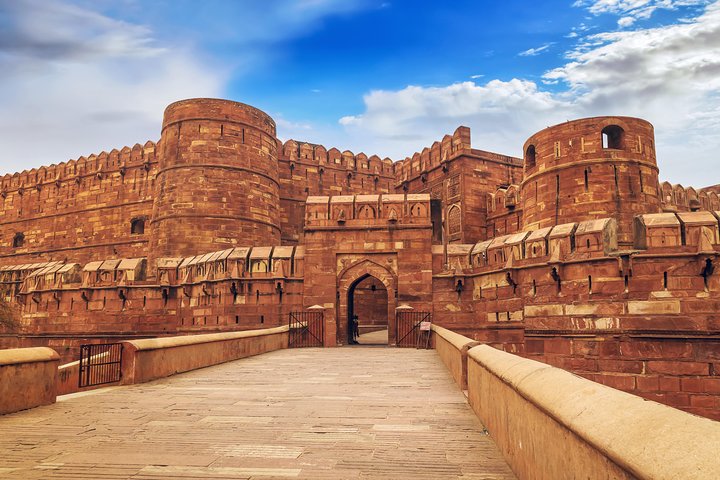
The Agra Fort is a historical fort in the city of Agra in India also known as the Red Fort. Rebuilt by the Mughal emperor Akbar in 1565 and completed in 1573, it served as the main residence of the rulers of the Mughal Dynasty until 1638, when the capital was shifted from Agra to Delhi. It was also known as the “Lal-Qila”Fort Rouge” or “Qila-i-Akbari Before capture by the British, the last Indian rulers to have occupied it was the Marathas. In 1983, the Agra fort was life inscribed as a UNESCO World Heritage Site. It is about 2.5 km northwest of its more famous sister monument, the Taj Mahal. The fort can be more accurately described as a walled city. Like the rest of Agra, the history of Agra Fort prior to Mahmud Ghaznavi's invasion is unclear. However, in the 15th century, the Chauhan Rajputs occupied it. Soon after, Agra assumed the status of capital when Sikandar Lodi (A.D. 1487–1517) shifted his capital from Delhi and constructed a few buildings in the pre-existing fort at Agra.
The tomb of I'timād-ud-Daulah (I'timād-ud-Daulah Maqbara) is a Mughal mausoleum in the city of Agra in the Indian state of Uttar Pradesh. Often described as a "jewel box", sometimes called the "Bachcha Taj" or the "Baby Taj", the tomb of I'timād-ud-Daulah is often regarded as a draft of the Taj Mahal. Along with the main building, the structure consists of numerous outbuildings and gardens. The tomb, built between 1622 and 1628, represents a transition between the first phase of monumental Mughal architecture – primarily built from red sandstone with marble decorations, as in Humayun's Tomb in Delhi and Akbar's tomb in Sikandra – to its second phase, based on white marble and pietra dura inlay, most elegantly realized in the Taj Mahal. The mausoleum was commissioned by Nur Jahan, the wife of Jahangir, for her father Mirzā Ghiyās Beg, originally a Persian Amir in exile, who had been given the title of I'timād-ud-Daulah (pillar of the state).
The Mehtab Bagh garden was the last of eleven Mughal-built gardens along the Yamuna opposite the Taj Mahal and the Agra Fort. The garden was built by Emperor Babur (d. 1530). It is also noted that Emperor Shah Jahan had identified a site from the crescent-shaped, grass-covered floodplain across the Yamuna River as an ideal location for viewing the Taj Mahal. It was then created as "a moonlit pleasure garden called Mehtab Bagh." White plaster walkways, airy pavilions, pools, and fountains were also created as part of the garden, with fruit trees and narcissus.[6] The garden was designed as an integral part of the Taj Mahal complex in the riverfront terrace pattern. Legends attributed to the travelogue of the 17th-century French traveler Jean Baptiste Tavernier mention Shah Jahan's wish to build a Black Taj Mahal for himself, as a twin to the Taj Mahal; however, this could not be achieved as he was imprisoned by his son Aurangzeb.
キャンセル
開始24時間前まで無料でキャンセルでき、全額返金されます。
口コミ
5.0
- 514
- 40
- 30
- 20
- 10
評価は予約パートナーが集めた14件の口コミによるものです。旅行者自身の言葉を書かれた順に掲載しており、体験をよく見せるために並べ替えることはありません。
参加前に知っておくこと
- 集合場所
- Meet us at the entry
- 送迎
- 送迎を利用するか、出発場所で合流できます。
- チケットの種類
- Mobile or paper ticket accepted
- 催行会社
- Inde Decouverte
- Public transportation options are available nearby
- Infants are required to sit on an adult’s lap
- Not recommended for pregnant travelers
- Not recommended for travelers with poor cardiovascular health
- Suitable for all physical fitness levels
- Travel time is included in the total tour duration
How it compares in ニューデリー
- Its from-price is 10% above the median of the 6327 experiences we list in ニューデリー.
- Its length is typical for the group.
- By number of reviews it ranks 1163 of 6327.
- The operator lists free cancellation on it.
About ニューデリー
ニューデリーはインド首都の堂々とした大通りと、オールドデリーのバザールやムガル建築が並び、幾重もの帝国と食の魅力が重なる街です。
計画的につくられた首都は、インド門から大統領官邸ラシュトラパティ・バワンへ伸びる壮大な儀礼の大通りを軸としています。近くにはタージ・マハルの先駆けとされるフマユーン廟が整形式庭園の中にあり、南には砂岩の塔ミナレット、クトゥブ・ミナールがそびえます。ロータス・テンプルと巨大なアクシャルダム寺院は、印象的な現代のランドマークです。
Top-ranked sights in ニューデリー: India Gate, Jama Masjid (Masjid e Jahan Numa), Chandni Chowk.
ニューデリーの特別価格
割引前と割引後の価格は事業者が示すもので、当サイトが付けたものではありません。