Travel back in time and discover the Soviet past of Georgia
설명은 영어로 표시됩니다.
- 4시간
- 시작 24시간 전까지 무료 취소
- 영어 가이드
- 즉시 확정
하이라이트
Since 1921, Georgia has been part of the Soviet Union until 1991. These 70 years have had a profound impact on the country, affecting its architecture, lifestyle, mindset and more. Today, we’re lifting the Iron Curtain and letting you travel back in time to fully experience what it was like to live in Soviet Georgia. On the tour, you will see Soviet architecture and hear urban legends from the 20th century. Tbilisi is a great example of brutalist architecture; therefore, take a unique chance to explore the Soviet past, hear the untold stories and get a local perspective. We explore some of the city’s most striking landmarks, showcasing bold examples of modernist and Soviet-era architecture. From monumental government and educational complexes to innovative residential designs and expressive public art, the tour highlights the creativity, ambition and ideological vision that shaped the urban landscape of the time.
포함 사항
포함되는 것
- Stories and urban legends from the Soviet era
- Tour of Soviet architecture in Tbilisi
- Metro Ride
- Transportation
- A certified guide service
- Local perspective on Soviet life
포함되지 않는 것
- Meals
- Tips
일정
The Parliament building stands as a monumental symbol of Soviet authority and architectural ambition. Built in the 1930s on the site of the demolished Cathedral, it embodies the regime’s desire to reshape both history and identity. Its massive colonnades, heavy stone facade and symmetrical design are prime examples of Stalinist architecture — meant to impress and intimidate. Today, it represents Georgia’s complex journey from Soviet rule to independence.
Opened in 1966, the Tbilisi Metro was one of the first subway systems in the Soviet Union outside Russia and Ukraine — a mark of prestige and modern progress. Its stations were built deep underground, serving not only as public transport but also as potential bomb shelters. Each station reflects Soviet ideals through mosaics, marble and geometric design, blending propaganda with local artistry. Riding the metro today feels like stepping into a living time capsule — a glimpse into daily life and design under the Soviet regime.
Located high above the city, the “Maghlivi” campus of Tbilisi State University is a striking example of late Soviet brutalism. Constructed in the 1970s, its monumental concrete forms were designed for function and endurance rather than beauty, reflecting the Soviet ideal of education as a collective pursuit.
Suspended high above Tbilisi’s Nutsubidze Plateau, this residential complex is a masterpiece of Soviet brutalism. Designed in the 1970s by Otar Kalandarishvili, it consists of three towering blocks connected by a dramatic sky bridge — a bold solution to the city’s mountainous landscape. Once a model of futuristic urban living, it’s now one of Tbilisi’s most photographed Soviet structures, capturing both the creativity and the isolation of life in the late socialist era.
Originally built in 1975 as the Ministry of Highway Construction, this building is one of the boldest examples of Soviet modernism in the Caucasus. Designed by Giorgi Chakhava and Zurab Jalaghania, it follows the “space city” concept — where architecture seems to float above the ground. Its interlocking horizontal blocks symbolize the connection of Georgia’s roads, an elegant metaphor for unity and progress. Today, it houses the Bank of Georgia, standing as a rare Soviet icon that’s been reimagined for the modern era.
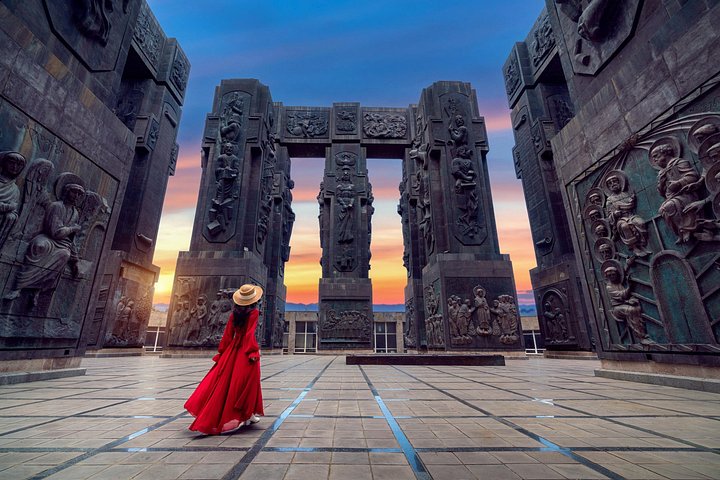
Built in the late 1970s, it was designed to merge with the landscape — a concrete structure that seems both futuristic and ancient. The building’s rough geometry and massive bas-reliefs reflect the Soviet fascination with science, history, and monumentality. Though abandoned, it remains one of Tbilisi’s most atmospheric sites — a symbol of forgotten ambition and fading utopias.
취소 규정
체험 시작 24시간 전까지 무료로 취소하고 전액 환불받을 수 있습니다.
후기
5.0
- 52
- 40
- 30
- 20
- 10
평점은 저희 예약 파트너가 모은 후기 2개를 바탕으로 합니다. 여행자가 직접 쓴 글을 쓰인 순서 그대로 보여주며, 체험을 좋아 보이게 하려고 순서를 바꾸지 않습니다.
출발 전 알아둘 점
- 미팅 장소
- At 9:45, our team member will meet you at the meeting point with the "Authentic Georgia" sign, 4a P. Ingorokva Street (350 meters away from Liberty Square).
- 픽업
- 모두 출발 장소에서 모이며, 픽업은 없습니다.
- 티켓 종류
- Mobile or paper ticket accepted
- 그룹 규모
- 최대 99명
- 운영사
- Authentic Georgia
- Public transportation options are available nearby
- Suitable for all physical fitness levels
- Minimum age of a traveler on the group tour is 7 years
- Wear comfortable shoes
- Dress accordingly to the weather
- Unaccompanied minors not allowed
- Pets are not allowed
How it compares in Tbilisi
- Its from-price is 39% below the median of the 184 시티 투어 we list in Tbilisi.
- It is shorter than most of them.
- By number of reviews it ranks 87 of 184.
- The operator lists free cancellation on it.
About Tbilisi
Tbilisi, Georgia's capital, spills along a river gorge beneath a fortress, mixing balconied old houses, sulphur baths and bold modern landmarks.
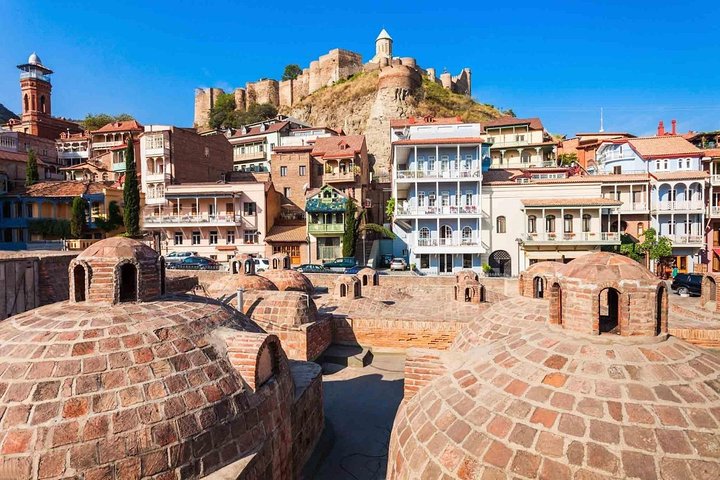
The old town gathers along the Mtkvari River, its narrow streets lined with carved wooden balconies, churches and wine bars. Abanotubani, the bath district, is crowned by brick domes over sulphur springs, and the walls of Narikala Fortress overlook it all, reached by cable car or a steep walk. The Mother of Georgia statue stands on the ridge holding a sword and a bowl of wine.
Top-ranked sights in Tbilisi: Metekhi Church, Narikala Fortress, Tbilisi Old Town (Dzveli Tbilisi).
Tbilisi 특가
할인 전후 가격은 운영사가 정한 것이며, 저희가 붙인 것이 아닙니다.