The Jewish Roots In Istanbul
説明は英語で表示されます。
- 4時間
- 24時間前まで無料キャンセル
- 9言語
- 即時確定
見どころ
This tour by a luxury private car and a professional guide will allow you to discover the heritage of the Jewish population in Istanbul.
含まれるもの
料金に含まれるもの
- Proffesional Tour Guide with your preferred language.
- Private driver with a luxury car.
含まれないもの
- Meals & Drinks.
- Gratuities
- Museum entrance ticket fees
行程
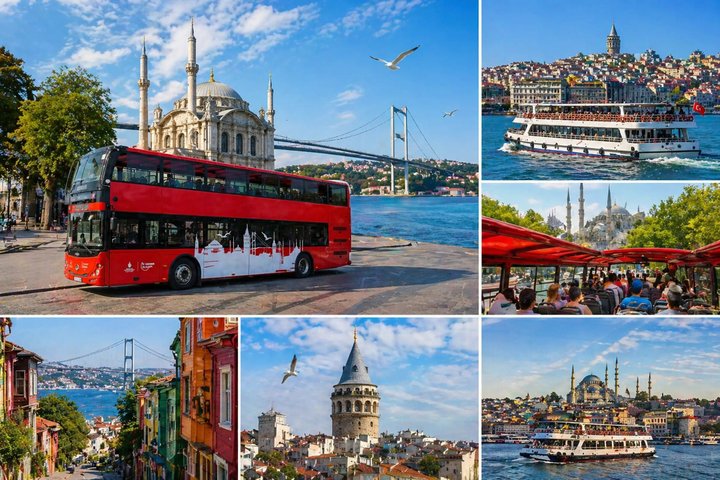
The Romanesque style tower was built as Christea Turris (Tower of Christ) in 1348 during an expansion of the Genoese colony in Constantinople. Galata Tower was the tallest building in Istanbul at 219.5 ft (66.9 m) when it was built in 1348. It was built to replace the old Tower of Galata, an original Byzantine tower named Megalos Pyrgos (English: Great Tower) which controlled the northern end of the massive sea chain that closed the entrance to the Golden Horn. That tower was on a different site and was largely destroyed in 1203, during the Fourth Crusade of 1202–1204. The upper section of the tower with the conical cap was slightly modified in several restorations during the Ottoman period when it was used as an observation tower for spotting fires. Galata Tower with its previous conical roof, depicted in a painting by Ivan Aivazovsky in 1846. The previous conical roof was destroyed by a storm in 1875. The current roof was built during restoration works between 1965 and 1967.
Neve Shalom Synagogue (Turkish: Neve Şalom Sinagogu, Hebrew: בית הכנסת נווה שלום; lit. "Oasis of Peace" or "Valley of Peace") is a synagogue in the Karaköy quarter of Beyoğlu district, in Istanbul, Turkey. The synagogue was built in response to an increase in the Jewish population in the old Galata neighborhood (today encompassed by Beyoğlu district) in the late 1930s. A Jewish primary school was torn down in 1949 for that purpose and the synagogue was built on its ruins. The construction completed in 1951. Its architects were Elyo Ventura and Bernar Motola, young Turkish Jews. The inauguration of the synagogue was held on Sunday, March 25, 1951 (17 Adar 5711, Hebrew calendar), in the presence of the Chief Rabbi of Turkey of the time, Hahambaşı Rav. Rafael David Saban. Neve Shalom is the central and largest Sephardic synagogue in Istanbul, open to service especially on Shabbats, High Holidays, Bar Mitzvahs, funerals and weddings.
The Ashkenazi Synagogue (Turkish: Eşkenazi Sinagogu) is an Ashkenazi synagogue located near the Galata Tower in Karaköy neighborhood of Beyoğlu in Istanbul, Turkey. It is the only currently active Ashkenazi synagogue in Istanbul open to visits and prayers. The synagogue was founded by Jews of Austrian origin in 1900. It is also the last remaining synagogue from a total of three built by Ashkenazim, as the population of Ashkenazi Jews accounts for 4 percent of the total Jewish population of Turkey. Visits to the synagogue can be made during weekday mornings and for Shabbat services on Saturday mornings. The synagogue holds weddings, Bar Mitzvahs and other religious ceremonies in the Ashkenazi tradition.
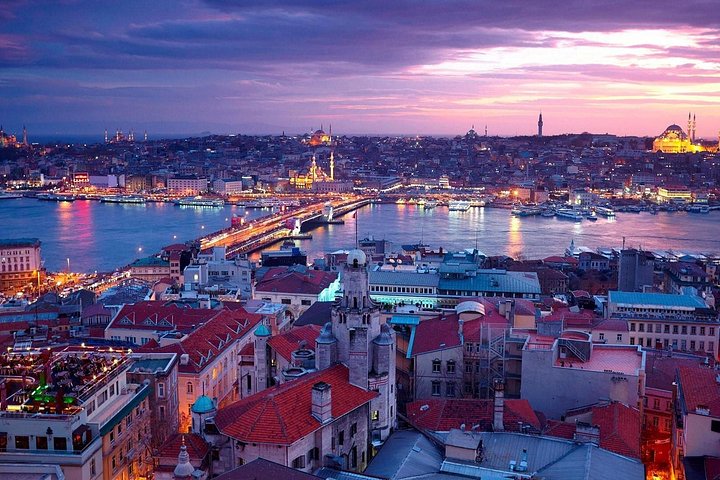
The Golden Horn is a small estuary created by two rivers that flow into the Bosporus. From one side of the Golden Horn to the other extend traditional Jewish neighborhoods that arose beginning at the time of Jewish settlement in Istanbul in the Byzantine period. Even at the beginning of the twentieth century more than half the population of the Balat was Jewish, although many were already leaving the cramped houses of this humid district for the “European city”. The neighborhoods of the Balat, on the right bank, and of Hasköy, on the other side of the river, have remained vibrant and rather exotic in memories of Istanbul -places where Ladino was spoken and one lived according to the rhythms of Jewish festivals and the Shabbat. The names of synagogues, many of which have since disappeared, recall the Sepharad that everyone keeps close to their hearts (Gerouche-Castile -the exiles of Castile-Catalan, Aragon, Portugal, Senioria…).
It was built by Romaniotes (Macedonian Jews), dating back to the 1430s, from the city of Ohrid (called 'Ahrid' in Greek) in what was then the Ottoman Empire and is now North Macedonia. Neve Shalom is said to have moved to Constantinople more than 550 years ago. Sephardi Jews arrived in the Ottoman Empire from the Iberian peninsula beginning in 1492, and soon were a larger group of Jews in population than the Romaniotes. The Romaniotes of Istanbul, as in many communities, including Thessaloniki became assimilated into the Sephardic culture and adopted the Sephardic liturgy as well as the language of the Sephardim, Judesmo. The synagogue building, one of the two ancient synagogues in Istanbul's Golden Horn, was renovated in 1992 by the Quincentennial Foundation, in celebration of the 500th anniversary of Sephardic Jews' arrival in the Ottoman Empire. Ahrida Synagogue is known for its boat-shaped tevah (the reading platform, known in Ashkenazi communities as a bimah).
Jewish Museum of Turkey (officially Quincentennial Foundation Museum of Turkish Jews; Turkish: 500. Yıl Vakfı Türk Musevileri Müzesi) is a cultural center established by the Quincentennial Foundation to inform the society of the traditions and history of Turkish Jewry. It was inaugurated on November 25, 2001. The Quincentennial Foundation was established in 1989 by 113 Turkish citizens, Jews and Muslims alike, to celebrate the five hundredth anniversary of the arrival of Sephardim to the Ottoman Empire. The idea of a museum was proposed by Naim Güleryüz who is now its curator and the foundation was financed by the prominent Jewish Kamhi family.
The Etz Ahayim Synagogue (Hebrew: קהל קדוש עץ החיים), also known as the Ortaköy Synagogue, is synagogue located in Ortaköy, Istanbul, Turkey, on the coast near the right leg of Bosphorus Bridge. The synagogue was totally destroyed by fire in 1941 with only the marble Aron Kodesh remaining intact. The synagogue was subsequently rebuilt.
キャンセル
開始24時間前まで無料でキャンセルでき、全額返金されます。
口コミ
5.0
- 52
- 40
- 30
- 20
- 10
評価は予約パートナーが集めた2件の口コミによるものです。旅行者自身の言葉を書かれた順に掲載しており、体験をよく見せるために並べ替えることはありません。
参加前に知っておくこと
- 送迎
- 送迎は全員に含まれます。
- チケットの種類
- Mobile or paper ticket accepted
- 催行会社
- TRAVELIUM
- Infants and small children can ride in a pram or stroller
- Infants are required to sit on an adult’s lap
- Specialized infant seats are available
- Suitable for all physical fitness levels
How it compares in イスタンブール
- Its from-price is 358% above the median of the 3649 experiences we list in イスタンブール.
- It is shorter than most of them.
- By number of reviews it ranks 1701 of 3649.
- The operator lists free cancellation on it.
About イスタンブール
イスタンブールはボスポラス海峡をはさんでヨーロッパとアジアにまたがり、ビザンティンとオスマンの遺産、にぎやかなバザール、大陸を結ぶフェリーがあります。
歴史地区のある半島に、最も重要な名所が集まっています。スルタンアフメトにはアヤソフィア、ブルーモスク、ヒッポドロームが向かい合い、地下にはバシリカ・シスターンが眠り、金角湾を見下ろす丘にはトプカプ宮殿が広がります。少し歩けば、何世紀も取引が続くグランド・バザールとスパイス・バザールがあり、偉大なオスマン建築家ミマール・スィナンの手になるスレイマニエ・モスクは、市内に七つあるといわれる丘のひとつにそびえています。
Top-ranked sights in イスタンブール: Dolmabahce Palace (Dolmabahce Sarayi), Bosphorus, Bosphorus Bridge (Bogazici Koprusu).
イスタンブールの特別価格
割引前と割引後の価格は事業者が示すもので、当サイトが付けたものではありません。