Wakhan Valley tour, 7 day
Beskrivelserne vises på engelsk.
- 168 timer
- Gratis afbestilling indtil 24 t før
- 2 sprog
- Straks bekræftet
Højdepunkter
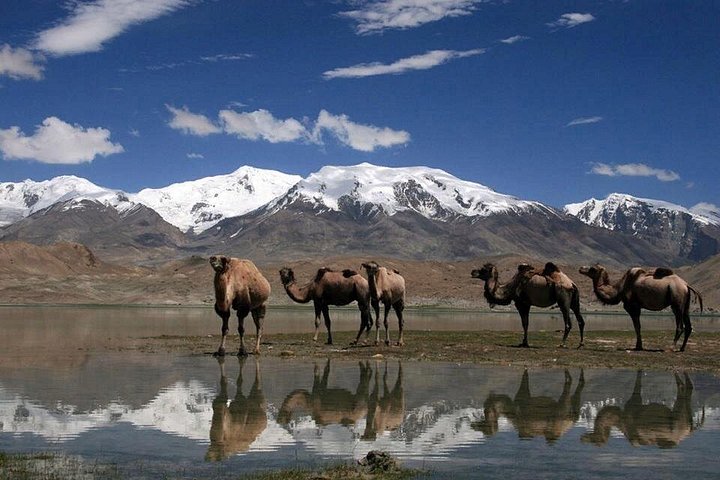
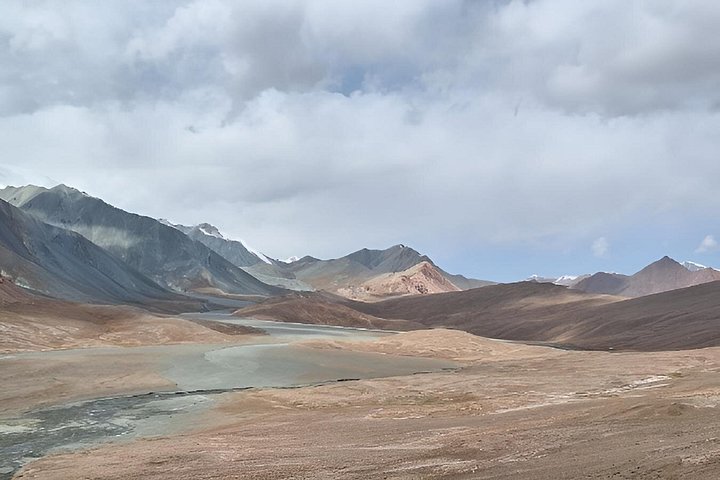
The Wakhan valley is located between in south-west of Tajikistan in Gorno-Badakhshan Autonomous Province and north-east of Afghanistan. It contains the headwaters of the Amu Darya River, and was an ancient corridor for travelers from the Tarim Basin to Badakshan. An 1873 agreement between UK and Russia split the Wakhan by delimiting spheres of influence for the two countries at the Pyanj and Pamir rivers, and an agreement between Britain and Afghanistan in 1893 confirmed the new border. The Wakhan is connected to Tashkurgan Tajik County, China, by a long, narrow strip called the Wakhan Corridor, which separates the Gorno-Badakhshan region of Tajikistan from the Khyber Pakhtunkhwa and Gilgit-Baltistan of Pakistan. Historically the Wakhan has been an important region for thousands of years as it is where the Western and Eastern portions of Central Asia meet.
Inkluderet
Det er inkluderet
- Private transportation
- Lunch
- All Fees and Taxes
- Dinner
- Breakfast
Ikke inkluderet
- personal costs, alcohol drinks, food etc.
Afbestilling
Gratis afbestilling indtil 24 timer før oplevelsen starter, med fuld refusion.
Godt at vide
- Afhentning
- Afhentning er inkluderet for alle.
- Billettype
- Mobile or paper ticket accepted
- Udføres af
- Bunyod-Tour
- Service animals allowed
- Public transportation options are available nearby
- Not recommended for pregnant travelers
- Travelers should have at least a moderate level of physical fitness
How it compares in Dushanbe
- Its from-price is 41% above the median of the 8 byture we list in Dushanbe.
- Its length is typical for the group.
- The operator lists free cancellation on it.
About Dushanbe
Dushanbe is the green capital of Tajikistan, set in a valley beneath the Hissar mountains, with tree-lined avenues, teahouses, bazaars and mountain roads.
Dushanbe lies in a valley in western Tajikistan, with snow-capped Hissar mountains to the north, and takes its name from the Persian word for Monday, after a market that once met there. Wide avenues lined with plane trees and fountains run through the city, and Rudaki Park is named for the medieval Persian-language poet Rudaki. The Rohat teahouse, with its tiled and carved interior, is a favourite meeting place.