10% rabatGratis afbestilling
Private Customizable Historical Walking Tour in Rothenburg
fra390 US$351 US$
Kategorier i Rothenburg
Beskrivelserne vises på engelsk.
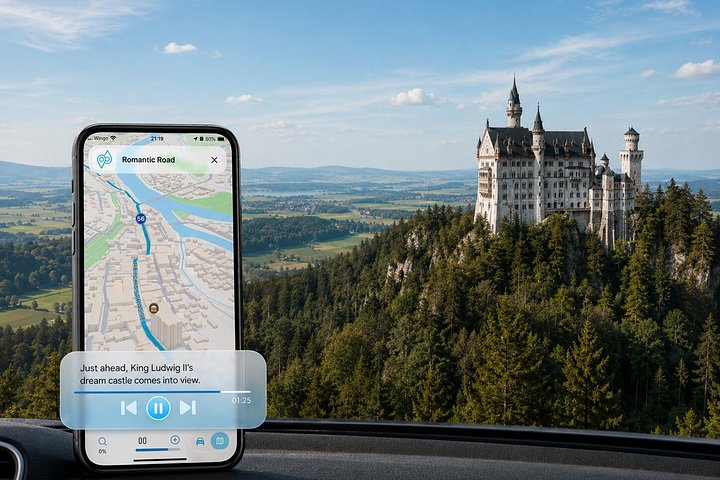
The audio guide is your convenient mobile companion for a self-guided tour of Rothenburg. This tour is specially designed for exploring the city in a short time (1.5–2 hours). Follow the route on the app’s map to walk from Market Square to the Hospital Bastion, passing by the city’s main attractions. Highlights include: City Hall, Jewish Street, St. Wolfgang’s Church and St. James Church, St. Mark's Tower, Gerlach Forge, Plönlein Square. The tour features 25 points of interest. All stories are crafted by professional journalists and historians, with a touch of humor and a passion for travel. Once you download the tour, the app works offline. The audio guide is always clear in your headphones. Enjoy fascinating stories and legends at your own pace, without having to keep up with a tour group. You can pause anytime to relax in a café or wander down a picturesque alley before continuing your exploration.
The Clock Tower in Rothenburg ob der Tauber, known locally in German as Markusturm, is one of the town’s historic medieval towers. Built as part of the early town fortifications, it stands beside the Röder Arch and marks one of the most picturesque corners of the old centre. Its stone base, timbered upper section, and clock face reflect Rothenburg’s preserved medieval character.
The Architect’s House, known locally in German as Baumeisterhaus, is one of the most distinctive Renaissance buildings in Rothenburg ob der Tauber. Built in the late 16th century for master builder Leonhard Weidmann, it reflects the status and craftsmanship of the town’s prosperous period. Its ornate façade, stone figures, and decorative details add a refined civic note to the medieval streetscape.
Toppler’s House, known locally in German as Topplerhaus, is one of Rothenburg ob der Tauber’s most unusual historic buildings. Built in the late 14th century, it is associated with Heinrich Toppler, the powerful mayor who helped shape the town’s medieval prosperity. Its narrow tower-like form, half-timbered upper floors, and position by the Tauber valley reflect both domestic life and defensive architecture.
The German Christmas Museum, known locally in German as Deutsches Weihnachtsmuseum, is a museum in Rothenburg ob der Tauber dedicated to the history of Christmas traditions. Its collection includes ornaments, decorations, nativity scenes, Advent calendars, and festive objects from different periods. The museum reflects how Christmas customs developed in German-speaking regions and became part of family and cultural life.
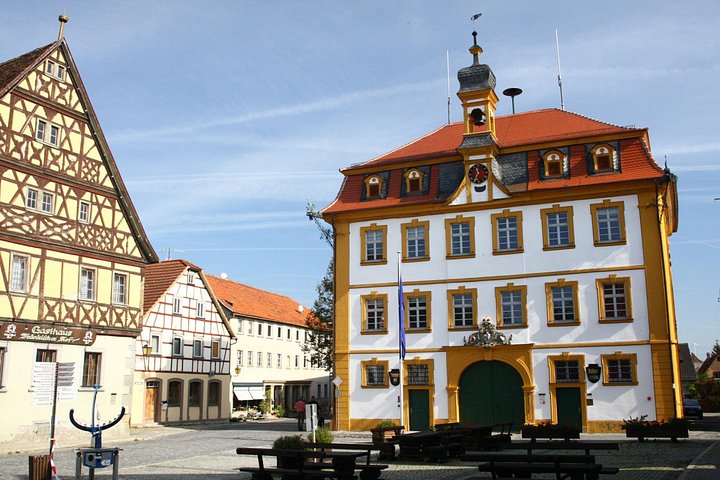
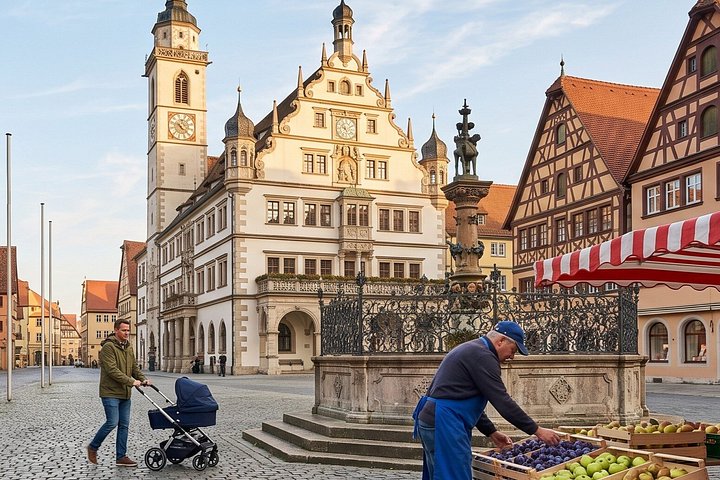
The Town Hall, known locally in German as Rathaus, stands at the heart of Rothenburg ob der Tauber’s Market Square. Its two-part architecture combines medieval Gothic elements with a later Renaissance façade, showing how the town changed over centuries. The building reflects Rothenburg’s civic power, legal traditions, and former status as a Free Imperial City.
The Powder Tower, known locally in German as Pulverturm, is one of the defensive towers of Rothenburg ob der Tauber. It formed part of the town’s medieval fortification system and was linked with the storage of gunpowder and military supplies. Its sturdy structure reflects the practical needs of defence in a Free Imperial City surrounded by walls, gates, and watchtowers.
Blade Gate, known locally in German as Klingentor, is one of the historic gates of Rothenburg ob der Tauber. Built as part of the town’s medieval fortifications, it combines a defensive tower with a passage into the old centre. Its massive walls, narrow openings, and connection with the town wall reflect the military architecture that protected Rothenburg for centuries.
St. Wolfgang’s Church, known locally in German as St.-Wolfgangs-Kirche or Schäferskirche, is a fortified church near the Klingentor in Rothenburg ob der Tauber. Built in the late 15th century, it combines a place of worship with defensive architecture. Its thick walls, towers, and connection with the town fortifications reflect the close link between faith, civic life, and protection in the medieval city.
St.-Jakobs-Kirche, known in English as St. James’s Church, is the main Protestant church of Rothenburg ob der Tauber. Built between the 14th and 15th centuries, it reflects the town’s wealth and religious importance in the late Middle Ages. Its Gothic architecture, stained glass, and famous Holy Blood altarpiece by Tilman Riemenschneider make it one of Rothenburg’s most significant landmarks.
Franziskanerkirche, known in English as Franciscan Church, is one of the oldest churches in Rothenburg ob der Tauber. Built in the late 13th century for the Franciscan order, it reflects the simplicity and restraint of mendicant architecture. Its Gothic interior, historic monuments, and quiet atmosphere connect the town with medieval monastic life.
Burgtor, known in English as Castle Gate, is one of the historic entrances to Rothenburg ob der Tauber. Built into the town’s western fortifications, it marks the approach to the former castle area above the Tauber valley. Its towers, defensive passages, and heavy gate structures reflect the strategic importance of protecting the medieval city.
Burggarten, known in English as Castle Garden, lies on the site of the former imperial castle of Rothenburg ob der Tauber. The castle was destroyed by an earthquake in the 14th century, leaving the garden as a quiet reminder of the town’s early medieval power. Its paths, viewpoints, and monuments overlook the Tauber valley and connect Rothenburg’s fortified centre with its wider landscape.
Gratis afbestilling indtil 24 timer før oplevelsen starter, med fuld refusion.
5,0
Bedømmelserne kommer fra 2 anmeldelser, som vores bookingpartner har indsamlet. Det er de rejsendes egne ord, i den rækkefølge de blev skrevet — aldrig omrokeret for at pynte på oplevelsen.
Rothenburg ob der Tauber is a walled medieval town in Bavaria, with half-timbered houses, a cobbled market square and a walkable ring of ramparts.
Rothenburg ob der Tauber stands on a ridge above the Tauber valley in Franconia, and its town walls, with gates and towers, still circle the old centre; a covered wall walk can be followed for much of the circuit. The town was a free imperial city in the Middle Ages, and the Markt square, with its Gothic and Renaissance town hall, shows the wealth of that era. The Plönlein, where two lanes meet beneath a tall tower, is its favourite photograph.
Top-ranked sights in Rothenburg: Rothenburg Market Square (Marktplatz), St. George’s Fountain (Georgsbrunnen).
Før/nu-priser kommer fra udbyderen, aldrig fra os.
fra390 US$351 US$
Føj Ticket Hall til din hjemmeskærm
Billetter og byguider, ét tryk væk, også offline.
Ticket Hall