Rome "Oscar da Roma" tour with high quality electric bicycle!
Beskrivelserne vises på engelsk.
Beskrivelserne kommer fra udbyderen og oversættes automatisk.
- 3 timer
- Gratis afbestilling indtil 24 t før
- 5 sprog
- Mobilbillet
Højdepunkter
Are you a movie buff? Have you ever thought about doing a tour in Rome by retracing the sets of the movie The Great Beauty? This is the tour for you! With the tour "Roma da Oscar" you can relive all the scenes of the movie "The Great Beauty", the masterpiece of Paolo Sorrentino who won the Oscar in 2014. You will enjoy the artistic, architectural and natural wonders that the magical capital has generously offered to the director, who knew how to make the most of them in every scene of the film!
Inkluderet
Det er inkluderet
- helmet
- padlock
- Use of bicycle
- city map
- rainproof
- seat up to 4 years
Rute
Piazza Navona, at the time of ancient Rome, was the Stadium of Domitian which was built by Emperor Domitian in 85 and in the 3rd century it was restored by Alexander Severus. It was 265 meters long, 106 wide and could accommodate 30,000 spectators. The stadium was richly decorated with some statues, one of which is that of Pasquino (perhaps a copy of a Hellenistic parchment group presumed to represent Menelaus supporting the body of Patroclus), now in the square of the same name next to Piazza Navona. Since it was a stadium and not a circus, there were no carceres (the gates from which the racehorses came out) or the plug (the dividing wall around which the horses ran) such as the Circus Maximus, but that was all free and used for athletes competitions. The obelisk that is now in the center of the square was not there, but it comes from the circus of Massenzio, which is still on the Via Appia.
Caracalla's thermal baths Baths of Caracalla, facing Caldarium.jpg View of the Baths of Caracalla. Roman Civilization Spas use Location State Italy Italy Municipality of Rome dimensions Surface area ~ 130 000 m² Administration Heritage Historic Center of Rome Special Authority for the Archeology of Fine Arts and Landscape of Rome Responsible Marina Piranomonte Can be visited Yes Location Map Wikimedia | © OpenStreetMap Data modification on Wikidata · Manual Coordinates: 41 ° 52′48.95 ″ N 12 ° 29′33.95 ″ E (Map) Caracalla's thermal baths. Overview of the Baths of Caracalla The Baths of Caracalla or Antoninian (in Latin Thermae Antoninianae, from the full name of the emperor Caracalla, belonging to the Severi dynasty) constitute one of the most magnificent examples of imperial baths in Rome, still preserved for most of their structure and free from buildings modern. They were built by the emperor on the Piccolo Aventino between 212 and 216 AD (as shown by the brick stamps [1]) in an area adjacent to the initial stretch of the Via Appia, about 400 m outside the ancient Porta Capena and just south of the venerated Camene forest.
Initially, like other streets in the district, it was dedicated to the Italian region of the same name. After the First World War, with resolution of the Municipal Council n. 37 of 25 October 1919, the name was changed in memory of the battle of Vittorio Veneto [1]. Designed at the end of the nineteenth century instead of Villa Ludovisi, it owes its fame above all for being at the center of the period of the Dolce Vita, thanks to the presence of numerous cafes (for example Harry's Bar) and hotels frequented by actors, singers and other celebrities, as well as journalists and photographers (or paparazzi). His fame was definitively sanctioned by the film by Federico Fellini La dolce vita, which however rebuilt the road in the Cinecittà studios.
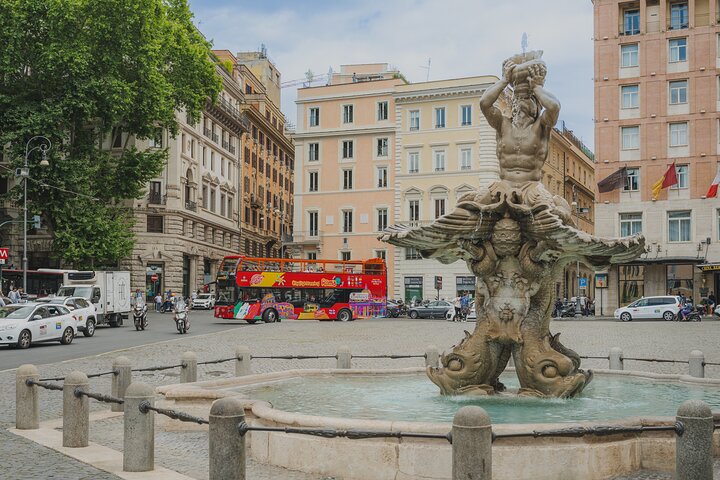
Piazza Barberini is a square in the present historic center of Rome situated in the saddle between the Quirinale hill and the Horti Sallustiani, at the top of the Via del Tritone hill and at the junction with the Felice road. It takes its name from the Palazzo Barberini that overlooks it, although its current entrance is in via delle Quattro Fontane. It stands on an area that until the nineteenth century was an extra-urban space.
its name derives from the Gens Pincia who owned the hill of the same name. In ancient times it was also called Porta Turata, because it was walled up, and Porta Salaria Vetus, because from here came the oldest via Salaria which, a little further on, joined the route of the Via Salaria Nova. The medieval popular tradition also gave it the name of "Porta Belisaria": according to legend, in fact, the general Byzantine Belisarius, now old and blind, begged near the door, to whose right was still visible, at the beginning of the nineteenth century , a graffiti writing, now disappeared, in medieval characters: "Date obolum Belisario". The story is completely false, also because Belisarius died in wealth, and not in Rome but in Constantinople. The only element that could justify the name is given by the fact that Belisario had perhaps his headquarters near the door.
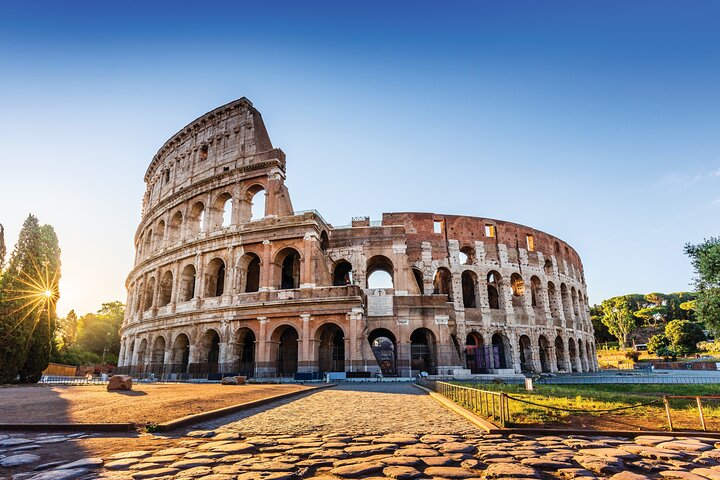
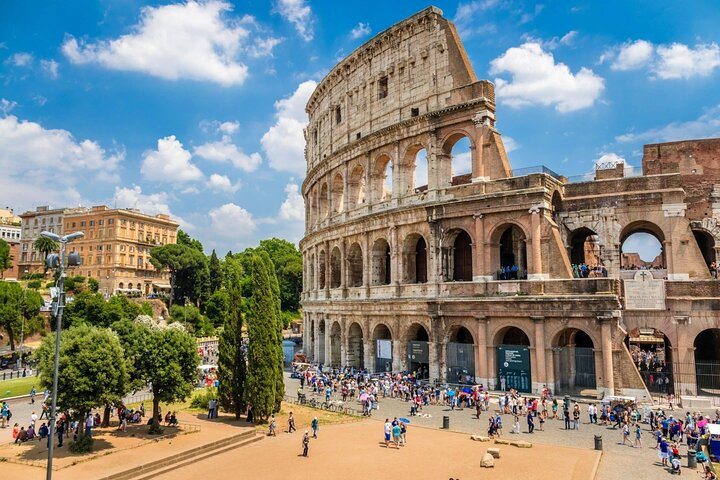
The Via dei Fori Imperiali, formerly Via dell'Impero, is a modern street in Rome, which takes its current name from the remains of the ancient Imperial Forums, and connects the Colosseum to Piazza Venezia.
Afbestilling
Gratis afbestilling indtil 24 timer før oplevelsen starter, med fuld refusion.
Anmeldelser
5,0
- 51
- 40
- 30
- 20
- 10
Bedømmelserne kommer fra 1 anmeldelser, som vores bookingpartner har indsamlet. Det er de rejsendes egne ord, i den rækkefølge de blev skrevet — aldrig omrokeret for at pynte på oplevelsen.
Godt at vide
- Afhentning
- Alle mødes ved startstedet; der er ingen afhentning.
- Billettype
- Mobile or paper ticket accepted
- Gruppestørrelse
- Op til 12 rejsende
- Udføres af
- Noleggio Ebike & Monopattini elettrici Roma
- Specialized infant seats are available
- Public transportation options are available nearby
- Suitable for all physical fitness levels
How it compares in Rom
- Its from-price is 62% below the median of the 8352 experiences we list in Rom.
- Its length is typical for the group.
- By number of reviews it ranks 4643 of 8352.
- The operator lists free cancellation on it.
About Rom
Rom lægger næsten tre tusind års historie ind i én by, man kan gå rundt i, fra Colosseum og Forum til barokpladser og Vatikanets kunst.
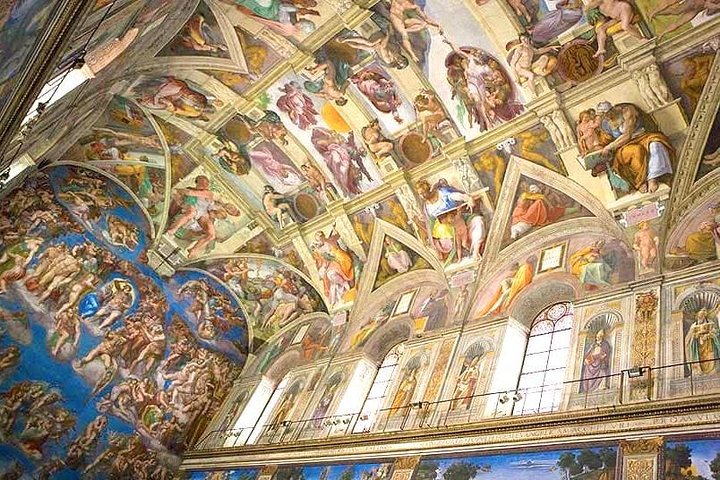
Det antikke Rom er stadig synligt overalt. Colosseum, Forum Romanum og Palatinerhøjen ligger tæt sammen i byens hjerte, Pantheon står endnu med sin åbne oculus, og rester af templer og akvædukter dukker op mellem boligblokkene. På den anden side af Tiberen rummer Vatikanstaten Peterskirken, Vatikanmuseerne og Michelangelos loft i Det Sixtinske Kapel.
Top-ranked sights in Rom: Colosseum, Vatican Museums, Sistine Chapel.
Særtilbud i Rom
Før/nu-priser kommer fra udbyderen, aldrig fra os.
 Bliver nok udsolgt20% rabat
Rom: Colosseum, Vatikanmuseerne, Det Sixtinske Kapel & Gåtur
fra
172 US$138 US$ 20% rabatGratis afbestilling
Hoteller i nærheden af Glide By Ancient Wonders & Hidden Gems
fra
154 US$124 US$![Rom Vespa Tour med billeder, Tiramisu og Drop-off inkluderet]() 14% rabatGratis afbestilling
Rom Vespa Tour med billeder, Tiramisu og Drop-off inkluderet
fra
63 US$54 US$![Rome: Spanish Steps, Trevi Fountain, Pantheon & Navona Tour]() 20% rabatGratis afbestilling
Rome: Spanish Steps, Trevi Fountain, Pantheon & Navona Tour
fra
56 US$45 US$![Rome & Vatican: Angels and Demons Self-Guided Escape Game Quest]() 20% rabatGratis afbestilling
Lignende oplevelser
 Gratis afbestillingUden kø
![Besøg Vatikanets museer, Sixtinske Kapel og Peterskirken]() Bliver nok udsolgtGratis afbestilling
![Skip-the-Line Vatikanet, Sixtinske Kapel og Sankt Peter | Lille Gruppe]() Bliver nok udsolgtGratis afbestilling