10% rabatGratis afbestilling
Warsaw Pub Crawl Bars, Nightclub Entry, Free Shots and Games
fra27 US$25 US$
Beskrivelserne vises på engelsk.
I was born and raised in a former territory of Warsaw Jewish Ghetto. I know every single corner of that district and I feel it is my legacy to present the history in the way it was. I am full of respect to all the history facts and I am presenting them with devotion and passion. My aim is to tell you how it was.
The Warsaw Ghetto was the largest Jewish ghetto established by Nazi Germany during World War II. Created in 1940, it imprisoned over 400,000 Jews in overcrowded and inhumane conditions behind walls and barbed wire. It became a place of immense suffering, starvation, and deportations to death camps, but also of courage and resistance, culminating in the 1943 Warsaw Ghetto Uprising.
The remaining fragments of the original Warsaw Ghetto Wall are among the most powerful symbols of World War II in Warsaw. Built by Nazi Germany in 1940, the wall imprisoned hundreds of thousands of Jews in overcrowded and brutal conditions. Today, preserved sections serve as moving reminders of suffering, separation, and the resilience of the Jewish community.
The memorial at Chłodna Street marks the site of the wooden footbridge that once connected the two parts of the Warsaw Ghetto above the street below. Used by Jews forced into the ghetto during World War II, the bridge became one of the most recognizable symbols of division, isolation, and daily life under Nazi occupation in wartime Warsaw.
The Umschlagplatz Monument marks the site where Jews were deported from the Warsaw Ghetto to Treblinka during WWII.
Mordehai Anielewicz bunker.
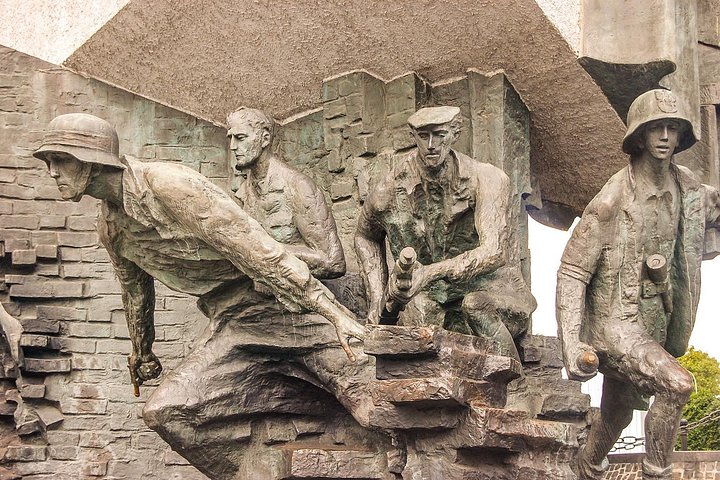
An outside visit to POLIN Museum of the History of Polish Jews highlights the powerful architecture and historical setting of the museum, located in the center of the former Warsaw Ghetto. Visitors can see the striking modern glass façade, symbolic public square, and nearby memorials connected to Jewish history. Just beside the museum stands the Monument to the Ghetto Heroes, commemorating the 1943 Warsaw Ghetto Uprising, along with plaques and monuments honoring the courage and suffering of Warsaw’s Jewish community during World War II. We recommend making this the final stop of the tour, allowing you to continue with a 3-hour self-guided visit through the museum’s main exhibition, exploring 1,000 years of the history of Polish Jews with the help of an audioguide.
Gratis afbestilling indtil 24 timer før oplevelsen starter, med fuld refusion.
5,0
Bedømmelserne kommer fra 6 anmeldelser, som vores bookingpartner har indsamlet. Det er de rejsendes egne ord, i den rækkefølge de blev skrevet — aldrig omrokeret for at pynte på oplevelsen.
Warsaw is Poland's capital on the Vistula River, a city carefully rebuilt after the Second World War, with a restored old town, palaces and modern towers.
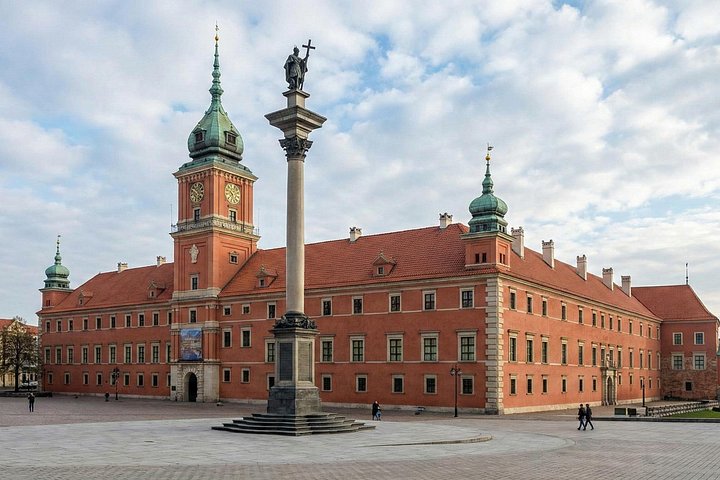
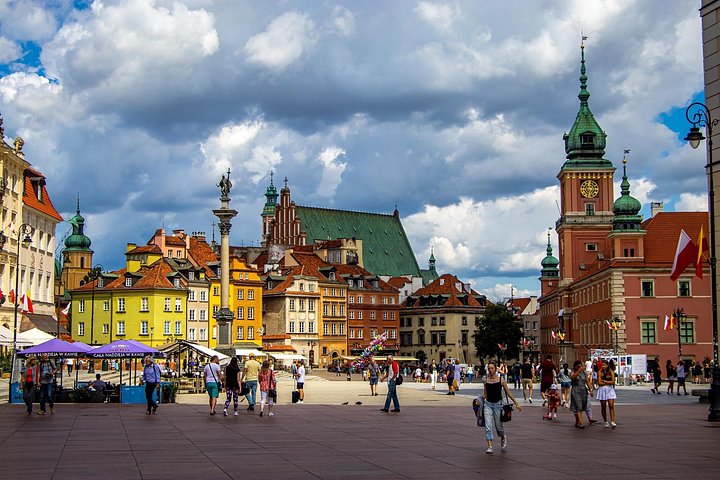
Warsaw was almost entirely destroyed in the Second World War, and its Old Town was rebuilt brick by brick from paintings and plans, work that earned it a UNESCO listing. Castle Square, with the Royal Castle and Sigismund's Column, leads into the market square, where a mermaid, the city's symbol, stands guard. The Palace of Culture and Science, a Soviet-era skyscraper of 1955, still dominates the skyline.
Top-ranked sights in Warsaw: Warsaw Old Town (Stare Miasto), Palace of Culture and Science (Palac Kultury i Nauki), Praga.
Før/nu-priser kommer fra udbyderen, aldrig fra os.
fra27 US$25 US$
fra27 US$25 US$

Føj Ticket Hall til din hjemmeskærm
Billetter og byguider, ét tryk væk, også offline.
Ticket Hall