Nuremberg Walking Tour with Audioguide on Your Smartphone
Beskrivelserne vises på engelsk.
- 3 timer
- Gratis afbestilling indtil 24 t før
- 5 sprog
- Straks bekræftet
Højdepunkter
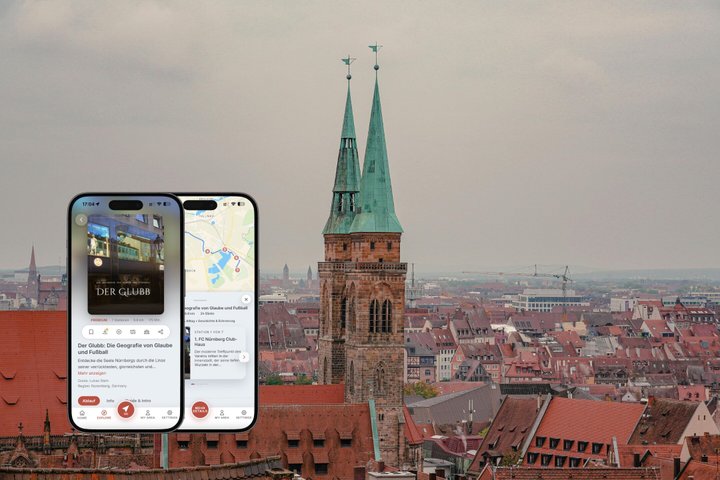
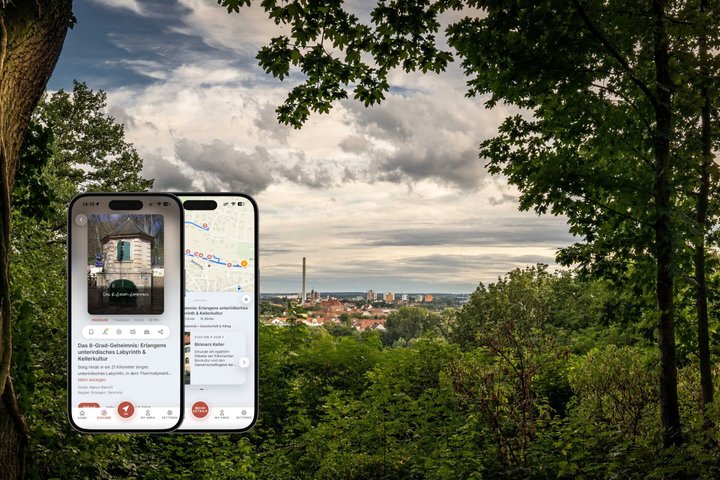
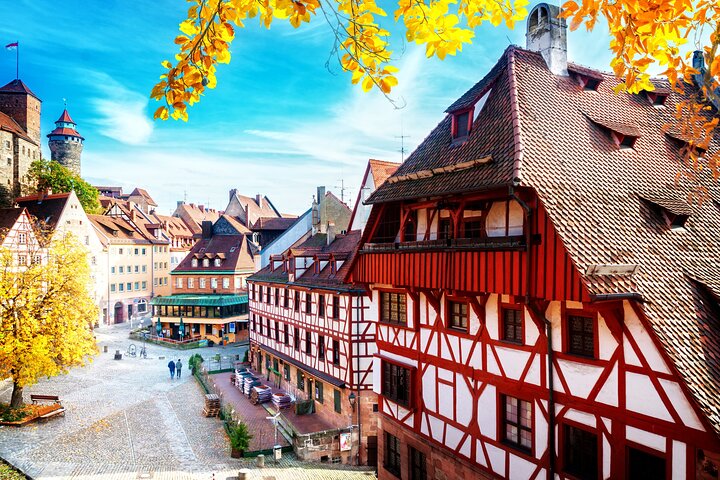
The audio guide serves as a convenient mobile companion for a self-guided tour of Nuremberg. This tour is specifically designed for those looking to explore the city in a short span of time (2-3 hours). Simply follow the route on the app's map to navigate through the city center, passing by the main attractions. You're guaranteed to see: The Imperial Fortress, Fortress wall and towers, Albrecht Dürer's House, Craftsmen's Court, The finest churches, A picturesque view of the tiled roofs. Once the tour is downloaded, the app can function offline. The audio guide is best enjoyed through your headphones, allowing you to immerse yourself in fascinating stories and legends at your own pace, without the need to keep up with a tour group. If you only have a few hours to spare in Nuremberg, make the most of it with the audio guide, ensuring you don't miss out on anything.
Inkluderet
Det er inkluderet
- Illustrations to Recognize Landmarks
- 30 audio recordings narrated by a professional historian
- One-year access to the tour in the language of your preference
- Audioguide application for iPhone and Android
- Offline map featuring a route for effortless GPS navigation
Ikke inkluderet
- In-person tour guide
- Smartphone and Headphones
- Entry tickets
- Transportation
- Food and Beverages
Rute
Nuremberg Central Station (Nürnberg Hauptbahnhof) is a grand entry point to the city, blending 19th-century architecture with modern functionality. Its historic stone façade hides a sleek, efficient interior filled with shops, eateries, and bustling platforms serving regional and international trains. A hub since 1844, it’s where Gothic towers meet high-speed rails. Whether you're arriving for Christmas markets or medieval alleys, the station stands as both gateway and anchor to Nuremberg’s layered identity.
The Handwerkerhof Nürnberg is a charming pocket of medieval nostalgia tucked just inside the old city walls near the central station. Built in 1971 within a restored bastion, it recreates the feel of a 16th-century artisan quarter, complete with half-timbered houses, cobbled lanes, and traditional craft shops. Goldsmiths, glassblowers, leatherworkers, and toy makers practice their trades here, while cozy taverns serve bratwurst and Franconian beer. Though a bit staged, it offers a warm, tangible link to Nuremberg’s guild heritage — quiet, curious, and full of handmade soul.
The Neues Museum Nürnberg is the city’s sleek temple to modern and contemporary art and design, housed in a striking glass-and-stone structure by architect Volker Staab. Opened in 2000 just behind the medieval city wall, it creates a dramatic contrast between past and present. Inside, white-walled galleries display works by Gerhard Richter, Andy Warhol, and cutting-edge designers, with rotating exhibitions that challenge and surprise. Light, minimalism, and movement define the space — more than a museum, it feels like a dialogue between material, space, and thought.
The Straße der Menschenrechte (Street of Human Rights) is a powerful open-air installation in Nuremberg, created by Israeli artist Dani Karavan. Located next to the Neues Museum, it features 27 white concrete pillars, each inscribed with one article of the Universal Declaration of Human Rights in both German and another language. Once the site of Nazi rallies, the street now stands as a firm statement of remembrance and commitment. Walking through it is both quiet and unsettling — a sculptural reminder that dignity must be defended, step by step.
St. James the Less Episcopal/Anglican Church in Nuremberg offers a rare English-speaking spiritual home in the heart of Franconia. Nestled in a quiet corner of the city, it’s part of the Convocation of Episcopal Churches in Europe, welcoming a diverse, international community. The church emphasizes inclusivity, liturgical tradition, and social outreach, offering a space for worship, reflection, and fellowship. While modest in size, it provides a sense of belonging for expats, students, and travelers seeking Anglican worship far from home.
Kirche St. Elisabeth in Nuremberg is a striking neoclassical Catholic church, known for its massive domed rotunda and austere elegance. Built between 1785 and 1903, delays and politics marked its construction, but the result is a solemn, symmetrical space that feels more Roman temple than Gothic sanctuary. Tucked near the bustling Jakobsplatz, it offers quiet contrast to the nearby medieval churches. Inside, light filters through high windows, illuminating clean lines and a sense of calm dignity — spiritual without excess.
The White Tower (Weißer Turm) is a medieval gate tower that once formed part of Nuremberg’s second city wall. Dating to the 13th century, it now rises oddly beside a modern U-Bahn station bearing its name. Despite the clash of old and new, the tower remains a sturdy witness to the city's layered history—its pale stone walls weathered but proud. Just steps away is the famous marriage carousel fountain, adding a surreal twist to the setting. The White Tower stands as both relic and landmark, quietly anchoring the chaos around it.
The Ehekarussell (Marriage Carousel) in Nuremberg is a wild, surreal fountain that pulls no punches. Created by sculptor Jürgen Weber in 1984, it sits near the White Tower and depicts the stages of marriage — passion, routine, conflict, decay — with six dramatic bronze groupings inspired by 16th-century poet Hans Sachs. Some figures are tender, others grotesque or grimly funny. Water gushes through scenes of love, struggle, and mortality. It’s not romanticized — it’s raw, honest, theatrical. A marriage of sculpture and satire, bold enough to make you blush or laugh out loud.
The Wasserturm (Water Tower) in Nuremberg, part of the ensemble with the Weinstadel, stands as a solid medieval sentinel along the Pegnitz River. Built in the 13th century, it was once part of the city’s fortifications, later used for various civic functions—including as a prison. Its cylindrical stone structure, red-tiled roof, and reflection in the water make it one of the Altstadt’s most photographed landmarks. Quietly stoic, the Wasserturm anchors the romantic riverside view with a touch of old-world strength and mystery.
The Weinstadel in Nuremberg is a stunning half-timbered building along the Pegnitz River, dating back to 1446. Originally a wine storehouse, it later served as a shelter for lepers during Holy Week and eventually housed the city’s poor. With its intricate woodwork, steep gables, and riverside arcades, it’s one of the best-preserved medieval structures in the city. Today, it serves as student housing — a rare case of 15th-century architecture with 21st-century roommates. Its reflection in the water makes it a postcard come to life.
The Spielzeugmuseum Nürnberg (Nuremberg Toy Museum) is a delightful journey through centuries of play, fittingly located in a city once known as the “toy capital of the world.” Housed in a charming Renaissance building, its vast collection spans wooden toys, dolls, tin soldiers, board games, and LEGO, from antique to modern. There's a nostalgic hum in the air — part childhood memory, part cultural reflection. The museum doesn’t just display toys; it shows how they mirror society, invention, and imagination. For kids and grown-ups alike, it’s pure, curated joy.
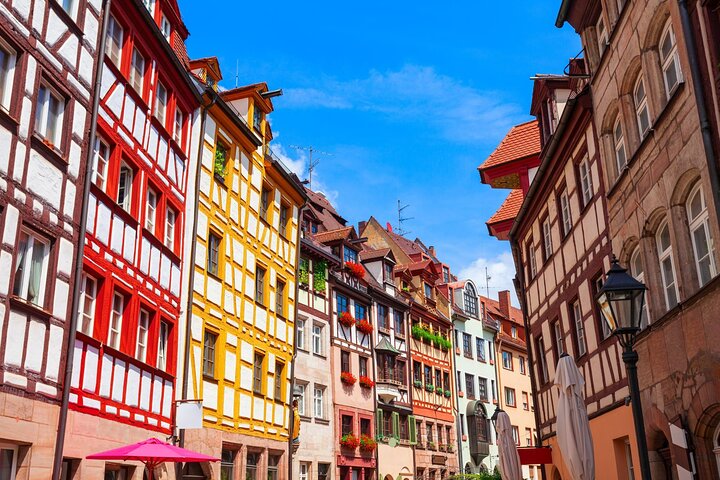
Weißgerbergasse is one of Nuremberg’s most photogenic streets — a cobbled lane lined with over 20 beautifully preserved half-timbered houses, many dating back to the 15th and 16th centuries. Named after the tanners (“Weißgerber”) who once worked here, the street survived WWII bombings and now glows with colorful facades, flower boxes, and quiet charm. It’s a rare glimpse of pre-modern Nuremberg, untouched by war or time. Today, it’s home to cafés, galleries, and private residences — a lived-in fairytale with creaky floors and centuries in the walls.
Afbestilling
Gratis afbestilling indtil 24 timer før oplevelsen starter, med fuld refusion.
Anmeldelser
5,0
- 54
- 40
- 30
- 20
- 10
Bedømmelserne kommer fra 4 anmeldelser, som vores bookingpartner har indsamlet. Det er de rejsendes egne ord, i den rækkefølge de blev skrevet — aldrig omrokeret for at pynte på oplevelsen.
Godt at vide
- Mødested
- - The tour begins at Nuremberg Central Station - This is a self-guided tour; there will be no guide present at the meeting point - Open the app, initiate the Nuremberg City Tour, and follow the designated route
- Afhentning
- Alle mødes ved startstedet; der er ingen afhentning.
- Billettype
- Mobile or paper ticket accepted
- Gruppestørrelse
- Op til 20 rejsende
- Udføres af
- TouringBee
- Public transportation options are available nearby
- Suitable for all physical fitness levels
- The audio guide is available through a mobile app for iOS and Android
- Entry tickets to the museums, Albrecht Dürer's House, and Nuremberg Castle are not included. Please purchase these separately in advance
- The tour does not cover all the sights in Nuremberg
- This is a self-guided tour. You will need to download the audio guide mobile app, activate your purchase, and follow the route on the app's map. There is no human guide provided
- The audio guide can be accessed at any time. The date and time provided during checkout are only approximate
How it compares in Nuremberg
- Its from-price is 92% below the median of the 27 byture we list in Nuremberg.
- Its length is typical for the group.
- By number of reviews it ranks 8 of 27.
- The operator lists free cancellation on it.
About Nuremberg
Nuremberg, in Franconia in northern Bavaria, is a walled medieval city of sandstone churches, an imperial castle and Christmas markets.
Nuremberg's old town sits inside a ring of medieval walls, crowned by the Kaiserburg, the imperial castle that was a residence of Holy Roman emperors. Below it, half-timbered houses and sandstone churches line the lanes by the Pegnitz river. The painter Albrecht Dürer lived in a house near the castle that is now a museum, and the Hauptmarkt square is dominated by the ornate Beautiful Fountain. Much of the old town was rebuilt after the Second World War.
Top-ranked sights in Nuremberg: Imperial Castle of Nuremberg (Kaiserburg), Hauptmarkt, Schöner Brunnen.
Særtilbud i Nuremberg
Før/nu-priser kommer fra udbyderen, aldrig fra os.
 20% rabatGratis afbestilling
Historic Nuremberg: Exclusive Private Tour with a Local
fra
183 US$146 US$![Self-guided podcast tour: Obtaining the underground labyrinth]() 20% rabatGratis afbestilling