5% rabatGratis afbestilling
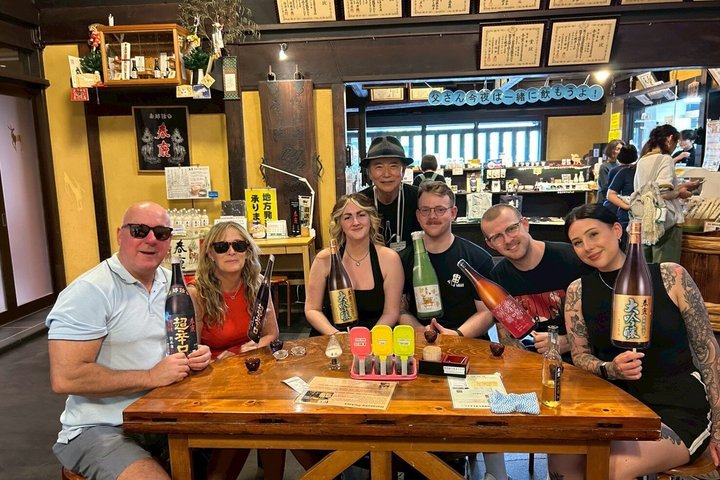
Nara Sake Tour: Birthplace of Sake, 2 Breweries & Tastings
fra110 US$104 US$
Beskrivelserne vises på engelsk.
When the sun sets and the tourists head back to Osaka, Nara's oldest streets wake up. Not with noise, with silence. The kind that feels like it's listening to us. Join us for a walk through the ancient capital after dark. Lantern in hand, we move through temple gates, stone paths, and forgotten corners of a city that has been accumulating stories for 1,300 years. Urban legends. Cursed places. Spirits that never left. Your guide carries a chochin, a traditional Japanese lantern, and knows where the darkness gets thick. We meet at the storefront of Starbucks Coffee, Sarusawaike when the last light fades. Some of what you will hear is legend. Some of it is history. We'll let you decide which is which.
Learn the tragic legend of the Uneme — a court lady from the Nara Period who served the emperor, fell desperately in love with him, and, when his affection faded, draped her robe over a willow tree by this bank before throwing herself into Sarusawa Pond. The willow itself no longer stands, but a stone monument marks where it once grew. Even the poet Kakinomoto no Hitomaro was moved to write a haunting verse about the image of her hair floating among the pond's weeds.
Built by local people out of sympathy for the spirit of the drowned court lady, this small shrine has an unusual feature: its altar faces away from the pond. According to legend, the spirit of the Uneme found it too painful to face the water where she died, and turned the shrine around — overnight — on her own. Look closely and you'll see the back of the shrine is what faces the pond today. Note: the shrine gate is only open on Sundays and public holidays; on weeknights, it is best appreciated from outside.
This small corner shrine is home to the Dōsojin — a border deity traditionally placed at crossroads and boundaries to ward off evil and disease. Over centuries, the deity's name evolved from Sai-no-kami to Sae-no-kami, and the character for "sae" was eventually read as "sai" — meaning dice — linking the deity to gambling. Today it's worshipped as a god of luck in contests and games. The punchline? A local legend says this very deity once played against the deity of the nearby Gorhyo Shrine — and lost almost all his followers, even pawning his mosquito net. The large sacred stone on the left of the gate is said to give luck to those who take a small chip home.
Founded in 800 AD by imperial decree, this shrine is dedicated to the spirit of Princess Inoue (Ikami-naishinnō), consort of Emperor Kōnin and mother of Crown Prince Osabe — both of whom died in suspicious circumstances after being accused of cursing the emperor through court intrigue, widely believed to be a political fabrication. After their deaths, a series of droughts, plagues, and disasters were blamed on their vengeful spirits, giving rise to the tradition of goryo shinkō — the belief that wrongly persecuted souls become powerful deities when properly enshrined.
The small red monkey figures dangling from eaves throughout Naramachi all trace back to this little hall. The belief behind them is unsettling: a creature called the Sanshi no Mushi lives inside every human body, and on specific nights it slips out while you sleep to report your misdeeds to the heavens — shortening your life in the process. The remedy was to stay awake all night, gather with neighbors, eat konnyaku, and drink sake until dawn. The monkey figures were hung outside as a ward against the creature. The hall is visible through the latticed doors at night, and the glow of a lantern makes the whole thing feel just close enough to believable.
Founded in the sixth century in Asuka and later relocated to Nara during the capital's establishment, this UNESCO World Heritage site carries one of the city's most vivid ghost stories. Late at night, a demon would appear in the belfry — until a boy of extraordinary strength wrestled it into the darkness. The demon fled, and the alley where it disappeared is still called "Fushin-ga-tsuji" to this day.
Gratis afbestilling indtil 24 timer før oplevelsen starter, med fuld refusion.
5,0
Bedømmelserne kommer fra 2 anmeldelser, som vores bookingpartner har indsamlet. Det er de rejsendes egne ord, i den rækkefølge de blev skrevet — aldrig omrokeret for at pynte på oplevelsen.
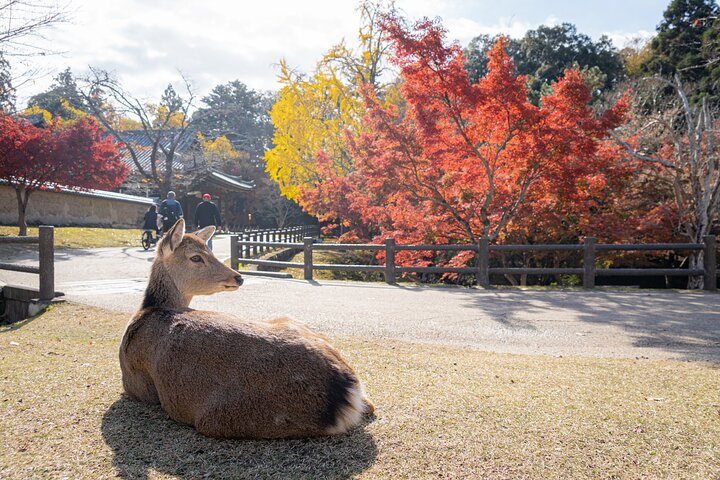
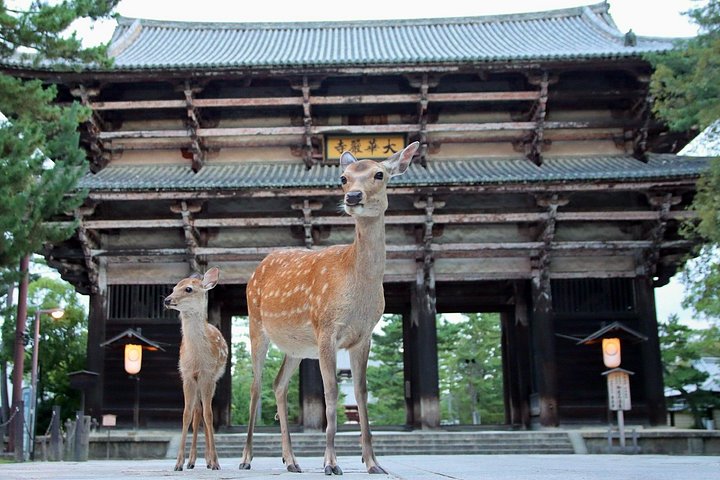
Nara, in the Kansai region, was Japan's capital in the eighth century and is now a city of great Buddhist temples and free-roaming deer.
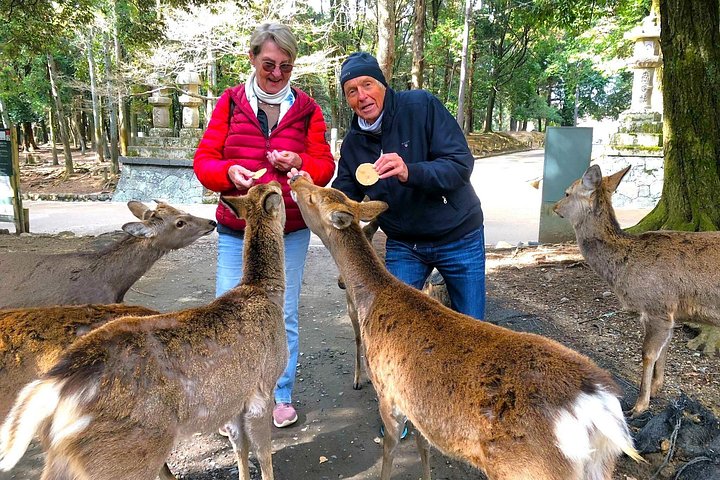
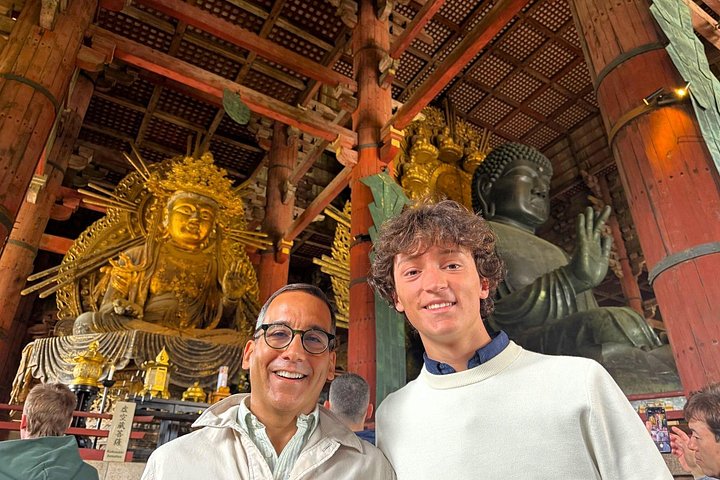
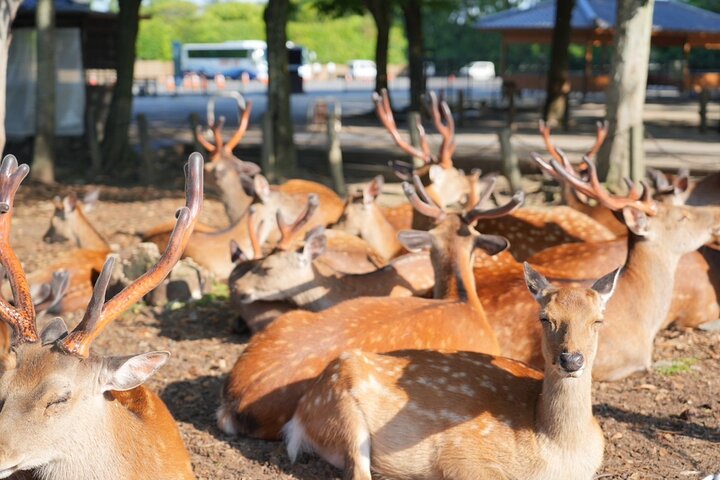
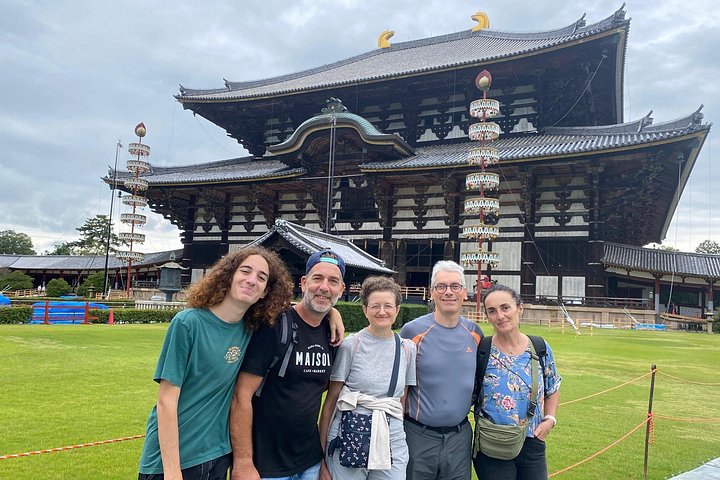
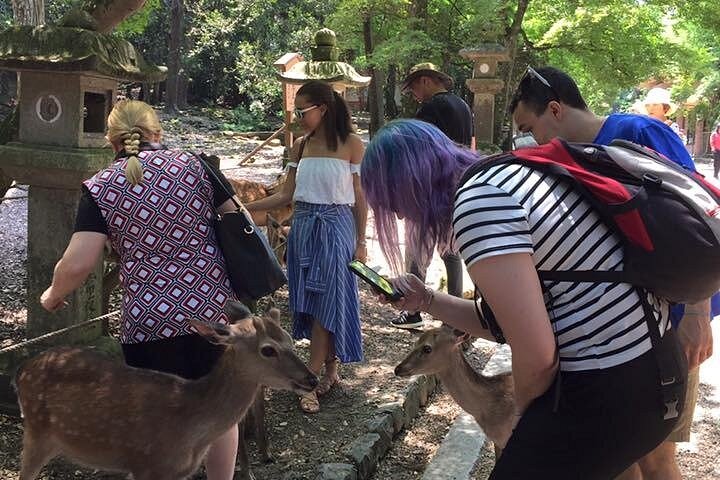
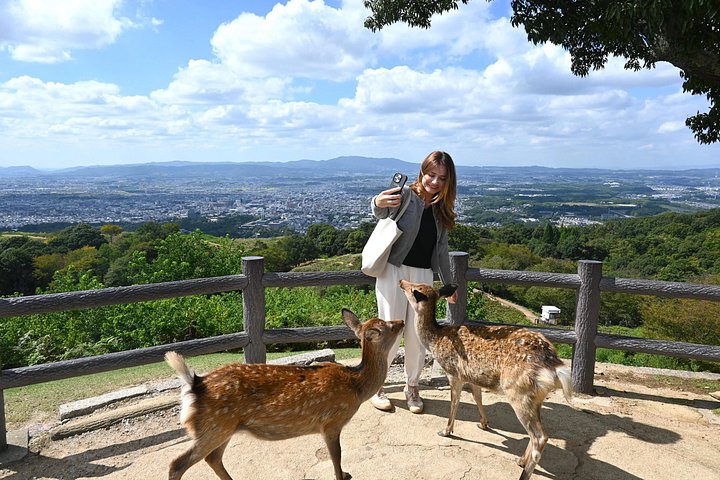
Nara was the capital, Heijo-kyo, from 710 to 784, and its monuments from that age make up a UNESCO World Heritage Site. Todai-ji temple houses a bronze Great Buddha in one of the largest wooden buildings in the world. Around it spreads Nara Park, where more than a thousand sika deer roam freely and bow for crackers sold at stalls.
Top-ranked sights in Nara: Toshodaiji Temple.
Før/nu-priser kommer fra udbyderen, aldrig fra os.
fra110 US$104 US$
fra171 US$120 US$
Føj Ticket Hall til din hjemmeskærm
Billetter og byguider, ét tryk væk, også offline.
Ticket Hall