20% rabatGratis afbestilling
Historic Marseille: Exclusive Private Tour with a Local
fra183 US$146 US$
Beskrivelserne vises på engelsk.
The audio guide serves as a convenient mobile companion for exploring the remarkable city of Marseille. This tour is specifically designed to help you discover the city within a short span of 2-3 hours. Simply follow the route on the app's map, which will guide you from the Arc de Triomphe to the Basilica of Notre Dame de la Garde. You are guaranteed to see: The Old Port, Fort Saint-Jean, Marseille Cathedral, The Street Art of Le Panier, Vieille-Charité Almshouse, Petanque fields, Charming narrow streets brimming with souvenirs and treats. Once you've downloaded the tour, the app functions offline. The audio guide can always be heard clearly through your headphones. Enjoy captivating stories and legends at your own pace, without the need to keep up with a tour group. If you have only a few hours to explore Marseille, make the most of it with the audio guide. You won't miss a thing.
Porte d’Aix in Marseille is a triumphal arch built in the 19th century to commemorate French military victories. Inspired by Roman arches, it features classical columns and detailed reliefs celebrating battles from the Revolution and Napoleonic era. Located at the historic entrance to the city, near the former road to Aix-en-Provence, it once marked Marseille’s northern gateway. Today, it stands as a proud symbol of civic memory and neoclassical grandeur in the heart of the city.
The Huveaune Aqueduct in Marseille is a historic structure built to carry water across the Huveaune River valley. Dating from the 19th century, it was part of the city’s efforts to modernize its water supply during a time of rapid growth. With its elegant arches and solid stone construction, the aqueduct blends functionality with architectural grace. Though no longer in full use, it remains a striking reminder of Marseille’s industrial and engineering heritage.
The Vieille Charité in Marseille is a stunning 17th-century building originally constructed as an almshouse for the poor. Designed by Pierre Puget, its Baroque architecture centers on a peaceful courtyard and a domed chapel made of pink and white stone. Today, it houses museums, art exhibitions, and cultural institutions, including the Museum of Mediterranean Archaeology. Located in the historic Panier district, it’s both a cultural hub and a serene architectural gem in the heart of the city.
Église Saint-Laurent is one of Marseille’s oldest churches, dating back to the 12th century. Built in the Romanesque style with warm pink stone, it once served the city’s fishing community. Perched above the Old Port, it offers beautiful views of the harbor and the modern Mucem nearby. Its simple, fortress-like façade hides a quiet, spiritual interior. The church stands as a peaceful witness to Marseille’s maritime past and its layered, centuries-old history.
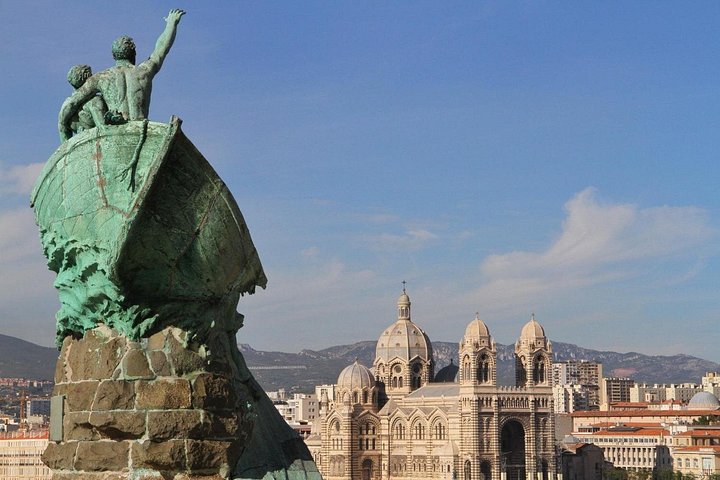
Marseille Cathedral (Cathédrale La Major) is a monumental 19th-century basilica that blends Romanesque and Byzantine styles, making it one of the largest churches in France. Built on the site of an earlier medieval cathedral, it features striped stonework, grand domes, and richly decorated interiors. Overlooking the sea near the Old Port, it stands as a symbol of Marseille’s Mediterranean identity—both spiritual and architectural. Its massive scale and unique design make it a must-see landmark in the city.
The Museum of European and Mediterranean Civilizations (Mucem) is one of Marseille’s most iconic cultural institutions. Opened in 2013, it explores the history, culture, and social fabric of Mediterranean civilizations through dynamic exhibitions, from ancient artifacts to contemporary art. Its striking architecture—glass, concrete latticework, and sea views—bridges the historic Fort Saint-Jean with a modern structure. Mucem is both a museum and a meeting point between continents, eras, and ideas.
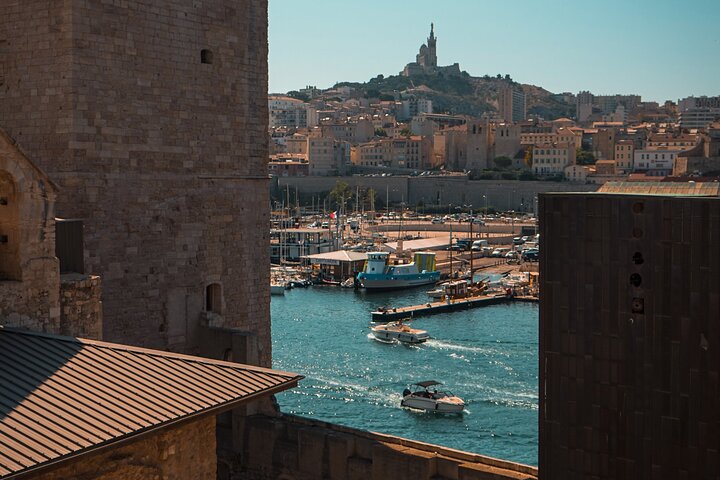
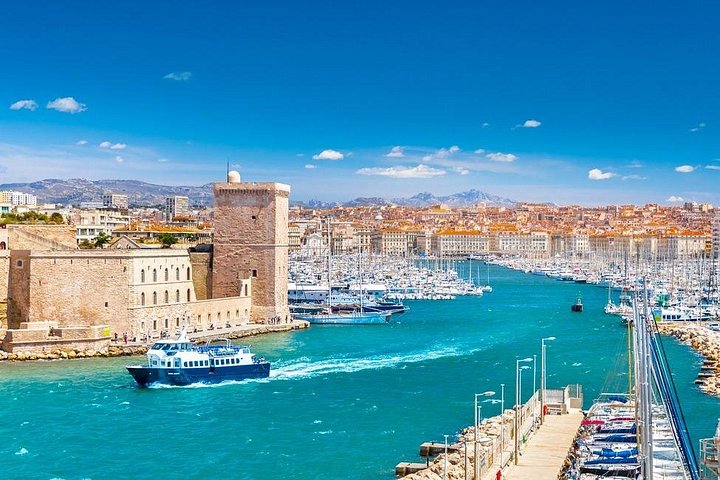
Fort Saint-Jean is a historic coastal fortress guarding the entrance to Marseille’s Old Port. Built in the 17th century on the site of earlier medieval and crusader structures, it served both military and ceremonial functions. Its ramparts, towers, and views over the sea make it a dramatic reminder of the city’s strategic maritime past. Now part of the Mucem complex, the fort is accessible via footbridges and hosts exhibitions, gardens, and panoramic walkways linking history with modern Marseille.
Fort Saint-Nicolas was built in the 17th century by order of Louis XIV to keep watch over Marseille—not just from outside threats, but also to control the city’s rebellious spirit. Located on the southern side of the Old Port, it faces Fort Saint-Jean across the water, forming a symbolic gateway to the city. Though partly in ruins, its massive stone walls and angular design reflect classic military architecture. Today, it’s a national monument and public space, offering dramatic views and a powerful glimpse into Marseille’s turbulent past.
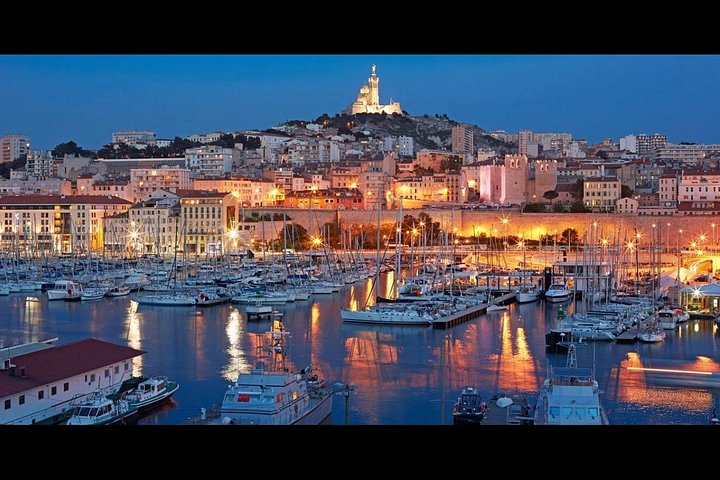
The Old Port of Marseille (Vieux-Port) is the historic heart of the city, where Phoenician sailors first landed over 2,600 years ago. Today, it’s a lively waterfront lined with cafes, markets, and boats—fishing vessels, ferries, and sleek yachts alike. Framed by Fort Saint-Jean and Fort Saint-Nicolas, the port is both a scenic hub and a symbol of Marseille’s enduring connection to the sea. Whether you're strolling the quays, visiting the fish market, or catching a boat to the Calanques, the Old Port is where Marseille’s soul lives and breathes.
The Hôtel de Ville de Marseille, or City Hall, is a beautiful 17th-century building located on the edge of the Old Port. Built in 1656, it reflects Genoese Baroque influence, with an elegant pink stone façade, ornate windows, and no internal staircase—access between floors is via a hidden external passage. It has been the seat of the city’s government for centuries and remains a functioning administrative building. Facing the harbor, it symbolizes Marseille’s long-standing role as a maritime and civic power.
The Church of the Accoules (Église des Accoules) is a historic church tucked into Marseille’s Le Panier district. Originally founded in the early Middle Ages, it was destroyed during the French Revolution and later rebuilt in the 19th century. Its most striking feature is the tall Gothic-style bell tower, preserved from the original medieval structure. Once a center of revolutionary activity, the church now stands as a quiet symbol of the city's resilience and layered religious history.
The Hôtel de Cabre is the oldest house in Marseille, dating back to 1535. Built in Renaissance style with Gothic elements, it belonged to a wealthy merchant and features ornate stonework, mullioned windows, and a carved façade. Remarkably, the entire building was rotated 90 degrees in 1954 to align with modern streets after WWII damage. Located near the Old Port and Le Panier, it’s a rare architectural survivor that connects present-day Marseille to its 16th-century past.
Gratis afbestilling indtil 24 timer før oplevelsen starter, med fuld refusion.
4,1
Bedømmelserne kommer fra 7 anmeldelser, som vores bookingpartner har indsamlet. Det er de rejsendes egne ord, i den rækkefølge de blev skrevet — aldrig omrokeret for at pynte på oplevelsen.
Marseille, France's oldest city, is a Mediterranean port of old forts, hilltop basilicas and limestone coves, and the home of bouillabaisse.
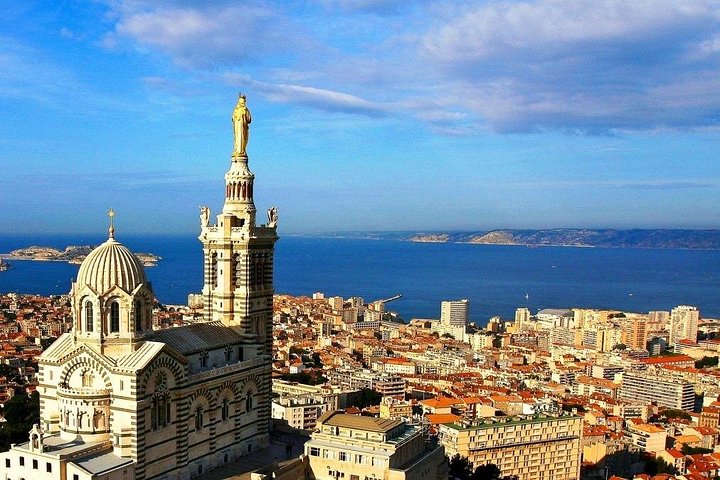
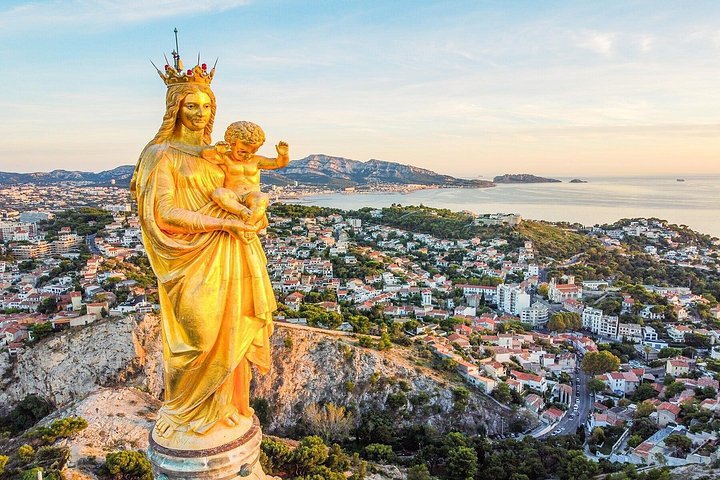
Greek sailors founded Marseille around 600 BC, making it the oldest city in France. The Vieux-Port is its centre, a long harbour ringed by cafés and the morning fish stalls, guarded by two forts at its mouth. On a hill above, the basilica of Notre-Dame de la Garde carries a gilded statue of the Virgin Mary and shows the harbour and the islands from its terrace.
Top-ranked sights in Marseille: Notre-Dame de la Garde Basilica (La Bonne Mère), Old Port of Marseille (Vieux Port), Vallon des Auffes.
Før/nu-priser kommer fra udbyderen, aldrig fra os.
fra183 US$146 US$


fra1.173 US$1.032 US$
fra1.213 US$1.067 US$
Føj Ticket Hall til din hjemmeskærm
Billetter og byguider, ét tryk væk, også offline.
Ticket Hall